
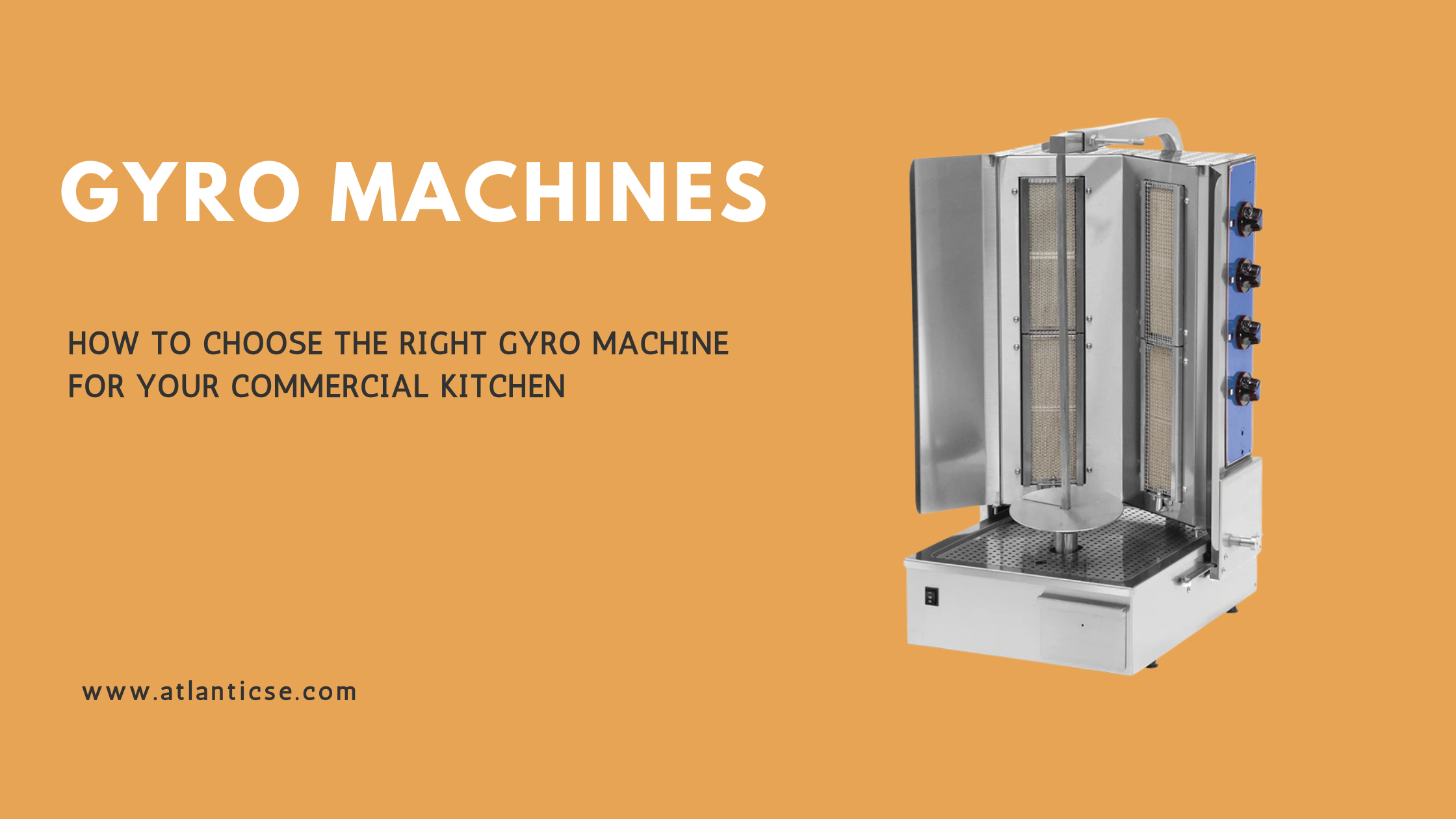
Adding a gyro machine to your commercial kitchen is not just a menu decision—it is an operational, financial, and strategic investment. Whether you run a Mediterranean restaurant, a fast-casual concept, a food truck, or a high-volume kitchen, choosing the right gyro machine directly affects food quality, service speed, labor efficiency, and long-term profitability.
Unlike many countertop cooking appliances, gyro machines are highly specialized. Capacity, energy source, installation requirements, and build quality all vary significantly between models. Making the wrong choice can lead to inconsistent cooking, unnecessary downtime, higher operating costs, or even compliance issues with local health and fire codes.
This guide walks through the six most important factors to consider when selecting the right gyro machine for your business, helping you make a decision that supports both your kitchen workflow and your bottom line.
Understanding Your Business Needs and Menu Concept
Before comparing models or prices, the first step is understanding how a gyro machine fits into your specific operation. Not every restaurant uses a gyro machine the same way, and assumptions at this stage often lead to overbuying or underbuying.
Start with your menu strategy. Is gyro meat one of your core offerings, or is it a secondary item? A restaurant built around gyros, shawarma, or doner will require a very different setup than a burger shop adding gyros as a limited menu expansion. High-volume concepts need machines designed for continuous operation, while smaller kitchens may prioritize flexibility and footprint over maximum output.
Next, consider daily service volume. How many gyro portions do you realistically expect to serve during peak hours? A food truck serving lunch crowds has different throughput needs than a sit-down restaurant with steady dinner service. The goal is to match your machine’s capacity to your actual demand, not aspirational projections.
Finally, think about menu versatility. Many modern gyro machines are used for more than just traditional gyro meat. Shawarma, al pastor, and even specialty roasted proteins can be prepared on the same vertical broiler. If menu expansion is part of your growth plan, choosing a machine that supports multiple protein types adds long-term value.
Choosing the Right Gyro Machine Type: Gas vs Electric
One of the most important technical decisions is choosing between a gas or electric gyro machine. Both options are widely used in commercial kitchens, but each serves different operational needs.
Gas gyro machines are typically preferred in high-volume kitchens. They offer stronger heat output, faster cooking times, and excellent consistency for continuous service. Many restaurant owners favor gas models for their reliability during peak hours and lower long-term energy costs, especially in areas where gas prices are stable.
Electric gyro machines, on the other hand, are popular in locations where gas lines are not available or where ventilation restrictions apply. They are often easier to install, making them a practical option for food trucks, kiosks, and smaller kitchens. Electric units also offer precise temperature control, which can be beneficial for operators who prioritize consistency over speed.
Local regulations matter here. Some municipalities have strict rules regarding gas connections, ventilation systems, and fire safety compliance. Choosing a machine that aligns with your local health department and fire code requirements avoids costly modifications later.
The right choice depends less on preference and more on infrastructure, volume expectations, and regulatory environment.
Capacity, Skewer Size, and Daily Output Considerations
Capacity is where many operators make costly mistakes. A gyro machine that is too small creates bottlenecks during service, while an oversized machine wastes energy and increases food waste.
Capacity is typically defined by skewer size and maximum meat load. Larger skewers support higher daily output and are ideal for restaurants with steady, high-volume demand. Smaller skewers work well for food trucks and low-to-medium volume operations where freshness and flexibility matter more than raw output.
Daily output should be calculated realistically. Consider peak service hours rather than total daily sales. If lunch service accounts for 70 percent of gyro orders, the machine must handle that concentrated demand without slowing down production or compromising cooking quality.
Also consider recovery time. Larger machines often retain heat better, allowing continuous slicing and serving without extended reheating periods. This directly affects service speed and customer satisfaction during rush periods.
Matching capacity to real operational needs is one of the most important steps in choosing the right gyro machine.
Space Planning, Ventilation, and Installation Requirements
Even the best gyro machine becomes a liability if it does not fit properly into your kitchen layout. Space planning is not just about footprint—it includes clearance, airflow, and integration with existing equipment.
Gyro machines require sufficient clearance on all sides for safe operation and cleaning. They must also align with your ventilation system. Most commercial kitchens need a compatible hood system to handle heat, grease, and smoke generated during operation.
Gas machines often require additional considerations such as gas line placement, shutoff valves, and fire suppression compatibility. Electric machines require proper electrical capacity and dedicated circuits.
Installation is where many hidden costs appear. A machine that looks affordable upfront may require expensive modifications to your kitchen infrastructure. Evaluating these requirements early helps prevent delays and unexpected expenses during setup.
Working with experienced equipment suppliers ensures that installation planning is addressed before purchase, not after delivery.
Build Quality, Safety Features, and Ease of Maintenance
A gyro machine is a long-term asset, not a disposable appliance. Build quality directly impacts durability, safety, and ongoing maintenance costs.
High-quality stainless steel construction is essential for both hygiene and longevity. Look for machines designed to withstand continuous use, frequent cleaning, and high temperatures without warping or corrosion.
Safety features should never be overlooked. Heat shields, stable bases, and reliable motor systems protect both staff and equipment. Machines designed with operator safety in mind reduce the risk of workplace injuries and downtime.
Maintenance is another critical factor. Easy-to-remove components, accessible grease trays, and smooth surfaces reduce daily cleaning time and labor costs. Over time, ease of maintenance often matters more than initial price.
A machine that is easier to clean and maintain will stay in service longer and perform more consistently.
Budget, ROI, and Long-Term Value of a Gyro Machine
Price matters, but cost alone should never drive the decision. The true value of a gyro machine lies in its return on investment over time.
Consider the total cost of ownership, including energy consumption, maintenance, replacement parts, and labor efficiency. A higher-quality machine may cost more upfront but deliver lower operating costs and longer service life.
Gyro machines often generate strong margins due to low food cost relative to portion price. A properly sized and reliable machine can pay for itself quickly, especially in high-traffic locations.
Long-term value also includes flexibility. Machines that support multiple menu items allow restaurants to adapt to changing customer preferences without additional equipment investment.
Choosing the right gyro machine is about balancing budget with performance, reliability, and growth potential.