
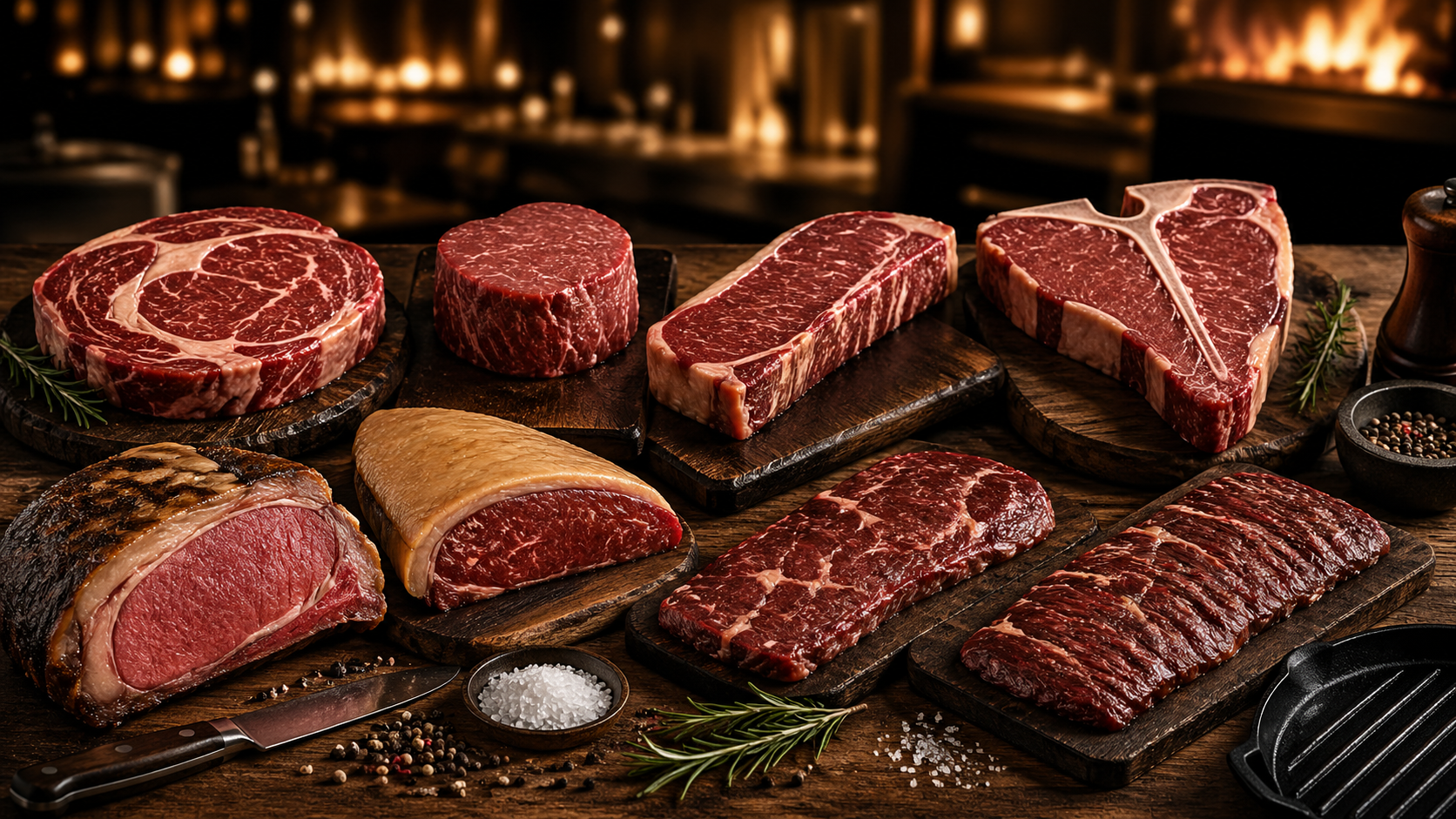
Choosing the best cut of steak is not only about picking the most expensive piece of beef. For restaurants, steakhouses, catering businesses, delis, butcher shops, and foodservice operations, the right steak cut depends on flavor, tenderness, cooking method, menu price, portion control, equipment, and customer expectation.

A filet mignon may be the most tender steak on the menu, but it is not always the best choice for every concept. A ribeye may deliver the richest flavor, but it also comes with higher fat content and a higher food cost. A flat iron or bavette steak may offer better value for a casual restaurant, steak sandwich program, Latin-inspired menu, or high-volume grill station. The best steak cut is the one that fits your menu, your kitchen workflow, and the experience your customer expects.
This guide breaks down the best cuts of steak, how each one tastes, where it comes from, how to cook it, and which type of restaurant or food business can benefit from using it.
What Makes a Steak Cut “The Best”?
The best steak cut usually comes down to four factors: tenderness, marbling, flavor, and cooking method.
Tenderness depends heavily on where the muscle is located on the animal. Muscles that do less work, such as the tenderloin, are usually softer and more delicate. Muscles that do more work, such as cuts from the shoulder, sirloin, plate, or flank areas, may have more chew but often deliver deeper beef flavor.
Marbling is the intramuscular fat inside the meat. More marbling usually means more juiciness, richer flavor, and better performance over high heat. Ribeye is a classic example of a highly marbled steak. Filet mignon, on the other hand, is extremely tender but much leaner.
Cooking method matters just as much as the cut itself. A ribeye, strip steak, T-bone, or porterhouse can perform beautifully on a commercial charbroiler or steakhouse grill. Thinner, more fibrous cuts like bavette, skirt, flank, and flat iron often benefit from marinades, fast cooking, and slicing against the grain. Larger cuts like prime rib need roasting, smoking, holding, and precise temperature management.
For restaurants, the “best” steak is not always the luxury cut. It is the cut that creates the best balance between menu appeal, food cost, preparation time, and customer satisfaction.
1. Ribeye Steak
Ribeye is one of the most popular steakhouse cuts because it delivers exactly what many customers want from a steak: rich beef flavor, visible marbling, juiciness, and a tender bite. It comes from the rib section of the animal and can be sold boneless or bone-in.
The reason ribeye tastes so rich is its marbling. As the steak cooks, the fat melts into the meat and helps create a buttery texture. This makes ribeye very forgiving compared to leaner cuts. Even when cooked to medium, it can still remain juicy.
For restaurants, ribeye is a strong premium menu item. It works well for steakhouses, American restaurants, hotel restaurants, catering menus, and any food business that wants a high-impact steak option. It performs especially well on a commercial charbroiler, heavy-duty range, flat top, or broiler.
Best cooking methods: grilling, broiling, pan-searing, reverse searing
Best menu use: premium steak entrée, steakhouse special, bone-in steak, cowboy ribeye
Flavor profile: rich, fatty, buttery, deeply beefy
Best restaurant equipment fit: commercial charbroiler, steakhouse broiler, heavy-duty range, refrigeration for proper meat storage
2. Filet Mignon
Filet mignon is known for tenderness. It comes from the center section of the tenderloin, a muscle that does very little work. That is why filet mignon has such a soft, buttery texture.
However, filet mignon is not the strongest steak in terms of beefy flavor. It is leaner than ribeye and usually has less marbling. This is why chefs often serve it with sauces, compound butter, bacon wrapping, demi-glace, mushroom sauce, peppercorn sauce, or red wine reduction.
For restaurants, filet mignon is useful because it feels luxurious. It can justify a premium price, especially on a fine dining menu, wedding menu, or steakhouse menu. It is also portion-friendly because it is usually served as a smaller, thicker steak.
Best cooking methods: pan-searing, grilling, broiling, sous vide
Best menu use: fine dining entrée, surf and turf, wedding catering, premium steak plate
Flavor profile: mild, delicate, buttery, tender
Best equipment fit: sauté range, charbroiler, combi oven, sous vide setup, refrigerated prep area
3. New York Strip Steak
New York strip is one of the best all-around steak cuts. It comes from the short loin and offers a strong balance between tenderness and flavor. Compared with filet mignon, it has more chew and more beef flavor. Compared with ribeye, it is usually leaner and slightly firmer.
This makes New York strip a reliable menu item for restaurants. It looks familiar to customers, it cooks well over high heat, and it holds up nicely as a steak entrée. It can be served with classic sides like mashed potatoes, fries, asparagus, roasted vegetables, or sautéed mushrooms.
For operators, New York strip is also easier to position than some lesser-known cuts. Customers recognize the name, which makes it easier to sell at a premium price.
Best cooking methods: grilling, broiling, pan-searing
Best menu use: steakhouse entrée, lunch steak plate, prix fixe menu, hotel restaurant menu
Flavor profile: bold, beefy, balanced, moderately tender
Best equipment fit: commercial grill, charbroiler, broiler, reach-in or walk-in refrigeration
4. Porterhouse Steak
Porterhouse is one of the most impressive steak cuts because it combines two steaks in one: the tenderloin and the strip steak. It is cut from the rear section of the short loin and includes a larger tenderloin portion than a T-bone. USDA-related specifications commonly distinguish porterhouse from T-bone by the size of the tenderloin section, with porterhouse requiring a larger tenderloin portion.
This cut is perfect when presentation matters. A large porterhouse can be served as a shareable steak for two, a premium dinner special, or a signature steakhouse item. Because it contains two different muscles, cooking requires attention. The tenderloin side cooks faster than the strip side, so even heat control is important.
For restaurants, porterhouse is less about everyday menu efficiency and more about creating a memorable dining experience. It is a great choice for steakhouses, Italian restaurants, high-end grills, and special occasion menus.
Best cooking methods: grilling, broiling, reverse searing, sous vide finishing
Best menu use: steak for two, premium steakhouse special, special occasion entrée
Flavor profile: tender on one side, bold and beefy on the other
Best equipment fit: steakhouse broiler, charbroiler, salamander, heavy-duty range
5. T-Bone Steak
T-bone is similar to porterhouse because it includes both strip steak and tenderloin separated by a T-shaped bone. The difference is that T-bone usually has a smaller tenderloin portion than porterhouse.
T-bone is a classic steakhouse cut. It gives customers the visual appeal of a bone-in steak without always reaching the size or price point of a porterhouse. It is excellent for grilling and broiling, especially when the kitchen has strong heat control.
For foodservice operators, T-bone can be a strong menu item when positioned correctly. It feels traditional, generous, and familiar. It works especially well in American restaurants, casual steakhouses, diners with premium dinner menus, and barbecue-focused operations.
Best cooking methods: grilling, broiling, pan-searing
Best menu use: classic steak dinner, bone-in steak special, steakhouse menu
Flavor profile: combination of tender filet and beefy strip
Best equipment fit: commercial charbroiler, steak grill, broiler
6. Prime Rib
Prime rib is different from a single steak cut because it is usually prepared as a roast and then sliced for service. It comes from the rib primal and is known for rich flavor, tenderness, and heavy marbling.
Prime rib is a powerful menu item for restaurants and catering businesses because it creates a sense of abundance. It works well for holiday menus, buffets, carving stations, hotel banquets, Sunday specials, and upscale catering. Unlike steaks that are cooked individually to order, prime rib is cooked as a larger roast and held for service.
The challenge is consistency. Prime rib needs proper roasting, holding, slicing, and temperature control. For commercial kitchens, this means the right oven, holding cabinet, carving station, and refrigeration setup are important.
Best cooking methods: roasting, smoking, low-temperature cooking
Best menu use: carving station, buffet, banquet, holiday menu, Sunday dinner special
Flavor profile: rich, juicy, beefy, tender
Best equipment fit: convection oven, smoker, holding cabinet, carving station, walk-in cooler
7. Picanha
Picanha, also called sirloin cap or rump cap, is especially popular in Brazilian steakhouses and South American cooking. It is known for its thick fat cap, which helps baste the meat as it cooks.
Picanha is a great cut for restaurants that want something flavorful, memorable, and slightly different from the standard ribeye-strip-filet lineup. It works beautifully on skewers, over open flame, or on a charbroiler. The fat cap is part of the experience, so it should not be removed too aggressively before cooking.
For Brazilian steakhouses, Latin restaurants, barbecue concepts, and meat-focused casual restaurants, picanha can become a signature item. It also offers strong visual appeal when sliced and served tableside.
Best cooking methods: grilling, skewering, rotisserie-style cooking, charbroiling
Best menu use: Brazilian steakhouse menu, grilled meat platter, steak skewers, churrasco
Flavor profile: beefy, juicy, slightly buttery, fat-rich
Best equipment fit: charbroiler, rotisserie, commercial grill, meat prep station
8. Flat Iron Steak
Flat iron steak comes from the shoulder area, specifically the top blade. It is known for being surprisingly tender and flavorful, especially compared with many other value cuts. Beef. It’s What’s For Dinner describes flat iron as tender, well-marbled, flavorful, and suitable for grilling, skillet cooking, broiling, smoking, sous vide, and stir-fry applications.
For restaurants, flat iron is one of the most useful cuts because it can deliver a strong dining experience without the same cost level as filet, ribeye, or strip. It works well for steak salads, steak frites, sandwiches, tacos, rice bowls, lunch specials, and casual steak entrées.
The key is slicing. Flat iron should usually be sliced against the grain to maximize tenderness. It can also benefit from marinades or bold seasoning depending on the menu concept.
Best cooking methods: grilling, pan-searing, broiling, sous vide
Best menu use: steak salad, steak sandwich, steak frites, tacos, casual entrée
Flavor profile: rich, beefy, tender for the price
Best equipment fit: flat top commercial griddle, charbroiler, range, refrigerated prep table
9. Tenderloin
Tenderloin is the larger muscle from which filet mignon is cut. While filet mignon usually refers to the center-cut portion, the whole tenderloin includes different sections that can be used in different ways.
For restaurants, whole tenderloin can be valuable because it offers flexibility. The center can become filet mignon portions. The head or butt end can be used for roasts, medallions, or beef Wellington. The tail can be used for tips, stroganoff, stir-fry, or smaller plates.
Tenderloin is not the most flavorful cut, but it is one of the most tender. That makes it useful for menus where texture and premium perception matter.
Best cooking methods: roasting, pan-searing, grilling, sous vide
Best menu use: filet mignon, beef Wellington, tenderloin medallions, banquet menus
Flavor profile: mild, tender, delicate
Best equipment fit: convection oven, sauté station, charbroiler, prep table
10. Bavette Steak
Bavette, also called flap steak, comes from the bottom sirloin area. It has a loose grain, strong beef flavor, and a texture that works well when cooked quickly and sliced properly.
Bavette is an excellent cut for restaurants that want more flavor at a better cost than premium steakhouse cuts. It can be used for steak frites, fajitas, tacos, steak sandwiches, grain bowls, bistro plates, and chef specials.
Because bavette has a more pronounced grain, slicing against the grain is critical. Marinades, chimichurri, garlic butter, salsa verde, and pepper sauces all work well with this cut.
Best cooking methods: grilling, pan-searing, broiling
Best menu use: bistro steak, steak frites, tacos, fajitas, sandwiches
Flavor profile: deep, savory, beefy
Best equipment fit: charbroiler, flat top griddle, range, prep station
11. Skirt Steak
Skirt steak is thin, long, and intensely flavorful. It is commonly used for fajitas, tacos, carne asada, steak sandwiches, and Latin-inspired dishes. It has a more fibrous texture than ribeye or strip, but when cooked hot and fast, then sliced against the grain, it can be excellent.
Skirt steak is especially useful for restaurants with high-volume grill programs because it cooks quickly. It also absorbs marinades well, making it adaptable for different cuisines.
Best cooking methods: grilling, broiling, flat top searing
Best menu use: fajitas, tacos, carne asada, steak sandwiches
Flavor profile: bold, beefy, slightly chewy
Best equipment fit: charbroiler, flat top griddle, refrigerated prep table
12. Flank Steak
Flank steak is lean, wide, and flavorful. It is not as tender as premium steakhouse cuts, but it is extremely useful in commercial kitchens. Like skirt and bavette, flank steak performs best with marinade, high heat, and thin slicing across the grain.
For restaurants, flank steak is a strong choice for steak salads, wraps, rice bowls, sandwiches, catering trays, and international menus. It is also portion-efficient because it can be sliced and served across multiple menu formats.
Best cooking methods: grilling, broiling, pan-searing
Best menu use: steak salad, wraps, catering, sliced steak plates, bowls
Flavor profile: lean, beefy, slightly firm
Best equipment fit: charbroiler, griddle, prep table, commercial refrigeration
Best Steak Cuts by Restaurant Type
For steakhouses, the strongest core cuts are ribeye, New York strip, filet mignon, porterhouse, T-bone, and prime rib. These cuts are familiar to customers and can support premium pricing.
For casual restaurants, flat iron, bavette, flank, skirt, and sirloin can be more practical. They allow operators to build steak-based dishes without turning the entire menu into a high-cost steakhouse program.
For Latin restaurants, picanha, skirt steak, flank steak, and bavette are especially useful. These cuts work well with marinades, open-flame cooking, chimichurri, rice plates, tacos, and grilled platters.
For catering businesses, prime rib, tenderloin, flank steak, and sliced flat iron can be strong options because they can be cooked in larger quantities and served efficiently.
For delis, grocery stores, and butcher shops, offering a range of premium and value steak cuts can help serve different customer budgets. Ribeye, strip, filet, T-bone, skirt, flank, and flat iron all have different price points and customer uses.
Steak Doneness and Food Safety
Restaurants often cook steaks to customer preference, from rare to well-done. However, food safety standards are still important. USDA and FoodSafety.gov list 145°F with a 3-minute rest as the safe minimum internal temperature for beef steaks, roasts, and chops. Ground beef requires a higher minimum internal temperature of 160°F.
For commercial kitchens, a reliable food thermometer is essential. Visual color alone is not a dependable way to measure doneness or food safety. Proper refrigeration, clean prep surfaces, safe storage, and temperature control are also part of serving steak safely.
Some steak lovers also ask about blue steak, which is cooked for a very short time over high heat and served with a cool, very rare center. While blue steak is popular among certain steakhouse customers, restaurants should understand the difference between customer preference, proper searing, safe handling, and internal temperature guidelines before offering it on the menu.
Equipment Matters: The Steak Cut Is Only Half the Story
A great steak program depends on more than the meat itself. The right commercial kitchen equipment affects flavor, consistency, speed, and food safety.
A commercial charbroiler helps create grill marks, smoke, and high-heat searing. A heavy-duty range supports pan-seared steaks, sauces, and finishing. A flat top griddle is useful for sliced steak, fajitas, steak sandwiches, and high-volume casual menus. A convection oven or combi oven helps with prime rib, tenderloin, and banquet production. A commercial refrigerator or walk-in cooler keeps raw beef at safe holding temperatures and protects inventory quality.
For restaurants and food businesses, steak quality starts before the meat hits the grill. It starts with proper receiving, cold storage, prep workflow, cooking equipment, and holding procedures.
The best cut of steak depends on your goal. If you want tenderness and luxury, filet mignon and tenderloin are strong choices. If you want rich flavor and steakhouse appeal, ribeye and New York strip are hard to beat. If you want a dramatic presentation, porterhouse and T-bone stand out. If you want value, versatility, and strong flavor, flat iron, bavette, skirt, and flank steak can be excellent menu-building cuts.
For restaurants, the smartest steak program usually includes a mix of premium cuts and value-driven cuts. This gives customers options while helping the business manage food cost, equipment workflow, and menu profitability.
Whether you are building a steakhouse menu, adding grilled steak to a casual restaurant, preparing a catering menu, or expanding a butcher shop or deli program, choosing the right steak cut is only the beginning. The right refrigeration, prep equipment, cooking equipment, and storage setup help turn that cut into a consistent, profitable menu item.