
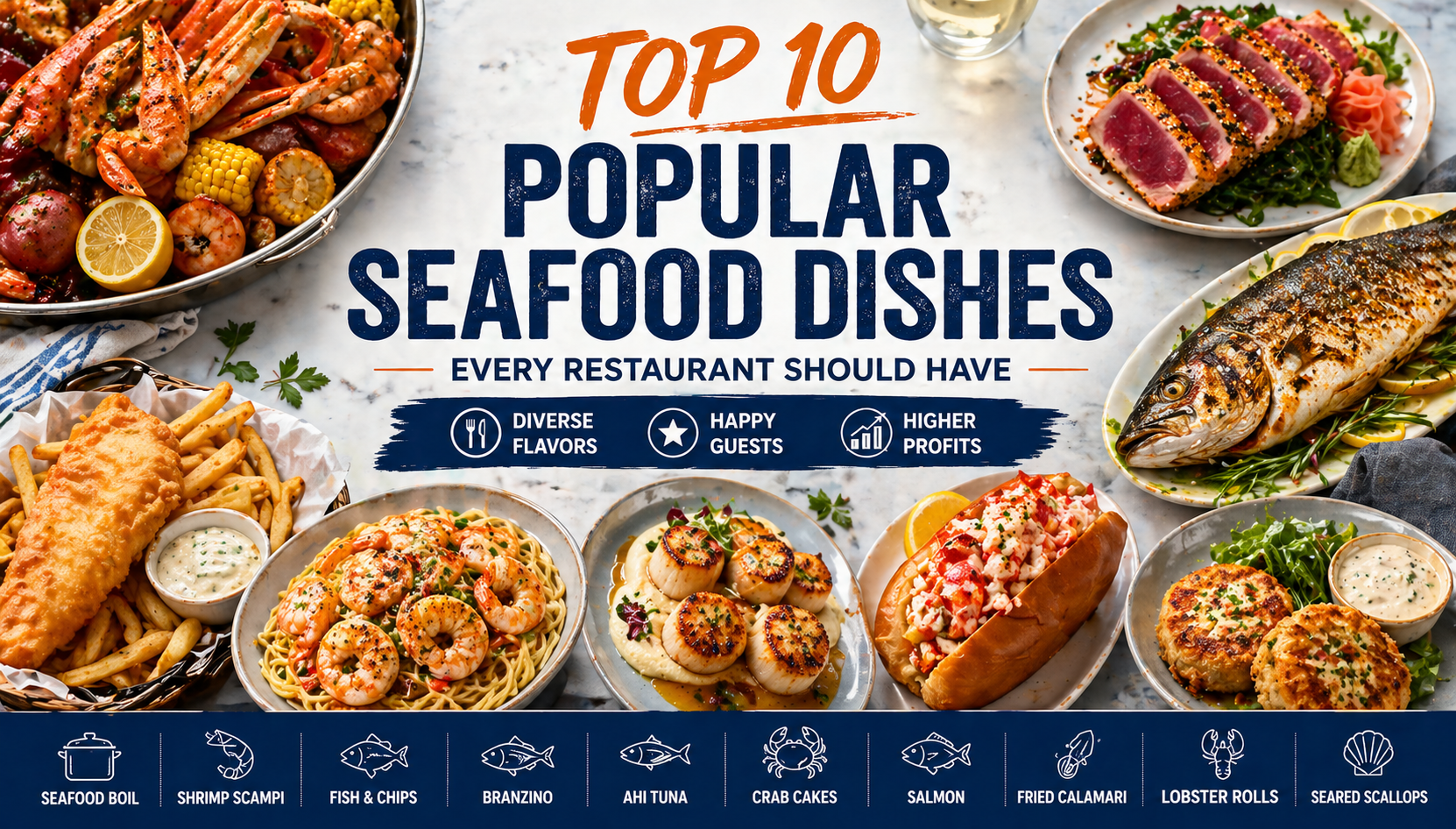
Seafood has always held a special place on restaurant menus because it can feel casual, premium, healthy, coastal, seasonal, and indulgent at the same time. A plate of fish and chips can work perfectly in a pub or food truck, while seared scallops, whole branzino, or ahi tuna can instantly elevate a fine dining menu. This flexibility is one of the biggest reasons seafood remains one of the most valuable categories for restaurants, caterers, hotels, bars, and commercial kitchens.

For operators, seafood is not only about flavor. It is also about menu positioning, perceived value, preparation method, equipment setup, storage discipline, and presentation. A strong seafood menu can help a restaurant attract health-conscious diners, premium dinner guests, lunch customers, and social media-driven audiences looking for visually appealing dishes.
The key is choosing the right seafood dishes for your concept. Some dishes are excellent for high-volume service because they are fast, familiar, and easy to portion. Others are better suited for premium menus because they justify higher pricing and create a more memorable dining experience. Below, we will explore the most popular seafood dishes for restaurants and explain why each one works from both a culinary and business perspective.
Why Seafood Dishes Are So Valuable on Restaurant Menus
Seafood gives restaurants a rare advantage: it can be positioned as both comfort food and premium food. Shrimp scampi, fried calamari, and fish and chips are approachable dishes that customers already understand. At the same time, branzino, ahi tuna, lobster rolls, and seared scallops feel elevated enough to support higher menu prices.
This matters because modern diners are not just ordering food. They are ordering an experience. A seafood boil creates a communal table moment. A lobster roll creates a coastal, seasonal feeling. Seared scallops create a fine dining impression. Even a simple salmon fillet can communicate freshness, health, and quality when it is prepared and presented correctly.
For restaurants, seafood also creates natural upsell opportunities. Sauces, sides, premium garnishes, wine pairings, beer pairings, and appetizer combinations can all increase average ticket size. However, seafood also requires careful handling. Proper cold storage, prep flow, and cooking equipment are essential. This is where having the right commercial refrigeration, commercial freezer, commercial kitchen equipment, and restaurant equipment becomes a major part of the seafood program’s success.
Seafood Boil: The Communal Dish That Turns Dinner Into an Event
A seafood boil is one of the most powerful seafood dishes because it is not just a meal. It is an experience. Traditionally associated with coastal regions, Southern cooking, Cajun cuisine, Creole cuisine, and Lowcountry gatherings, seafood boils are designed to be shared. They often include shrimp, crab legs, clams, mussels, corn, potatoes, sausage, lemon, garlic, and bold seasoning blends.
From a restaurant perspective, the biggest advantage of a seafood boil is its visual impact. When served family-style, it fills the table with color, steam, aroma, and abundance. This makes it highly shareable on social media and ideal for group dining. Customers often perceive seafood boils as generous and festive, which allows restaurants to build premium seafood platters, seasonal specials, and weekend promotions around them.
Operationally, seafood boils work best when the kitchen has strong prep organization. Ingredients need to be cleaned, portioned, chilled, and cooked in proper sequence so that the seafood remains tender and the vegetables are fully cooked. Overcooked shrimp or rubbery shellfish can quickly damage the experience, so timing is everything.
Seafood boils pair beautifully with garlic butter, Cajun sauce, lemon, parsley, corn, potatoes, light beer, lemonade, and citrus-forward cocktails. For restaurants that want to build a high-energy seafood concept, this dish can become a signature menu item.
Shrimp Scampi: Simple, Fast, and Highly Profitable
Shrimp scampi is one of the best examples of a seafood dish that feels elegant while remaining operationally efficient. Built around shrimp, garlic, butter, lemon juice, white wine, parsley, and sometimes pasta, it delivers strong flavor without requiring a long cooking process.
The reason shrimp scampi works so well for commercial kitchens is speed. Shrimp cooks quickly, the sauce comes together fast, and the dish can be served as an appetizer, entrée, pasta topping, or lunch special. It also has strong perceived value. Even though the ingredient list is relatively simple, customers often view shrimp dishes as premium compared to many chicken or vegetable-based dishes.
Shrimp scampi is especially useful for restaurants that want to add seafood without overcomplicating the menu. It can be adapted into shrimp scampi pasta, shrimp scampi risotto, shrimp scampi flatbread, or shrimp scampi with rice. The base flavor profile is familiar enough for conservative diners but flexible enough for chefs to customize.
For best results, restaurants need consistent cold holding and fast prep access. Shrimp should remain properly chilled before cooking, which makes reliable commercial refrigeration an important part of the workflow.
Fish and Chips: A Classic Seafood Dish Built for Volume
Fish and chips is one of the most popular seafood dishes in the world because it combines familiarity, affordability, and comfort. Traditionally made with battered white fish such as cod, haddock, pollock, or halibut, the dish is fried until crisp and served with fries, tartar sauce, malt vinegar, lemon, or coleslaw.
For restaurants, fish and chips is valuable because it performs well in casual dining, pubs, food trucks, takeout menus, and family restaurants. It is easy for customers to understand and easy to promote. The dish also allows operators to control cost by selecting the fish species that best fits their price point.
The success of fish and chips depends heavily on execution. The batter should be crisp, the fish should remain moist, and the fries should be hot and properly seasoned. This makes fryer quality, oil management, and holding time extremely important. Restaurants that serve this dish regularly need dependable commercial fryers, proper filtration habits, and a kitchen layout that supports high-volume fried food service.
Fish and chips also gives restaurants room for regional variations. Beer-battered fish, panko-crusted fish, spicy fried fish, baked fish and chips, and premium halibut versions can all help a restaurant differentiate its menu.
Branzino: A Premium Whole Fish With Strong Presentation Value
Branzino, also known as European sea bass, has become a popular restaurant dish because it is light, elegant, and visually impressive. It is often served whole, either roasted, grilled, or baked with lemon, herbs, olive oil, garlic, fennel, tomatoes, or olives.
The appeal of branzino comes from its delicate flavor and premium presentation. A whole fish served tableside creates a sense of occasion. It feels Mediterranean, refined, and fresh. For restaurants that want to communicate quality without creating an overly heavy dish, branzino is one of the best seafood options.
From a business standpoint, branzino works well in upscale casual, Mediterranean, Italian, Greek, and fine dining concepts. It can be priced as a premium entrée while still being approachable for customers who prefer mild fish. It also pairs naturally with roasted vegetables, risotto, potatoes, salads, white wine, and dry rosé.
The main operational challenge is consistency. Whole fish requires proper storage, careful handling, and staff training. The kitchen must be able to cook the fish evenly without drying it out. Proper commercial refrigeration is especially important because whole fish quality is highly visible to both chefs and customers.
Ahi Tuna: A Modern Seafood Favorite for Health-Conscious Diners
Ahi tuna, often referring to yellowfin tuna, is popular because of its firm texture, deep red color, and versatility. It can be served raw, seared, grilled, sliced over salads, used in poke bowls, or featured in tacos and rice bowls.
Ahi tuna is especially valuable for restaurants targeting health-conscious customers. It feels lean, modern, and premium. Dishes like seared ahi tuna, ahi tuna poke, and tuna tartare also perform well visually, making them strong choices for restaurants that care about presentation and social media appeal.
The flavor profile of ahi tuna works beautifully with soy sauce, sesame oil, ginger, avocado, citrus, ponzu, wasabi, scallions, rice, cucumber, and seaweed. Because it can be used across multiple menu formats, ahi tuna allows restaurants to build several dishes from one core ingredient.
However, tuna requires careful sourcing and handling. If served raw or lightly seared, quality standards become even more important. Restaurants must follow proper food safety procedures, maintain strict cold storage, and work with reputable suppliers. For this type of menu item, dependable commercial freezer and refrigeration systems are not optional. They are central to product integrity.
Crab Cakes: A High-Perceived-Value Dish With Menu Flexibility
Crab cakes are a restaurant classic because they feel upscale but can be served in many formats. They can appear as appetizers, entrées, sandwiches, brunch items, seafood platters, or catering menu items. Made with crab meat, breadcrumbs, mayonnaise, mustard, herbs, lemon, and seasoning, crab cakes deliver rich flavor in a compact and portion-controlled format.
One of the biggest advantages of crab cakes is perceived value. Customers often associate crab with premium seafood, so even a small portion can support a strong menu price when prepared well. This makes crab cakes useful for restaurants that want to add a high-margin seafood item without building an entire seafood-focused menu.
Texture is critical. A good crab cake should be crisp on the outside, moist inside, and crab-forward rather than filler-heavy. Restaurants can differentiate their version with Maryland-style seasoning, panko crust, spicy remoulade, lemon aioli, or regional sauces.
Crab cakes also pair well with fries, coleslaw, salad, roasted potatoes, tartar sauce, remoulade, and citrus-based sauces. For kitchens, the dish is manageable because crab cakes can often be pre-portioned before service, helping reduce ticket time during busy periods.
Pan-Seared Salmon: The Reliable Seafood Entrée Every Menu Can Use
Pan-seared salmon is one of the most important seafood dishes for restaurants because it is familiar, versatile, and widely accepted by customers. Salmon has a mild but rich flavor, a firm texture, and a strong health association. It works for lunch, dinner, catering, meal prep menus, hotel restaurants, and upscale casual dining.
A properly seared salmon fillet should have crisp skin, a golden exterior, and a moist interior. The cooking process is straightforward, but consistency matters. Overcooked salmon can become dry, while undercooked salmon may not meet customer expectations depending on the concept.
Salmon’s biggest advantage is flexibility. It can be served with asparagus, rice, quinoa, mashed potatoes, roasted vegetables, salads, lemon butter, dill sauce, teriyaki glaze, mango salsa, or creamy sauces. This makes it easy to adapt to different cuisines and price points.
From an equipment perspective, salmon requires reliable refrigeration, quality sauté pans, strong ventilation, and an organized prep station. Restaurants serving salmon at volume benefit from a smart commercial kitchen equipment layout that keeps proteins, sauces, sides, and finishing ingredients within an efficient workflow.
Fried Calamari: The Appetizer That Works Across Concepts
Fried calamari is one of the most popular seafood appetizers because it is crispy, shareable, and easy to pair with drinks. It is commonly made by coating squid rings or tentacles in seasoned flour, cornmeal, or batter, then frying them until golden.
The dish works because it sits between casual and premium. It feels more elevated than standard fried appetizers but is still approachable for groups. Fried calamari is common in Italian restaurants, seafood restaurants, bars, steakhouses, Mediterranean concepts, and casual dining menus.
Execution is everything. Calamari can become tough if overcooked, so the frying process must be fast and controlled. The exterior should be crisp while the inside remains tender. Sauces such as marinara, lemon aioli, spicy remoulade, garlic sauce, and balsamic glaze can help customize the dish.
For restaurants, fried calamari is especially useful because it encourages sharing and pairs well with beer, wine, cocktails, and other appetizers. A strong fryer station with reliable commercial fryers can make this dish a consistent performer.
Lobster Rolls: A Coastal Classic With Premium Menu Appeal
Lobster rolls are strongly associated with New England and summertime dining, but they have expanded far beyond coastal restaurants. A classic lobster roll usually includes lobster meat served in a buttered and toasted split-top bun, either chilled with mayonnaise and celery or warm with butter.
The power of a lobster roll comes from simplicity. Customers want to taste the lobster, so the supporting ingredients should not overpower it. When done well, a lobster roll communicates freshness, seasonality, and indulgence in a format that is still easy to eat.
For restaurants, lobster rolls are valuable because they can support premium pricing while remaining operationally straightforward. They work well in seafood restaurants, food trucks, cafes, beach concepts, hotel menus, and seasonal pop-ups. They also photograph well, which helps with online visibility.
The main challenge is food cost. Lobster can be expensive, so portion control and pricing discipline are important. Operators should build the dish carefully, protect margins, and consider offering lobster roll specials during peak seafood seasons.
Seared Scallops: Fine Dining Flavor in a Small Portion
Seared scallops are one of the most elegant seafood dishes a restaurant can serve. They are known for their sweet flavor, tender texture, and golden crust. When plated with risotto, pea purée, citrus sauce, brown butter, bacon, truffle, or seasonal vegetables, scallops can become a standout fine dining dish.
The beauty of scallops is that they do not require a large portion to feel premium. A few perfectly seared scallops can create a refined appetizer or entrée. This makes them valuable for restaurants that want to offer a high-end seafood experience while maintaining portion control.
Technique is critical. Scallops must be patted dry, cooked in a hot pan, and not overcrowded. Too much moisture or low heat prevents browning. Overcooking makes them rubbery. Because the cooking window is short, staff training is essential.
Seared scallops are best suited for restaurants that already have strong kitchen discipline. They require good sourcing, proper storage, and precise execution. When handled correctly, they can become one of the most memorable dishes on the menu.
How to Build a Profitable Seafood Menu
A profitable seafood menu should balance familiarity, premium appeal, and operational control. Not every restaurant needs all ten dishes. In fact, most restaurants should avoid adding too many seafood items at once. The better strategy is to choose dishes that fit the concept and can be executed consistently.
A casual restaurant might start with fish and chips, fried calamari, shrimp scampi, and pan-seared salmon. A premium restaurant might focus on branzino, ahi tuna, scallops, lobster rolls, and crab cakes. A seafood-focused restaurant can build an entire menu around boils, raw bar items, fried seafood, grilled fish, and premium shellfish.
The best seafood menus also consider storage and workflow. Seafood is sensitive, and quality declines quickly when handling is poor. Restaurants need proper refrigeration, clean prep areas, reliable cooking equipment, and staff who understand timing. This is why seafood success is closely connected to the right restaurant equipment, commercial refrigeration, commercial freezers, commercial fryers, and commercial cooking equipment.
Best Side Dishes for Seafood
Seafood dishes perform better when they are paired with sides that support the main ingredient rather than compete with it. Light fish works well with citrus, herbs, rice, salads, and roasted vegetables. Fried seafood pairs naturally with fries, coleslaw, tartar sauce, malt vinegar, and pickles. Premium shellfish can be elevated with risotto, purées, butter sauces, grilled vegetables, or fresh greens.
Restaurants should think about sides as part of the profit strategy. A well-designed side dish can increase perceived value without dramatically increasing food cost. For example, a simple lemon herb rice or seasonal vegetable medley can make a salmon entrée feel more complete. A small cup of premium sauce can make fried calamari feel more distinctive. A toasted bun and house-made chips can make a lobster roll feel like a full meal rather than a sandwich.
Best Sauces and Flavor Pairings for Seafood
Sauces are one of the easiest ways to differentiate seafood dishes. Garlic butter, lemon butter, tartar sauce, remoulade, aioli, ponzu, soy ginger glaze, Cajun butter, chimichurri, and herb cream sauces can all create different menu personalities.
For casual dishes, bold sauces often work best. Fish and chips benefits from tartar sauce and malt vinegar. Seafood boils need garlic butter or Cajun sauce. Fried calamari works well with marinara or spicy aioli. For premium dishes, the sauce should enhance rather than dominate. Branzino works with olive oil, lemon, herbs, and fennel. Scallops pair beautifully with brown butter, pea purée, citrus, or light cream sauces.
The right sauce strategy can also help restaurants cross-utilize ingredients. One lemon herb butter can support salmon, scallops, shrimp, and branzino. A Cajun butter can support seafood boils, shrimp dishes, and grilled fish specials.
Seafood Storage and Food Safety Considerations
Seafood quality depends heavily on storage. Fresh fish and shellfish should be kept cold, protected from cross-contamination, and used within proper timelines. Odor, texture, color, and moisture are all important quality indicators. If seafood smells overly fishy, feels slimy, or shows discoloration, it should not be served.
Restaurants should also separate raw seafood from ready-to-eat foods and maintain clean prep surfaces. Staff should be trained to handle allergens carefully, especially with shellfish. Since shrimp, crab, lobster, scallops, clams, and mussels are common allergens, menu communication and kitchen procedures matter.
Good seafood operations are built on discipline. The right storage equipment, prep flow, and cleaning process protect both customer safety and restaurant reputation.
Seafood can be one of the strongest categories on a restaurant menu when it is planned correctly. It gives chefs room to be creative, gives customers a sense of freshness and indulgence, and gives operators opportunities to build profitable dishes across different price points.
The most successful seafood menus are not built by copying trends blindly. They are built by matching dishes to the restaurant’s concept, customer base, equipment capacity, and service style. A seafood boil can create energy and group dining appeal. Shrimp scampi can deliver speed and profitability. Fish and chips can support volume. Branzino and scallops can elevate the menu. Salmon can provide everyday reliability. Lobster rolls can create seasonal excitement.
When seafood is supported by the right sourcing, storage, preparation, and commercial kitchen equipment, it becomes more than a menu category. It becomes a traffic driver, a brand builder, and a reason for customers to come back.
FAQ
What are the most popular seafood dishes for restaurants?
Some of the most popular seafood dishes for restaurants include shrimp scampi, fish and chips, seafood boils, pan-seared salmon, crab cakes, lobster rolls, fried calamari, branzino, ahi tuna, and seared scallops. These dishes are popular because they balance customer familiarity, strong flavor, and menu profitability.
What seafood dish is best for a casual restaurant?
Fish and chips, fried calamari, shrimp scampi, and pan-seared salmon are excellent choices for casual restaurants. They are recognizable, easy to pair with sides, and can be prepared efficiently during busy service.
What seafood dishes have the highest perceived value?
Lobster rolls, seared scallops, branzino, ahi tuna, and crab cakes usually have high perceived value. Customers often associate these dishes with premium ingredients, freshness, and restaurant-quality dining.
What is the easiest seafood dish to add to a menu?
Shrimp scampi is one of the easiest seafood dishes to add because it cooks quickly, uses familiar ingredients, and can be served as an appetizer, entrée, or pasta dish.
What seafood dishes are best for appetizers?
Fried calamari, crab cakes, shrimp scampi, seared scallops, and small seafood boil portions work well as appetizers. These dishes are shareable, flavorful, and easy to position as premium starters.
What equipment does a restaurant need for seafood dishes?
Most seafood programs require dependable commercial refrigeration, prep tables, sauté equipment, fryers, holding equipment, and in some cases commercial freezers. The exact setup depends on whether the restaurant serves fried seafood, fresh fish, shellfish, raw items, or high-volume seafood platters.
How can restaurants make seafood dishes more profitable?
Restaurants can improve seafood profitability through portion control, smart sourcing, cross-utilized sauces, premium side pairings, seasonal specials, and proper menu pricing. Strong storage and prep systems also reduce waste, which is especially important with seafood.