
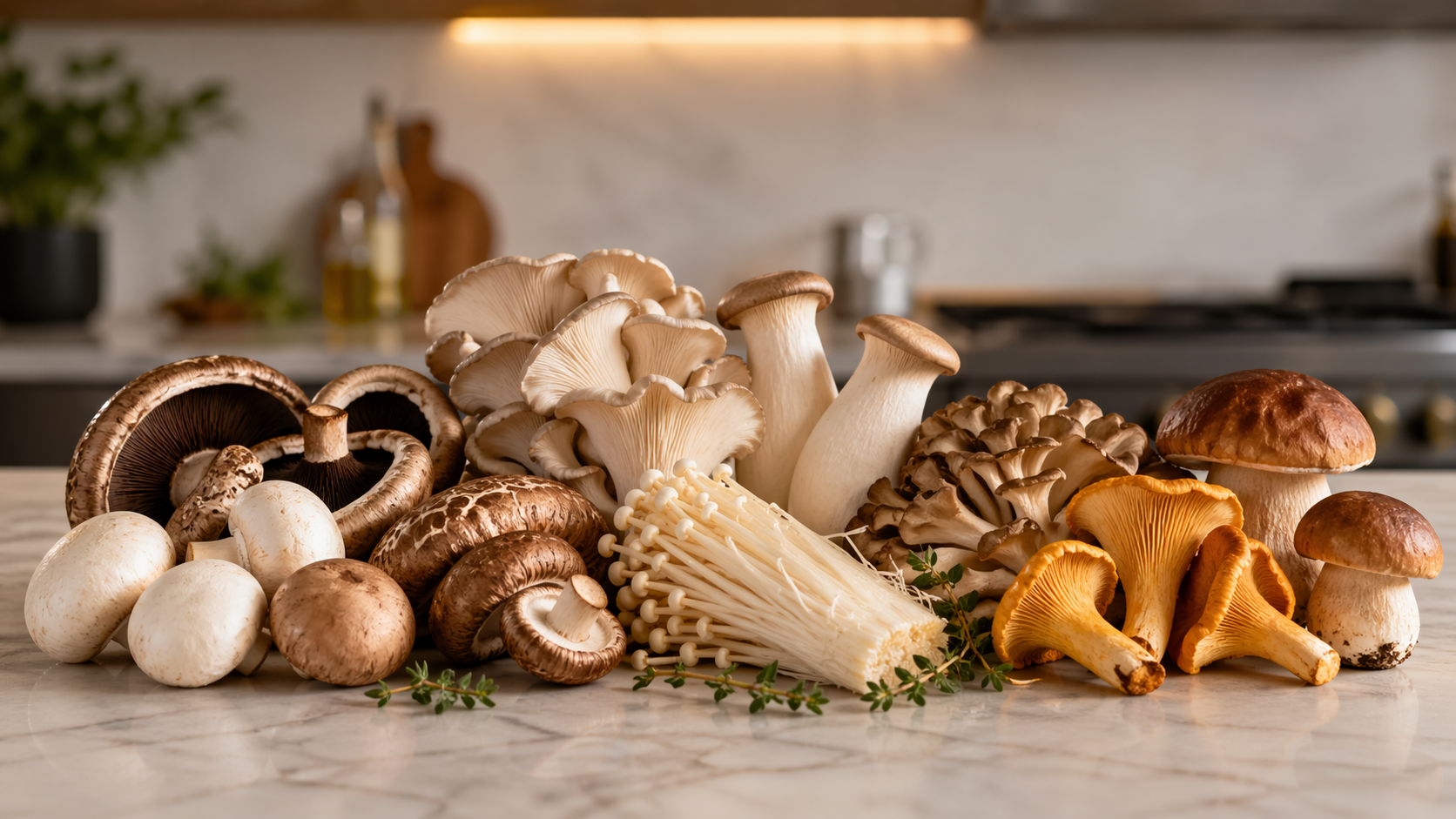
Mushrooms are one of the most versatile ingredients in the foodservice world. They can add depth to a sauce, replace meat in a vegetarian entrée, bring umami to a soup, improve the texture of a stir-fry, or turn a simple side dish into something that feels more premium. For restaurants, cafes, delis, hotels, catering businesses, and commercial kitchens, understanding the different types of mushrooms is not just a culinary detail. It can directly affect menu design, food cost, storage planning, prep workflow, and customer experience.

Unlike many vegetables that mainly bring sweetness, acidity, freshness, or crunch, mushrooms bring something deeper: savory complexity. A well-seared mushroom can taste meaty, smoky, nutty, earthy, buttery, or even slightly seafood-like depending on the variety. That is why mushrooms appear across so many cuisines, from American steakhouse sides and Italian risottos to Japanese hot pots, Korean barbecue, French sauces, vegan burgers, breakfast omelets, soups, pizza toppings, and fine dining garnishes.
For foodservice operators, mushrooms also offer a smart way to expand plant-forward menu options without making the menu feel “light” or incomplete. Portobello mushrooms can replace burger patties. King oyster mushrooms can be sliced into scallop-like rounds. Shiitake mushrooms can deepen broths and sauces. Maitake mushrooms can be roasted until crisp and served like a premium appetizer. Even simple white button mushrooms can become valuable when cooked correctly and stored properly.
Before adding mushrooms to a commercial menu, it helps to know how each type behaves in the kitchen. Some mushrooms hold their shape under high heat. Some are better for soups. Some are delicate and should be added near the end of cooking. Some are best purchased fresh, while others are more practical dried. And because mushrooms are perishable, every kitchen should think carefully about refrigeration, prep timing, and storage containers.
For best quality and safety, fresh mushrooms should be kept refrigerated. FDA guidance says perishable fresh produce, including mushrooms, should be stored in a clean refrigerator at 40°F or below. Penn State Extension also recommends storing mushrooms in the refrigerator, ideally in their original container or a paper bag. For restaurants that handle larger volumes, this makes reliable Commercial Refrigeration and proper cold storage an important part of mushroom purchasing and menu planning.
What Are Mushrooms?
Mushrooms are fungi, not vegetables, although they are usually treated like vegetables in the kitchen. They reproduce through spores and grow in many different environments, including forests, fields, farms, logs, and controlled indoor growing facilities. Some mushrooms are cultivated commercially and widely available through produce suppliers. Others are seasonal, wild, expensive, and used more often in upscale or chef-driven restaurants.
From a culinary perspective, mushrooms are valuable because they contain naturally savory compounds that help build umami. This makes them especially useful in dishes where you want depth without relying only on meat, stock, cream, butter, or salt. A small amount of dried porcini powder can transform a sauce. Sautéed shiitakes can make a vegetable broth taste richer. Roasted maitake can turn a simple plate into a premium menu item.
However, mushrooms also require caution. Wild mushrooms should never be eaten unless identified by a qualified expert. CDC states that wild mushrooms should not be consumed unless they are identified by an expert because mushroom poisonings are largely preventable. For a restaurant, the safest approach is simple: buy mushrooms from reputable commercial suppliers and avoid uncertain foraged products unless they come through a properly verified, legal, and food-safe supply chain.
1. White Button Mushrooms
White button mushrooms are the most common mushrooms in American kitchens. They are mild, affordable, easy to source, and familiar to customers. They belong to the same species as cremini and portobello mushrooms, but they are harvested at a younger stage.
Their biggest advantage in a commercial kitchen is consistency. They are available year-round, they work in many dishes, and they are usually one of the most cost-effective mushroom options. Because their flavor is mild, they absorb butter, garlic, herbs, wine, stock, and sauce very well.
White button mushrooms are ideal for pizza toppings, omelets, soups, gravies, breakfast skillets, salad bars, sautéed sides, and burger toppings. In high-volume kitchens, they are also useful because they can be sliced quickly and cooked in large batches.
For restaurants using mushrooms in breakfast, lunch, and dinner service, white button mushrooms are the reliable everyday option. They may not feel as premium as chanterelles or morels, but when browned properly in a hot pan, they can still deliver strong flavor.
Best uses: pizza, omelets, soups, gravies, sautéed sides, salad bars, breakfast skillets
Flavor: mild, earthy, slightly savory
Texture: tender when cooked, firm when raw
Best cooking method: sautéing, roasting, grilling, simmering
Storage note: keep refrigerated, dry, and unwashed until prep
White button mushrooms pair well with Commercial Ranges, Commercial Ovens, Prep Tables, and Commercial Refrigeration content because they are a daily-use ingredient in many foodservice kitchens.
2. Cremini Mushrooms
Cremini mushrooms, often called baby bella mushrooms, are a slightly more mature version of white button mushrooms. They are darker in color, firmer in texture, and deeper in flavor. For many restaurants, cremini mushrooms are the best balance between cost and flavor.
They work well when you want a richer mushroom flavor without paying specialty mushroom prices. Cremini mushrooms are excellent in pasta sauces, steak toppings, mushroom gravies, soups, risottos, flatbreads, and roasted vegetable sides.
Compared with white button mushrooms, cremini mushrooms usually hold up better during cooking. They brown nicely, shrink less aggressively, and add a more noticeable earthy note. If a kitchen wants to upgrade from basic button mushrooms without changing its workflow too much, cremini mushrooms are often the easiest step up.
Best uses: sauces, pasta, risotto, steak toppings, soups, flatbreads, roasted sides
Flavor: earthy, deeper than white button mushrooms
Texture: firm, tender after cooking
Best cooking method: sautéing, roasting, simmering
Menu positioning: affordable upgrade from white button mushrooms
Cremini mushrooms are especially useful for restaurants that want better flavor in familiar dishes. They can support menu descriptions like “wild mushroom sauce,” “cremini mushroom gravy,” or “roasted mushroom blend” without making food cost too difficult to control.
3. Portobello Mushrooms
Portobello mushrooms are large, mature mushrooms with broad caps and a meaty texture. They are one of the most popular mushrooms for vegetarian and vegan menu development because they can function almost like a steak, burger patty, sandwich filling, or entrée base.
Their large size makes them visually satisfying on a plate. A grilled portobello cap can fill a bun, sit under melted cheese, hold stuffing, or serve as a center-of-plate item. This is why portobello mushrooms are common in casual restaurants, burger concepts, cafés, and plant-forward menus.
Portobellos have a rich, earthy flavor and a firm bite. They do well with marinades, especially mixtures that include olive oil, balsamic vinegar, garlic, herbs, soy sauce, or Worcestershire-style flavors. They can be grilled, roasted, broiled, stuffed, or sliced into strips.
For restaurants, the key is moisture management. Portobellos can release a lot of liquid as they cook. If they are cooked on low heat or overcrowded on a pan, they may become soggy. High heat and enough space are important.
Best uses: vegetarian burgers, grilled sandwiches, stuffed mushrooms, steakhouse sides, fajitas, pasta
Flavor: rich, earthy, meaty
Texture: dense and substantial
Best cooking method: grilling, roasting, broiling, stuffing
Prep tip: remove the stem and, if desired, scrape out the dark gills for a cleaner appearance and less moisture
Portobello mushrooms create natural internal link opportunities for Commercial Grills, Commercial Ovens, Commercial Cooking Equipment, and Restaurant Equipment.
4. Shiitake Mushrooms
Shiitake mushrooms are one of the most important mushrooms in Asian cuisine and one of the best choices for adding deep umami flavor. They have brown umbrella-shaped caps, firm flesh, and a savory aroma that becomes stronger when cooked.
Fresh shiitakes are excellent in stir-fries, noodle dishes, dumpling fillings, ramen, rice bowls, soups, and vegetable sides. Dried shiitakes are especially valuable in commercial kitchens because they can be stored longer and used to create rich broths, sauces, and stocks. The soaking liquid from dried shiitakes can add significant flavor to soups and braises.
Shiitake stems are usually tough, so many kitchens remove them before cooking. The stems do not have to be wasted. They can be used to flavor stocks and then strained out.
Best uses: ramen, stir-fries, soups, dumplings, sauces, rice bowls, broths
Flavor: savory, smoky, earthy, umami-rich
Texture: meaty cap, tough stem
Best cooking method: sautéing, simmering, stir-frying, drying and rehydrating
Prep tip: remove tough stems before service
For restaurants serving Asian, vegetarian, or broth-based dishes, shiitake mushrooms are one of the most useful specialty mushrooms. They also pair well with Commercial Stock Pots, Commercial Ranges, Commercial Refrigeration, and Food Prep Equipment pages.
5. Oyster Mushrooms
Oyster mushrooms have soft, fan-shaped caps and a delicate texture. They are usually white, gray, tan, or sometimes pink depending on the variety. Their flavor is mild, slightly sweet, and lightly earthy, which makes them flexible across cuisines.
Oyster mushrooms cook quickly and are excellent for sautéing, stir-frying, frying, and adding to soups. Because they are more delicate than portobello or king oyster mushrooms, they are often best cooked with high heat for a short time. Overcooking can make them lose their attractive texture.
For commercial menus, oyster mushrooms are useful because they feel more premium than button mushrooms but are often more accessible than rare wild mushrooms. They can be used in vegan tacos, noodle bowls, omelets, pizza toppings, pasta dishes, and crispy mushroom appetizers.
Best uses: stir-fries, tacos, pasta, omelets, soups, crispy appetizers, pizza toppings
Flavor: mild, slightly sweet, lightly earthy
Texture: tender, delicate, slightly chewy when cooked
Best cooking method: quick sautéing, stir-frying, frying, roasting
Menu idea: crispy oyster mushroom “wings” with dipping sauce
Oyster mushrooms are a strong choice for restaurants trying to create plant-based appetizers. This gives you a good reason to link toward Commercial Fryers, Commercial Cooking Equipment, and Food Prep Equipment.
6. King Oyster Mushrooms
King oyster mushrooms, also known as king trumpet mushrooms, are different from regular oyster mushrooms. They have thick white stems and small tan caps. Unlike many mushrooms where the cap is the main attraction, the stem is the star of the king oyster mushroom.
The thick stem has a dense, meaty texture that can be sliced into rounds, scored, seared, roasted, grilled, or shredded. Many chefs use king oyster mushrooms as a plant-based substitute for scallops, pulled meat, or steak-like slices. When cooked properly, they develop a savory flavor and satisfying bite.
King oyster mushrooms are excellent for restaurants that want creative vegan or vegetarian dishes that still feel premium. They can be used in fine dining, Asian fusion, modern American menus, vegan seafood-style dishes, and upscale appetizers.
Best uses: vegan scallops, grilled mushroom steaks, stir-fries, ramen, skewers, tacos
Flavor: mild, savory, nutty, umami when browned
Texture: dense, meaty, firm
Best cooking method: searing, grilling, roasting, braising
Prep tip: score the cut surface before searing to help the mushroom absorb seasoning and brown evenly
King oyster mushrooms create strong links to Commercial Griddles, Commercial Ranges, Commercial Cooking Equipment, and Restaurant Equipment.
7. Morel Mushrooms
Morel mushrooms are one of the most prized mushrooms in the culinary world. They have a honeycomb-like cap, hollow center, and a deeply nutty, earthy flavor. They are seasonal, often expensive, and commonly associated with spring menus and chef-driven restaurants.
Morels are especially popular in cream sauces, pasta, risotto, poultry dishes, steak sauces, and fine dining specials. They pair beautifully with butter, cream, shallots, garlic, thyme, white wine, and fresh herbs. Because their shape can trap grit, they require careful cleaning.
Morels should be cooked thoroughly. FDA has noted that morels are generally considered safe to eat, but they may contain toxins that can cause illness, and proper preparation such as cooking can help reduce toxin levels. This is particularly important for restaurants because raw or undercooked morels can create food safety risk.
Best uses: cream sauces, risotto, pasta, steak sauce, poultry dishes, spring specials
Flavor: nutty, earthy, slightly smoky
Texture: delicate but meaty
Best cooking method: sautéing, simmering in sauce, roasting
Prep tip: clean carefully and cook thoroughly
Morels are ideal for seasonal menu storytelling. A restaurant can promote “spring morel cream sauce” or “seared chicken with morel mushroom pan sauce” as a limited-time dish.
8. Chanterelle Mushrooms
Chanterelle mushrooms are known for their golden color, funnel-like shape, and delicate fruity aroma. Their flavor is often described as nutty, earthy, slightly peppery, and sometimes faintly apricot-like. They are a premium mushroom and are often used in upscale restaurants.
Chanterelles work well in simple preparations. Heavy sauces can overpower them, so many chefs use butter, shallots, herbs, eggs, pasta, risotto, or poultry to support their flavor without hiding it. They are excellent in omelets, cream sauces, pasta dishes, roasted sides, and fine dining garnishes.
Because chanterelles can be delicate and irregularly shaped, cleaning them takes attention. Dirt can hide in the ridges. They should be brushed or quickly rinsed if needed, then dried thoroughly.
Best uses: omelets, pasta, risotto, cream sauces, poultry, seafood, seasonal specials
Flavor: nutty, earthy, lightly fruity, slightly peppery
Texture: tender, delicate
Best cooking method: sautéing, light roasting, finishing in sauce
Menu positioning: premium seasonal mushroom
Chanterelles can support links to Commercial Ranges, Commercial Ovens, Food Prep Equipment, and Commercial Refrigeration.
9. Porcini Mushrooms
Porcini mushrooms are famous for their rich, nutty, earthy flavor. Fresh porcini can be difficult to source consistently, so many commercial kitchens rely on dried porcini. Dried porcini are powerful because a small amount can flavor soups, sauces, risottos, stocks, and braised dishes.
Porcini mushrooms are especially important in Italian and European cooking. They pair well with pasta, cream, butter, beef, poultry, rice, polenta, and roasted vegetables. The soaking liquid from dried porcini should be strained carefully to remove grit, then used as a flavor base.
For restaurants, dried porcini can be a smart pantry ingredient because they provide high flavor impact without needing daily fresh inventory. They are useful for sauces, soups, and specials where the kitchen wants a deep mushroom flavor.
Best uses: risotto, pasta sauces, soups, stocks, braises, polenta, steak sauces
Flavor: deep, nutty, earthy, savory
Texture: meaty when fresh, chewy when rehydrated
Best cooking method: rehydrating, simmering, sautéing
Prep tip: strain soaking liquid through a fine filter before using
Porcini mushrooms create good internal link opportunities for Commercial Stock Pots, Commercial Ranges, Commercial Refrigeration, and Restaurant Equipment.
10. Enoki Mushrooms
Enoki mushrooms have long, thin white stems and tiny caps. They are delicate, crisp, and mildly sweet. Enoki mushrooms are common in Japanese, Korean, and Chinese cooking, especially in hot pots, ramen, soups, stir-fries, and salads.
Because enoki mushrooms are thin and delicate, they cook very quickly. They should often be added near the end of cooking. Overcooking can make them limp and less attractive.
Enoki mushrooms are useful for presentation. Their long clustered shape adds height, texture, and visual interest to bowls and soups. They can make a simple ramen bowl, hot pot, or salad look more refined.
Best uses: ramen, hot pot, soups, salads, stir-fries, Korean barbecue sides
Flavor: mild, lightly sweet, delicate
Texture: crisp when fresh, tender when cooked
Best cooking method: quick simmering, light sautéing, adding near the end
Prep tip: trim the root base and separate clusters before cooking
Enoki mushrooms pair naturally with content about Commercial Refrigeration, Food Prep Equipment, and Commercial Cooking Equipment.
11. Beech Mushrooms
Beech mushrooms, also called shimeji mushrooms, grow in small clusters with slender stems and small caps. They are available in white and brown varieties. Their flavor is nutty, mild, and slightly sweet, but it becomes more savory when cooked.
Beech mushrooms should usually be cooked rather than served raw because cooking improves their texture and flavor. They work well in soups, stir-fries, noodle dishes, rice bowls, and side dishes. Their clustered shape makes them attractive on the plate.
For restaurants, beech mushrooms are useful when you want a refined look without using very expensive wild mushrooms. They are especially good in Japanese-inspired dishes, vegetable sides, and composed entrées.
Best uses: stir-fries, soups, noodles, rice bowls, vegetable sides, seafood dishes
Flavor: nutty, mild, slightly sweet
Texture: firm, tender after cooking
Best cooking method: sautéing, simmering, stir-frying
Prep tip: trim the base and separate into smaller clusters
Beech mushrooms offer internal link opportunities for Commercial Ranges, Food Prep Equipment, Prep Tables, and Commercial Refrigeration.
12. Maitake Mushrooms
Maitake mushrooms, also called hen-of-the-woods, grow in ruffled clusters that look almost like feathers. They have a rich, earthy, peppery flavor and a texture that becomes beautifully crisp on the edges when roasted or seared.
Maitake mushrooms are excellent for modern restaurant menus because they can be used as a premium appetizer, vegan entrée component, steak garnish, ramen topping, or roasted side. Their shape creates a dramatic presentation with very little manipulation.
One of the best ways to cook maitake mushrooms is to tear them into clusters, season them, and roast or sear them at high heat. The edges become crisp while the center stays tender.
Best uses: roasted appetizers, steak garnish, ramen, pizza toppings, vegan entrées, grain bowls
Flavor: earthy, peppery, nutty, savory
Texture: frilly, tender center, crisp edges when roasted
Best cooking method: roasting, searing, sautéing
Menu idea: roasted maitake with garlic butter, herbs, and lemon
Maitake mushrooms are excellent for linking to Commercial Ovens, Commercial Ranges, Commercial Cooking Equipment, and Restaurant Equipment.
13. Black Trumpet Mushrooms
Black trumpet mushrooms are dark, thin, trumpet-shaped mushrooms with a deep, smoky, earthy flavor. They are sometimes called horn of plenty. Their appearance is dramatic, and their flavor is intense.
Because black trumpet mushrooms are delicate and dark, they are often used in sauces, pasta, risotto, egg dishes, seafood dishes, and garnishes. They can also be dried and ground into powder for seasoning. A small amount can add a strong mushroom aroma to a dish.
For restaurants, black trumpets are best used when the menu can support a premium ingredient. They may not be the right choice for high-volume casual dishes, but they are excellent for specials, tasting menus, and upscale sauces.
Best uses: sauces, pasta, risotto, seafood, eggs, seasoning powder, fine dining garnish
Flavor: smoky, earthy, nutty, intense
Texture: delicate, tender
Best cooking method: sautéing, simmering in sauces, drying and grinding
Prep tip: clean carefully because dirt can hide inside the trumpet shape
Black trumpet mushrooms can link naturally to Commercial Ranges, Food Prep Equipment, Commercial Refrigeration, and Restaurant Equipment.
14. Lobster Mushrooms
Lobster mushrooms are not technically a single mushroom species in the usual sense. They are created when a parasitic fungus grows on certain mushrooms and transforms them into a firm, red-orange mushroom with a seafood-like aroma.
Their color makes them stand out immediately. Lobster mushrooms are often used in plant-based seafood dishes, pasta, chowders, bisques, tacos, and risottos. Their firm texture allows them to hold up well during cooking.
Because their flavor can suggest shellfish or seafood, they are especially interesting for vegan seafood-style menu items. A restaurant could use them in a “lobster mushroom roll,” mushroom bisque, seafood-style pasta, or vegetarian taco special.
Best uses: vegan lobster rolls, bisque, chowder, pasta, tacos, risotto, seafood-style dishes
Flavor: earthy, savory, sometimes seafood-like
Texture: firm, dense, meaty
Best cooking method: sautéing, simmering, roasting
Prep tip: brush clean and trim any damaged areas
Lobster mushrooms create strong links to Commercial Cooking Equipment, Commercial Ranges, Commercial Refrigeration, and Food Prep Equipment.
15. Truffles
Truffles are not mushrooms in the same way as button mushrooms or shiitakes, but they are fungi and are often discussed in the same culinary category. They grow underground and are known for their intense aroma, luxury positioning, and high price.
Black truffles and white truffles are used differently, but both are usually treated as finishing ingredients rather than bulk cooking ingredients. They may be shaved over pasta, risotto, eggs, pizza, potatoes, or butter-based dishes. Truffle oil is widely used but should be handled carefully because too much can overpower a dish.
For restaurants, truffles are less about volume and more about perceived value. Even a small amount can make a dish feel premium. They are best used in menu items where the aroma reaches the guest at the table.
Best uses: pasta, risotto, eggs, fries, pizza, butter, cream sauces, fine dining specials
Flavor: earthy, musky, aromatic, savory
Texture: firm when shaved fresh
Best cooking method: usually shaved or added at the end
Menu positioning: luxury upgrade
Truffles are useful for content related to Restaurant Equipment, Commercial Cooking Equipment, and premium menu development.
Fresh vs Dried Mushrooms
Fresh and dried mushrooms serve different purposes in a commercial kitchen. Fresh mushrooms are best when texture matters. They can be grilled, roasted, stuffed, sautéed, fried, or used as visible components in a dish. Dried mushrooms are best when concentrated flavor matters. They can be rehydrated and used in soups, sauces, stocks, risottos, and braised dishes.
A smart foodservice kitchen may use both. Fresh cremini or oyster mushrooms can be used for volume, while dried porcini or shiitake can be used to build deep flavor in sauces. This approach helps control food cost while improving taste.
Fresh mushrooms are better for:
Mushroom burgers, roasted sides, pizza toppings, stir-fries, omelets, salads, stuffed mushrooms, and visible plate presentation.
Dried mushrooms are better for:
Stocks, soups, sauces, gravies, risotto, braises, seasoning blends, and mushroom powders.
The biggest mistake is treating dried mushrooms as a direct replacement for fresh mushrooms in every dish. Dried mushrooms are usually more intense and chewy after rehydration. They are excellent for flavor, but not always ideal when you need a fresh, juicy mushroom texture.
How to Store Mushrooms in a Restaurant
Mushrooms are highly sensitive to moisture. If they are trapped in plastic with condensation, they can become slimy. If they dry out too much, they lose quality. For most kitchens, the goal is to keep mushrooms cold, dry, and breathable.
FDA recommends storing perishable fresh produce like mushrooms in a clean refrigerator at 40°F or below. Penn State Extension recommends refrigerating mushrooms in their original container or in a paper bag. For commercial operations handling larger quantities, specialty mushroom quality may benefit from colder storage conditions and high humidity control, but standard restaurant practice should always begin with safe refrigeration and careful moisture management.
Restaurant storage tips:
Keep mushrooms refrigerated.
Avoid washing mushrooms before storage.
Use breathable packaging when appropriate.
Keep mushrooms away from raw meat, poultry, and seafood.
Inspect daily for sliminess, sour odor, dark wet spots, or mold.
Rotate inventory using FIFO.
Prep mushrooms as close to service as practical.
For restaurants, delis, hotels, and produce-heavy kitchens, reliable Walk In Cooler storage can make a real difference. Mushrooms are not the kind of ingredient that should sit in a warm prep area for long periods. They should move from receiving to refrigeration quickly, then to prep, then back to cold storage if not used immediately.
Should You Wash Mushrooms?
There is a long-standing debate about whether mushrooms should be washed. Some chefs prefer brushing them because mushrooms can absorb water. Others rinse mushrooms quickly because they may carry dirt or debris. The practical answer depends on the mushroom type and the condition of the product.
For firm mushrooms like button, cremini, and portobello, a quick rinse followed by thorough drying is usually workable. For delicate mushrooms like chanterelles, oyster mushrooms, and black trumpets, brushing or very quick rinsing is better. For mushrooms with hidden dirt, such as morels, more careful cleaning may be necessary.
The key is not to soak most mushrooms for a long time unless the specific variety and cleaning need call for it. Waterlogged mushrooms do not brown well. In a commercial kitchen, poor drying can create a major cooking problem because wet mushrooms steam instead of sear.
Best practice:
Clean mushrooms close to the time of use.
Brush off visible dirt first.
Rinse quickly only when needed.
Dry thoroughly with towels or a salad spinner.
Do not store washed mushrooms for long periods.
How to Cook Mushrooms for Better Flavor
The most common mistake with mushrooms is overcrowding the pan. Mushrooms contain a lot of water. When too many mushrooms are placed in a pan at once, they release moisture and steam. This prevents browning and creates a soft, watery texture.
For better flavor, cook mushrooms with enough heat and enough space. Let moisture evaporate before adding too much butter, cream, or sauce. If using a large batch, cook in stages or use larger cooking equipment.
A good mushroom cooking method:
Preheat the pan.
Add oil or fat.
Add mushrooms in a single layer when possible.
Let them cook without constant stirring.
Allow moisture to evaporate.
Brown the mushrooms.
Season after browning.
Finish with butter, herbs, garlic, wine, stock, or sauce.
This is where proper Commercial Cooking Equipment matters. A high-output range, griddle, oven, or sauté station can help a kitchen cook mushrooms quickly without steaming them into a watery texture.
Best Mushrooms by Menu Type
Choosing mushrooms becomes easier when you match the mushroom to the menu item.
For burgers:
Portobello, cremini, king oyster
For pizza:
Button, cremini, oyster, maitake, shiitake
For pasta:
Porcini, cremini, shiitake, chanterelle, morel, black trumpet
For risotto:
Porcini, morel, chanterelle, shiitake, cremini
For soups:
Button, cremini, shiitake, porcini, oyster, enoki
For vegan entrées:
Portobello, king oyster, maitake, oyster, lobster mushroom
For steakhouse sides:
Cremini, portobello, morel, porcini, maitake
For Asian menus:
Shiitake, enoki, beech, king oyster, oyster, maitake
For fine dining specials:
Morel, chanterelle, black trumpet, truffle, porcini, maitake
For high-volume kitchens:
Button, cremini, portobello, shiitake, oyster
Mushroom Buying Tips for Foodservice Operators
When buying mushrooms for a restaurant, price is only one part of the decision. The right mushroom should match your menu, labor capacity, supplier consistency, storage space, and target customer.
A casual pizza shop may not need expensive chanterelles. A fine dining restaurant may not want basic button mushrooms as the main mushroom feature. A vegan café may benefit from king oyster and oyster mushrooms because they can create plant-based dishes with stronger texture. A steakhouse may want cremini, portobello, porcini, and morels for sauces and sides.
Look for mushrooms that are firm, fresh-smelling, and free from excessive moisture. Avoid mushrooms that are slimy, sour-smelling, bruised, or wet inside the package. For specialty mushrooms, check quality carefully at receiving because shelf life can be shorter than standard button mushrooms.
Foodservice buying checklist:
Is this mushroom available consistently?
Does it fit the food cost target?
Can the prep team clean it quickly?
Does it require special storage?
Will customers recognize it or need menu explanation?
Can it be cross-utilized in multiple dishes?
Does it hold up during service?
Can it be used in specials before spoilage?
The best mushroom program is not always the most exotic one. It is the one that your kitchen can execute consistently.
Mushroom Storage and Equipment Planning
Mushrooms seem simple, but they can expose weaknesses in a kitchen’s storage system. If the cooler is too warm, mushrooms decline quickly. If the prep area is too humid, they become wet. If the kitchen does not rotate inventory properly, mushrooms may spoil before service.
For small restaurants, reach-in refrigeration may be enough. For larger restaurants, hotels, catering operations, supermarkets, and produce-heavy businesses, a Walk In Cooler can provide the space needed to store fresh produce, mushrooms, dairy, sauces, and prepared ingredients in a more organized way.
If mushrooms are part of a larger fresh produce program, operators should also think about:
Receiving workflow
Cold storage capacity
Prep table space
Moisture control
Shelf organization
FIFO rotation
Daily inspection
Batch prep timing
This is a natural place to internally link to Commercial Refrigeration, Walk In Cooler, Prep Tables, Commercial Sinks, and Food Prep Equipment.
Mushroom FAQ
How long do mushrooms last in the refrigerator?
Most fresh mushrooms are best used within a few days, though some common varieties may last up to about a week when stored properly. Delicate specialty mushrooms can have a shorter shelf life. For restaurants, the safest operational approach is to inspect mushrooms daily and rotate inventory carefully.
Can you freeze mushrooms?
Yes, but it is usually better to cook or blanch mushrooms before freezing. Raw mushrooms can become watery and lose texture after freezing. Frozen mushrooms are best used later in soups, sauces, cooked fillings, and braised dishes rather than fresh presentations.
Are mushrooms vegetables?
Botanically, mushrooms are fungi, not vegetables. In culinary use, they are usually treated like vegetables because they appear in salads, sides, entrées, soups, sauces, and plant-forward dishes.
What mushrooms are best for vegan meat substitutes?
Portobello, king oyster, oyster, maitake, and lobster mushrooms are some of the best options. Portobellos work well as burger patties. King oyster mushrooms can mimic scallops or shredded meat. Oyster mushrooms can be fried for crispy appetizers. Maitake mushrooms can be roasted as a center-of-plate item.
What mushrooms are best for soup?
Button, cremini, shiitake, porcini, oyster, and enoki mushrooms are all strong soup options. Dried shiitake and dried porcini are especially useful for building deep broth flavor.
What mushrooms are best for pizza?
Button and cremini mushrooms are the most practical for high-volume pizza operations. Oyster, maitake, shiitake, and portobello mushrooms can be used for premium pizzas.
Should restaurants use wild mushrooms?
Restaurants should only use wild mushrooms from reputable, legal, properly verified suppliers. Wild mushrooms should not be foraged casually or served unless their identity and safety are professionally confirmed. CDC warns that wild mushrooms should not be consumed unless identified by an expert.
What is the best mushroom for steak?
Cremini, portobello, porcini, morel, and maitake mushrooms all pair well with steak. Cremini mushrooms work well for classic sautéed mushroom sides. Morels and porcini are excellent for premium sauces. Maitake mushrooms can be roasted until crisp and served as a modern steakhouse garnish.
What is the best mushroom for a commercial kitchen?
For everyday use, cremini mushrooms may be the best all-around choice because they are affordable, flavorful, and versatile. For plant-based entrées, portobello and king oyster mushrooms are stronger. For premium specials, morel, chanterelle, porcini, and maitake mushrooms can add more value.
Mushrooms are more than a topping. In a commercial kitchen, they can be a flavor builder, a meat alternative, a premium garnish, a sauce base, a seasonal special, or a high-margin menu upgrade. The key is choosing the right mushroom for the right job.
White button mushrooms are affordable and flexible. Cremini mushrooms bring better flavor without a major cost jump. Portobellos are ideal for burgers and grilled entrées. Shiitakes build deep umami. Oyster mushrooms are delicate and versatile. King oyster mushrooms create plant-based dishes with real texture. Morels, chanterelles, porcini, black trumpets, and truffles can make a dish feel premium and seasonal.
For restaurants and foodservice businesses, mushroom success also depends on equipment and workflow. Proper Commercial Refrigeration keeps mushrooms fresh. A reliable Walk In Cooler helps organize produce inventory. Efficient Food Prep Equipment supports cleaning and slicing. Quality Commercial Cooking Equipment helps mushrooms brown instead of steam.
When stored correctly, cooked with intention, and matched to the right menu item, mushrooms can become one of the most valuable ingredients in a restaurant kitchen.