
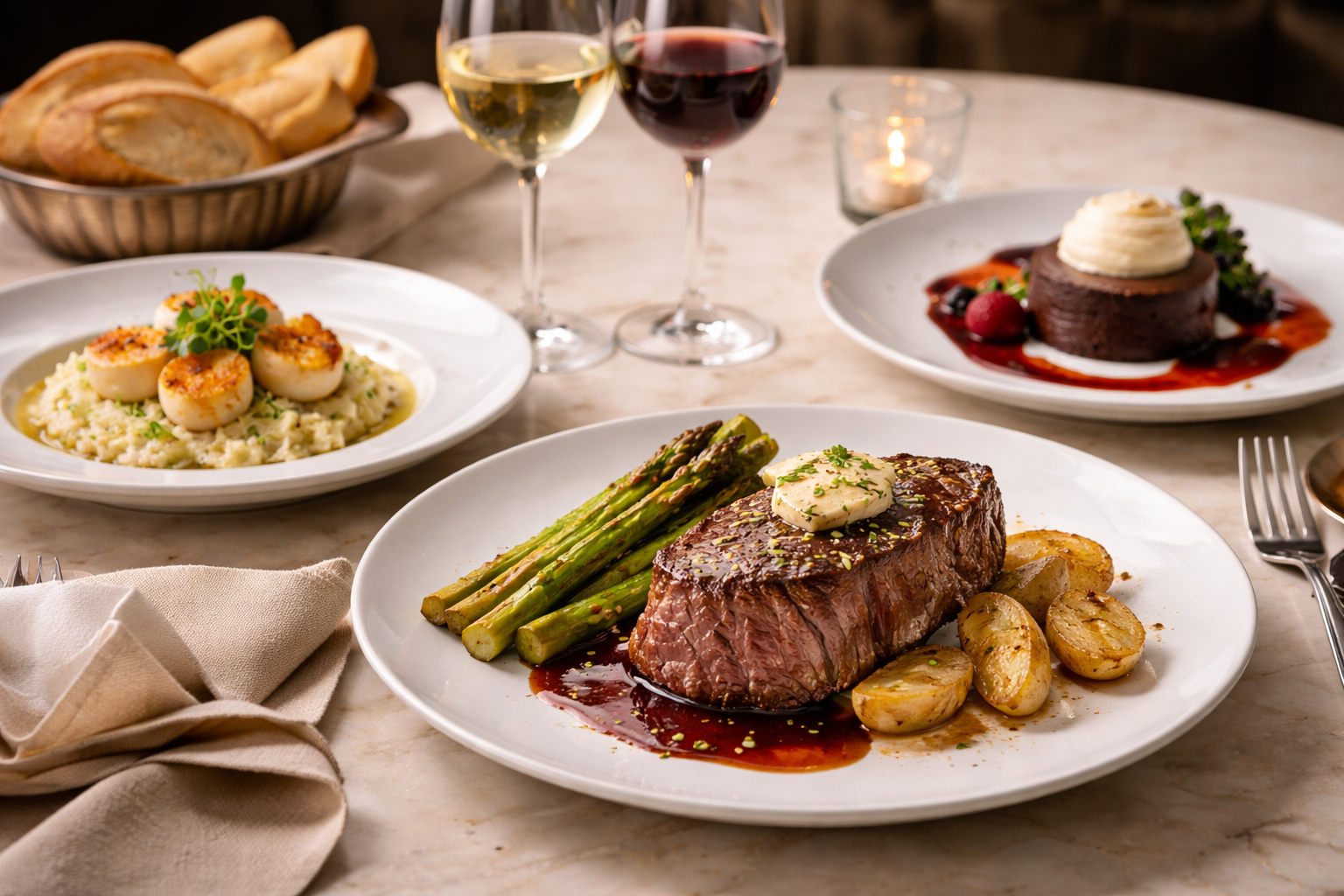
A prix fixe menu is one of those restaurant terms that many people recognize, but fewer fully understand. Guests often associate it with fine dining, holiday specials, or chef-driven tasting experiences. Operators, on the other hand, tend to see it through a different lens: service flow, menu engineering, food cost control, and average check growth.

Both perspectives are valid. A prix fixe menu can absolutely create a more memorable dining experience, but its real value for a restaurant goes much deeper than presentation. When structured well, it can simplify ordering, improve kitchen execution, reduce waste, and make revenue more predictable. Toast and Lightspeed both describe fixed menus as a way for restaurants to better manage costs, streamline operations, and support profitability, not just create a polished guest experience.
That is exactly why prix fixe menus keep showing up across very different restaurant formats. They are not limited to white-tablecloth dining rooms anymore. You now see them in lunch service, brunch, wine bars, pop-ups, seasonal promotions, date-night specials, and Restaurant Week programs. In many cases, the appeal is the same: fewer decisions for the guest, more control for the restaurant.
What Does Prix Fixe Mean?
“Prix fixe” is a French term meaning “fixed price.” In restaurant use, it refers to a meal offered at one set price rather than pricing each dish separately. Lightspeed defines it as a fixed-price, multi-course menu, and Webstaurant uses the same core definition in the article you shared.
Most prix fixe menus include multiple courses, often a starter, main course, and dessert. However, there is no rule that says it must always be exactly three courses. Some restaurants offer two-course lunch prix fixe menus, while others build extended multi-course experiences for dinner. Michelin’s restaurant coverage also reflects that range, with examples that span three-course prix fixe service as well as longer tasting-style formats.
Prix Fixe vs. À La Carte vs. Tasting Menu
This is where many restaurant articles stay too shallow. If you want to explain prix fixe well, you need to distinguish it from two formats it is constantly confused with: à la carte and tasting menus.
À la carte means dishes are ordered individually and priced separately. That gives guests maximum flexibility, but it also introduces more decision-making, more ticket variation, and often more operational complexity. Lightspeed specifically contrasts prix fixe with à la carte ordering in this way.
A tasting menu is related, but not always the same thing. A tasting menu is usually more chef-driven, more sequential, and more focused on showcasing technique, ingredients, or a culinary point of view across several smaller courses. Some tasting menus are also fixed-price, but not every prix fixe menu is a tasting menu. In practice, a neighborhood restaurant offering “3 courses for $39” is usually running a prix fixe menu, while a longer curated progression with highly controlled pacing is more likely to be presented as a tasting menu. Michelin’s editorial coverage shows that restaurants and diners often compare the overlap between tasting and à la carte offerings, which reinforces how distinct these structures can be from one another.
For operators, the difference matters because the guest expectation is different. A prix fixe menu often promises value, simplicity, and cohesion. A tasting menu promises curation, progression, and usually a more immersive dining experience.
How a Prix Fixe Menu Actually Works
At the guest level, the concept is simple: one price, several courses, limited choices. But from an operations standpoint, there are multiple ways a prix fixe menu can be built.
A restaurant may offer a fully predetermined menu selected by the chef, with every guest receiving the same sequence. Or it may offer a structured choice model, where guests choose one item from each course category. Many restaurants use the second approach because it preserves some guest flexibility while still keeping the menu tight and predictable. The Webstaurant article mentions this structure, and Lightspeed’s restaurant guidance aligns with that general format.
The best prix fixe menus usually do three things at once. First, they limit the number of decision points for the guest. Second, they standardize a meaningful part of kitchen production. Third, they create a value frame that makes the total offer feel more intentional than simply ordering individual plates. That structure is one reason fixed menus can be especially effective during holidays, high-volume periods, or promotional weeks. Toast notes that fixed menus can help optimize operations and support smoother service, while restaurant industry guidance also links streamlined menus to more efficient execution and lower waste.
Why Restaurants Use Prix Fixe Menus
The guest-facing reason is easy to understand: prix fixe feels curated. It can make a dinner feel more complete and more occasion-worthy. But operators usually adopt it because it solves business problems. Because a prix fixe menu narrows the number of dishes leaving the kitchen, it becomes easier for chefs to maintain consistency across stations using core cooking equipment such as commercial ranges.
One of the biggest advantages is menu simplification. Fewer choices reduce friction for the guest and create more predictable ordering patterns for the kitchen. Menu psychology resources routinely point out that limiting choices can reduce decision fatigue, and Webstaurant’s own menu engineering content makes a similar point about helping customers choose more quickly.
Another major benefit is cost control. When you know that most guests will be choosing from a narrow group of dishes, forecasting becomes easier. Purchasing gets tighter. Prep gets cleaner. Cross-utilization improves. Waste often drops because the restaurant is producing against a more controlled mix. The National Restaurant Association’s food waste guidance emphasizes menu engineering and portion planning as practical ways to reduce waste, and prix fixe menus fit that logic well when they are built around overlapping ingredients and stable prep systems.
A well-designed prix fixe menu can also improve back-of-house timing by allowing the team to batch-prep and finish items more efficiently with the help of dependable commercial ovens.
Prix fixe menus can also increase average guest spend. That does not mean they always increase profit automatically, but they can raise the total check by bundling courses a guest might not have ordered individually. Toast’s restaurant pricing materials note that fixed-price and tasting-style offerings can streamline cost structure while encouraging a fuller purchase.
Then there is pace. In busy services, especially during holidays, Restaurant Week, or pre-theater dining windows, a tighter menu helps restaurants move more deliberately. That matters not only to the kitchen but also to table turn strategy and service consistency.
When Prix Fixe Menus Work Best
Not every restaurant should run a prix fixe menu every day. But there are certain moments when the format tends to perform especially well.
Holiday service is one of the clearest examples. Valentine’s Day, Mother’s Day, New Year’s Eve, and similar occasions often bring high reservation demand and strong guest willingness to commit to a planned experience. In that setting, prix fixe reduces kitchen chaos and sets expectations in advance. The Webstaurant piece correctly identifies special occasions as one of the strongest use cases.
Prix fixe can also work well for slower periods. A restaurant that struggles on certain weeknights may use a fixed menu to create a value-driven reason to visit. Toast and Lightspeed both describe fixed menus as adaptable tools, not just formal-dining relics. That means a restaurant can use them as a tactical promotion, not only as a permanent identity marker.
Chef-led concepts, tasting-forward restaurants, pop-ups, wine bars, and intimate dining rooms also tend to benefit from prix fixe because the structure supports storytelling and kitchen discipline at the same time. Pop-up restaurant guidance from Lightspeed notes that limited fixed-price menus are especially common in short-term or themed concepts.
When Prix Fixe Menus Can Backfire
This is where many surface-level articles are too optimistic. A prix fixe menu is not automatically a smart move.
The first risk is pricing mismatch. If the offer feels too expensive relative to the guest’s perceived freedom of choice, it can suppress conversions. Some diners do not want a curated experience. They want control. If your audience is highly customization-driven, fixed menus may create friction instead of excitement. Webstaurant mentions financial commitment as a downside, and that point is valid.
Restaurants offering multi-course prix fixe service should also account for the added pressure on cleaning and reset speed, since more courses often mean heavier dependence on high-capacity commercial dishwashers.
The second risk is food-cost volatility. Fixed-price offers can get squeezed when ingredient costs move quickly and the menu is not engineered carefully. If your prix fixe relies on unstable proteins, imported specialty ingredients, or dishes with weak margin structure, the fixed price can stop working very fast. Restaurant pricing guidance from Toast and the National Restaurant Association both reinforce the need to base menu pricing on real costing, not guesswork.
The third risk is operational mismatch. Some restaurants assume prix fixe automatically makes service easier, but that only happens when the menu is designed for execution. If every course requires last-minute finishing, special equipment bottlenecks, or complicated modifications, the format may create more stress instead of less. A fixed menu is only operationally efficient when the production system behind it is also disciplined.
How to Price a Prix Fixe Menu Correctly
A smart prix fixe menu is not built by adding together three menu prices and applying a small discount. That is the lazy version. The better approach is to engineer it around contribution margin, prep overlap, and perceived value.
Start with your real plate costs. Know the cost of each dish, including garnishes, bread service, sauces, and any included extras that operators sometimes forget to account for. Toast’s pricing guidance is clear that menu pricing has to be grounded in recipe costing, total dish cost, and target margin.
Then balance the menu. Not every course needs the same margin profile. In many successful prix fixe menus, the appetizer and dessert are relatively cost-efficient while the main course carries the emotional weight of the offer. That lets the full menu feel generous without destroying profitability. The guest remembers the value of the whole experience, not just the cost structure of each plate.
Next, design for overlap. The best prix fixe menus often re-use components intelligently across courses. That does not mean serving repetitive food. It means engineering shared ingredients, sauces, prep items, and seasonal products in ways the guest does not experience as redundancy. This is one of the clearest ways to improve both purchasing efficiency and waste control.
Finally, think in terms of perceived deal value, not discounting alone. A strong prix fixe menu should feel like a thoughtful package, not like a clearance sale. That distinction matters. The more intentional the menu feels, the more pricing power the restaurant retains.
How to Build a Good Prix Fixe Menu
A strong prix fixe menu is cohesive. It should feel like a meal, not a random bundle.
That starts with theme and flow. The dishes should make sense together in terms of cuisine, season, pacing, and appetite progression. Webstaurant gestures toward this idea by recommending thematic continuity, but in practice the concept deserves more weight than the original article gives it.
Choice architecture also matters. Too many options defeat the purpose. Too few can feel rigid. For many restaurants, the sweet spot is a small number of choices per course, enough to accommodate preferences without exploding complexity. Menu psychology principles support this balance by showing that too many choices can increase stress rather than satisfaction.
The main course should anchor the menu. That is usually where the guest evaluates value most intensely. If the entrée feels weak, the entire prix fixe offer feels weak, even if the rest of the menu is well designed.
It is also wise to decide in advance how substitutions will work. A fixed menu can lose its operational advantage quickly if the staff improvises endless swaps. The more structured your substitution policy is, the easier the service becomes.
Should Every Restaurant Offer One?
No. Some restaurants are better off staying mostly à la carte and using prix fixe only at strategic times. Others may benefit from offering a lunch prix fixe, a pre-theater menu, a date-night menu, or a seasonal chef’s menu rather than forcing the entire concept into fixed-price dining.
The best decision depends on your concept, guest expectations, labor model, and food-cost stability. If your menu identity is built around wide variety and personalization, a permanent prix fixe format may feel restrictive. But if your restaurant performs best when the kitchen controls the experience more tightly, prix fixe can be a powerful tool.