
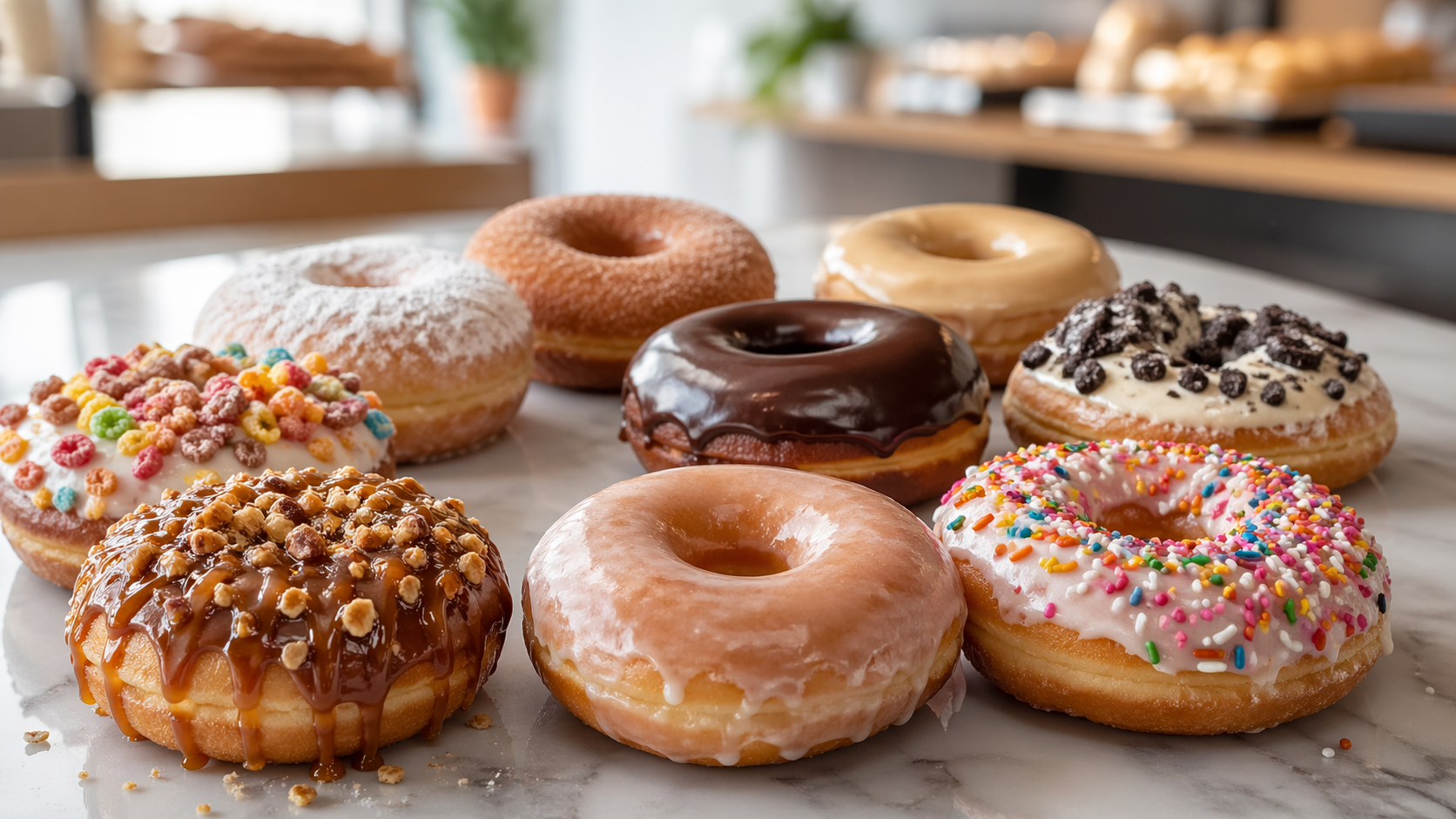
Donuts may start with fried or baked dough, but the topping is what usually makes the customer stop, look, choose, and buy. A plain donut can be excellent when the dough is fresh and well-made, but a glossy glaze, colorful sprinkle finish, rich chocolate dip, maple icing, cinnamon sugar coating, crushed cookie topping, or seasonal cereal garnish can turn that same donut into a menu item with stronger visual appeal and better selling power.

For donut shops, bakeries, cafes, supermarkets, convenience stores, and commercial kitchens, donut toppings are not just decoration. They influence flavor, texture, food cost, production speed, shelf appeal, menu variety, social media performance, and customer perception. The right topping strategy can help a bakery sell more classic donuts, create premium limited-time offers, reduce waste by cross-utilizing ingredients, and build a display case that feels abundant and exciting.
This is why a serious donut program should not only ask, “What toppings taste good?” It should also ask: Which toppings are easiest to apply during busy production? Which ones hold up in the display case? Which ones create visual contrast? Which toppings work for everyday bestsellers? Which ones are better for premium specials? And which ones require refrigeration, careful storage, or better prep workflow?
The Webstaurant article focuses on foundational toppings like donut glaze, vanilla icing, sprinkles, chocolate icing, powdered sugar, maple icing, cinnamon sugar, sanding sugar, cereal, and crushed Oreos. Those are still the right starting point for any donut business. But if Atlantic wants to publish a stronger article, the opportunity is to go beyond a basic list and turn the topic into a complete foodservice guide: classic toppings, premium toppings, seasonal ideas, texture strategy, storage tips, display guidance, production workflow, and equipment considerations.
For operators, this matters because bakery customers are increasingly drawn to comfort and nostalgia, but they also want novelty, texture, and limited-time excitement. The National Restaurant Association’s 2026 culinary forecast highlights comfort and nostalgia with a twist as an important menu direction, while bakery trend research points to growing interest in crunchy and crusty textures. Donuts are perfectly positioned for that combination: familiar enough to feel nostalgic, flexible enough to become creative, and visually strong enough to perform well in-store and online.
1. Classic Donut Glaze
Classic donut glaze is the foundation of almost every donut program. It is simple, familiar, affordable, fast to apply, and loved by a wide customer base. A standard glaze usually creates a thin, shiny coating that sets as the donut cools. It adds sweetness, moisture, and visual appeal without covering the character of the dough.
For a donut shop, glaze is important because it supports speed. Freshly fried yeast donuts can be dipped or coated in batches, allowing staff to produce large quantities quickly during morning rush. Glazed donuts are also easy for customers to understand. They do not need explanation, and they work across breakfast, coffee service, grab-and-go displays, and bulk orders.
A great glazed donut depends on timing. If the donut is too hot, the glaze can become too thin and slide off. If the donut is too cool, the glaze may not set evenly. The goal is a smooth, slightly translucent coating that gives the donut a clean shine.
Best for: yeast donuts, donut holes, crullers, honey buns, classic shop displays
Flavor profile: clean sweetness, light vanilla or neutral sugar flavor
Texture: thin, smooth, slightly crisp once set
Operational advantage: fast production and broad customer appeal
For Atlantic, this section creates a natural internal link to Bakery Equipment, Commercial Fryers, Commercial Cooling Racks, and Commercial Prep Tables.
2. Vanilla Donut Icing
Vanilla icing gives donuts a sweeter, more opaque, more decorative finish than a classic glaze. It is usually thicker than glaze but thinner than frosting, making it ideal for dipping, spreading, or adding toppings before the surface sets.
Vanilla icing is especially useful because it acts like a blank canvas. It can hold sprinkles, sanding sugar, cereal, cookie crumbs, nuts, coconut, candy pieces, or seasonal decorations. It also gives donut shops a clean visual base for colorful displays. A white vanilla-iced donut with rainbow sprinkles, for example, is one of the most recognizable donut case items in the United States.
The flavor should be sweet, creamy, and aromatic without tasting artificial or heavy. For bakeries, vanilla icing works well because it can be used on ring donuts, bar donuts, filled donuts, cake donuts, and sour cream donuts.
Best for: yeast rings, bar donuts, sour cream donuts, cake donuts, sprinkle donuts
Flavor profile: sweet, creamy, vanilla-forward
Texture: smooth, glossy, slightly thicker than glaze
Operational advantage: ideal base for decorative toppings
This is a good place to link to Bakery Display Cases, Bakery Equipment, and Commercial Refrigeration, especially if you discuss holding iced products and maintaining freshness.
3. Chocolate Donut Icing
Chocolate icing is one of the most important donut toppings because it offers strong color contrast, familiar flavor, and wide customer appeal. A glossy chocolate-dipped donut immediately stands out in a display case, especially when paired with sprinkles, peanuts, cookie crumbs, chocolate curls, or cream filling.
Unlike thick frosting or ganache, donut icing should usually be thin enough to dip cleanly but rich enough to deliver a clear chocolate flavor. For high-volume production, consistency is critical. If the chocolate icing is too thick, it slows down dipping and creates an uneven finish. If it is too thin, it may run off or look weak on the donut.
Chocolate icing works especially well for Boston cream donuts, Bavarian cream donuts, long johns, chocolate cake donuts, and classic chocolate sprinkle donuts. It also helps operators create premium-looking donuts without adding overly complicated ingredients.
Best for: Boston cream, Bavarian cream, chocolate long johns, sprinkle donuts, cake donuts
Flavor profile: sweet, cocoa-rich, familiar, indulgent
Texture: glossy, smooth, slightly firm once set
Operational advantage: strong visual contrast and high customer recognition
This section can link naturally to Commercial Mixers, Bakery Equipment, Commercial Prep Tables, and Bakery Display Cases.
4. Maple Icing
Maple icing gives donuts a warmer, more nostalgic flavor profile. It is especially strong for fall menus, but it can sell year-round when paired with bacon, cinnamon, apple, pecans, or long john formats.
Maple icing is popular because it feels familiar and comforting. It has a deeper flavor than plain glaze and a more seasonal identity than vanilla or chocolate. For a bakery, maple icing can be used to create both classic and premium items. A maple-glazed long john is a staple. A maple bacon donut can become a high-margin specialty product. A maple pecan cake donut can work well for fall promotions.
The best maple icing should taste like maple, caramel, vanilla, and brown sugar rather than plain sugar with color added. It should be pourable or dippable when warm and set into a smooth finish.
Best for: maple long johns, apple fritters, cinnamon rolls, fall donuts, bacon donuts
Flavor profile: maple, caramel, brown sugar, vanilla, warm spice
Texture: smooth, syrupy, glossy
Operational advantage: strong seasonal menu potential
This is a smart place to link to Commercial Ovens, Bakery Equipment, Commercial Fryers, and Food Prep Equipment.
5. Powdered Sugar
Powdered sugar is one of the simplest donut toppings, but it is still extremely useful in bakery production. It creates a soft, delicate finish and works especially well with fried pastries such as beignets, zeppole, crullers, cake donuts, and filled donuts.
Unlike glaze or icing, powdered sugar does not require heating, dipping, or setting time. It can be applied quickly by dusting, tossing, or sifting. However, it also requires care because it can absorb moisture and disappear into the surface if applied too early or held too long.
Powdered sugar is best applied when the donut is slightly warm but not wet. If the donut is too hot or oily, the sugar may melt into the surface. If the donut is completely cold and dry, the coating may not adhere well.
Best for: beignets, zeppole, cake donuts, crullers, filled donuts
Flavor profile: soft sweetness, less intense than granulated sugar
Texture: fine, powdery, delicate
Operational advantage: simple, inexpensive, fast to apply
This section can link to Commercial Fryers, Bakery Equipment, Commercial Prep Tables, and Food Prep Equipment.
6. Cinnamon Sugar
Cinnamon sugar is one of the best toppings for bakeries because it is inexpensive, aromatic, easy to apply, and loved by customers. It creates a warm, nostalgic flavor that works especially well with cake donuts, apple cider donuts, churros, twists, and sour cream donuts.
The key is application timing. Cinnamon sugar sticks best when the donut is still warm and lightly moist from frying. If the donut has cooled too much, the sugar may fall off. Some operators brush the donut lightly with melted butter before rolling it in cinnamon sugar, especially for baked donuts or pastries.
Cinnamon sugar also gives donut shops seasonal flexibility. It can be positioned as a fall flavor, a breakfast flavor, or a classic comfort flavor. It pairs well with apple, pumpkin, maple, vanilla, caramel, and cream cheese fillings.
Best for: cake donuts, apple cider donuts, churros, twists, sour cream donuts
Flavor profile: sweet, warm, lightly spicy, nostalgic
Texture: granular, slightly crisp
Operational advantage: low cost and strong aroma
This section creates a natural internal link to Commercial Fryers, Commercial Ovens, Bakery Equipment, and Commercial Mixers.
7. Sprinkles
Sprinkles are one of the most important visual toppings in a donut case. They add color, texture, and instant recognition. For many customers, especially families and children, a sprinkle donut is not just a flavor choice. It is an emotional choice.
Sprinkles work best when applied to wet icing or glaze before it sets. They should stick cleanly without sliding, clumping, or bleeding color into the icing. Rainbow sprinkles are the standard option, but chocolate sprinkles, seasonal shapes, holiday colors, confetti sprinkles, and themed blends can help bakeries create fresh-looking displays without changing the dough or icing formula.
The advantage of sprinkles is that they make the same base donut feel different. A bakery can use vanilla icing and rotate sprinkle colors for holidays, local events, sports teams, school celebrations, birthdays, and limited-time promotions.
Best for: vanilla iced donuts, chocolate iced donuts, kids’ donuts, seasonal donuts
Flavor profile: sweet, sometimes vanilla or chocolate
Texture: light crunch
Operational advantage: easy visual variety and seasonal customization
This is a good place for Atlantic to link to Bakery Display Cases, Bakery Equipment, and Food Prep Equipment.
8. Sanding Sugar
Sanding sugar is a decorative sugar with larger crystals that reflect light and create sparkle. It is often used when a bakery wants a brighter, more polished finish than regular granulated sugar. It can be applied in many colors and is especially useful for seasonal or event-based donuts.
Unlike powdered sugar, sanding sugar is mainly about color, sparkle, and texture. It can make a donut look more premium or more festive. Fine sanding sugar offers a lighter crunch, while coarse sanding sugar gives a more noticeable crystal texture.
Sanding sugar works well on iced donuts, holiday donuts, birthday donuts, and themed assortments. It can also be used with colored glazes to create strong display appeal.
Best for: holiday donuts, party donuts, vanilla iced donuts, chocolate iced donuts
Flavor profile: simple sweetness
Texture: crunchy, sparkly, crystalline
Operational advantage: strong visual effect with simple application
This section can link naturally to Bakery Display Cases, Bakery Equipment, and Commercial Prep Tables.
9. Cereal Toppings
Cereal toppings are one of the easiest ways to make donuts feel fun, modern, and social-media friendly. They add crunch, color, nostalgia, and recognizable flavor. A donut topped with Fruity Pebbles, Cinnamon Toast Crunch, Cocoa Pebbles, Froot Loops, or cereal marshmallows can instantly stand out in a display case.
Cereal also fits the 2026 direction of comfort and nostalgia with a twist. Customers recognize cereal flavors from childhood, but when they appear on donuts, they feel playful and new. This makes cereal toppings especially valuable for limited-time offers, weekend specials, and social media posts.
The key issue is texture. Cereal can become stale or soft if applied too early or stored in a humid environment. It should be kept dry and added to wet icing close enough to service that it remains crisp.
Best for: colorful donuts, kids’ donuts, weekend specials, social media items
Flavor profile: fruity, chocolate, cinnamon, peanut butter, marshmallow, depending on cereal
Texture: crunchy, crisp
Operational advantage: low-cost novelty and high visual impact
This creates internal link opportunities for Bakery Display Cases, Commercial Shelving, Food Storage Containers, and Bakery Equipment.
10. Crushed Cookie Toppings
Crushed cookies, especially chocolate sandwich cookies, are a powerful donut topping because they add crunch, dark visual contrast, and familiar flavor. A vanilla-iced donut topped with crushed cookies looks premium without requiring complicated pastry work.
Cookie toppings work well with chocolate icing, vanilla icing, cream filling, Bavarian cream, cookies-and-cream frosting, and cake donuts. They can also be used as a finishing garnish for filled donuts, donut sundaes, or dessert boxes.
The biggest operational concern is moisture. Cookie crumbs can soften if applied too early or stored incorrectly. They should be kept dry and applied to icing while it is still tacky. For best presentation, use a mix of fine crumbs and slightly larger pieces.
Best for: cookies-and-cream donuts, chocolate cake donuts, filled donuts, gourmet donuts
Flavor profile: chocolate, vanilla cream, buttery cookie
Texture: crunchy, crumbly, rich
Operational advantage: familiar premium flavor and strong contrast
This is a strong place to link to Food Storage Containers, Commercial Prep Tables, Bakery Equipment, and Bakery Display Cases.
11. Crushed Nuts
Crushed nuts are one of the best ways to add a premium texture to donuts. Peanuts, almonds, pecans, walnuts, pistachios, and hazelnuts all work well depending on the icing and flavor profile. Nuts add crunch, richness, and a more adult flavor compared with candy or cereal toppings.
Peanuts work well with chocolate icing. Pecans pair beautifully with maple icing, caramel, cinnamon sugar, and apple flavors. Pistachios can give donuts a more upscale look, especially when paired with white chocolate, rose, raspberry, or honey. Hazelnuts work well with chocolate, mocha, and cream fillings.
Because nuts are a major allergen, bakeries need clear handling procedures. Cross-contact should be taken seriously, and nut toppings should be stored and applied carefully. If a bakery offers both nut and nut-free donuts, staff should use separate tools and clear labeling.
Best for: maple pecan donuts, chocolate peanut donuts, pistachio donuts, premium assortments
Flavor profile: nutty, rich, roasted, buttery
Texture: crunchy, dense
Operational advantage: premium perception and higher menu value
This section can link to Food Storage Containers, Commercial Shelving, Commercial Prep Tables, and Bakery Display Cases.
12. Bacon Toppings
Bacon toppings turn a sweet donut into a sweet-savory menu item. Maple bacon donuts are the most common version, but bacon can also work with chocolate, brown sugar, bourbon-style glaze, caramel, or spicy toppings.
For donut shops, bacon is attractive because it feels indulgent and premium. It can command a higher price than a standard glazed donut. It also photographs well and creates conversation. However, bacon adds more operational complexity than dry toppings. It must be cooked, cooled, chopped, held safely, and managed carefully during service.
If bacon is used as a topping, the bakery needs to think about food safety, refrigeration, and cross-utilization. Bacon should not be treated like sprinkles or dry cereal. It is a cooked animal product and should be handled with proper temperature control and sanitation practices.
Best for: maple bacon donuts, chocolate bacon donuts, brunch specials, premium donuts
Flavor profile: salty, smoky, savory, sweet contrast
Texture: crisp, chewy, meaty
Operational advantage: premium pricing and strong novelty appeal
This is one of the best sections for internal links to Commercial Griddles, Commercial Fryers, Commercial Refrigeration, Prep Tables, and Food Holding Equipment.
13. Fruit Toppings
Fruit toppings can make donuts feel fresher, brighter, and more seasonal. Strawberries, blueberries, raspberries, apples, bananas, peaches, cherries, and citrus zest can all be used depending on the donut style.
Fruit can be used in several ways: fresh sliced fruit, fruit compote, jam, jelly, curd, dehydrated fruit, freeze-dried fruit, or fruit glaze. Fresh fruit creates the strongest visual appeal but also has the shortest shelf life. Freeze-dried fruit gives color and flavor with better shelf stability. Compotes and jams are easier to use in filled donuts or drizzles.
Fruit toppings work especially well for cafes and bakeries that want a more artisanal or seasonal image. A strawberry shortcake donut, blueberry lemon donut, apple cinnamon donut, or raspberry white chocolate donut can feel more elevated than a basic sprinkle donut.
Best for: seasonal donuts, filled donuts, café displays, premium pastry-style donuts
Flavor profile: bright, sweet, tart, fresh
Texture: juicy, soft, crisp, or crunchy depending on format
Operational advantage: seasonal storytelling and premium appearance
This section can link naturally to Commercial Refrigeration, Bakery Display Cases, Food Prep Equipment, and Commercial Prep Tables.
14. Caramel and Dulce de Leche
Caramel and dulce de leche toppings add richness, shine, and a premium dessert feel. They pair well with chocolate, vanilla, cinnamon, apple, pecan, banana, sea salt, and coffee flavors.
Caramel can be used as a drizzle, dip, filling, or finishing stripe. Dulce de leche can be used in filled donuts, Latin-inspired bakery items, or premium seasonal products. Both create a sense of indulgence and can help turn a standard donut into a dessert-style item.
The operational challenge is consistency. Caramel that is too thin may run off. Caramel that is too thick may be difficult to apply during production. Holding temperature and viscosity matter, especially in high-volume bakeries.
Best for: caramel apple donuts, salted caramel donuts, dulce de leche filled donuts, premium boxes
Flavor profile: buttery, cooked sugar, toffee, creamy
Texture: sticky, glossy, smooth
Operational advantage: premium flavor and strong dessert appeal
This gives Atlantic a reason to link to Commercial Warmers, Commercial Mixers, Bakery Equipment, and Commercial Prep Tables.
15. Chocolate Chips, Curls, and Shavings
Chocolate pieces create texture and visual appeal without requiring a fully chocolate-covered donut. Mini chips, chocolate curls, chocolate shavings, white chocolate pieces, and dark chocolate flakes all work well on iced donuts.
Chocolate toppings are especially useful because they can make a donut look more premium with very little prep. They also pair with many bases: vanilla icing, chocolate icing, maple icing, peanut butter drizzle, caramel, strawberry, banana, coffee, and cream fillings.
For display, chocolate curls and shavings often look more upscale than standard chips. Mini chips work better for even coverage and easier eating. Larger chunks can feel indulgent but may fall off more easily if the icing is not tacky enough.
Best for: chocolate lovers’ donuts, filled donuts, mocha donuts, premium dessert donuts
Flavor profile: cocoa, sweet, bitter, creamy depending on chocolate type
Texture: firm, crisp, melt-in-mouth
Operational advantage: easy premiumization
This section can link to Bakery Display Cases, Commercial Refrigeration, Food Storage Containers, and Bakery Equipment.
16. Coconut
Coconut is a classic topping that gives donuts texture, aroma, and a slightly tropical flavor. It can be used toasted or untoasted. Toasted coconut brings deeper flavor and crunch, while untoasted coconut gives a softer, sweeter finish.
Coconut works well with chocolate icing, vanilla icing, caramel, pineapple, lime, mango, almond, and cream fillings. It is especially useful for bakeries that want to create tropical, spring, summer, or holiday donut flavors.
Like nuts, coconut can be an allergen concern for some customers, so clear labeling is important. It should also be stored dry to prevent clumping.
Best for: chocolate coconut donuts, tropical donuts, vanilla coconut donuts, toasted coconut cake donuts
Flavor profile: sweet, nutty, tropical
Texture: flaky, chewy, crisp when toasted
Operational advantage: simple topping with strong flavor identity
This is a good place to link to Commercial Ovens, Food Storage Containers, Bakery Equipment, and Commercial Prep Tables.
17. Candy Pieces
Candy toppings are useful for colorful, high-impact donuts. Chopped peanut butter cups, chocolate candies, gummy pieces, marshmallows, toffee bits, mini candies, and seasonal candy pieces can all be used to create playful or indulgent donuts.
Candy donuts work especially well for limited-time promotions, children’s menus, holidays, and social media. They can also help bakeries use seasonal candy themes around Halloween, Valentine’s Day, Easter, Christmas, or local events.
The biggest issue is balance. Too much candy can make a donut hard to eat or overly sweet. A good candy donut should still feel like a donut first, not just candy piled on dough.
Best for: holiday donuts, kids’ donuts, premium dessert donuts, limited-time offers
Flavor profile: varies by candy; usually sweet, chocolatey, fruity, or caramel-like
Texture: crunchy, chewy, soft, or crisp
Operational advantage: strong visual appeal and easy LTO creation
This section can link to Bakery Display Cases, Commercial Shelving, Food Storage Containers, and Bakery Equipment.
18. Cream Cheese Icing
Cream cheese icing gives donuts a tangy, creamy flavor that balances sweetness. It works especially well with carrot cake donuts, red velvet donuts, cinnamon rolls, pumpkin donuts, apple donuts, and berry flavors.
Compared with simple glaze or icing, cream cheese icing may require more careful storage and food safety planning depending on formulation. Bakeries should follow supplier instructions, local health codes, and proper refrigeration guidelines when using dairy-based or potentially time/temperature sensitive toppings and fillings.
Cream cheese icing is valuable because it allows a bakery to create pastry-style donuts that feel closer to cakes, cupcakes, or premium desserts.
Best for: red velvet donuts, carrot cake donuts, pumpkin donuts, cinnamon rolls, fruit donuts
Flavor profile: creamy, tangy, sweet
Texture: smooth, thicker than glaze
Operational advantage: premium dessert positioning
This section is excellent for links to Commercial Refrigeration, Bakery Display Cases, Commercial Mixers, and Bakery Equipment.
19. Whipped Toppings and Cream Finishes
Whipped toppings can make donuts feel lighter, more modern, and more dessert-like. They are especially useful for filled donuts, layered donuts, donut sundaes, and café-style dessert presentations.
Whipped toppings can be plain, vanilla, chocolate, coffee-flavored, fruit-flavored, or stabilized for display. They pair well with fresh fruit, chocolate shavings, cookie crumbs, caramel, and nuts.
For operators, the important issue is holding. Whipped toppings need proper temperature control and may not be suitable for every display environment. If the bakery has a refrigerated display case, whipped-topped donuts become more realistic as a menu option.
Best for: cream-filled donuts, dessert donuts, café specials, fruit donuts
Flavor profile: light, creamy, sweet
Texture: airy, soft
Operational advantage: dessert-style presentation
This is a strong internal link opportunity for Commercial Refrigeration, Refrigerated Display Cases, Bakery Display Cases, and Commercial Mixers.
20. Seasonal and Limited-Time Donut Toppings
Seasonal toppings are one of the best ways for a donut shop to create repeat visits. The base donut can stay the same, but toppings can change monthly, weekly, or around holidays.
For example, fall donuts can use maple icing, cinnamon sugar, apple filling, pumpkin spice, pecans, and caramel. Winter donuts can use peppermint, chocolate, marshmallow, powdered sugar, and white icing. Spring donuts can use lemon glaze, berry toppings, pastel sanding sugar, and floral flavors. Summer donuts can use coconut, tropical fruit, cereal, and bright glazes.
Limited-time donuts work because they create urgency. Customers know they may not be available forever. They also give businesses new content for social media, email marketing, and local promotions.
Seasonal topping ideas:
Fall: maple pecan, apple cinnamon, pumpkin spice, caramel
Winter: peppermint chocolate, hot cocoa, powdered sugar, white chocolate
Spring: lemon blueberry, strawberry cream, pastel sprinkles
Summer: coconut lime, mango glaze, cereal crunch, berry shortcake
Holiday: red velvet, candy cane, heart sprinkles, patriotic sanding sugar
This section can link to Bakery Display Cases, Bakery Equipment, Commercial Refrigeration, and Food Prep Equipment.
How to Choose the Right Donut Toppings for Your Business
The best donut topping strategy depends on your business model. A small donut shop needs toppings that are easy to apply and easy to sell. A café may want more premium toppings that pair with coffee. A supermarket bakery may need toppings that hold well in display cases. A catering business may need toppings that travel well. A high-volume bakery may prioritize production speed and ingredient consistency.
A good donut menu usually includes three levels of toppings.
First, you need everyday classics. These include glaze, chocolate icing, vanilla icing, powdered sugar, cinnamon sugar, and sprinkles. These toppings create the foundation of the menu.
Second, you need premium upgrades. These include maple icing, crushed cookies, nuts, fruit, caramel, cream cheese icing, and chocolate curls. These toppings help justify higher prices.
Third, you need limited-time toppings. These include seasonal cereal, holiday sprinkles, specialty candy, fruit glazes, and themed toppings. These keep the menu fresh and give customers a reason to return.
The goal is not to stock every topping possible. The goal is to build a topping system that supports variety without creating chaos in the kitchen.
Donut Topping Strategy by Business Type
A traditional donut shop should focus on speed, volume, and familiar favorites. The strongest mix is glaze, chocolate icing, vanilla icing, sprinkles, maple icing, powdered sugar, cinnamon sugar, and a few premium toppings like cookies or nuts.
A café should focus on toppings that pair with coffee. Chocolate, cinnamon sugar, maple, caramel, vanilla, mocha, nuts, and cream fillings work especially well. Café donuts can feel more artisanal and less mass-market.
A bakery should use toppings that support seasonal pastry identity. Fruit, cream cheese icing, powdered sugar, toasted nuts, chocolate shavings, and specialty glazes work well.
A supermarket bakery should prioritize toppings with good shelf appeal and stability. Glaze, icing, sprinkles, sanding sugar, chocolate, maple, and powdered sugar are practical choices.
A convenience store should use toppings that are recognizable, durable, and easy to sell quickly. Glazed, chocolate, powdered sugar, cinnamon sugar, and filled donuts are usually stronger than delicate fresh fruit toppings.
A catering operation should choose toppings that travel well. Avoid toppings that melt, slide, soften quickly, or require strict display conditions unless the event setup supports them.
Donut Display Tips
A donut display should be designed like a visual menu. Customers often decide with their eyes before reading the flavor name. The best displays use contrast: light and dark, glossy and matte, colorful and neutral, simple and premium.
Place classic glazed donuts where customers can see abundance. Use colorful donuts as attention anchors. Put premium donuts in clean rows or special trays. Avoid mixing strong allergens like nuts too casually with other donuts. Keep messy toppings from contaminating cleaner products.
A strong donut display usually includes:
Classic glazed donuts for familiarity
Chocolate iced donuts for contrast
Sprinkle donuts for color
Powdered sugar or cinnamon sugar for texture
Maple or caramel donuts for warmth
Premium toppings for higher ticket value
Seasonal donuts for urgency
This is where Bakery Display Cases become important. Donuts need to look fresh, organized, and appealing throughout service. A poor display can make good donuts look average. A clean, well-lit display can make simple donuts feel more valuable.
Storage and Food Safety Considerations
Not every donut topping has the same storage needs. Dry toppings like sprinkles, sanding sugar, cereal, cookie crumbs, and nuts should be stored in sealed containers away from moisture. Wet toppings like glaze, icing, caramel, cream cheese icing, fruit compote, and whipped toppings may require different handling depending on ingredients and supplier instructions.
FDA’s Food Code is a model used for food safety practices in retail and foodservice environments, and operators should follow local health department requirements for time and temperature control. Bakery items may have different storage conditions depending on formulation, water activity, fillings, dairy content, and whether the product is shelf-stable or refrigerated.
As a general operational rule, donut shops should separate dry storage, refrigerated storage, and production areas clearly. Ingredients should be labeled, dated, sealed, and rotated. Toppings that absorb moisture should not sit open near steam, fryers, sinks, or humid prep areas. Refrigerated toppings should not be left at room temperature longer than allowed by food safety rules and supplier guidelines.
This section is a perfect opportunity to link to Commercial Refrigeration, Food Storage Containers, Commercial Shelving, Prep Tables, and Commercial Sinks.
Equipment That Supports a Better Donut Topping Program
A donut topping program is not only about ingredients. It also depends on having the right workflow and equipment. If the kitchen is disorganized, toppings become messy, production slows down, and consistency suffers.
For high-volume donut production, Commercial Fryers are essential for consistent dough quality. Commercial Mixers help with dough, icings, fillings, and batters. Commercial Prep Tables give staff space to dip, decorate, sort, and finish donuts. Bakery Display Cases help present finished products in a way that increases impulse purchases. Commercial Refrigeration supports dairy-based toppings, fruit, fillings, and prepared ingredients. Food Storage Containers help keep dry toppings fresh and organized.
The best donut operations are built around a clean production flow:
Mix the dough
Fry or bake the donuts
Cool properly
Dip, glaze, or coat
Add toppings before icing sets
Move finished donuts to display
Store backup toppings correctly
Refresh the case throughout service
When the workflow is smooth, the donut shop can offer more variety without slowing down service.
Best Donut Toppings by Goal
For speed: glaze, chocolate icing, vanilla icing, powdered sugar, cinnamon sugar
For visual appeal: sprinkles, sanding sugar, cereal, chocolate drizzle, fruit
For premium pricing: nuts, caramel, maple bacon, cream cheese icing, fresh fruit, chocolate curls
For kids: rainbow sprinkles, cereal, candy pieces, colored sanding sugar
For coffee pairing: cinnamon sugar, maple, chocolate, caramel, vanilla, mocha
For seasonal menus: pumpkin spice, apple cinnamon, peppermint, berry, lemon, coconut
For texture: cereal, crushed cookies, nuts, sanding sugar, toasted coconut
For nostalgia: glazed, powdered sugar, cinnamon sugar, cereal, sprinkles
For social media: cereal, candy, fruit, bold colors, limited-time toppings
Common Donut Topping Mistakes
One of the biggest mistakes is adding too many toppings without a clear system. A donut with chocolate icing, caramel, cereal, candy, whipped cream, and sprinkles may look exciting at first, but it can be messy, expensive, and difficult to eat. The best premium donuts usually have a clear flavor direction.
Another mistake is applying toppings at the wrong time. Sprinkles, cereal, and cookie crumbs need wet icing to stick. Powdered sugar should be applied when the donut is warm but not too hot or oily. Fresh fruit should be added close to service. Dry toppings should not be stored near humidity.
A third mistake is ignoring display life. A topping may look great for 10 minutes but poor after two hours. If a donut is going into a display case, it should be tested for how it looks and tastes over time.
A fourth mistake is not separating allergens. Nuts, peanut toppings, and certain candy toppings require careful handling and clear labeling.
Finally, many shops underuse cross-utilization. The same topping can appear across multiple products. Maple icing can work on rings, long johns, fritters, and cinnamon rolls. Cookie crumbs can work on donuts, cupcakes, milkshakes, and dessert cups. Fruit compote can work in filled donuts, pastries, parfaits, and plated desserts.
FAQ: Donut Toppings
What are the most popular donut toppings?
The most popular donut toppings include classic glaze, chocolate icing, vanilla icing, sprinkles, powdered sugar, maple icing, cinnamon sugar, cereal, crushed cookies, and sanding sugar. These toppings work because they are familiar, easy to apply, and visually appealing.
What toppings should every donut shop have?
Every donut shop should start with glaze, chocolate icing, vanilla icing, sprinkles, powdered sugar, cinnamon sugar, and maple icing. Once those are covered, the shop can add premium toppings like crushed cookies, nuts, caramel, fruit, and cereal.
What toppings make donuts look more premium?
Nuts, chocolate curls, caramel drizzle, fresh fruit, cream cheese icing, toasted coconut, pistachios, and seasonal garnishes can make donuts look more premium. Presentation also matters. A clean, organized Bakery Display Case can make even simple donuts look more valuable.
What toppings are best for high-volume donut production?
Classic glaze, chocolate icing, vanilla icing, powdered sugar, cinnamon sugar, and sprinkles are best for high-volume production because they are fast, familiar, and easy to apply consistently.
What toppings are best for seasonal donuts?
Maple, cinnamon sugar, apple, pumpkin spice, pecans, peppermint, berry glazes, lemon, coconut, and holiday sprinkles are strong seasonal choices. The best seasonal toppings should connect to customer expectations for that time of year.
What toppings are best for social media?
Cereal, colorful sprinkles, sanding sugar, candy pieces, fresh fruit, chocolate drizzle, and bold limited-time flavors work well for social media because they create visual impact.
How should donut toppings be stored?
Dry toppings should be stored in sealed containers away from moisture. Refrigerated toppings, dairy-based toppings, fruit toppings, and certain fillings should be stored according to supplier instructions and local food safety requirements. This is where Commercial Refrigeration and organized Food Storage Containers are important.
How can a donut shop reduce topping waste?
Use cross-utilization. Choose toppings that work across several menu items. For example, crushed cookies can be used on donuts, milkshakes, and dessert cups. Maple icing can be used on donuts, cinnamon rolls, and fritters. Fruit compote can be used in filled donuts, pastries, and breakfast items.
The best donut topping program is not built by adding random toppings to a menu. It is built by balancing classic favorites, premium upgrades, seasonal ideas, production speed, display appeal, and storage needs.
A successful donut shop needs everyday sellers like glaze, chocolate icing, vanilla icing, powdered sugar, cinnamon sugar, and sprinkles. It also needs toppings that create excitement, such as maple icing, cereal, crushed cookies, nuts, fruit, caramel, and limited-time seasonal finishes. The strongest menus give customers both comfort and discovery: the classic glazed donut they already love, plus a rotating flavor that makes them come back next week.
For bakeries, cafes, donut shops, supermarkets, and foodservice operators, toppings are a business tool. They can increase perceived value, improve display presentation, create social media content, support seasonal promotions, and make a simple donut program feel much more complete.
The right equipment supports that strategy. Reliable Commercial Fryers help produce consistent donuts. Commercial Mixers support dough, icing, and filling production. Commercial Prep Tables keep decorating efficient. Bakery Display Cases improve presentation. Commercial Refrigeration protects sensitive toppings and fillings. Food Storage Containers keep dry toppings organized and fresh.
When the ingredients, equipment, and workflow work together, donut toppings become more than decoration. They become one of the easiest ways to build a stronger bakery menu and a more profitable foodservice operation.