
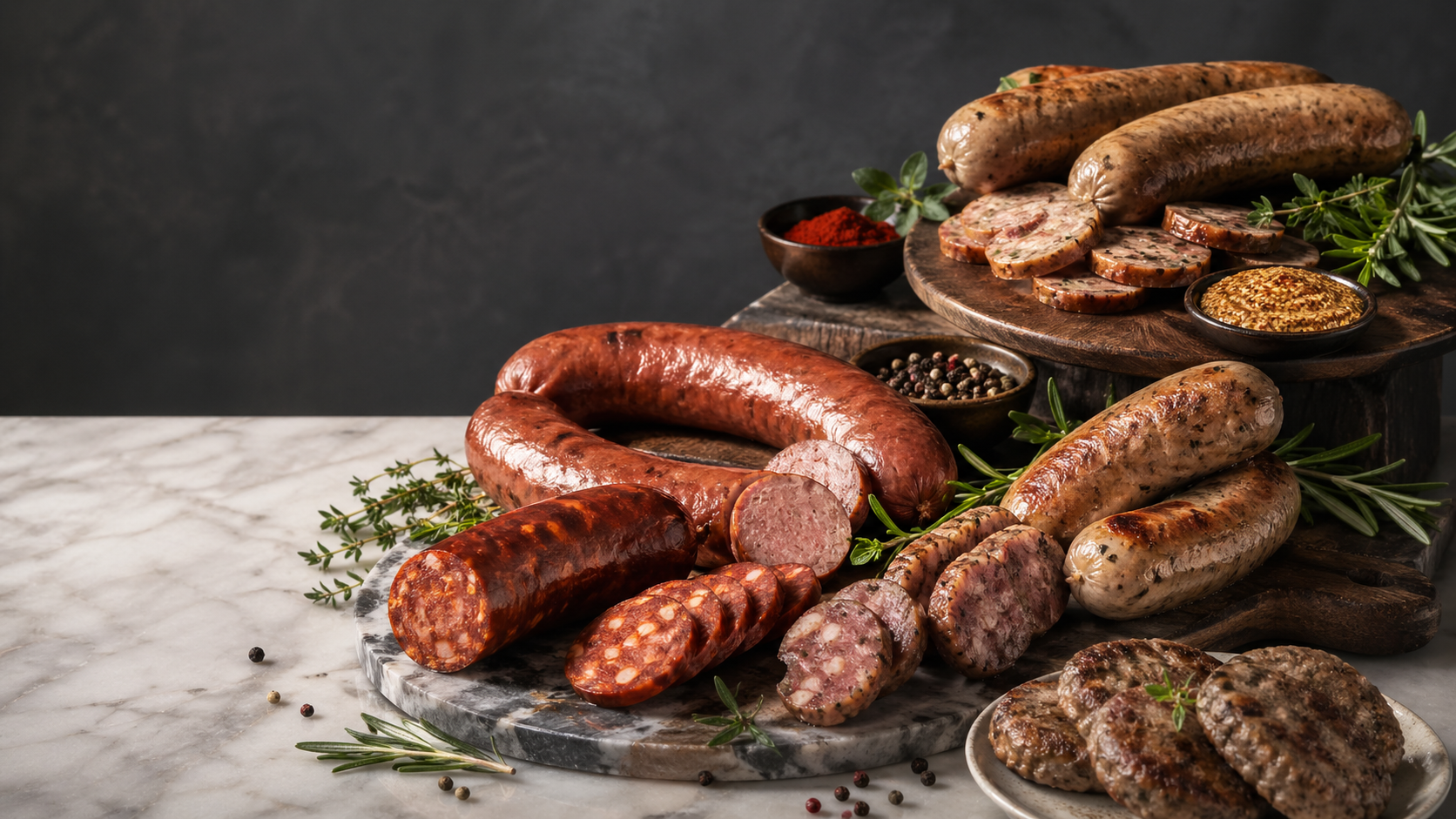
Sausage is one of the most versatile foods in commercial kitchens. It can be grilled, smoked, pan-fried, roasted, sliced into stews, served in sandwiches, added to breakfast plates, used on pizza, folded into pasta, featured on charcuterie boards, or built into seasonal menu specials. For restaurants, butcher shops, delis, supermarkets, catering businesses, hotels, and food trucks, sausage is not just an ingredient. It is a menu-building tool.

The reason sausage appears in so many cuisines is simple: it turns meat, fat, spices, salt, herbs, smoke, fermentation, and casing into a product with strong identity. A bratwurst does not eat like chorizo. Andouille does not behave like breakfast sausage. Italian sausage brings fennel and herbs into pasta, sandwiches, and pizza, while kielbasa gives soups, cabbage dishes, and comfort-food plates a smoky Polish character.
The Webstaurant article introduces several major sausage types, including chorizo, kielbasa, bratwurst, andouille, Italian sausage, blood sausage, and breakfast sausage. That is a strong starting point, but operators need more than a basic list. A restaurant owner also needs to know which sausages work best for grilling, which are better sliced into stews, which require refrigeration, which can be cross-utilized across multiple dishes, and which equipment supports safe and efficient production.
Food safety matters here because sausages are often made from ground meat. USDA FSIS guidance lists 160°F as the safe minimum internal temperature for ground meats, while ground poultry requires 165°F. Operators should always use a food thermometer and follow local health department rules, product labels, and supplier instructions.
Sausage also fits current menu trends. The National Restaurant Association’s 2026 forecast highlights comfort, nostalgia, global flavors, value, and protein-forward menu direction. Sausage sits directly inside that opportunity because it is familiar, flavorful, relatively cost-effective, and easy to adapt across global cuisines.
1. Chorizo
Chorizo is one of the most flavorful sausages in the world, and it can bring instant depth to a menu. Traditional Spanish chorizo is usually made from pork and seasoned with smoked paprika, garlic, salt, and spices. It is often cured, fermented, and smoked, giving it a firm texture and deep red color. Mexican chorizo, on the other hand, is usually fresh and raw, with a looser texture and a stronger chili-forward flavor.
This distinction is important for foodservice operators. Spanish chorizo can often be sliced and used like a cured sausage, depending on the product. Mexican chorizo usually needs to be cooked before service. That means the prep workflow, storage requirements, and menu usage can be very different.
Chorizo works extremely well in breakfast skillets, breakfast burritos, tacos, rice bowls, paella, tapas plates, sandwiches, soups, stews, loaded fries, mac and cheese, pizza, and brunch specials. It is especially valuable for restaurants that want bold flavor without building an entire sauce or spice blend from scratch.
Flavor profile: smoky, spicy, garlicky, paprika-rich
Best cooking methods: sautéing, grilling, pan-frying, roasting, simmering
Best menu uses: tacos, breakfast burritos, paella, tapas, rice bowls, soups
Best equipment links: Commercial Griddles, Commercial Ranges, Commercial Fryers, Commercial Refrigeration, Food Prep Equipment
For Atlantic, chorizo is a strong internal linking opportunity because it connects to breakfast service, Latin menus, tapas, and high-flavor prep stations.
2. Kielbasa
Kielbasa is a Polish sausage with broad menu appeal. In Polish, the word “kielbasa” generally refers to sausage, but in the United States it usually means a smoked U-shaped sausage made from pork, beef, poultry, or a blend. It is commonly seasoned with garlic, marjoram, salt, and pepper.
Kielbasa is valuable in restaurants because it is easy to use and works well in comfort-food dishes. It can be sliced into soups, browned on a flat top, grilled for sandwiches, served with sauerkraut and potatoes, added to casseroles, or used in breakfast skillets.
Because many kielbasa products are smoked or fully cooked, operators often use them for speed. However, labels matter. Some sausages are fully cooked, some are smoked but not ready-to-eat, and some are fresh. A kitchen should never assume handling or cooking instructions without checking the package.
Flavor profile: smoky, garlicky, savory, mildly herbal
Best cooking methods: grilling, pan-frying, roasting, simmering
Best menu uses: sandwiches, soups, stews, cabbage dishes, breakfast skillets
Best equipment links: Commercial Griddles, Commercial Ranges, Charbroilers, Commercial Refrigeration, Food Storage Containers
Kielbasa is especially useful for diners, delis, Eastern European restaurants, cafeterias, and comfort-food concepts.
3. Bratwurst
Bratwurst is a traditional German sausage often made from pork, veal, beef, or a blend. It is usually seasoned with spices such as marjoram, nutmeg, ginger, coriander, and pepper. Compared with chorizo or andouille, bratwurst is usually milder, creamier, and more herbal.
Bratwurst is one of the best sausages for grilling. It works well for beer gardens, food trucks, stadium-style menus, Oktoberfest events, casual restaurants, pubs, and catering operations. A properly cooked bratwurst served on a roll with mustard, sauerkraut, onions, or beer cheese can be a simple but profitable menu item.
For operators, bratwurst also works well as a seasonal product. Oktoberfest menus, fall beer pairings, football season specials, and outdoor catering can all use bratwurst as a centerpiece.
Flavor profile: mild, savory, herbal, lightly spiced
Best cooking methods: grilling, simmering, pan-frying, roasting
Best menu uses: sausage sandwiches, Oktoberfest plates, beer hall menus, pub specials
Best equipment links: Charbroilers, Commercial Griddles, Commercial Ranges, Hot Dog Rollers, Food Holding Equipment
If Atlantic wants to connect sausage content to equipment, bratwurst is one of the easiest sections for Charbroilers and Commercial Griddles.
4. Andouille Sausage
Andouille is a bold, smoky sausage with French roots and a major role in Cajun and Creole cooking. In the United States, andouille is strongly associated with Louisiana cuisine. It is often made from pork and seasoned with garlic, onion, pepper, and spices, then smoked for a deep, robust flavor.
Andouille is not a subtle sausage. It is designed to stand out. That makes it ideal for gumbo, jambalaya, red beans and rice, seafood boils, dirty rice, pasta, breakfast hash, po’boys, and spicy soups. It can also be used as a flavor-building ingredient, where a small amount of sausage seasons an entire pot.
For restaurants, andouille is valuable because it creates menu identity. If a kitchen wants to add a Southern, Cajun, Creole, or smoky-spicy direction, andouille is one of the fastest ways to do it.
Flavor profile: smoky, spicy, garlicky, peppery, bold
Best cooking methods: sautéing, grilling, simmering, roasting
Best menu uses: gumbo, jambalaya, red beans and rice, po’boys, seafood boils
Best equipment links: Commercial Ranges, Stock Pot Ranges, Commercial Griddles, Commercial Refrigeration, Food Prep Equipment
Andouille also gives Atlantic a natural way to link to equipment used in high-volume soup, stew, and rice-based production.
5. Italian Sausage
Italian sausage is one of the most widely used sausages in American foodservice. It is commonly made from pork and seasoned with fennel, garlic, oregano, basil, red pepper flakes, or other Italian herbs and spices. It usually comes in mild, sweet, or hot varieties.
Italian sausage is extremely useful because it works across many high-demand menu categories. It can be used in pizza, pasta, sandwiches, soups, lasagna, stuffed peppers, breakfast skillets, calzones, and catering trays. A pizza shop can use sausage as a topping. An Italian restaurant can use it in pasta sauce. A deli can use it in sausage and pepper sandwiches. A catering company can use it in baked ziti or buffet trays.
The difference between sweet, mild, and hot Italian sausage should be clear on the menu. Sweet Italian sausage usually refers to the use of sweet basil or a milder spice profile, not necessarily a sugary sausage. Hot Italian sausage gets heat from red pepper flakes or similar spices.
Flavor profile: fennel-forward, garlicky, herbal, mild to spicy
Best cooking methods: sautéing, grilling, roasting, simmering
Best menu uses: pizza, pasta, sandwiches, soups, casseroles, catering trays
Best equipment links: Pizza Ovens, Commercial Ranges, Commercial Ovens, Commercial Prep Tables, Commercial Refrigeration
This is one of the strongest sections for Atlantic because Italian sausage naturally connects to pizza shops, Italian restaurants, delis, and catering kitchens.
6. Blood Sausage
Blood sausage is one of the most distinctive sausage categories. It is made with animal blood, usually pork, beef, or sheep blood, combined with fat, grain, filler, spices, or regional ingredients. It appears in many food cultures, including English black pudding, French boudin noir, Spanish morcilla, Korean soondae, and various Latin American, African, and Asian preparations.
Blood sausage has a rich, earthy, mineral flavor. It is not as universally familiar to American customers as Italian sausage or breakfast sausage, but it can be very valuable for restaurants that focus on regional, traditional, or chef-driven menus.
Operators should be careful with menu positioning. Blood sausage may need explanation for some guests. It often works best as part of a breakfast plate, tasting menu, tapas plate, traditional platter, or cultural specialty.
Flavor profile: earthy, savory, rich, mineral
Best cooking methods: pan-frying, grilling, roasting
Best menu uses: breakfast plates, tapas, traditional platters, chef specials
Best equipment links: Commercial Griddles, Commercial Ranges, Commercial Refrigeration, Food Prep Equipment
Blood sausage is less of a mass-market menu item, but it can help a restaurant stand out when used with the right audience.
7. Breakfast Sausage
Breakfast sausage is a staple in American foodservice. It is usually made from pork and seasoned with sage, black pepper, salt, and sometimes maple, brown sugar, cayenne, or other spices. It is commonly sold as links, patties, or bulk ground sausage.
Breakfast sausage is important because it fits one of the most profitable dayparts: breakfast and brunch. It works in breakfast platters, egg sandwiches, biscuits and gravy, breakfast burritos, omelets, pancakes, waffles, casseroles, and hotel breakfast buffets.
The format matters. Links are ideal for plated breakfasts and buffets. Patties are better for breakfast sandwiches. Bulk sausage is best for gravy, scrambles, casseroles, and stuffing.
Flavor profile: savory, peppery, sage-forward, sometimes sweet
Best cooking methods: griddling, pan-frying, baking, roasting
Best menu uses: breakfast plates, egg sandwiches, biscuits and gravy, buffets
Best equipment links: Commercial Griddles, Food Holding Equipment, Commercial Ovens, Commercial Refrigeration, Steam Tables
For Atlantic, this section should link to griddles, holding equipment, breakfast buffet equipment, and refrigeration.
8. Merguez
Merguez is a North African sausage traditionally made with lamb or beef and seasoned with harissa, chili, cumin, coriander, paprika, garlic, and other spices. It is usually red in color and has a bold, spicy flavor.
Merguez is a strong choice for restaurants that want to build global flavor into the menu. It works well in Mediterranean bowls, couscous, shakshuka, flatbreads, grain bowls, lamb plates, sandwiches, and mezze-style menus.
Because global comfort foods are becoming more important in restaurant trend discussions, merguez can help operators offer something familiar in format but more adventurous in flavor.
Flavor profile: spicy, aromatic, earthy, lamb-forward
Best cooking methods: grilling, pan-frying, roasting
Best menu uses: couscous, shakshuka, flatbreads, bowls, Mediterranean plates
Best equipment links: Charbroilers, Commercial Griddles, Commercial Ranges, Commercial Prep Tables
Merguez is especially useful for Mediterranean, Middle Eastern, North African, and chef-driven casual concepts.
9. Longaniza
Longaniza is a sausage found in Spanish, Latin American, and Filipino cuisines. It varies widely by country. Some versions are garlicky and smoky, some are sweet, some are spicy, and some are bright red from achiote or paprika.
For foodservice operators, longaniza is valuable because it supports regional menu storytelling. Mexican longaniza can work in tacos and breakfast plates. Dominican longaniza can be served with fried cheese, plantains, or rice dishes. Filipino longganisa can be sweet, garlicky, and served with garlic rice and eggs.
Flavor profile: varies by region, often garlicky, sweet, smoky, or spicy
Best cooking methods: pan-frying, grilling, sautéing
Best menu uses: breakfast plates, tacos, rice bowls, sandwiches, regional specials
Best equipment links: Commercial Griddles, Commercial Ranges, Rice Cookers, Commercial Refrigeration
Longaniza is a great example of why a sausage guide should go beyond the basic European and American types.
10. Boudin
Boudin is strongly associated with Louisiana cuisine, especially Cajun cooking. The most familiar Cajun boudin is usually made with pork, rice, onions, peppers, and seasonings stuffed into a casing. Unlike many sausages, boudin often has a softer filling because rice is a major component.
Boudin can be steamed, grilled, smoked, pan-fried, or removed from its casing and used in balls, stuffing, or appetizers. Boudin balls are especially useful for restaurants because they can be breaded, fried, and served as a shareable appetizer.
Flavor profile: savory, rice-rich, peppery, Cajun-spiced
Best cooking methods: steaming, grilling, frying, smoking
Best menu uses: appetizers, boudin balls, Cajun plates, rice dishes, specials
Best equipment links: Commercial Fryers, Steamers, Charbroilers, Commercial Refrigeration, Food Prep Equipment
Boudin gives Atlantic a strong connection to Commercial Fryers, especially if the article discusses boudin balls.
11. Hot Dogs and Frankfurters
Hot dogs and frankfurters are technically part of the sausage family and deserve attention because they are widely used in foodservice. They can be made from beef, pork, poultry, or blends and are usually emulsified, seasoned, cooked, and sometimes smoked.
Hot dogs are essential for concession stands, food trucks, cafeterias, stadiums, convenience stores, diners, and quick-service concepts. Their biggest advantage is speed and familiarity. With the right equipment, operators can serve high volumes quickly.
Flavor profile: savory, smoky, mildly spiced
Best cooking methods: steaming, grilling, roller grilling, boiling
Best menu uses: hot dogs, chili dogs, loaded dogs, kids’ menus, concessions
Best equipment links: Hot Dog Rollers, Hot Dog Steamers, Charbroilers, Food Holding Equipment, Commercial Refrigeration
This section gives Atlantic a perfect opportunity to link directly to hot dog equipment and concession equipment categories.
12. Knockwurst
Knockwurst, sometimes spelled knackwurst, is a German sausage usually made from pork, beef, or veal and seasoned with garlic. It is typically plump, smoky, and snappy when cooked correctly.
Knockwurst is useful for German restaurants, pubs, beer gardens, and delis. It can be served with mustard, sauerkraut, potatoes, rye bread, or pickles. It also works well on sausage platters.
Flavor profile: garlicky, smoky, rich, savory
Best cooking methods: simmering, grilling, pan-frying
Best menu uses: German platters, sausage boards, sandwiches, pub menus
Best equipment links: Charbroilers, Commercial Ranges, Commercial Griddles, Food Holding Equipment
Knockwurst is not as common as bratwurst, but it gives menus a more complete German sausage offering.
13. Bockwurst
Bockwurst is another German sausage, often made from veal and pork and seasoned with herbs such as parsley, chives, and paprika. It is usually milder than bratwurst and is often served with mustard and bread.
For operators, bockwurst can work as a specialty sausage for German menus, beer pairings, Oktoberfest events, and European-style delis.
Flavor profile: mild, delicate, herbal
Best cooking methods: simmering, steaming, light grilling
Best menu uses: German plates, beer pairings, deli menus, seasonal specials
Best equipment links: Steamers, Commercial Ranges, Food Holding Equipment, Commercial Refrigeration
Bockwurst is a good option for customers who want a milder sausage experience.
14. Linguica
Linguica is a Portuguese sausage typically made from pork and seasoned with garlic, paprika, and other spices. It is often smoked and has a savory, slightly spicy flavor.
Linguica works well in breakfast plates, rice dishes, sandwiches, stews, pizzas, and Portuguese-style menus. It is also common in some regional American markets, especially areas with Portuguese communities.
Flavor profile: garlicky, smoky, paprika-rich, savory
Best cooking methods: grilling, pan-frying, simmering
Best menu uses: rice dishes, breakfast plates, sandwiches, stews, pizza
Best equipment links: Commercial Griddles, Commercial Ranges, Pizza Ovens, Commercial Refrigeration
Linguica is a strong addition for operators looking to expand beyond standard Italian sausage and kielbasa.
15. Sucuk
Sucuk is a dry, spiced sausage popular in Turkish, Balkan, Middle Eastern, and Central Asian cuisines. It is commonly made from beef, though lamb or other meats may be used, and it is seasoned with garlic, cumin, paprika, red pepper, and other spices.
Sucuk is intensely flavorful. It is commonly sliced and pan-fried for breakfast with eggs, used in sandwiches, added to pide or pizza-style items, or served as part of grilled meat platters.
For Atlantic’s audience, sucuk is valuable because it introduces a global sausage type that can fit breakfast, brunch, and casual dining menus.
Flavor profile: spicy, garlicky, cumin-forward, savory
Best cooking methods: pan-frying, grilling, baking on flatbread
Best menu uses: eggs, breakfast plates, flatbreads, sandwiches, grilled platters
Best equipment links: Commercial Griddles, Commercial Ranges, Pizza Ovens, Commercial Refrigeration
Sucuk can help a menu feel more international without requiring complicated preparation.
16. Chicken Sausage
Chicken sausage is popular with operators who want a lighter alternative to pork sausage. It can be seasoned in many ways, including apple, spinach, feta, sun-dried tomato, Italian herbs, jalapeño, roasted garlic, or breakfast-style spices.
Chicken sausage works well in breakfast plates, healthy bowls, wraps, pasta, sandwiches, and hotel buffet menus. Because poultry sausages have different safety requirements, operators should pay close attention to cooking temperatures and handling practices. USDA guidance lists ground poultry at 165°F.
Flavor profile: mild, adaptable, seasoning-dependent
Best cooking methods: grilling, pan-frying, roasting, baking
Best menu uses: breakfast plates, bowls, wraps, pasta, health-focused menus
Best equipment links: Commercial Griddles, Commercial Ovens, Commercial Refrigeration, Food Prep Equipment
Chicken sausage is useful for cafes, hotels, diners, and health-conscious menus.
17. Turkey Sausage
Turkey sausage is another lighter alternative, often used in breakfast service or health-focused menus. It can be made into links, patties, or bulk sausage. It is often seasoned similarly to breakfast sausage with sage, pepper, and herbs.
Turkey sausage is popular in hotels, schools, hospitals, corporate cafeterias, breakfast restaurants, and diners that want an alternative to pork. Like chicken sausage, it must be handled carefully and cooked to the appropriate safe temperature.
Flavor profile: lean, mild, savory, herb-forward
Best cooking methods: griddling, baking, pan-frying
Best menu uses: breakfast sandwiches, hotel buffets, health-focused plates, omelets
Best equipment links: Commercial Griddles, Food Holding Equipment, Commercial Ovens, Commercial Refrigeration
Turkey sausage is especially useful for operations that need alternative breakfast proteins.
18. Vegan and Plant-Based Sausage
Plant-based sausage has become a major category in modern foodservice. These sausages may be made from soy, pea protein, wheat gluten, vegetables, legumes, grains, or other plant-based ingredients. They are designed to replicate the flavor, texture, and cooking behavior of traditional sausage.
Plant-based sausage works well in breakfast sandwiches, vegan bowls, pasta, pizza, wraps, and casual dining menus. It gives operators a way to serve vegetarian and vegan guests without building an entirely separate menu.
Operators should still treat plant-based sausage professionally. It needs proper storage, clean prep practices, allergen awareness, and good cooking technique. Some plant-based products contain soy, wheat, or other allergens, so labels matter.
Flavor profile: varies by product, often savory, smoky, or spicy
Best cooking methods: griddling, pan-frying, baking, grilling
Best menu uses: vegan breakfast sandwiches, bowls, pizza, pasta, wraps
Best equipment links: Commercial Griddles, Commercial Ovens, Commercial Refrigeration, Food Prep Equipment
Plant-based sausage can be a strategic menu addition for restaurants looking to serve broader dietary preferences.
Fresh, Smoked, Cured, and Dry Sausage: What Is the Difference?
Understanding sausage types is not only about origin or flavor. Operators also need to understand processing style.
Fresh sausage is raw and must be cooked before service. Examples include many breakfast sausages, fresh Italian sausage, and Mexican chorizo. These products require careful refrigeration and safe cooking.
Smoked sausage may be fully cooked or may still require cooking, depending on the product. Kielbasa, andouille, hot links, and some hot dogs often fall into this category. The label should guide handling and preparation.
Cured sausage uses salt, curing agents, drying, fermentation, or smoking to develop flavor and preservation characteristics. Spanish chorizo and some salami-style sausages fall into this broader category.
Dry sausage has lower moisture and a firmer texture. Some dry sausages are shelf-stable, while others still require refrigeration after opening. Operators should not guess. USDA FSIS provides specific sausage safety and storage guidance, and product labels should always be followed.
Best Sausage Types by Menu Use
For breakfast menus, the best options are breakfast sausage, turkey sausage, chicken sausage, sucuk, longaniza, and plant-based sausage. These work in egg sandwiches, breakfast platters, burritos, and buffet lines.
For grilling menus, bratwurst, kielbasa, Italian sausage, andouille, hot dogs, knockwurst, and merguez are strong choices. These sausages hold well on grills and create high-impact sandwiches or platters.
For pasta and pizza, Italian sausage is the top choice, but chorizo, linguica, chicken sausage, and plant-based sausage can also work.
For soups and stews, andouille, kielbasa, chorizo, Italian sausage, and smoked sausage are excellent because they contribute fat, spice, smoke, and depth.
For global menus, merguez, sucuk, longaniza, boudin, chorizo, linguica, and blood sausage bring regional identity.
For catering, bratwurst, kielbasa, Italian sausage, breakfast sausage, chicken sausage, and hot dogs are practical because they are familiar, scalable, and easy to serve.
Sausage Cooking Methods for Commercial Kitchens
Grilling is ideal for bratwurst, kielbasa, hot dogs, andouille, Italian sausage, merguez, and knockwurst. It adds char, smoke, and visual appeal. Restaurants that serve grilled sausage sandwiches or beer garden menus should consider Charbroilers or outdoor-safe grilling equipment where appropriate.
Griddling is one of the most practical methods for breakfast sausage, sliced kielbasa, patties, sucuk, longaniza, and plant-based sausage. A Commercial Griddle gives operators control, speed, and surface area.
Pan-frying works well for smaller batches and chef-driven dishes. It is useful for chorizo, sliced sausage, blood sausage, and specialty sausages.
Roasting is useful for Italian sausage, bratwurst, chicken sausage, and catering trays. Commercial Ovens allow operators to cook larger batches with consistency.
Simmering is useful for soups, stews, gumbo, jambalaya, cabbage dishes, and beans. This is where Commercial Ranges and Stock Pot Ranges become important.
Steaming is useful for hot dogs, bockwurst, and some sausage-holding applications. Hot Dog Steamers and Food Holding Equipment can support concession operations and quick-service menus.
Sausage Storage and Food Safety
Sausage safety depends on whether the product is fresh, cooked, smoked, cured, or dry. Fresh sausage is highly perishable and must be refrigerated or frozen properly. USDA FSIS notes that fresh sausage should be kept refrigerated and used within a short window, while hard or dry sausage has different storage characteristics depending on whether it is whole, opened, or shelf-stable.
For commercial kitchens, the most important rules are simple:
Keep cold products cold.
Separate raw and ready-to-eat foods.
Label and date opened packages.
Store raw sausage below ready-to-eat items.
Cook fresh sausage to safe internal temperatures.
Use a calibrated food thermometer.
Follow the supplier’s label and local health code.
A good sausage program also requires reliable Commercial Refrigeration, organized Food Storage Containers, proper Commercial Shelving, clean Commercial Prep Tables, and accessible Commercial Sinks for handwashing and sanitation.
Equipment That Supports a Better Sausage Program
A restaurant can offer sausage without special equipment, but a serious sausage program benefits from the right workflow.
Commercial Griddles are ideal for breakfast sausage, sausage patties, sliced kielbasa, sucuk, longaniza, and sandwich prep.
Charbroilers are important for grilled bratwurst, Italian sausage, hot dogs, and sausage sandwiches.
Commercial Ranges support soups, stews, gumbo, pasta sauces, rice dishes, and simmered sausage recipes.
Commercial Ovens are useful for roasting sausage in batches, finishing trays, and supporting catering operations.
Commercial Refrigeration protects fresh sausage, cooked sausage, toppings, sauces, and prepared menu components.
Food Holding Equipment helps operators keep cooked sausages at proper service temperature during breakfast, buffet, catering, or concession service.
Commercial Prep Tables create a cleaner workflow for slicing, portioning, assembling sandwiches, and organizing mise en place.
Hot Dog Rollers and Hot Dog Steamers are essential for concession stands, convenience stores, cafeterias, and high-volume quick-service hot dog programs.
How to Choose the Right Sausage for Your Menu
The best sausage for your business depends on your concept, equipment, customer base, service speed, and food cost.
A breakfast restaurant should focus on breakfast sausage, turkey sausage, chicken sausage, and plant-based sausage. A German beer hall should focus on bratwurst, knockwurst, bockwurst, and kielbasa. A Cajun restaurant should focus on andouille and boudin. A pizzeria should focus on Italian sausage, but may add chorizo, chicken sausage, or plant-based sausage for variety. A food truck may prioritize sausages that cook quickly, hold well, and work in handheld formats.
Operators should also think about cross-utilization. One sausage should support multiple menu items. Italian sausage can work on pizza, pasta, sandwiches, soups, and catering trays. Chorizo can work in tacos, breakfast burritos, rice bowls, and loaded fries. Kielbasa can work in soups, sandwiches, breakfast skillets, and cabbage plates.
The goal is not to carry every sausage type. The goal is to carry the right sausages for your menu and use them across enough dishes to justify inventory.
Common Sausage Menu Mistakes
One common mistake is treating all sausages the same. A fresh sausage, smoked sausage, dry sausage, and cured sausage are not interchangeable in preparation or storage.
Another mistake is overcooking. Sausage should be cooked safely, but overcooking can make it dry, split the casing, and reduce quality. A thermometer is better than guessing.
A third mistake is ignoring casing texture. Natural casings can provide snap, while skinless or artificial casing products behave differently. The right choice depends on the menu item.
A fourth mistake is poor holding. Sausages that sit too long without proper equipment can lose texture and moisture. For buffets and concessions, Food Holding Equipment matters.
A fifth mistake is failing to explain regional sausages. If a menu includes merguez, sucuk, blood sausage, or boudin, a short menu description can help customers order with confidence.
FAQ: Types of Sausage
What are the most popular types of sausage?
The most popular types of sausage include Italian sausage, breakfast sausage, chorizo, bratwurst, kielbasa, andouille, hot dogs, and smoked sausage. More specialized options include merguez, boudin, blood sausage, longaniza, linguica, sucuk, and plant-based sausage.
What sausage is best for breakfast?
Breakfast sausage, turkey sausage, chicken sausage, and plant-based sausage are the most common breakfast options. Sucuk and longaniza can also work well for global breakfast menus.
What sausage is best for grilling?
Bratwurst, Italian sausage, kielbasa, hot dogs, andouille, merguez, knockwurst, and linguica are all strong grilling options.
What sausage is best for pizza?
Italian sausage is the classic choice for pizza because of its fennel, garlic, and herb profile. Chorizo, chicken sausage, plant-based sausage, and linguica can also work depending on the pizza style.
What sausage is best for soups and stews?
Andouille, kielbasa, chorizo, Italian sausage, and smoked sausage work especially well in soups and stews because they add fat, seasoning, smoke, and depth.
What is the difference between fresh sausage and smoked sausage?
Fresh sausage is usually raw and must be cooked before eating. Smoked sausage may be fully cooked or may still require cooking, depending on the product. Operators should always read the label and follow supplier instructions.
What temperature should sausage be cooked to?
USDA FSIS lists 160°F for ground meats and 165°F for ground poultry. Since sausage is often made from ground meat, operators should use a food thermometer and follow the product label, supplier instructions, and local health code.
How should restaurants store sausage?
Fresh sausage should be refrigerated or frozen according to food safety guidelines and supplier instructions. Opened, cooked, smoked, cured, and dry sausages may have different storage requirements. Restaurants should keep products labeled, dated, sealed, and stored at safe temperatures.
What equipment do restaurants need for sausage service?
The most useful equipment depends on the menu, but common options include Commercial Griddles, Charbroilers, Commercial Ranges, Commercial Ovens, Commercial Refrigeration, Food Holding Equipment, Commercial Prep Tables, Hot Dog Rollers, and Hot Dog Steamers.
Sausage is one of the most flexible ingredients in foodservice. It can be simple or premium, local or global, breakfast-focused or dinner-ready, mild or spicy, fresh or smoked, traditional or plant-based. For restaurants and butcher shops, understanding sausage types is not only about knowing their names. It is about knowing how each sausage behaves on the menu.
Chorizo brings smoke, paprika, and heat. Kielbasa brings garlic and Polish comfort. Bratwurst brings German grilling tradition. Andouille brings Cajun depth. Italian sausage brings fennel, herbs, and versatility. Breakfast sausage supports one of the most important dayparts. Merguez, longaniza, boudin, linguica, sucuk, and plant-based sausage help operators build more distinctive menus.
For Atlantic’s audience, the business lesson is clear: the right sausage selection can improve menu variety, support seasonal specials, create global flavor, and increase operational flexibility. But the right equipment matters too. Commercial Griddles, Charbroilers, Commercial Ranges, Commercial Ovens, Commercial Refrigeration, Food Holding Equipment, and Commercial Prep Tables help kitchens cook, hold, store, and serve sausage more consistently.
A strong sausage program is not built by adding random products to the menu. It is built by choosing sausages that match your concept, your customers, your cooking equipment, and your workflow. When those pieces come together, sausage becomes more than a protein. It becomes a reliable foundation for profitable, flavorful, and highly adaptable menu development.