
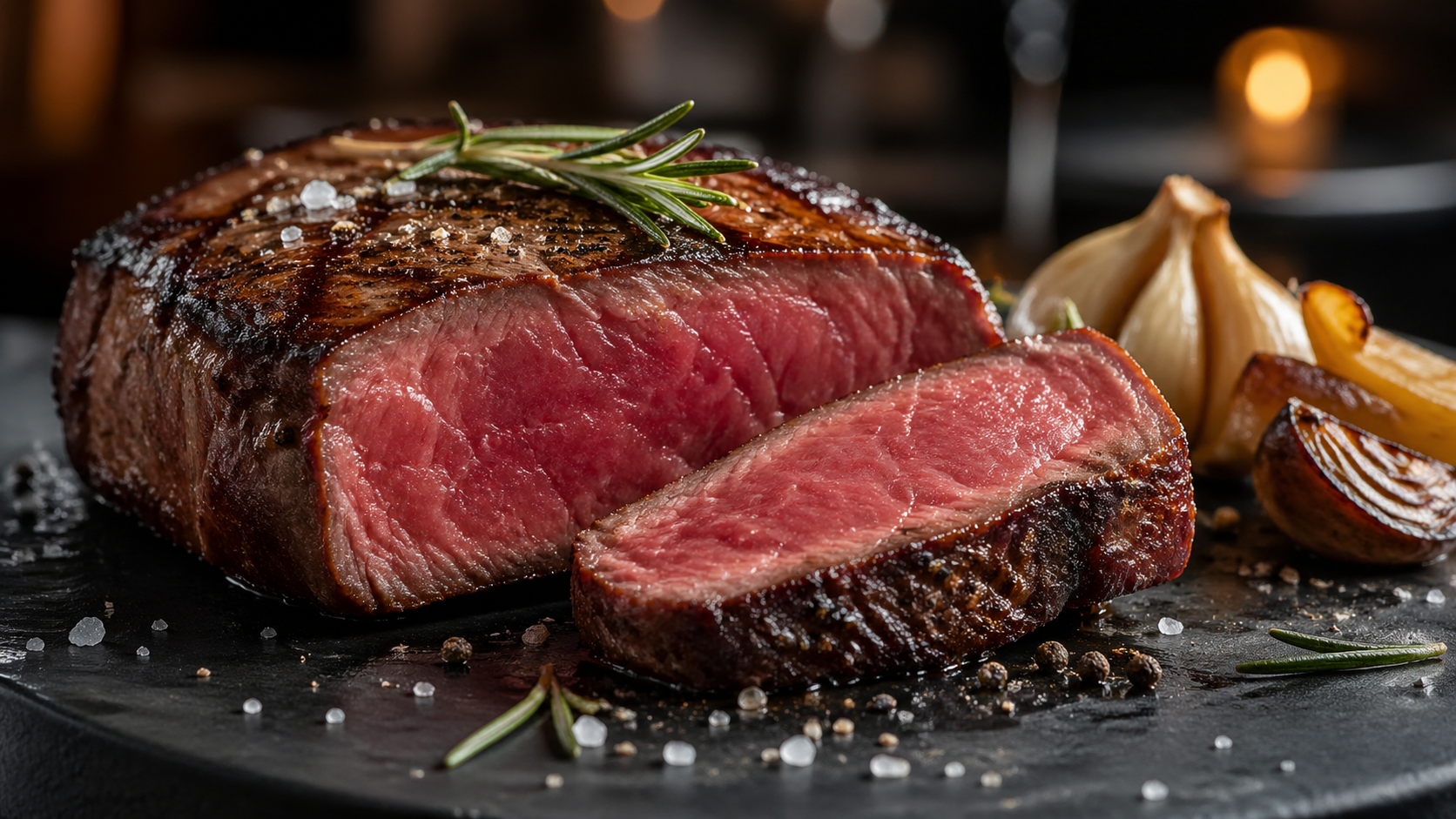
Blue steak, also called blue rare steak or extra rare steak, is the least cooked level of steak doneness. It is quickly seared on the outside while the inside remains deep red, cool to barely warm, and extremely tender. For steak lovers who enjoy a soft, almost raw texture, blue steak offers one of the most delicate eating experiences on the menu.

For restaurants, steakhouses, butcher shops, hotel kitchens, and high-end dining concepts, blue steak is more than a cooking style. It is a test of precision. A properly prepared blue steak requires high heat, excellent timing, clean handling, a quality cut of beef, and a clear understanding of food safety. Unlike medium rare or medium steak, blue steak gives the chef very little margin for error.
Blue steak is usually cooked to an internal temperature around 115°F to 120°F, which is below the USDA’s recommended safe minimum internal temperature for whole cuts of beef. USDA guidance recommends cooking beef steaks, roasts, and chops to 145°F followed by a 3-minute rest for safety. That means restaurants serving blue steak should understand local health code requirements, menu consumer advisory rules, and proper raw meat handling practices before offering it to guests.
Blue Steak Meaning
Blue steak is a steak that has been seared very quickly at high heat, leaving the interior mostly raw. The outside should develop a light crust or sear, while the center remains red, soft, and cool compared to other steak doneness levels.
The word “blue” does not mean the steak is literally blue when served. It refers to the very rare stage of doneness where the interior can have a dark red or bluish-red appearance before the meat fully warms and changes color. Once exposed to air and heat, the steak becomes redder, but it still remains far less cooked than rare steak.
In most steak doneness charts, blue rare steak sits below rare steak. Approximate temperature ranges commonly used by chefs and steak brands place blue rare around 115°F to 120°F, rare around 120°F to 125°F, medium rare around 130°F to 135°F, medium around 140°F to 145°F, and well done around 160°F or higher.
Blue Steak vs Rare Steak
Blue steak and rare steak are often confused, but they are not the same.
A blue steak is seared quickly on the outside and left very red and cool inside. The center is barely warmed. The texture is soft, tender, and closer to raw beef than cooked steak.
A rare steak is cooked slightly longer. It still has a red center, but the interior is warmer, the texture is slightly firmer, and the steak has more cooked structure. Rare steak is still below the USDA’s recommended 145°F safety temperature for whole cuts, but it is more cooked than blue steak.
In simple terms:
Blue steak is the rarest steak doneness.
Rare steak is still red, but warmer and more cooked.
Medium rare has a warm red center and more developed steak texture.
Medium steak has a warmer pink center and firmer bite.
For restaurants, this difference matters because guests may say they want “rare” when they actually mean “blue rare,” or they may order blue steak without understanding how raw the inside will be. Servers should be trained to describe it clearly.
What Does Blue Steak Taste Like?
Blue steak has a clean, beef-forward flavor because it is cooked for such a short time. It does not develop as much rendered fat, browning, or roasted flavor as medium rare or medium steak. The outside provides the seared flavor, while the inside keeps a very soft, fresh, and delicate texture.
The eating experience depends heavily on the cut. A lean, tender cut can work beautifully as blue steak. A fatty or tough cut may feel chewy because there is not enough cooking time to melt fat or break down connective tissue.
That is why blue steak is not ideal for every cut. A ribeye, for example, is rich and flavorful, but much of its appeal comes from rendered fat. If cooked blue rare, the fat may remain waxy or firm. A tenderloin, on the other hand, has less fat and a naturally tender texture, making it one of the best choices for blue steak.
Best Cuts for Blue Steak
The best cuts for blue steak are naturally tender, lean, and fine-textured. Since the steak is cooked for such a short time, you want a cut that does not require much heat to become enjoyable.
Tenderloin / Filet Mignon
Tenderloin is one of the best cuts for blue steak. It is naturally tender, lean, and delicate. Since it does not rely on heavy marbling for flavor and texture, it can be served blue rare more successfully than fattier cuts. Filet mignon is especially popular for blue steak because the texture remains soft and elegant.
Flat Iron Steak
Flat iron steak is another strong option because it is tender and flavorful. It comes from the shoulder area but is cut in a way that removes the tough connective tissue. When handled correctly, flat iron can offer a good balance of tenderness and beef flavor.
Sirloin Tip
Sirloin tip can work for blue steak if it is high quality and cut properly, but it is not as naturally tender as tenderloin. It has more muscle structure, so it may feel firmer. Restaurants should test this cut before offering it blue rare on a menu.
Strip Steak
New York strip can be served blue rare, but it is better when the cut is high quality and not overly fatty. Because strip has more chew than tenderloin, some guests may prefer it rare or medium rare instead.
Cuts to Be Careful With
Ribeye, brisket, flank, skirt, hanger, short rib, and other heavily marbled or connective-tissue-rich cuts are usually not the best choices for blue steak. These cuts often need more heat to render fat, soften tissue, and develop flavor. For many of them, medium rare or medium produces a better eating experience.
How to Cook Blue Steak
Cooking blue steak is simple in theory but difficult in execution. The goal is to sear the outside quickly while keeping the interior barely cooked.
Start with a high-quality steak, ideally at least 1 to 1.5 inches thick. A very thin steak can overcook too quickly, while a very thick steak may be difficult to warm evenly. Pat the steak dry before seasoning. Moisture on the surface prevents proper searing.
Season simply with salt and pepper unless the restaurant concept calls for a different profile. Blue steak is usually about the beef itself, so heavy sauces and marinades are not always necessary.
Preheat the cooking surface until very hot. A Commercial Charbroiler, Commercial Griddle, heavy-duty grill, or cast iron cooking surface can work well. The key is intense heat. Place the steak on the hot surface and sear each side for about 45 to 60 seconds, depending on thickness and heat level. Sear the edges briefly if needed.
Use an accurate Meat Thermometer to check internal temperature. For blue rare, many chefs target around 115°F to 120°F, but operators must remember that this is below the USDA recommended safe minimum for whole cuts of beef.
Let the steak rest briefly before serving. Resting helps redistribute juices, although the rest time for blue steak is usually shorter than for more cooked steaks because the interior temperature is low.
Blue Steak Cooking Steps for Restaurants
A restaurant kitchen should treat blue steak as a precision item, not a casual fire-and-serve dish.
First, confirm the guest understands the doneness. The server can say something like, “Blue rare is seared on the outside and very red and cool in the center.” This helps prevent complaints from guests expecting a standard rare steak.
Second, use only suitable whole muscle cuts from trusted suppliers. Avoid mechanically tenderized, injected, or non-intact steaks unless they are cooked according to safe handling requirements. FSIS has explained that pathogens may be introduced below the surface of non-intact beef products, which changes the risk profile compared with intact whole-muscle cuts.
Third, keep raw steak cold until prep. Use proper Commercial Refrigeration and store raw beef below ready-to-eat foods to reduce cross-contamination risk.
Fourth, use separate utensils or sanitize tools after raw contact. Tongs used to place raw steak on the grill should not touch the finished steak unless properly cleaned and sanitized.
Fifth, sear all exterior surfaces. Since bacteria are more likely to be present on the exterior of intact whole cuts, full surface searing is especially important for blue steak.
Finally, serve immediately. Blue steak is not a good holding item. It should not sit under heat lamps or be delayed in the pass because its appeal depends on precise texture and temperature.
Is Blue Steak Safe?
This is the most important question for restaurants. Blue steak can be served by many restaurants, but it carries more risk than steak cooked to USDA recommended temperatures.
The USDA recommends cooking whole cuts of beef such as steaks, roasts, and chops to 145°F with a 3-minute rest. Blue steak is typically served far below that, often around 115°F to 120°F. Because of this, restaurants need to follow local health department rules, use consumer advisories where required, and train staff carefully.
The safety logic behind rare and blue rare intact steak is that bacteria are generally more likely to be on the outside surface of whole-muscle beef. Searing the outside can reduce surface contamination risk. However, this assumption becomes weaker when beef is mechanically tenderized, injected, ground, chopped, or otherwise made non-intact because bacteria can be moved below the surface. FSIS has specifically addressed the risk difference between intact and non-intact beef.
For this reason, blue steak should be prepared only with appropriate cuts, clean equipment, disciplined handling, and clear menu communication.
Menu Consumer Advisory for Blue Steak
Restaurants that serve blue steak, rare steak, steak tartare, carpaccio, raw oysters, runny eggs, sushi, or other raw or undercooked animal foods may need a consumer advisory on the menu. FDA Food Code guidance is widely used by states and local jurisdictions, and consumer advisory requirements generally include disclosure and reminder language for raw or undercooked animal foods.
A common advisory statement is:
“Consuming raw or undercooked meats, poultry, seafood, shellfish, or eggs may increase your risk of foodborne illness.”
Restaurants should check local health department requirements because wording, placement, asterisks, and menu formatting rules can vary by jurisdiction. This is especially important for blue steak because it is intentionally served under the recommended safety temperature.
Blue Steak Safety Tips for Commercial Kitchens
Blue steak should never be treated casually. A safe restaurant workflow starts before the steak reaches the grill.
Use trusted suppliers and high-quality whole muscle beef.
Avoid mechanically tenderized steaks for blue rare service unless handled according to applicable safety requirements.
Keep steaks properly refrigerated before prep.
Use clean cutting boards, knives, tongs, and prep surfaces.
Do not reuse raw-contact utensils on cooked steak without sanitizing.
Sear the full exterior surface of the steak.
Use a calibrated thermometer.
Train servers to explain blue steak accurately.
Use menu advisories where required.
Follow local health department rules.
The right equipment helps support this workflow. Commercial Refrigeration, Commercial Prep Tables, Commercial Sinks, Food Storage Containers, Commercial Charbroilers, and accurate Meat Thermometers all play a role in safer steak service.
Black and Blue Steak
Black and blue steak is similar to blue steak, but the outside is more aggressively charred. The interior remains very rare or blue rare, while the exterior develops a dark crust.
This creates a strong contrast: charred outside, cool red center. It is a dramatic style of steak that appeals to guests who want intense crust without a cooked interior.
Black and blue steak requires very high heat. A standard low-heat grill will not create the same effect. Restaurants often use a very hot grill, broiler, or cast iron surface. A Commercial Charbroiler or Salamander Broiler can be useful when the goal is fast surface charring.
Pittsburgh Style Steak
Pittsburgh style steak, also called Pittsburgh rare or Pittsburgh blue, is closely related to black and blue steak. It is known for a heavily charred exterior and a rare or blue rare interior.
The name is often linked to Pittsburgh’s steel mill history, where stories suggest workers cooked steaks quickly on extremely hot metal surfaces. Whether treated as culinary history or restaurant folklore, the style remains popular because it creates a powerful contrast between char and tenderness.
For menu writing, “Pittsburgh style” should be explained clearly. Some guests may not know the term. A restaurant might write:
“Pittsburgh Style: heavily charred outside, blue rare to rare center.”
Best Equipment for Cooking Blue Steak
Blue steak depends on speed, heat, and precision. The equipment must create a strong sear before the interior overcooks.
Commercial Charbroilers are one of the best options for steakhouse-style searing. They create grill marks, char, and strong surface flavor.
Commercial Griddles can work well when they reach and maintain high enough heat. They are especially useful for controlled surface contact and even searing.
Salamander Broilers are useful for finishing, charring, or creating a black-and-blue effect.
Commercial Ranges with cast iron pans can work for smaller kitchens or chef-driven concepts.
Meat Thermometers are essential because visual cues are not enough. A few degrees can change blue rare into rare or medium rare.
Commercial Refrigeration protects raw beef quality and supports safe storage.
Commercial Prep Tables help keep raw beef handling organized, especially during busy service.
Commercial Sinks support handwashing, cleaning, and sanitation workflows.
For Atlantic, this article naturally connects steak preparation to multiple equipment categories without forcing the link.
Blue Steak Temperature Chart
Blue rare steak is often around 115°F to 120°F. Rare steak is around 120°F to 125°F. Medium rare is around 130°F to 135°F. Medium is around 140°F to 145°F. Medium well is around 150°F to 155°F. Well done is usually around 160°F or higher. These ranges are common culinary references, but they are not the same as food safety recommendations. Certified Angus Beef lists similar approximate doneness ranges, while USDA guidance recommends 145°F with a 3-minute rest for whole cuts of beef for safety.
A restaurant can include a doneness guide on its menu or staff training material, but it should avoid presenting undercooked steak temperatures as “safe” without proper consumer advisory language.
Common Mistakes When Cooking Blue Steak
One common mistake is using the wrong cut. A fatty steak that needs rendering may not taste good when cooked blue rare.
Another mistake is cooking at medium heat. Blue steak needs high heat because the outside must sear quickly before the inside warms too much.
A third mistake is skipping the thermometer. Blue steak is too precise to rely only on touch or color.
A fourth mistake is failing to sear the edges. If a steak is served blue rare, every exterior surface should be seared.
A fifth mistake is poor communication. Some guests order blue steak because it sounds premium, but they may not expect a cool red center. Servers should describe it before the order reaches the kitchen.
A sixth mistake is ignoring food safety rules. Blue steak is an undercooked animal food. Restaurants need menu advisories, clean handling, and local code compliance.
Should Restaurants Offer Blue Steak?
Blue steak can be a smart menu option for the right restaurant, but it is not necessary for every operation.
A steakhouse, French bistro, upscale hotel restaurant, butcher-focused concept, or chef-driven dining room may benefit from offering blue steak. It signals confidence, culinary precision, and respect for guest preference.
A fast-casual restaurant, high-volume casual concept, or kitchen with limited staff training may prefer to avoid it. Blue steak requires consistent execution and clear safety protocols.
Before adding blue steak to the menu, operators should ask:
Do we have the right steak cuts?
Do we have the right equipment?
Can our cooks execute it consistently?
Can our servers explain it clearly?
Do we have proper consumer advisory language?
Are we following local health department rules?
Can we prevent cross-contamination during rush periods?
If the answer is yes, blue steak can be a valuable addition. If not, rare or medium rare may be a safer and more practical offering.
How to Describe Blue Steak on a Menu
Menu language matters. Blue steak should be described clearly but attractively.
A simple menu description could be:
“Blue Rare: quickly seared outside with a cool, red center.”
For black and blue:
“Black & Blue: heavily charred outside with a blue rare center.”
For Pittsburgh style:
“Pittsburgh Style: deeply charred exterior with a rare or blue rare center.”
Restaurants should avoid vague descriptions like “lightly cooked” because they do not fully explain what the guest will receive. Clear language reduces returns, complaints, and confusion.
Best Sides and Sauces for Blue Steak
Because blue steak has a delicate interior and strong beef flavor, sides and sauces should support rather than overwhelm it.
Good side options include roasted potatoes, fries, grilled asparagus, sautéed mushrooms, creamed spinach, simple green salad, charred onions, and crusty bread.
Good sauce options include béarnaise, peppercorn sauce, chimichurri, red wine reduction, compound butter, horseradish cream, and Dijon mustard.
For restaurants, this creates internal menu-building opportunities. A blue steak special can be paired with a premium side, sauce, wine pairing, or chef’s tasting menu.
FAQ: Blue Steak
What is blue steak?
Blue steak is the rarest level of steak doneness. It is quickly seared on the outside while the inside remains red, cool, and barely cooked.
Is blue steak raw?
Blue steak is not completely raw because the outside is seared. However, the inside is very close to raw and remains much less cooked than rare or medium rare steak.
What temperature is blue steak?
Blue steak is commonly served around 115°F to 120°F. This is below the USDA recommended safe minimum internal temperature for whole cuts of beef, which is 145°F with a 3-minute rest.
Is blue steak safe to eat?
Blue steak carries more risk than steak cooked to USDA recommended temperatures. Restaurants should use appropriate whole muscle cuts, sear the exterior, prevent cross-contamination, use consumer advisory language where required, and follow local health department rules.
What is the difference between blue steak and rare steak?
Blue steak is cooked for a shorter time and has a cooler, redder center. Rare steak is cooked slightly longer and has a warmer red center.
What is black and blue steak?
Black and blue steak has a heavily charred outside and a blue rare or very rare inside.
What is Pittsburgh style steak?
Pittsburgh style steak usually means a steak with a deeply charred exterior and a rare or blue rare center.
What cut is best for blue steak?
Tenderloin or filet mignon is one of the best cuts because it is naturally tender and lean. Flat iron and high-quality strip steak can also work.
Can ribeye be cooked blue?
Ribeye can technically be cooked blue, but it is not usually the best choice because its fat may not render enough. Ribeye often performs better at medium rare or medium.
What equipment do restaurants need for blue steak?
Useful equipment includes Commercial Charbroilers, Commercial Griddles, Salamander Broilers, Commercial Refrigeration, Commercial Prep Tables, Commercial Sinks, and accurate Meat Thermometers.
Blue steak is one of the most precise and misunderstood steak preparations. It is not simply “undercooked steak.” When done correctly, it is a deliberate cooking style built around high heat, fast searing, quality beef, and careful handling.
For guests, blue steak delivers a soft, tender, intensely beef-forward experience. For restaurants, it offers a chance to show culinary confidence. But it also requires responsibility. Blue steak is served below USDA recommended safety temperatures, so operators must understand food safety, consumer advisory rules, raw meat handling, and local health code requirements.
The best blue steak starts with the right cut, usually a lean and tender steak such as tenderloin. It requires a hot cooking surface, clean tools, a calibrated thermometer, and a team that understands the difference between blue, rare, medium rare, black and blue, and Pittsburgh style.
For commercial kitchens, the right setup matters. Commercial Charbroilers, Commercial Griddles, Salamander Broilers, Commercial Refrigeration, Commercial Prep Tables, Commercial Sinks, and Meat Thermometers help restaurants prepare, store, cook, and serve steak with more consistency.
A restaurant should only offer blue steak if it can execute it safely and explain it clearly. When those standards are met, blue steak can become a distinctive menu option that appeals to serious steak lovers and helps a restaurant stand out in a competitive dining market.