
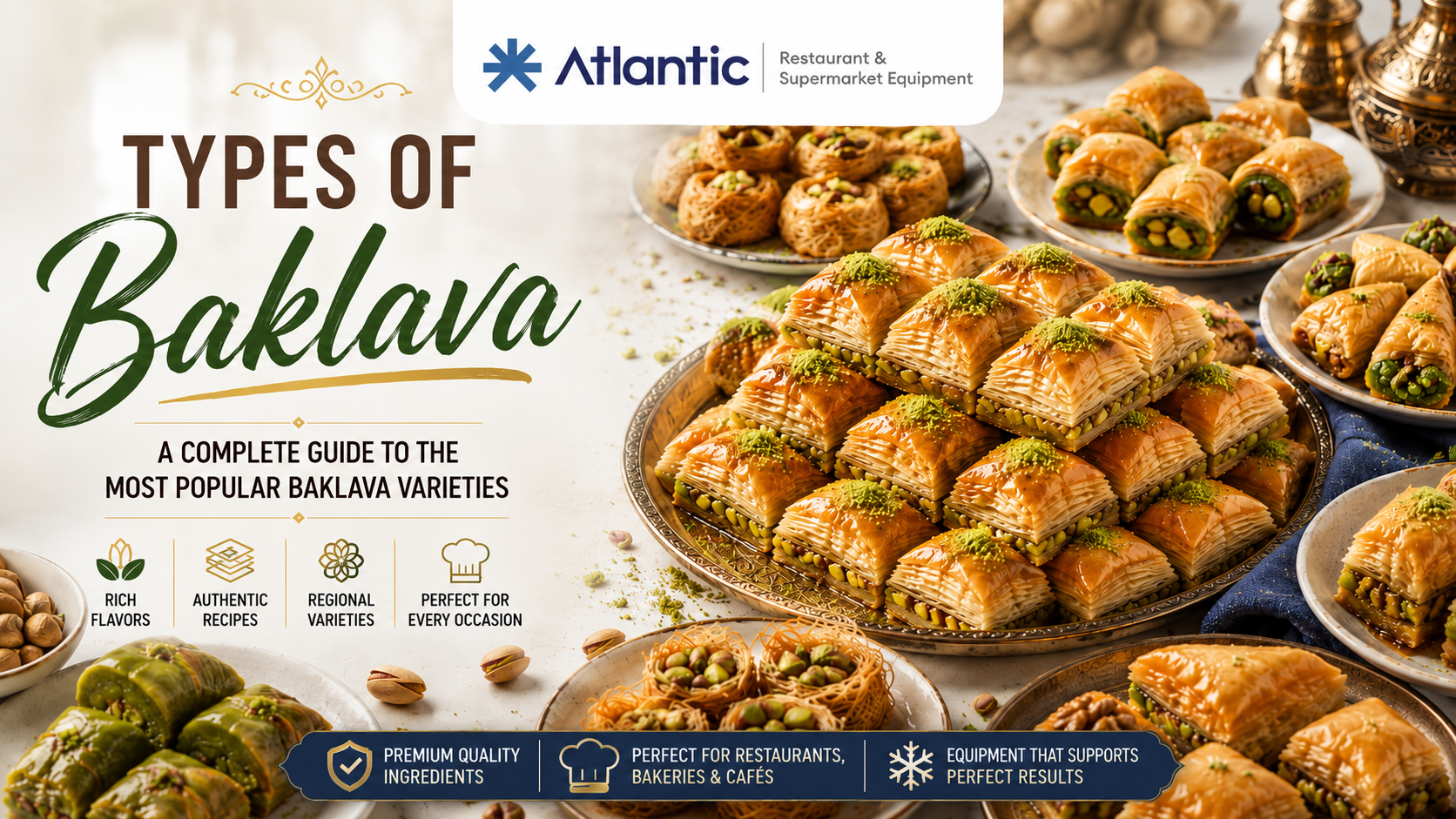
Baklava is one of the most beloved desserts in the world: crisp layers of thin pastry, rich nuts, melted butter, and fragrant syrup served in small, luxurious pieces. Although many people think of baklava as one single dessert, there are actually many different types of baklava shaped by regional traditions, nut fillings, syrup styles, pastry techniques, and serving occasions.
From Turkish pistachio baklava to Greek walnut baklava, from creamy şöbiyet to rolled sarma baklava, from honey-sweetened versions to rosewater-scented Middle Eastern styles, baklava has developed into a broad family of desserts across Turkey, Greece, the Balkans, the Levant, the Caucasus, Iran, and beyond.
This guide explains the most popular types of baklava, how they differ, what they taste like, and which varieties are best for restaurants, bakeries, cafés, and dessert menus.
What Is Baklava?
Baklava is a layered pastry dessert made with very thin sheets of dough, usually called phyllo or filo, layered with butter or clarified butter and filled with chopped nuts. After baking, the pastry is soaked with syrup, honey syrup, or a flavored sweetener that gives baklava its signature glossy finish and rich sweetness.
The most common baklava fillings include pistachios, walnuts, hazelnuts, almonds, or combinations of nuts. Depending on the region, the syrup may be made with sugar and lemon, honey, rosewater, orange blossom water, cinnamon, cloves, or other aromatics.
Traditional baklava is usually served in small pieces because it is dense, rich, and sweet. It can be cut into diamonds, squares, rectangles, triangles, rolls, nests, or large wedge-shaped slices.
Quick Comparison of Popular Baklava Types
| Baklava Type | Main Filling | Texture | Best Known For |
|---|---|---|---|
| Pistachio Baklava | Pistachios | Rich, crisp, buttery | Classic Turkish-style baklava |
| Walnut Baklava | Walnuts | Earthy, crunchy, aromatic | Greek, Balkan, and homemade styles |
| Gaziantep Baklava | Antep pistachios | Delicate, fragrant, premium | Famous Turkish regional specialty |
| Şöbiyet | Pistachios and cream | Creamy, soft inside, crisp outside | Rich Turkish bakery-style baklava |
| Sütlü Nuriye | Hazelnuts or pistachios, milk syrup | Lighter, milkier, softer | Less heavy alternative to classic baklava |
| Fıstık Sarma | Pistachio paste | Dense, nut-forward | Intense pistachio flavor |
| Midye Baklava | Pistachios and cream | Shell-shaped, creamy | Decorative modern Turkish style |
| Bülbül Yuvası | Pistachios or walnuts | Rolled, nest-shaped | Elegant presentation |
| Greek Baklava | Walnuts, honey, spices | Sticky, fragrant, spiced | Honey syrup and cinnamon notes |
| Lebanese Baklava | Pistachios, walnuts, cashews | Light, floral, crisp | Orange blossom or rosewater syrup |
| Persian Baklava | Almonds or pistachios | Fragrant, delicate | Rosewater, cardamom, saffron notes |
| Balkan Baklava | Walnuts | Syrupy, hearty, homemade | Holiday and family-style service |
| Chocolate Baklava | Nuts and chocolate | Rich, modern, dessert-like | Contemporary bakery menus |
| Ice Cream Baklava | Pistachio or walnut baklava with ice cream | Hot-cold contrast | Restaurant dessert plating |
1. Pistachio Baklava
Pistachio baklava is one of the most iconic and popular types of baklava. It is especially associated with Turkish and Middle Eastern pastry traditions. The filling is made with finely chopped or ground pistachios layered between thin sheets of phyllo dough. After baking, the pastry is soaked with syrup, creating a crisp, buttery, nutty dessert with a bright green filling.
High-quality pistachio baklava should taste balanced rather than overly sugary. The flavor should highlight roasted pistachios, butter, delicate pastry, and syrup. In many Turkish-style versions, the syrup is made with sugar, water, and lemon rather than heavy honey, allowing the pistachio flavor to remain the focus.
Pistachio baklava is a strong choice for restaurants and bakeries because it is highly recognizable, visually appealing, and often considered a premium dessert.
Cream-filled baklava varieties such as şöbiyet or milk-based desserts like Sütlü Nuriye may need proper storage and presentation in a commercial display refrigerator, especially in bakeries, cafés, and dessert counters.
2. Walnut Baklava
Walnut baklava is one of the oldest and most widespread baklava varieties. It is especially common in Greek, Balkan, Armenian, and homemade family-style recipes. Compared with pistachios, walnuts create a deeper, earthier flavor. They also pair well with cinnamon, cloves, honey, and citrus-scented syrups.
Walnut baklava is often cut into diamonds or squares and served at holidays, weddings, religious celebrations, and family gatherings. It is usually slightly darker in flavor than pistachio baklava and can feel more rustic and comforting.
For foodservice operations, walnut baklava can also be more cost-effective than pistachio baklava because walnuts are usually less expensive than premium pistachios.
3. Gaziantep Baklava
Gaziantep baklava, also called Antep baklava, is one of the most famous baklava styles in Turkey. Gaziantep is known for its pistachios and deep baklava-making tradition. This style is typically made with very thin dough, high-quality pistachios, clarified butter, and carefully balanced syrup.
What makes Gaziantep baklava special is not only the ingredient list but also the technique. The dough must be rolled extremely thin, the layers must bake evenly, and the syrup must be absorbed without making the pastry soggy. The final texture should be crisp on top, rich in the middle, and cleanly sweet.
Gaziantep baklava is often viewed as a benchmark for high-end Turkish baklava. On a dessert menu, it works well as a premium item, especially when served with Turkish coffee, espresso, or tea.
4. Turkish Baklava
Turkish baklava is usually lighter in spice than many Greek or Middle Eastern versions. It often uses pistachios or walnuts and is commonly sweetened with a sugar-based syrup rather than a heavy honey syrup. The goal is balance: crisp phyllo, rich butter, clean syrup, and a clear nut flavor.
Turkish baklava comes in many shapes and formats, including classic diamond-cut baklava, square-cut baklava, şöbiyet, sarma, midye baklava, havuç dilimi, and bülbül yuvası. Many Turkish bakeries offer a wide baklava display with different fillings, sizes, and textures.
For restaurants, Turkish baklava is a strong menu item because it can be served as a small dessert, a shareable platter, a coffee pairing, or a premium pastry display item.
5. Greek Baklava
Greek baklava is often made with walnuts, almonds, or a mixture of nuts. It is commonly flavored with cinnamon and cloves and sweetened with honey syrup. Compared with Turkish baklava, Greek baklava usually has a more aromatic, spiced profile and a stickier finish.
Greek baklava is traditionally cut into diamond-shaped pieces and served during celebrations, holidays, and family meals. The honey gives it a floral sweetness, while warm spices make it especially comforting.
This style works well in Mediterranean restaurants, Greek bakeries, cafés, and dessert menus that pair baklava with coffee, tea, or ice cream.
6. Lebanese Baklava
Lebanese baklava is often lighter, smaller, and more floral than some heavier versions. It may include pistachios, walnuts, cashews, or almonds, and the syrup is often scented with orange blossom water or rosewater. This gives the dessert a delicate fragrance.
Lebanese baklava is commonly served in assorted pastry trays with multiple shapes: fingers, nests, diamonds, rolls, and small bite-sized pieces. It is popular for weddings, holidays, catering, and gift boxes.
Because of its elegant appearance and smaller portions, Lebanese-style baklava is a good fit for bakeries, dessert counters, catering businesses, and restaurants that want a refined pastry assortment.
7. Persian Baklava
Persian baklava is known for fragrant flavors such as rosewater, cardamom, saffron, and sometimes pistachio or almond fillings. It is often more delicate and aromatic than heavily syruped versions. Some Persian-style baklava is cut into smaller diamond pieces and topped with ground pistachios or rose petals.
This type of baklava is ideal for menus that emphasize floral, aromatic desserts. It pairs especially well with black tea, Persian tea, or lightly sweetened drinks.
8. Armenian Pakhlava
Armenian pakhlava is a regional baklava style commonly made with layers of dough, chopped walnuts, warm spices, and syrup. It is often cut into diamond shapes and sometimes decorated with a nut placed in the center of each piece before baking.
The flavor is usually rich, nutty, and aromatic. Armenian versions may include cinnamon, cloves, or other spices, giving the dessert a festive character. It is often prepared for holidays, family gatherings, and special occasions.
9. Balkan Baklava
Baklava is also deeply rooted in Balkan cuisine, including countries such as Albania, Bosnia, Serbia, North Macedonia, Bulgaria, and others. Balkan baklava is often homemade, hearty, and walnut-forward. It is usually soaked generously with syrup and served during holidays, weddings, and religious celebrations.
Compared with delicate bakery-style baklava, Balkan baklava can feel more rustic and comforting. The pieces may be larger, the syrup more generous, and the filling more focused on walnuts than pistachios.
For restaurants serving Balkan or Eastern Mediterranean cuisine, walnut baklava is often the most authentic and familiar choice.
10. Şöbiyet
Şöbiyet is a Turkish baklava variation filled with nuts and a creamy semolina or clotted cream-style filling. It is usually made in a triangular shape. The outside remains crisp and flaky, while the inside is softer, creamier, and richer than classic baklava.
The cream filling gives şöbiyet a different mouthfeel. It is less about crisp layers alone and more about the contrast between crunchy pastry, sweet syrup, pistachio, and creamy filling.
Şöbiyet is a good option for bakeries and restaurants that want to offer something more indulgent than standard baklava.
11. Sütlü Nuriye
Sütlü Nuriye is a lighter Turkish baklava variation made with a milk-based syrup instead of a traditional sugar syrup. It often includes hazelnuts or pistachios and has a softer, milkier flavor profile.
Because the syrup contains milk, Sütlü Nuriye tastes less sharp and less intensely sweet than classic baklava. The texture is also softer and more delicate. It is popular with customers who like baklava but prefer a lighter finish.
This variety is especially appealing for cafés and dessert shops because it offers a different flavor while still staying within the baklava family.
12. Fıstık Sarma

Fıstık sarma, also known as pistachio roll or pistachio wrap, is one of the most pistachio-heavy baklava styles. Instead of many layers with a modest nut filling, fıstık sarma is made with a dense pistachio filling wrapped in thin pastry.
The result is intense, rich, and deeply nutty. It is usually bright green and visually striking. Because it uses a large amount of pistachio, it is often considered a premium item.
Fıstık sarma is excellent for dessert displays because its color stands out immediately.
13. Baklava Sarma
Baklava sarma refers to rolled baklava. Thin pastry is filled with nuts, rolled tightly, baked, and soaked with syrup. It can be made with pistachios, walnuts, or other fillings.
Rolled baklava has a different texture than layered baklava. The pastry wraps around the filling, creating a crisp outer shell and a concentrated nut center. It is often easier to portion and can work well for catering, bakery trays, and dessert boxes.
14. Midye Baklava
Midye baklava means “mussel baklava” because of its shell-like shape. It is a modern Turkish bakery favorite, usually filled with pistachios and cream. Its folded pastry shape makes it look decorative and luxurious.
Midye baklava is popular because it combines visual appeal with rich flavor. The creamy filling softens the inside, while the exterior remains crisp and buttery. It is an excellent choice for bakeries that want a premium, eye-catching baklava variety.
15. Bülbül Yuvası
Bülbül yuvası means “nightingale’s nest.” This baklava is shaped like a small nest, usually made by rolling phyllo around a thin rod and forming it into a circular shape. The center is filled with chopped pistachios or walnuts after baking or before final presentation.
This variety is more decorative than standard square or diamond baklava. It is often included in assorted baklava trays because it adds visual variety. The texture is crisp, syrupy, and nut-forward.
16. Havuç Dilimi Baklava
Havuç dilimi means “carrot slice,” but this baklava does not contain carrots. The name refers to its large triangular wedge shape. Havuç dilimi baklava is usually served as a large slice, often with pistachios and sometimes with ice cream or kaymak on the side.
This style is popular in restaurants because it plates beautifully. Instead of small bite-sized pieces, the customer receives a dramatic wedge of baklava that feels like a full dessert course.
For dine-in service, havuç dilimi baklava is one of the best options because it looks impressive and works well with toppings.
17. Kuru Baklava
Kuru baklava means “dry baklava.” It contains less syrup than traditional baklava, which gives it a longer shelf life and a crisper texture. It is often preferred for shipping, gift boxes, travel, and retail packaging.
Despite the name, kuru baklava is not completely dry. It is still sweet and buttery, but the syrup level is controlled so the pastry stays firm and less sticky.
For bakeries and online dessert sellers, kuru baklava can be a practical product because it holds better than very syrupy styles.
18. Cevizli Baklava
Cevizli baklava is walnut baklava in Turkish. It is one of the most common homemade and bakery-style baklava varieties in Turkey and surrounding regions. The walnut filling gives it a warm, earthy flavor and a slightly coarser texture than pistachio baklava.
Cevizli baklava can be made in classic diamond shapes, squares, rolls, or layered trays. It is often more affordable than pistachio baklava, which makes it a strong choice for catering menus and larger dessert platters.
19. Fındıklı Baklava
Fındıklı baklava is hazelnut baklava. Hazelnuts are especially associated with the Black Sea region of Turkey, where hazelnut production is important. Hazelnut baklava has a rounder, toastier flavor than pistachio or walnut baklava.
This style is less common internationally than pistachio or walnut baklava, which can make it a unique menu item. It pairs well with chocolate, coffee, and milk-based desserts.
20. Bademli Baklava
Bademli baklava is almond baklava. Almonds create a lighter, slightly sweeter nut flavor. This style is found in different regional traditions, including Mediterranean and Middle Eastern variations.
Almond baklava can be especially good with orange blossom water, rosewater, honey, or citrus syrup. It is a refined option for bakeries and restaurants looking for a slightly less common baklava flavor.
21. Cashew Baklava
Cashew baklava is popular in some Middle Eastern pastry shops, especially in assorted Lebanese and Syrian-style baklava trays. Cashews have a creamy, mild flavor that works well with floral syrups.
Because cashews are softer and less intense than pistachios or walnuts, this type of baklava has a smoother, gentler flavor. It is a good choice for customers who want a nutty dessert without the stronger bitterness of walnuts.
22. Chocolate Baklava
Chocolate baklava is a modern variation made by adding chocolate chips, cocoa, chocolate drizzle, or chocolate-nut filling to the pastry. It is not as traditional as pistachio or walnut baklava, but it is popular in contemporary bakeries and fusion dessert menus.
Chocolate baklava works especially well with hazelnuts, walnuts, pistachios, or almonds. It can be served as small pieces, plated with ice cream, or used in dessert boxes.
For restaurants, chocolate baklava can appeal to customers who are less familiar with traditional baklava but love chocolate desserts.
23. Coconut Baklava
Coconut baklava is another modern or regional variation. It uses shredded coconut either alone or mixed with nuts. The flavor is sweeter, tropical, and softer than classic nut baklava.
This style is not the standard version most people think of, but it can perform well in bakeries that offer broad pastry assortments. Coconut baklava can also pair well with chocolate, pistachio, or citrus syrup.
24. Date Baklava
Date baklava uses chopped dates, date paste, or a mixture of dates and nuts. This variation adds natural fruit sweetness and a chewy texture. It is especially suitable for Middle Eastern-inspired dessert menus.
Dates pair well with walnuts, almonds, pistachios, cinnamon, cardamom, and orange blossom water. Date baklava can also be marketed as a rich holiday dessert or a premium pastry for gift boxes.
25. Baklava with Ice Cream
Baklava with ice cream is not a separate traditional baklava recipe, but it is one of the most popular restaurant serving styles. Warm or room-temperature baklava is served with vanilla ice cream, pistachio ice cream, Turkish ice cream, or clotted cream.
The appeal comes from contrast: crisp pastry, warm syrup, cold ice cream, and rich nuts. Large triangular havuç dilimi baklava is especially popular for this type of plating.
For restaurants, this is one of the easiest ways to turn baklava into a high-value plated dessert.
26. Baklava Cheesecake
Baklava cheesecake is a modern fusion dessert that combines the flavors of baklava with the structure of cheesecake. It may include phyllo layers, nuts, honey syrup, cinnamon, pistachios, or walnut topping.
This type of dessert is not traditional, but it is popular in modern bakeries, cafés, and social-media-friendly dessert menus. It gives customers the familiar creaminess of cheesecake with the flavor profile of baklava.
27. Baklava Rolls
Baklava rolls are made by rolling phyllo around a nut filling and cutting it into smaller pieces. They may be filled with pistachios, walnuts, almonds, or mixed nuts. Because of their uniform shape, baklava rolls are practical for catering and retail packaging.
They are also easy to serve in small portions, which makes them useful for buffets, dessert trays, and grab-and-go bakery cases.
28. Mixed Nut Baklava
Mixed nut baklava uses a combination of pistachios, walnuts, almonds, hazelnuts, or cashews. This style is common in many home kitchens and commercial bakeries because it creates a layered flavor profile.
Mixed nut baklava is not always tied to one specific region, but it is versatile and cost-efficient. It can be adjusted depending on ingredient cost, customer preference, and desired flavor.
29. Honey Baklava
Honey baklava is most strongly associated with Greek-style and some Middle Eastern-style recipes. Instead of a simple sugar syrup, the dessert is sweetened with honey syrup or a mixture of honey, sugar, water, and citrus.
Honey gives baklava a deeper flavor and stickier texture. It pairs especially well with walnuts, almonds, cinnamon, and cloves.
For restaurants, honey baklava can be positioned as a classic Mediterranean dessert with a rich, aromatic finish.
30. Rosewater or Orange Blossom Baklava
Rosewater and orange blossom baklava are common in Middle Eastern-inspired versions. The syrup is lightly scented with floral water, giving the dessert a fragrant aroma.
These styles are often more delicate than heavy honey-based baklava. They work especially well with pistachios, almonds, cashews, and smaller pastry shapes.
For bakeries and cafés, floral baklava varieties can help create a more premium and elegant dessert selection.
How Baklava Types Differ
Although most baklava varieties share the same basic structure, they differ in several important ways.
1. Nut Filling
The most common fillings are pistachio, walnut, hazelnut, almond, and cashew. Pistachio is often seen as premium and colorful. Walnut is earthy and traditional. Hazelnut is toasty and aromatic. Almond is lighter and more delicate. Cashew is mild and creamy.
2. Syrup Style
Some baklava is soaked with sugar syrup, while others use honey syrup or floral syrup. Turkish-style baklava often uses a clean sugar syrup with lemon. Greek-style baklava often includes honey and warm spices. Middle Eastern versions may use orange blossom or rosewater.
3. Shape
Baklava can be cut into diamonds, squares, rectangles, triangles, rolls, nests, or large wedges. Shape affects both presentation and texture. Rolled baklava has more crisp edges, while layered tray baklava has a softer center.
4. Texture
Some baklava is very crisp and light, while others are syrupy, dense, creamy, or chewy. Kuru baklava is drier and crisper. Şöbiyet and midye baklava are creamier. Walnut baklava is often heartier, while pistachio baklava can be more delicate.
5. Serving Style
Baklava may be served as a small pastry, a plated dessert, a bakery case item, a catering tray, a gift box, or a premium dessert with ice cream. Restaurants should choose the style that fits their service model.
Best Baklava Types for Restaurants and Bakeries
For a restaurant or bakery menu, the best baklava selection depends on your customers, price point, and service style.
Best for Classic Menus
Pistachio baklava, walnut baklava, and Greek baklava are the safest choices. They are familiar, easy to explain, and widely loved.
Best for Premium Dessert Displays
Gaziantep-style baklava, fıstık sarma, midye baklava, and bülbül yuvası look more upscale and visually distinctive.
Best for Catering and Dessert Trays
Baklava rolls, Lebanese-style assorted baklava, walnut baklava, and kuru baklava are practical because they portion well and hold their shape.
Best for Plated Restaurant Desserts
Havuç dilimi baklava with ice cream, şöbiyet, and warm pistachio baklava are excellent options for dine-in service.
Best for Modern Dessert Menus
Chocolate baklava, baklava cheesecake, date baklava, and ice cream baklava can attract customers looking for something familiar but creative.
What to Serve with Baklava
Baklava is rich, so it pairs best with drinks and sides that balance sweetness.
Popular pairings include:
- Turkish coffee
- Greek coffee
- Espresso
- Black tea
- Mint tea
- Pistachio ice cream
- Vanilla ice cream
- Kaymak or clotted cream
- Fresh berries
- Citrus slices
- Unsweetened whipped cream
For restaurants, baklava can be served as a small after-dinner sweet or upgraded into a plated dessert with ice cream, sauce, and crushed pistachios.
Tips for Storing and Serving Baklava
Baklava should usually be stored at room temperature in a dry, covered container unless the recipe contains cream or dairy-based filling. Very syrupy baklava can become soft if it is sealed too tightly, while dry baklava can lose freshness if exposed to air for too long.
For foodservice, consistency matters. Keep baklava away from excess humidity, avoid stacking delicate pieces too tightly, and use proper display equipment if serving from a bakery case or dessert counter.
Cream-filled varieties such as şöbiyet or milk-based styles like Sütlü Nuriye may require refrigeration depending on the recipe and food safety requirements.
Which Baklava Type Is the Best?
There is no single best type of baklava. The best choice depends on taste, tradition, and how the dessert is being served. But for me the best baklava is the Fıstık sarma.
If you want the most iconic version, choose pistachio baklava. If you prefer a deeper, earthier flavor, walnut baklava is excellent. If you want something creamy and luxurious, try şöbiyet or midye baklava. If you want a dramatic plated dessert, havuç dilimi baklava with ice cream is a great choice. If you want a lighter, floral style, Lebanese or Persian-inspired baklava may be the best option.
For restaurants, bakeries, cafés, and catering businesses, offering more than one type of baklava can make the dessert menu more attractive. A small assortment of pistachio, walnut, rolled, and cream-filled baklava gives customers variety while keeping the menu focused.
Baklava is much more than one dessert. It is a family of pastries shaped by regional traditions, ingredients, techniques, and presentation styles. From crisp pistachio baklava to walnut-filled Greek baklava, from creamy Turkish şöbiyet to fragrant rosewater baklava, each version offers a different way to enjoy layers of pastry, nuts, butter, and syrup.
For foodservice businesses, understanding the different types of baklava can help with menu planning, dessert presentation, catering selections, and customer experience. Whether served as a small bite with coffee or as a plated dessert with ice cream, baklava remains one of the most recognizable and loved sweets in Mediterranean and Middle Eastern cuisine.