
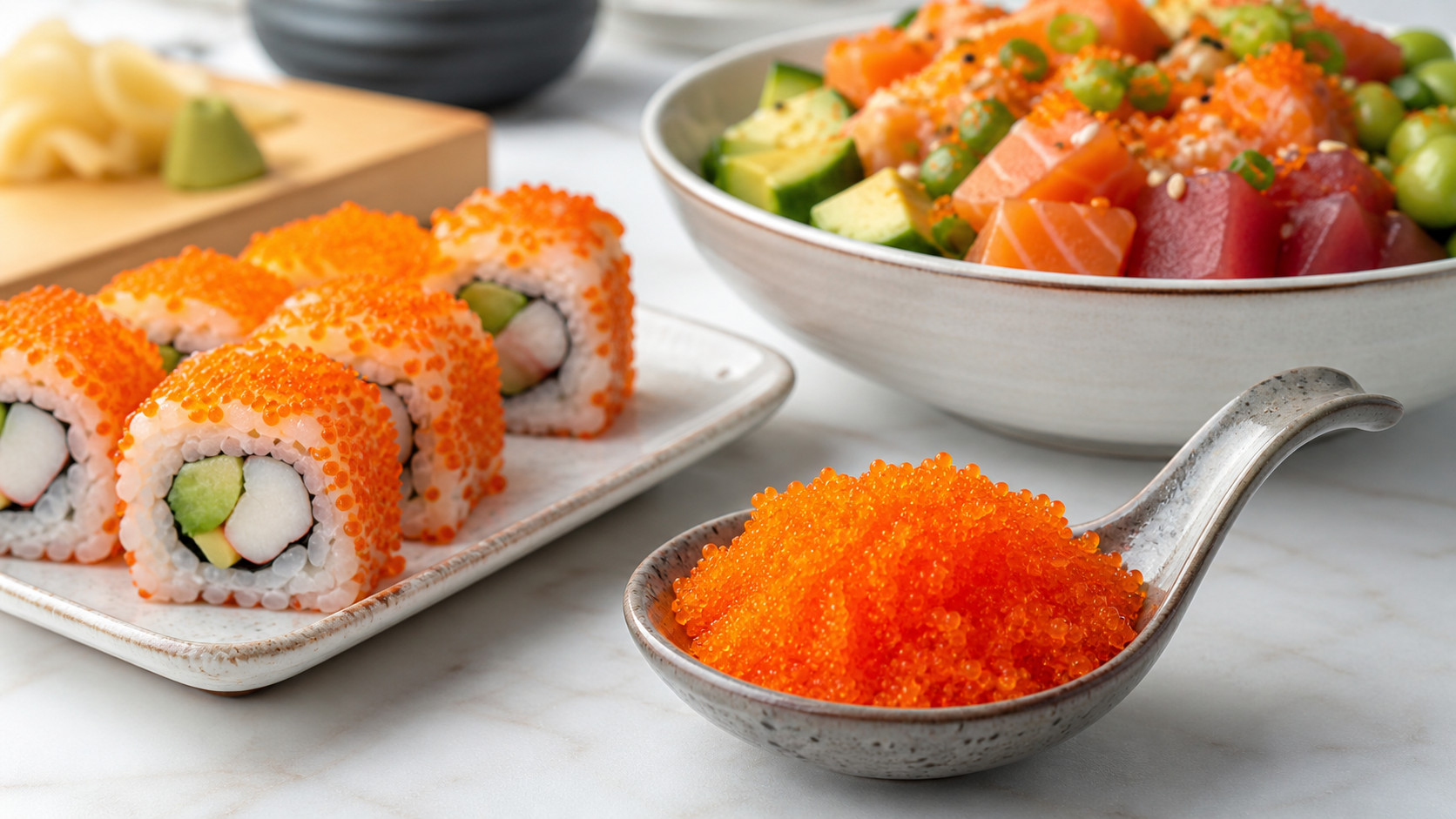
Masago is one of those small ingredients that can completely change the way a dish looks and feels. At first glance, it may seem like a simple orange garnish sprinkled over sushi rolls, but in professional kitchens, masago plays a bigger role. It adds color, texture, saltiness, visual contrast, and a recognizable “sushi bar” finish that customers immediately understand.

Masago is the roe, or eggs, of capelin, a small fish found in cold northern waters. In Japanese cuisine, it is commonly used on sushi rolls, sashimi plates, poke bowls, seafood appetizers, and sauces. Because the eggs are tiny, lightly crunchy, and naturally briny, masago gives dishes a clean ocean flavor without overpowering the main ingredient.
Masago is most commonly used in sushi, especially on rolls where color, texture, and presentation matter. If you are planning a sushi menu, it also helps to understand the most common sushi types and how each style uses toppings, fillings, rice, and seafood.
For restaurants, masago is also practical. Compared with premium roe like caviar or ikura, masago is generally more affordable, easy to portion, and versatile enough to use across multiple menu items. A sushi chef can use it outside a California roll, inside a spicy tuna roll, on top of a poke bowl, or blended into a creamy masago sauce. That flexibility is one reason it has become such a common ingredient in American sushi restaurants.
What Does Masago Taste Like?
Masago has a salty, briny, slightly sweet flavor with a subtle seafood finish. Its flavor is milder than ikura and less luxurious than caviar, but that is part of its appeal. It supports other ingredients instead of taking over the dish.
The texture is just as important as the flavor. Each tiny egg gives a light pop or crunch when eaten. That texture works especially well with soft ingredients like sushi rice, avocado, spicy mayo, tuna, salmon, imitation crab, cream cheese, and cucumber. In a roll, masago adds the small layer of contrast that makes each bite feel more complete.
Many people compare masago with tobiko because both are used in sushi and both are often orange. The difference is that tobiko, which comes from flying fish roe, usually has larger eggs and a stronger pop. Masago is smaller, more delicate, and often used as a cost-effective alternative when a restaurant wants a similar look and texture at a more accessible price point.
Masago vs Tobiko: What Is the Difference?
Masago and tobiko are often confused because they are both used as sushi toppings and can look similar on a plate. But for chefs, buyers, and restaurant owners, the difference matters.
Masago comes from capelin roe. Tobiko comes from flying fish roe. Masago eggs are smaller and softer, while tobiko eggs are slightly larger and usually have a firmer pop. Masago is typically mild, briny, and slightly sweet. Tobiko tends to have a more pronounced flavor and a sharper texture.
From a menu-cost perspective, masago is often the more economical choice. This is why many restaurants use masago for everyday rolls and save tobiko for premium rolls, specialty presentations, or menu items where the “pop” of the roe is more noticeable. A restaurant can still create a colorful, premium-looking sushi roll with masago while keeping ingredient costs easier to control.
Masago vs Ikura, Caviar, and Tamago
Masago is part of a larger family of sushi and seafood ingredients that customers often mix up.
Ikura is salmon roe. It is much larger than masago and has a stronger, richer, more pronounced ocean flavor. Ikura is often served as a featured ingredient rather than just a garnish.
Caviar traditionally refers to roe from sturgeon. It is usually associated with fine dining, luxury service, and a softer, more delicate texture. Masago is much smaller, crunchier, and more commonly used in casual sushi restaurants and poke concepts.
Tamago is not roe at all. It is a Japanese-style omelet, usually made with eggs, sugar, soy sauce, and mirin. While masago and tamago are completely different ingredients, they can work together in sushi because the salty roe balances the sweetness of the omelet.
This kind of comparison is useful for customers, but it is also useful for menu planning. If your restaurant wants a premium seafood experience, ikura or caviar may make sense. If you want an affordable garnish that can improve presentation across many dishes, masago is usually the more practical choice.
How Restaurants Use Masago
Masago is most commonly used in sushi, but restaurants can use it in more ways than many people realize. In a sushi bar, it is often rolled on the outside of maki rolls, sprinkled over specialty rolls, mixed into spicy sauces, or used as a garnish on nigiri and sashimi platters.
In poke shops, masago works well as a topping because it adds color and texture without requiring extra cooking. A bowl with tuna, salmon, rice, cucumber, avocado, seaweed salad, spicy mayo, and masago looks more finished and more valuable to the customer.
Seafood restaurants can also use masago in sauces. Masago mayo, spicy masago sauce, and creamy roe-based dressings can be used with shrimp, crab, scallops, fried seafood, rice bowls, or cold seafood appetizers. The key is to use it where the salty pop improves the dish rather than hiding it inside a heavy sauce.
For high-volume kitchens, masago should be treated as a finishing ingredient. It does not need to be used in large amounts. A small portion can make a dish look brighter, more expensive, and more intentional.
Masago Sauce: A Simple Way to Add Value to a Menu
Masago sauce is usually made by combining masago with mayonnaise, spicy mayo, soy sauce, rice vinegar, citrus, or other seasonings. Some kitchens keep it simple with masago and Japanese mayo. Others create a spicy version with sriracha, chili oil, or togarashi.
The value of masago sauce is that it can turn a basic menu item into a signature dish. For example, a restaurant can use it on a spicy tuna roll, crab salad, salmon bowl, seafood taco, crispy rice appetizer, or shrimp tempura roll. The sauce adds richness, salt, texture, and visual appeal at the same time.
For Atlantic’s audience, this is also where equipment matters. If a restaurant is preparing masago sauce in volume, it needs the right refrigerated prep space, food storage containers, squeeze bottles, ingredient pans, prep tables, and cold holding equipment. A good ingredient becomes operationally useful only when the kitchen can store, portion, and serve it safely.
Is Masago Healthy?
Masago can be a nutritious ingredient when eaten in moderation. Fish roe is generally rich in protein and beneficial fats, and masago is often discussed for its omega-3 content, vitamin B12, selenium, and other nutrients. Health-focused sources also note that masago is relatively low in calories compared with many richer toppings.
The main concern is sodium. Masago is usually cured or seasoned, which means it can contain a meaningful amount of salt. For most restaurant customers, that is not an issue in small garnish portions, but it is worth considering for people watching their sodium intake. Some health sources also advise caution for people with fish allergies or certain dietary restrictions.
For restaurants, the best approach is simple: use masago as a flavorful accent, not as the main protein. It is best in small portions where it adds texture, color, and flavor without making the dish too salty.
How to Store Masago in a Commercial Kitchen
Masago is a seafood ingredient, so storage and temperature control matter. In a restaurant environment, it should be kept cold, protected from contamination, and handled with clean utensils. The FDA advises safe seafood handling practices to reduce foodborne illness risk, including proper refrigeration and careful storage of seafood products.
For sushi operations, cold holding is especially important. Food safety guidance commonly uses 41°F / 5°C or below as the standard cold holding temperature for time/temperature control for safety foods, and sushi-related guidance also emphasizes keeping sushi cold during storage, transport, and display.
In practical terms, a sushi restaurant should keep masago in refrigeration until service, portion only what is needed for the shift, and avoid leaving it out on the counter during busy periods. Small covered containers, refrigerated prep rails, undercounter refrigerators, and sushi display cases can all help maintain better workflow.
This is where many new food businesses make a mistake. They focus on buying the ingredient but do not think enough about the equipment system around the ingredient. Masago, tuna, salmon, crab mix, sauces, cut vegetables, and rice all require a clean and organized prep process. A sushi station needs more than knives and cutting boards; it needs dependable refrigeration, cold storage, prep surfaces, ingredient pans, and a layout that helps staff move quickly without compromising food safety.
What Equipment Do You Need for a Sushi or Poke Operation?
If you are adding masago to a menu, you are probably also working with other cold ingredients: raw fish, imitation crab, spicy tuna mix, sauces, seaweed salad, cucumbers, avocado, and prepared toppings. That means your equipment setup matters.
A sushi restaurant, poke shop, or seafood counter may need commercial refrigerators, refrigerated prep tables, undercounter refrigerators, reach-in freezers, food storage containers, rice cookers, prep sinks, cutting boards, ingredient pans, and sushi display cases. For higher-volume operations, walk-in coolers and walk-in freezers may become necessary because seafood, produce, sauces, and prepared ingredients require organized cold storage.
Atlantic can naturally position itself here: successful sushi and seafood menus do not depend only on good ingredients. They depend on the cold chain, the prep station, and the daily workflow. The right commercial kitchen equipment helps protect inventory, reduce waste, improve speed, and support consistent menu execution.
How Long Does Masago Last?
Shelf life depends on the product, packaging, supplier, whether it is frozen or thawed, and how it is handled after opening. Restaurants should always follow the supplier’s label, storage instructions, and local health department requirements.
As a general rule, unopened frozen masago can last longer than thawed masago, but once thawed or opened, it should be treated as a perishable refrigerated seafood product. It should be kept covered, cold, and separated from possible contamination. Staff should use clean utensils and avoid repeatedly warming and cooling the same container during service.
For restaurants, the real goal is not just “how long can it last?” The better question is: “How do we portion it so we maintain quality and reduce waste?” A smart sushi station may keep a small working container in a refrigerated prep rail and keep backup product in a properly organized refrigerator or walk-in cooler.
Why Masago Is Popular in American Sushi Restaurants
Masago became popular because it solves several problems at once. It makes sushi look more colorful. It adds a light crunch. It gives a briny seafood note. It can be used across many rolls. And compared with more expensive roe options, it is easier for restaurants to build into everyday menu pricing.
For customers, masago gives sushi a familiar visual identity. A California roll with orange roe on the outside looks more complete than a plain roll. A poke bowl with masago looks more premium than a bowl without it. Even when customers do not know the name, they recognize the look.
For restaurant owners, that visual impact matters. Food that photographs well performs better on menus, delivery apps, social media, and customer reviews. A small ingredient like masago can improve the perceived value of a dish without requiring a complete menu redesign.
Common Masago Menu Ideas
Masago can be used in many menu items, including California rolls, spicy tuna rolls, shrimp tempura rolls, salmon avocado rolls, dragon rolls, poke bowls, sushi burritos, crispy rice appetizers, seafood salads, crab salad, spicy mayo sauces, and chef’s special rolls.
One of the best menu strategies is to use masago in tiers. Use it lightly on standard rolls for color and texture, then use more distinctive roe combinations on premium rolls. For example, a restaurant might use masago on everyday rolls, tobiko on specialty rolls, and ikura on premium seafood presentations.
This gives the menu better structure. Customers can understand why some rolls cost more, and the kitchen can control food costs more carefully.
FAQ
What is masago made from?
Masago is made from capelin roe, which means the eggs of the capelin fish. It is commonly cured, seasoned, and used as a topping or garnish in sushi and seafood dishes.
Is masago the same as tobiko?
No. Masago comes from capelin, while tobiko comes from flying fish. Masago is smaller and usually milder. Tobiko is larger and has a stronger pop.
Is masago raw?
Masago is commonly served as a cured or seasoned roe product. Restaurants should follow supplier instructions, safe seafood handling practices, and local health department requirements.
Why is masago orange?
Masago may be naturally pale yellow to orange, but many commercial products are colored or seasoned to create the bright orange look customers associate with sushi.
Can restaurants use masago in poke bowls?
Yes. Masago is a popular poke bowl topping because it adds color, saltiness, and texture without requiring additional cooking.
Does masago need to be refrigerated?
Yes. Masago should be kept cold and handled as a perishable seafood ingredient. Restaurants should maintain proper cold holding and follow product label instructions.
What equipment helps store and serve masago safely?
Useful equipment includes commercial refrigerators, refrigerated prep tables, undercounter refrigerators, food storage containers, sushi cases, ingredient pans, and walk in coolers for higher-volume operations.
Masago may be small, but it has a big impact on sushi presentation, menu value, and customer perception. It gives rolls and bowls the color, crunch, and briny finish customers expect from a professional sushi experience.
For restaurant owners, the bigger lesson is that ingredients and equipment work together. Buying masago is easy. Serving it consistently, safely, and profitably requires the right refrigerated storage, prep station, cold holding setup, and kitchen workflow.
At Atlantic, we help restaurants, sushi bars, poke shops, seafood counters, and food businesses build the equipment foundation behind their menus. Whether you are opening a new sushi concept or upgrading your cold prep area, the right equipment can make daily service faster, cleaner, and more reliable.