
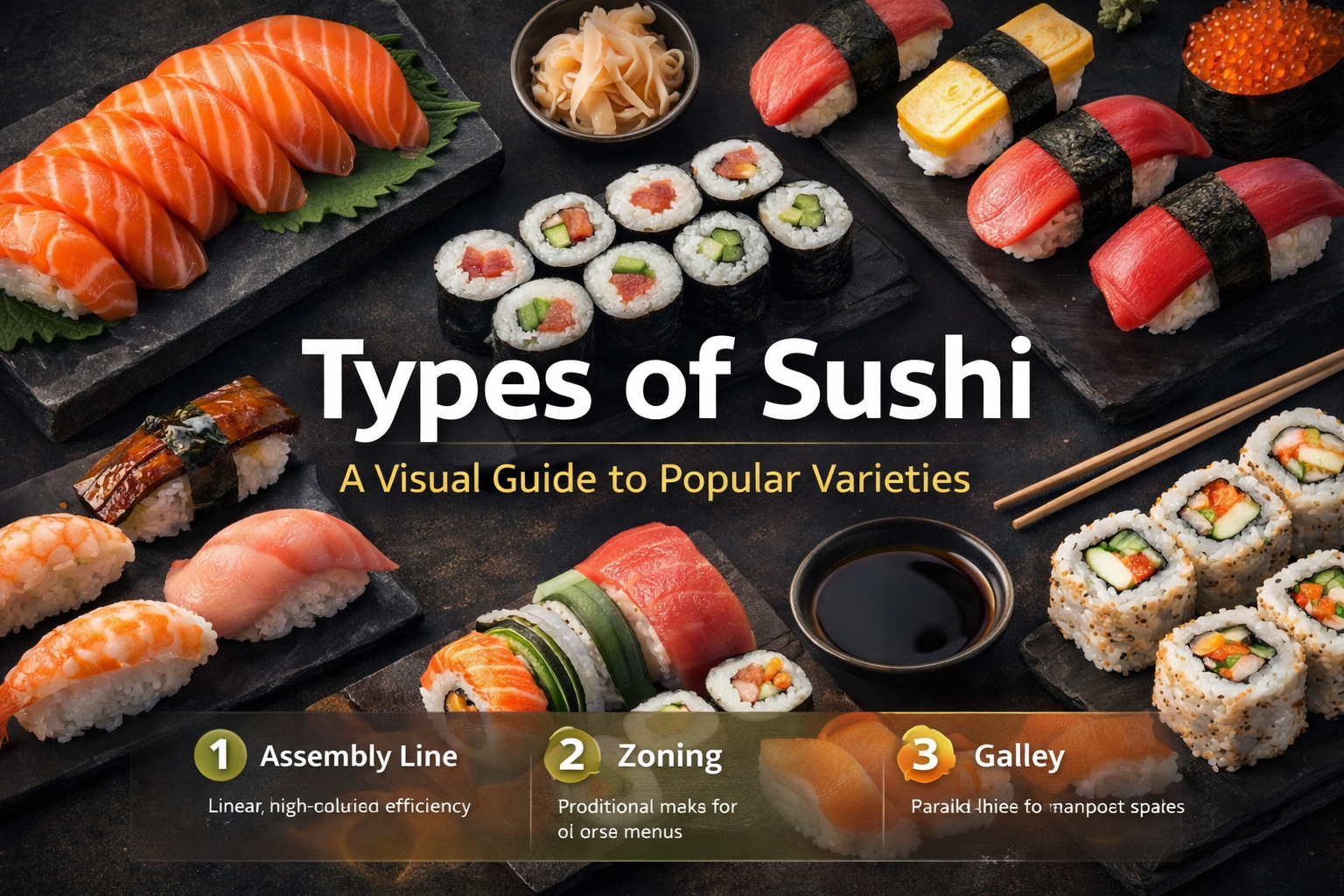
The Complete Guide for Restaurant Owners, Chefs, and Sushi Lovers
Sushi is no longer just a traditional Japanese dish. It has evolved into a global phenomenon, shaping menus across the United States from high-end omakase restaurants to fast-casual takeout concepts. For restaurant owners and operators, understanding sushi is not just about food knowledge. It is about menu strategy, customer expectations, and operational efficiency.

If you are planning to open a sushi restaurant or integrate sushi into your existing concept, knowing the different types of sushi is essential. Each type comes with its own preparation method, equipment requirements, and customer appeal.
This guide goes beyond simple definitions. It breaks down sushi types from a real-world restaurant perspective, helping you understand what works, what sells, and how to structure a sushi menu that performs.
What Is Sushi, Really?
One of the most common misconceptions is that sushi means raw fish. In reality, sushi refers to vinegared rice combined with various ingredients, which may include raw seafood, cooked items, vegetables, or even plant-based alternatives.
The foundation of all sushi is:
Sushi rice seasoned with rice vinegar, sugar, and salt
This rice is what defines sushi. Without it, you are not serving sushi. You are serving something else.
For restaurant operators, this distinction matters because:
- Rice consistency affects product quality
- Preparation workflow impacts speed and scalability
- Equipment setup influences overall kitchen performance
Sashimi: The Purest Expression of Seafood
Technically, sashimi is not sushi because it does not include rice. However, it is impossible to discuss sushi without it.
Sashimi consists of thinly sliced raw or lightly cooked seafood, served without additional components to highlight the quality of the ingredient.
Common types include:
- Salmon (sake)
- Tuna (maguro)
- Yellowtail (hamachi)
- Octopus (tako)
- Eel (unagi, usually cooked)
Why It Matters for Restaurants
Sashimi is a high-margin, high-skill item. It requires:
- premium sourcing
- precise knife work
- proper refrigeration
This is where investing in reliable commercial refrigerator becomes critical. Temperature control directly impacts both safety and quality.
Sashimi is not about complexity. It is about execution. For high-volume sushi operations, investing in a properly sized walk in cooler ensures consistent temperature control and safe storage of fresh seafood.
Nigiri: Simplicity That Defines Quality
Nigiri is one of the most traditional forms of sushi. It consists of a small hand-pressed mound of rice topped with a slice of fish or seafood.
No rolls. No excessive ingredients. Just balance.
Popular types include:
- Salmon nigiri
- Tuna nigiri
- Shrimp nigiri
- Eel nigiri
- Tamago (egg omelet)
Operational Insight
Nigiri is a test of consistency. Every piece must:
- have the same rice portion
- maintain structure
- deliver balanced flavor
This requires:
- trained staff
- efficient prep stations
- precise workflow
Well-designed food prep equipment setups can significantly improve speed without sacrificing quality.
Maki: The Foundation of Most Sushi Menus
Maki sushi is what most customers recognize as “sushi rolls.” It consists of rice and fillings wrapped in seaweed (nori) and sliced into bite-sized pieces.
Types of maki include:
Hosomaki (thin rolls)
- Single ingredient
- Example: cucumber roll, tuna roll
Futomaki (thick rolls)
- Multiple ingredients
- Larger, more complex
Why Maki Is Important
Maki is the backbone of most sushi businesses because it:
- is scalable
- appeals to a wide audience
- allows menu creativity
From an operational standpoint, maki production depends heavily on workflow efficiency. A properly designed station with the right food prep equipment allows staff to produce rolls quickly during peak hours.
Uramaki: The American Evolution of Sushi
Uramaki, also known as inside-out rolls, is one of the most popular sushi styles in the United States.
Unlike traditional maki, uramaki has rice on the outside and seaweed on the inside. This format was developed to appeal to Western customers who were less familiar with nori.
Famous examples include:
- California roll
- Rainbow roll
- Dragon roll
- Spicy tuna roll
Why Uramaki Dominates the U.S. Market
Uramaki is designed for:
- visual appeal
- bold flavors
- customization
It is also highly profitable because it allows:
- ingredient flexibility
- premium toppings
- upselling opportunities
For high-volume kitchens, consistency in uramaki production relies on efficient assembly lines and properly organized prep stations.
Temaki: The Hand Roll Experience
Temaki, or hand rolls, are cone-shaped sushi rolls meant to be eaten immediately.
They are not sliced like maki. Instead, they are served as individual portions.
Common fillings include:
- salmon and avocado
- spicy tuna
- crab and cucumber
Operational Advantage
Temaki is:
- faster to produce
- less labor-intensive
- ideal for made-to-order service
This makes it perfect for:
- fast-casual sushi concepts
- takeout-focused operations
Chirashi: The Underrated Power Item
Chirashi sushi consists of a bowl of sushi rice topped with a variety of fish, vegetables, and garnishes.
It is one of the most efficient sushi items from an operational perspective.
Why Chirashi Is a Smart Menu Addition
- Minimal assembly time
- High perceived value
- Lower labor cost
It is also perfect for delivery and takeout, making it a strong addition to modern sushi menus.
Modern Sushi Trends in the U.S.
Sushi continues to evolve, especially in the American market.
Sushi Burritos
Oversized rolls designed for portability and convenience.
Plant-Based Sushi
Vegan options using ingredients like avocado, tofu, and mushrooms.
Fusion Rolls
Combining sushi techniques with global flavors such as:
- spicy mayo
- cream cheese
- tempura
These trends show that sushi is no longer limited by tradition. It is driven by customer demand. Many modern sushi concepts are also integrating live cooking elements, such as a teppanyaki grill, to create a more interactive and experience-driven dining environment.
How to Build a High-Performing Sushi Menu
If you are designing a sushi menu, the goal is not variety. The goal is balance.
A strong sushi menu should include:
Core traditional items (nigiri, sashimi)
High-volume items (maki, uramaki)
Fast-production items (temaki, bowls)
Signature items (premium rolls)
Equipment Behind a Successful Sushi Operation
Behind every great sushi menu is a well-structured kitchen.
Your setup should include:
Commercial refrigeration for seafood storage
Food prep stations for efficient assembly
Cooking equipment for items like tempura and eel
Holding solutions for maintaining consistency during service
A well-designed kitchen layout ensures that your sushi operation runs smoothly even during peak hours.
Sushi Is a System, Not Just a Menu
Understanding sushi is not just about knowing the names of different rolls. It is about understanding how each type fits into your operation.
Each sushi category serves a purpose:
- Sashimi builds credibility
- Nigiri showcases quality
- Maki drives volume
- Uramaki drives profit
- Chirashi improves efficiency
When these elements are combined strategically, sushi becomes one of the most powerful additions to any restaurant concept.
And when supported by the right kitchen setup and equipment, it becomes a scalable and highly profitable system.