
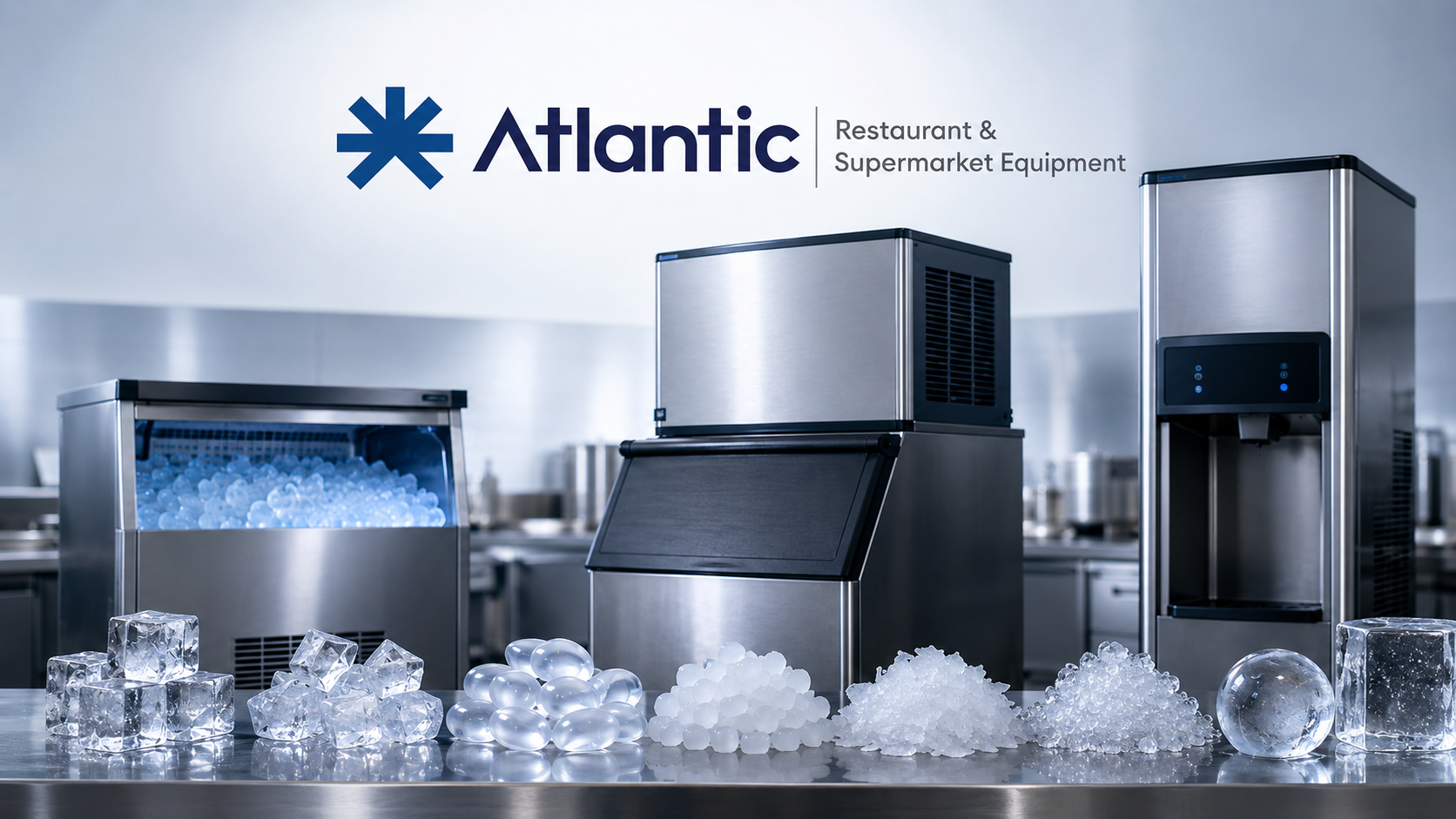
Choosing the right ice machine is not just about buying a unit that makes ice. For restaurants, bars, cafés, hotels, convenience stores, healthcare facilities, seafood markets, grocery stores, and commercial kitchens, ice affects beverage quality, food presentation, labor efficiency, sanitation, operating cost, and customer experience.
The challenge is that “ice machine” can mean several different things. Some machines are compact undercounter units. Some are high-capacity modular ice machine heads that sit on top of separate storage bins. Some are countertop ice and water dispensers. Some produce cube ice for drinks, while others make nugget ice, flake ice, crescent ice, or gourmet ice for specialty applications.
This guide explains the main types of commercial ice machines, how they work, where they are used, and how to choose the right one for your business.
Main Types of Ice Machines
Commercial ice machines can be classified in several ways:
| Classification | Main Types |
|---|---|
| By machine design | Modular ice machines, undercounter ice machines, countertop ice dispensers, ice machines with bins, ice and water dispensers |
| By condenser system | Air-cooled, water-cooled, remote condenser |
| By ice type | Cube, half cube, crescent, nugget, flake, gourmet, crushed |
| By production method | Batch-type ice machines, continuous-type ice machines |
| By application | Restaurant ice machines, bar ice machines, hotel ice machines, healthcare ice machines, seafood display ice machines, convenience store ice machines |
The best ice machine for your business depends on how much ice you need, what type of ice you need, where the machine will be installed, how much storage you need, and how your staff will use the ice during service.
Modular Ice Machines
A modular ice machine is one of the most common types of commercial ice machines for restaurants, hotels, bars, cafeterias, supermarkets, and high-volume foodservice operations.
A modular ice machine is usually sold as an ice machine head. The head produces ice but does not include a built-in storage bin. It is installed on top of a separate ice storage bin, ice dispenser, or beverage dispenser.
How Modular Ice Machines Work
The ice machine head produces ice and drops it into the bin below. The bin does not make ice; it stores the ice until staff need it. This setup allows operators to pair the right production capacity with the right storage capacity.
For example, a busy restaurant may choose a 500 lb. per day ice machine head with a 400 lb. storage bin. A hotel or banquet facility may need a higher-production modular head with a larger bin.
Best Uses for Modular Ice Machines
Modular ice machines are best for:
- Full-service restaurants
- Bars and nightclubs
- Hotels
- Banquet halls
- Cafeterias
- Schools
- Hospitals
- Grocery stores
- Convenience stores
- High-volume beverage stations
Advantages of Modular Ice Machines
The biggest advantage of a modular ice machine is flexibility. You can choose the ice machine head and storage bin separately. This helps match production and storage to your actual operation.
Modular systems are also available in many ice types, including cube, half cube, crescent, nugget, and flake ice. They are a strong choice for businesses that need consistent ice throughout the day.
Considerations Before Buying
A modular ice machine needs enough vertical clearance because the machine head sits on top of the bin. You also need to confirm water line access, electrical requirements, floor drain access, and ventilation space.
Modular units are usually better for medium- and high-volume operations than for small cafés or tight bar spaces.
Undercounter Ice Machines

An undercounter ice machine is a compact, self-contained ice maker designed to fit under a counter or work surface. These units typically combine the ice maker and storage bin in one cabinet.
How Undercounter Ice Machines Work
The machine produces ice and stores it in the same cabinet. Staff can open the front door and scoop ice directly from the built-in bin. Because the unit is compact, it is often used close to the point of service.
Best Uses for Undercounter Ice Machines
Undercounter ice machines are best for:
- Bars
- Cafés
- Coffee shops
- Small restaurants
- Office break rooms
- Food trucks and commissaries
- Server stations
- Hotel breakfast areas
- Healthcare hydration stations
- Low- to medium-volume beverage service
Advantages of Undercounter Ice Machines
The main advantage is space efficiency. An undercounter ice maker can fit in places where a full modular head and bin would be too large.
It is also convenient because staff can access ice where they actually use it. A bar may place an undercounter unit behind the counter for cocktails. A café may use one near the iced coffee station. A small restaurant may use one near the server area.
Considerations Before Buying
Undercounter units usually produce less ice than modular machines. They also have smaller storage bins. For a busy restaurant or bar, an undercounter unit may work as a secondary ice source but may not be enough as the main machine.
Ventilation is especially important. Many undercounter machines need proper front, side, or rear clearance depending on the model. Poor ventilation can reduce performance and shorten equipment life.
Ice Machines With Bin
An ice machine with bin is a commercial ice machine package that includes both the ice-making head and a matching ice storage bin.
This is a practical option for buyers who want a complete setup without separately matching a machine head and storage bin.
How Ice Machines With Bin Work
The top section makes ice. The lower section stores it. Once the storage bin is full, the machine stops producing ice until the bin level drops.
Best Uses for Ice Machines With Bin
Ice machines with bins are best for:
- Restaurants
- Bars
- Hotels
- Convenience stores
- Cafeterias
- Grocery stores
- Delis
- Catering kitchens
- Event venues
Advantages of Ice Machines With Bin
The main advantage is convenience. A pre-matched machine and bin package helps simplify the buying process. It also reduces the risk of choosing a bin that is too small, too large, or physically incompatible with the machine head.
This type of setup is often ideal for businesses that need a dependable daily ice supply and enough storage for peak service periods.
Considerations Before Buying
Production capacity and bin capacity are different numbers. A machine may produce 500 lb. of ice per day, but the bin may only store 300 lb. at one time. Buyers should compare both figures.
Also consider the footprint. Ice machines with bins can take up significant floor space and may require more vertical clearance than undercounter models.
Countertop Ice Dispensers
A countertop ice dispenser is designed to dispense ice directly into cups, containers, or pitchers. Some models dispense ice only, while others dispense both ice and water.
These machines are often used in customer-facing or staff-facing environments where sanitary, portion-controlled dispensing is important.
How Countertop Ice Dispensers Work
Depending on the model, the dispenser may include its own ice-making system or may be connected to a separate ice machine. Users press a button, lever, or sensor to dispense ice.
Best Uses for Countertop Ice Dispensers
Countertop ice dispensers are best for:
- Healthcare facilities
- Hospitals
- Nursing homes
- Offices
- Break rooms
- Hotels
- Cafeterias
- Self-serve beverage stations
- Schools
- Fitness centers
Advantages of Countertop Ice Dispensers
The biggest advantage is sanitation. Because users do not need to scoop ice from a bin, there is less direct hand contact. This can be especially valuable in healthcare, office, and self-service environments.
Countertop units are also convenient for water and ice service. Many operators prefer them in areas where staff or guests need quick access to ice throughout the day.
Considerations Before Buying
Countertop dispensers may not be suitable as the main ice source for a high-volume restaurant or bar unless they are paired with the right production capacity. Buyers should also consider countertop space, water filtration, drainage, and cleaning access.
Ice and Water Dispensers
Ice and water dispensers are commonly used in healthcare, hospitality, office, and institutional settings. They provide both drinking water and ice from the same unit.
Best Uses for Ice and Water Dispensers
Ice and water dispensers are best for:
- Hospitals
- Senior living facilities
- Clinics
- Hotel corridors
- Employee break rooms
- Schools
- Corporate offices
- Waiting rooms
- Cafeterias
Advantages of Ice and Water Dispensers
They are convenient, sanitary, and easy to use. Many models are designed for frequent self-service use, making them a strong fit for environments where guests, patients, or employees need access throughout the day.
These machines often produce nugget or chewable ice because that texture is popular in healthcare and beverage applications.
Considerations Before Buying
Pay attention to the ice type, dispensing method, drain requirements, water filtration, and cleaning schedule. In healthcare environments, sanitation and ease of cleaning should be a major part of the buying decision.
Hotel Ice Machines

Hotel ice machines are usually designed for guest access, corridor installation, vending areas, breakfast areas, or back-of-house beverage service.
A hotel may use multiple ice machines across different floors or service zones instead of relying on one central machine.
Best Uses for Hotel Ice Machines
Hotel ice machines are best for:
- Guest floors
- Vending areas
- Breakfast bars
- Banquet service
- Lobby beverage stations
- Back-of-house kitchens
- Pool bars
- Event spaces
Common Hotel Ice Machine Setups
Hotels commonly use:
- Ice dispensers
- Ice and water dispensers
- Modular ice machines with bins
- Undercounter ice machines for bars or breakfast areas
- Remote condenser machines where noise reduction matters
Considerations for Hotels
Hotels should prioritize quiet operation, guest-friendly dispensing, sanitation, reliability, and service access. If the machine is installed near guest rooms, noise and heat output become more important.
Air-Cooled Ice Machines
An air-cooled ice machine uses air to remove heat from the refrigeration system. Fans move air across the condenser coil, allowing the machine to reject heat into the surrounding space or through a remote condenser.
Air-cooled machines are among the most common commercial ice machines.
Best Uses for Air-Cooled Ice Machines
Air-cooled ice machines are best for:
- Restaurants
- Bars
- Cafés
- Hotels
- Convenience stores
- Commercial kitchens
- Most general foodservice operations
Advantages of Air-Cooled Ice Machines
Air-cooled models are popular because they are generally easier to install than water-cooled systems and do not require condenser water for cooling. They are widely available and common across many machine styles.
Considerations Before Buying
Air-cooled machines release heat into the room unless the condenser is remote. If the machine is installed in a hot kitchen, tight storage room, or poorly ventilated area, performance may suffer.
Ventilation clearance is critical. Always confirm the manufacturer’s installation requirements.
Water-Cooled Ice Machines
A water-cooled ice machine uses water to remove heat from the refrigeration system instead of relying only on airflow.
These machines can perform well in hot or tight spaces because they are less affected by ambient air temperature. However, they typically use more water than air-cooled machines and may be restricted by local codes or utility rules in some areas.
Best Uses for Water-Cooled Ice Machines
Water-cooled ice machines may be considered for:
- Hot kitchens
- Tight mechanical spaces
- Areas with limited ventilation
- Certain specialized commercial installations
Advantages of Water-Cooled Ice Machines
Water-cooled machines can be useful where ambient air conditions make air-cooled performance difficult. They may also reduce heat added to the room.
Considerations Before Buying
Water usage is the biggest concern. Many businesses avoid water-cooled ice machines unless there is a specific operational reason to use them. Always check local codes, utility requirements, and long-term water cost before choosing this type.
Remote Condenser Ice Machines
A remote condenser ice machine moves the condenser away from the ice machine head. The condenser is often installed outdoors, on a roof, or in another remote location.
How Remote Condenser Ice Machines Work
The ice machine head is installed inside the building, while the condenser is placed elsewhere. Refrigerant lines connect the two sections. This allows the heat and fan noise to be moved away from the kitchen, bar, or service area.
Best Uses for Remote Condenser Ice Machines
Remote condenser ice machines are best for:
- Hot kitchens
- Fine dining restaurants
- Hotels
- Bars where noise matters
- High-volume ice production areas
- Locations where indoor heat load is a concern
Advantages of Remote Condenser Ice Machines
The main advantage is comfort. By moving heat and noise away from the work area, a remote system can make the kitchen or bar more comfortable. This can also help with indoor temperature management.
Remote systems are especially useful in high-volume operations where the ice machine runs frequently.
Considerations Before Buying
Remote systems are more complex to install. They require proper refrigerant line routing, roof or exterior access, and professional installation. They may cost more upfront but can be worth it in the right environment.
Cube Ice Machines
Cube ice machines produce solid ice cubes or cube-style ice. This is one of the most common types of ice for restaurants and bars.
Cube ice may include full cube, half cube, dice cube, and similar formats depending on the brand.
Best Uses for Cube Ice Machines
Cube ice machines are best for:
- Soft drinks
- Water service
- Cocktails
- Spirits
- Restaurants
- Bars
- Hotels
- Cafés
- Convenience stores
Advantages of Cube Ice
Cube ice is versatile, attractive, and relatively slow melting. Full cube ice is often preferred for premium beverage presentation, while half cube ice is widely used for general beverage service because it works well in many glass sizes and dispensers.
Considerations Before Buying
Choose cube size based on your beverage program. A cocktail bar may prefer larger cubes, while a quick-service restaurant may prefer half cubes for fountain drinks.
Half Cube Ice Machines
Half cube ice machines produce smaller cube-style ice pieces. Half cube ice is one of the most practical formats for restaurants, bars, cafés, and convenience stores.
Best Uses for Half Cube Ice
Half cube ice is best for:
- Soft drinks
- Iced coffee
- Tea
- Cocktails
- Smoothies
- Water service
- Fast-casual restaurants
- Convenience stores
Advantages of Half Cube Ice
Half cube ice fills glasses efficiently and cools drinks quickly. It works well in many commercial beverage programs because it balances cooling performance, versatility, and machine availability.
Considerations Before Buying
Half cube ice may melt faster than larger cube formats. For premium spirits or high-end cocktail presentation, a larger cube or gourmet ice format may be better.
Crescent Ice Machines
Crescent ice machines produce crescent-shaped ice, often associated with hard, clear, slow-melting ice. Crescent ice has a curved shape that can reduce splashing and support high-volume beverage service.
Best Uses for Crescent Ice
Crescent ice is best for:
- Restaurants
- Bars
- Hotels
- Soft drinks
- Cocktails
- Water service
- High-volume beverage programs
Advantages of Crescent Ice
Crescent ice is durable, attractive, and efficient for beverage service. Its shape helps it move well in glasses and bins, and it is often used in commercial environments where consistency matters.
Considerations Before Buying
Crescent ice is brand-specific in many cases. If your operation specifically wants crescent ice, make sure the machine you choose is designed to produce that format.
Nugget Ice Machines
Nugget ice machines produce small, soft, chewable ice. Nugget ice is also called pellet ice, chewable ice, or cubelet ice depending on the brand.
This type of ice is extremely popular in soft drinks, healthcare, cafés, and specialty beverage service.
Best Uses for Nugget Ice Machines
Nugget ice machines are best for:
- Soft drinks
- Iced coffee
- Specialty drinks
- Healthcare facilities
- Hospitals
- Senior living facilities
- Cafés
- Smoothie bars
- Self-serve beverage stations
Advantages of Nugget Ice
Nugget ice has a soft, chewable texture. It also absorbs beverage flavor, which many customers enjoy. This makes it a strong choice for soft drinks, iced tea, lemonade, and specialty beverages.
Considerations Before Buying
Nugget ice can be in high demand, but nugget ice machines may require careful cleaning and maintenance. Make sure the machine’s production capacity matches customer demand, especially if nugget ice is part of your brand experience.
Flake Ice Machines
Flake ice machines produce thin, flat pieces of ice that mold easily around products. Flake ice is widely used for food displays and rapid cooling.
Best Uses for Flake Ice Machines
Flake ice machines are best for:
- Seafood displays
- Meat displays
- Produce displays
- Salad bars
- Food presentation
- Healthcare
- Some blended beverage applications
- Supermarkets
- Fish markets
Advantages of Flake Ice
Flake ice provides excellent surface coverage. It can be packed around seafood, produce, or prepared foods to keep items cold and visually fresh. Because it molds easily, it is one of the best ice types for display cases and food merchandising.
Considerations Before Buying
Flake ice is not usually the best choice for standard beverage service. It melts faster than cube ice and is better for cooling, packing, and display applications.
Gourmet Ice Machines
Gourmet ice machines produce premium, clear, specialty-shaped ice. This may include large cubes, spheres, top-hat ice, or other specialty formats.
Best Uses for Gourmet Ice Machines
Gourmet ice machines are best for:
- Craft cocktail bars
- Fine dining restaurants
- Hotel lounges
- Whiskey bars
- Premium beverage programs
- Upscale hospitality concepts
Advantages of Gourmet Ice
Gourmet ice is all about presentation and slow melting. Large clear cubes or spheres can make cocktails look more premium while reducing dilution.
For bars that sell high-end cocktails or premium spirits, the right ice can become part of the customer experience.
Considerations Before Buying
Gourmet ice machines are typically more specialized. They may produce less ice per day than general-purpose cube machines, and the equipment can be more expensive. They are best for operations where beverage presentation justifies the investment.
Crushed Ice Machines
Crushed ice is small, irregular ice often used for blended drinks, cocktails, and displays. Some businesses use machines that produce ice and then crush it, while others use separate ice crushers.
Best Uses for Crushed Ice
Crushed ice is best for:
- Margaritas
- Frozen drinks
- Smoothies
- Mojitos
- Seafood displays
- Salad bars
- Food presentation
Advantages of Crushed Ice
Crushed ice cools quickly and packs easily. It is useful in both beverage and display applications.
Considerations Before Buying
Crushed ice melts quickly. If your operation needs crushed ice all day, confirm whether you need a dedicated machine, a crusher, or a different ice format such as flake or nugget.
Batch-Type Ice Machines
A batch-type ice machine freezes water into ice and then harvests the ice in cycles. Many cube ice machines are batch-type machines.
Best Uses for Batch-Type Machines
Batch-type machines are best for:
- Cube ice
- Half cube ice
- Full cube ice
- Crescent ice
- Gourmet ice
Advantages of Batch-Type Machines
Batch-type machines are widely used and available in many commercial formats. They are common in restaurants, bars, hotels, and beverage service operations.
Considerations Before Buying
Production capacity depends on the machine’s harvest rate and operating conditions. Ambient temperature, water temperature, ventilation, and maintenance all affect real-world output.
Continuous-Type Ice Machines
Continuous-type ice machines produce ice continuously rather than in batches. Flake and nugget ice machines are common examples.
Best Uses for Continuous-Type Machines
Continuous-type machines are best for:
- Nugget ice
- Flake ice
- Healthcare ice
- Food displays
- High-demand specialty ice applications
Advantages of Continuous-Type Machines
Continuous production is useful when the operation needs a steady supply of chewable or flake-style ice. These machines are common in healthcare, beverage, and display applications.
Considerations Before Buying
Continuous-type machines often have different maintenance needs than cube machines. Cleaning, water filtration, and sanitation are especially important.
Self-Contained Ice Machines
A self-contained ice machine has the ice-making components and storage bin in the same cabinet. Most undercounter ice machines are self-contained units.
Best Uses for Self-Contained Ice Machines
Self-contained ice machines are best for:
- Small restaurants
- Bars
- Cafés
- Break rooms
- Offices
- Low- to medium-volume applications
Advantages of Self-Contained Ice Machines
They are compact and convenient. Installation can be simpler than larger modular systems, and the all-in-one format is easy to understand.
Considerations Before Buying
Because the condenser, compressor, evaporator, and bin are in one cabinet, ventilation and service access are important. Self-contained machines may also have lower production capacity than modular units.
Commercial Ice Storage Bins
An ice storage bin does not make ice. It stores ice produced by a modular ice machine head.
Best Uses for Ice Storage Bins
Ice storage bins are best for:
- Modular ice machines
- High-volume restaurants
- Hotels
- Catering operations
- Banquet facilities
- Cafeterias
- Bars
Why Bin Capacity Matters
A business can run out of usable ice even if the machine has enough daily production. This happens when the bin is too small for rush periods.
For example, if a restaurant uses large amounts of ice during lunch and dinner rush, the storage bin must hold enough ice to support those peak windows.
Considerations Before Buying
Check bin width, depth, height, ice capacity, door style, compatibility with the machine head, and available floor space.
How to Choose the Right Type of Ice Machine
The right ice machine depends on five core questions.
1. How Much Ice Do You Need Per Day?
Daily ice production is usually measured in pounds per 24 hours. A small café may need a compact undercounter unit. A busy bar, hotel, or restaurant may need a modular ice machine with a large bin.
Always size the machine for peak demand, not average demand.
2. What Type of Ice Do You Need?
Choose the ice type based on how the ice will be used.
| Ice Type | Best For |
|---|---|
| Full cube | Cocktails, spirits, premium drinks |
| Half cube | Soft drinks, iced coffee, general beverage service |
| Crescent ice | Restaurants, bars, hotels, high-volume beverages |
| Nugget ice | Soft drinks, healthcare, cafés, specialty drinks |
| Flake ice | Seafood, meat, produce, food displays |
| Gourmet ice | Craft cocktails and premium beverage presentation |
| Crushed ice | Blended drinks, margaritas, displays |
3. Where Will the Machine Be Installed?
Installation location affects the best machine type.
A small bar may need an undercounter unit. A hotel may need a dispenser. A high-volume kitchen may need a modular machine with a bin. A hot kitchen may benefit from a remote condenser system.
Before buying, confirm:
- Water line access
- Drainage
- Electrical requirements
- Ventilation clearance
- Floor space
- Door swing and service access
- Ambient room temperature
- Local code requirements
4. How Much Storage Do You Need?
Ice production and ice storage are not the same. Production tells you how much ice the machine can make in 24 hours. Storage tells you how much ice can be held at one time.
A business with intense rush periods may need a larger bin even if the daily production number looks adequate.
5. What Is Your Long-Term Cost?
The purchase price is only one part of the total cost. Also consider:
- Energy use
- Water use
- Filters
- Cleaning supplies
- Maintenance
- Repairs
- Downtime risk
- Installation cost
- Service availability
A lower-priced machine may be the right choice for a small business, while a premium machine may be the better long-term investment for a high-volume operation.
Best Ice Machine Type by Business
Restaurants
Most restaurants should compare modular ice machines with bins, ice machines with bins, and undercounter machines for server stations or bar areas.
Recommended ice types: half cube, cube, crescent.
Bars
Bars often need multiple ice types. A standard beverage program may use half cube or crescent ice, while a cocktail bar may need gourmet ice or large cubes.
Recommended ice types: cube, half cube, crescent, gourmet, nugget.
Cafés and Coffee Shops
Cafés often need ice for iced coffee, cold brew, tea, smoothies, and specialty drinks. Undercounter machines and compact ice machines with bins are common.
Recommended ice types: half cube, nugget, cube.
Hotels
Hotels may need guest-facing dispensers, breakfast-area ice machines, and back-of-house modular machines.
Recommended machine types: ice dispensers, ice and water dispensers, modular ice machines.
Healthcare Facilities
Healthcare facilities often prefer sanitary dispensing and soft chewable ice.
Recommended machine types: countertop ice and water dispensers, nugget ice machines, cubelet machines.
Seafood Markets and Grocery Stores
Seafood, meat, and produce displays usually need flake ice because it molds around products and provides excellent surface coverage.
Recommended ice type: flake ice.
Convenience Stores
Convenience stores often need dependable beverage ice for fountain drinks and self-service stations.
Recommended machine types: modular ice machines, ice dispensers, ice machines with bins.
Common Mistakes to Avoid When Buying an Ice Machine
Mistake 1: Buying Based Only on Daily Production
Daily production is important, but storage capacity, ice type, and installation conditions matter too.
Mistake 2: Ignoring Ventilation
Poor ventilation can reduce ice production and increase service problems. Always follow clearance requirements.
Mistake 3: Choosing the Wrong Ice Type
A seafood market should not choose the same ice machine as a cocktail bar. Match the ice to the application.
Mistake 4: Forgetting Water Filtration
Water quality affects ice clarity, taste, scale buildup, and machine life. A proper water filter is strongly recommended.
Mistake 5: Underestimating Peak Demand
A machine that works on a slow weekday may fail to keep up on weekends, holidays, or peak summer service.
Mistake 6: Not Planning for Drainage
Most commercial ice machines require proper drainage. Confirm drain type and location before installation.
Mistake 7: Ignoring Service Access
Technicians need room to clean, inspect, and repair the machine. Do not install an ice machine in a space that blocks service panels or airflow.
Which Type of Ice Machine Should You Choose?
Choose a modular ice machine if you need high production and flexible storage.
Choose an undercounter ice machine if you have limited space or need ice close to the point of service.
Choose an ice machine with bin if you want a complete production-and-storage package.
Choose a countertop dispenser if sanitation and self-service access are important.
Choose an air-cooled machine for most standard restaurant and foodservice applications.
Choose a water-cooled machine only when the installation conditions justify it and local rules allow it.
Choose a remote condenser machine if you want to reduce indoor heat and noise.
Choose a nugget ice machine if chewable ice is important to your beverage or healthcare program.
Choose a flake ice machine for seafood, meat, produce, and food displays.
Choose a gourmet ice machine for premium cocktail presentation.
Shop Commercial Ice Machines at Atlantic
Atlantic Restaurant & Supermarket Equipment offers commercial ice machines for restaurants, bars, hotels, cafés, grocery stores, delis, convenience stores, healthcare facilities, and foodservice operations.
Whether you need a compact undercounter ice maker, a commercial ice machine with bin, a modular ice machine head, an ice storage bin, or a machine designed for a specific ice type, Atlantic can help you compare options based on production capacity, storage capacity, machine size, ice type, and budget.
Frequently Asked Questions
What are the main types of commercial ice machines?
The main types of commercial ice machines are modular ice machines, undercounter ice machines, ice machines with bins, countertop ice dispensers, ice and water dispensers, air-cooled ice machines, water-cooled ice machines, and remote condenser ice machines.
What is the difference between a modular ice machine and an undercounter ice machine?
A modular ice machine is an ice-making head that usually sits on top of a separate storage bin. An undercounter ice machine is a compact self-contained unit with the ice maker and storage bin in one cabinet.
What type of ice machine is best for a restaurant?
Most restaurants use a modular ice machine with a storage bin or an ice machine with bin. Smaller restaurants may use an undercounter ice machine. The best option depends on daily ice usage, space, and beverage volume.
What type of ice machine is best for a bar?
Bars often use half cube, crescent, or cube ice machines for standard drink service. Craft cocktail bars may also use gourmet ice machines for large clear cubes or specialty ice.
What type of ice machine makes nugget ice?
A nugget ice machine, cubelet ice machine, or chewable ice machine makes small, soft ice that is popular for soft drinks, healthcare, iced coffee, and specialty beverages.
What type of ice machine makes flake ice?
A flake ice machine makes thin, flat ice pieces used for seafood displays, meat displays, produce displays, salad bars, and certain healthcare or food presentation applications.
Is an air-cooled or water-cooled ice machine better?
Air-cooled ice machines are more common and are suitable for most foodservice operations. Water-cooled machines may help in hot or tight spaces but can use significantly more water and may be restricted in some areas.
What is a remote condenser ice machine?
A remote condenser ice machine places the condenser away from the ice machine head, often outdoors or on a roof. This helps move heat and fan noise away from the kitchen or service area.
How much ice production do I need?
Ice needs depend on your business type, menu, traffic, and peak service periods. Always size the machine for your busiest times, not your average day.
Do commercial ice machines need a drain?
Most commercial ice machines need proper drainage. Drain requirements vary by model and installation type, so confirm plumbing requirements before buying.
Do I need a water filter for my ice machine?
Yes. A water filter is strongly recommended because it can improve ice taste and clarity while helping reduce scale buildup and maintenance problems.
What is the best commercial ice machine for a small café?
A small café may use an undercounter ice machine or a compact ice machine with bin. Nugget ice and half cube ice are both popular for iced coffee, tea, soft drinks, and specialty beverages.