
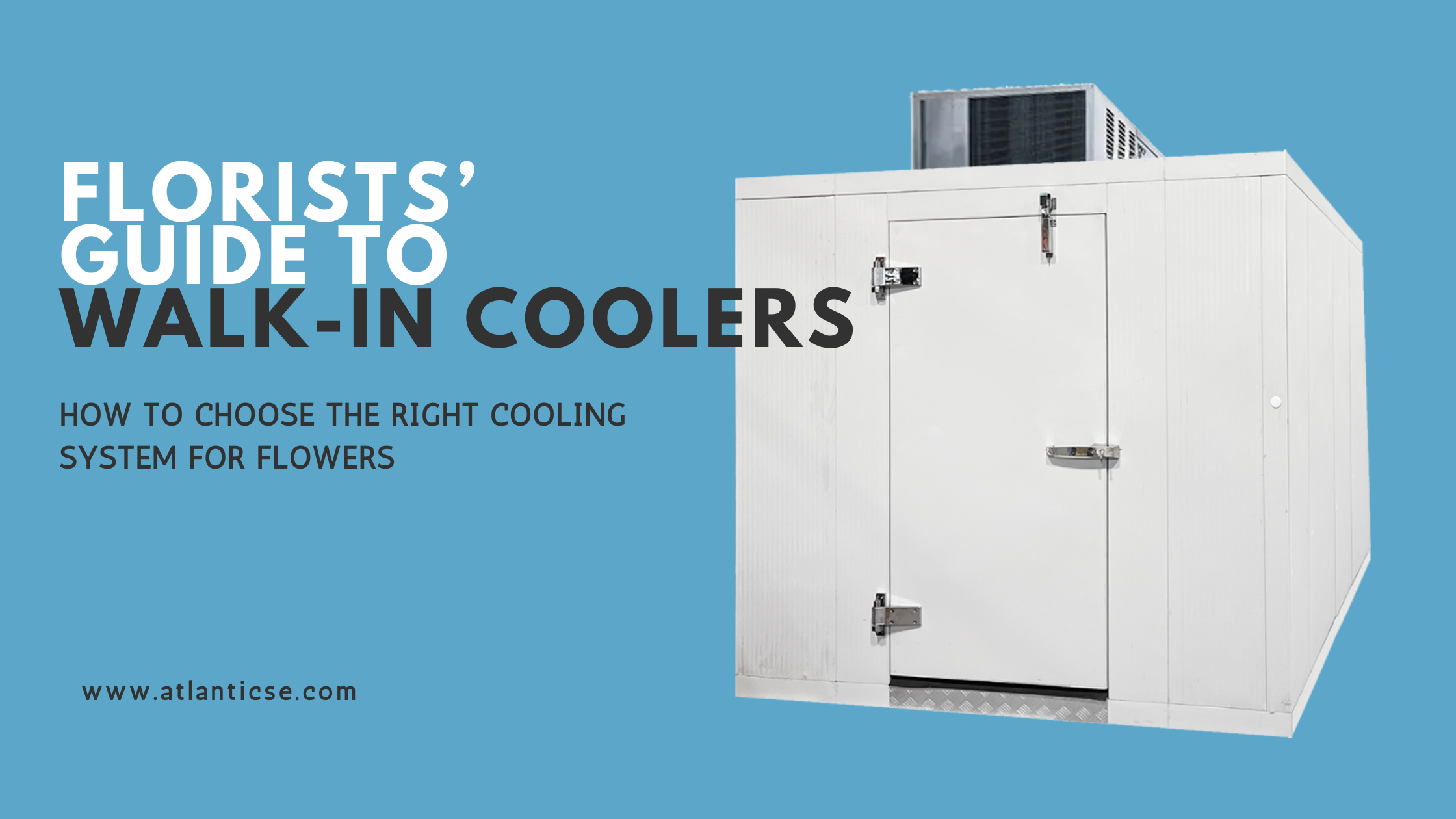
For florists, refrigeration is not simply about keeping products cold. Flowers are living products even after being cut, and their lifespan depends heavily on how well their environment slows down natural aging processes. This is why florists require specialized walk-in coolers rather than standard commercial refrigeration systems designed for food and beverages.
Most commercial walk-in coolers are engineered for products like meat, dairy, or beverages. These products benefit from dry, stable cold environments with minimal humidity. Flowers, however, require a very different balance. Without proper humidity control, flowers lose moisture rapidly, resulting in wilted petals, brittle stems, and shortened shelf life.
Specialized walk-in coolers for florists are designed to preserve freshness by controlling not just temperature but also humidity and airflow. Maintaining the right moisture level helps flowers retain their structure and color while slowing dehydration. At the same time, proper air circulation prevents stagnant zones where mold or bacteria can develop.
Another key difference is gas management. Flowers emit ethylene gas as they age, which accelerates the wilting process. In poorly designed refrigeration systems, ethylene can accumulate and damage entire batches of flowers. Floral walk-in coolers are designed to reduce ethylene exposure through controlled ventilation and airflow patterns.
For a flower shop, a walk-in cooler is not just storage. It is a core operational asset. Choosing the right system directly impacts product quality, customer satisfaction, and overall profitability. Florists who invest in specialized cooling systems consistently experience lower product loss, longer display life, and better visual presentation.
Ideal Temperature and Humidity Levels for Cut Flowers
Temperature and humidity control are the foundation of successful floral refrigeration. While exact requirements can vary by flower type, there are industry-standard ranges that work for most cut flowers.
In general, the ideal temperature for cut flowers is between 34°F and 38°F. This temperature range slows metabolic activity without causing cellular damage. Temperatures below this range risk freezing and tissue damage, while higher temperatures accelerate respiration and moisture loss.
Humidity is equally critical. Most cut flowers require a humidity level between 80% and 90%. Low humidity environments cause flowers to dry out quickly, leading to drooping petals and weak stems. Excessively high humidity, on the other hand, can promote mold growth and bacterial contamination.
Standard commercial walk-in coolers are often designed to remove moisture from the air, which is ideal for food safety but harmful for flowers. Floral walk-in coolers use specialized evaporators and airflow systems that maintain consistent humidity without creating condensation.
Another important consideration is consistency. Temperature and humidity fluctuations can stress flowers and shorten their lifespan. A quality walk-in cooler for florists should maintain stable conditions even during frequent door openings, which are common in busy flower shops.
Professional florists often work with multiple flower varieties at once, each with slightly different storage preferences. Adjustable temperature settings and responsive humidity control allow flower shops to adapt storage conditions based on inventory needs and seasonal changes.
Walk-In Cooler vs Standard Refrigeration for Flower Shops
One of the most common mistakes flower shop owners make is assuming that any walk-in cooler will work for floral storage. While standard commercial refrigeration systems can keep flowers cold, they rarely provide the environment flowers actually need to thrive.
Standard refrigeration systems prioritize low humidity and uniform cooling for food safety. This approach removes moisture from the air and can dehydrate flowers in a matter of days. As a result, flowers stored in standard coolers often show signs of stress well before their expected shelf life.
Floral walk-in coolers are engineered differently. They balance temperature with controlled humidity, allowing flowers to retain moisture and structural integrity. Airflow is designed to be gentle rather than aggressive, reducing physical stress on delicate petals and leaves.
Another difference lies in interior layout. Flower coolers typically feature adjustable shelving and vertical storage options to accommodate buckets, arrangements, and boxed flowers. Standard walk-in coolers are usually optimized for shelving food containers, not tall floral storage.
From a cost perspective, standard refrigeration may appear cheaper upfront. However, increased product loss, reduced display quality, and higher replacement rates often offset any initial savings. Over time, specialized floral walk-in coolers tend to be more cost-effective due to reduced waste and improved product longevity.
For flower shops aiming to maintain consistent quality and professional presentation, the difference between commercial refrigeration and a floral walk-in cooler becomes clear very quickly.
Choosing the Right Walk-In Cooler Size for Your Flower Shop
Selecting the correct walk-in cooler size is one of the most important purchasing decisions a florist can make. A cooler that is too small limits inventory and forces frequent restocking. A cooler that is too large increases energy costs and wastes valuable floor space.
The right size depends on several factors, including shop size, sales volume, delivery frequency, and seasonal demand. Florists who handle large event orders or wedding arrangements typically require more storage space than retail-only flower shops.
Daily inventory turnover is another critical factor. Shops that receive frequent deliveries may function well with smaller coolers, while shops that buy in bulk to reduce costs need larger storage capacity.
Peak seasons must also be considered. Holidays such as Valentine’s Day, Mother’s Day, and wedding season significantly increase flower volume. A walk-in cooler should be sized to handle peak demand, not just average daily operations.
Interior layout plays a role as well. Vertical storage options and adjustable shelving can significantly increase usable space without increasing the physical footprint of the cooler. Experienced suppliers often help florists plan internal configurations to maximize efficiency.
Choosing the right size walk-in cooler is about balancing operational needs with long-term costs. Proper sizing reduces stress on equipment, improves workflow, and supports business growth.
Indoor vs Outdoor Walk-In Coolers for Florists
Florists operate in a wide variety of environments, and the choice between indoor and outdoor walk-in coolers depends largely on location, space availability, and business model.
Indoor walk-in coolers are common in shopping malls, urban storefronts, and strip malls. They offer convenience, easy access, and protection from external weather conditions. Indoor units typically require less insulation and can integrate seamlessly into existing layouts.
Outdoor walk-in coolers are often preferred by garden centers, standalone flower shops, and businesses with limited indoor space. These units are built with weather-resistant materials and enhanced insulation to withstand temperature fluctuations, rain, and snow.
For florists with high-volume operations, outdoor coolers free up valuable interior space for retail displays and customer interaction. However, they require careful planning for accessibility and security.
Climate also plays a role. In regions with extreme heat or cold, outdoor units must be designed to maintain stable internal conditions regardless of external temperatures. This makes proper insulation and refrigeration capacity especially important.
Both indoor and outdoor walk-in coolers can work effectively for florists when chosen correctly. The key is aligning the cooler type with operational needs, available space, and long-term business goals.