
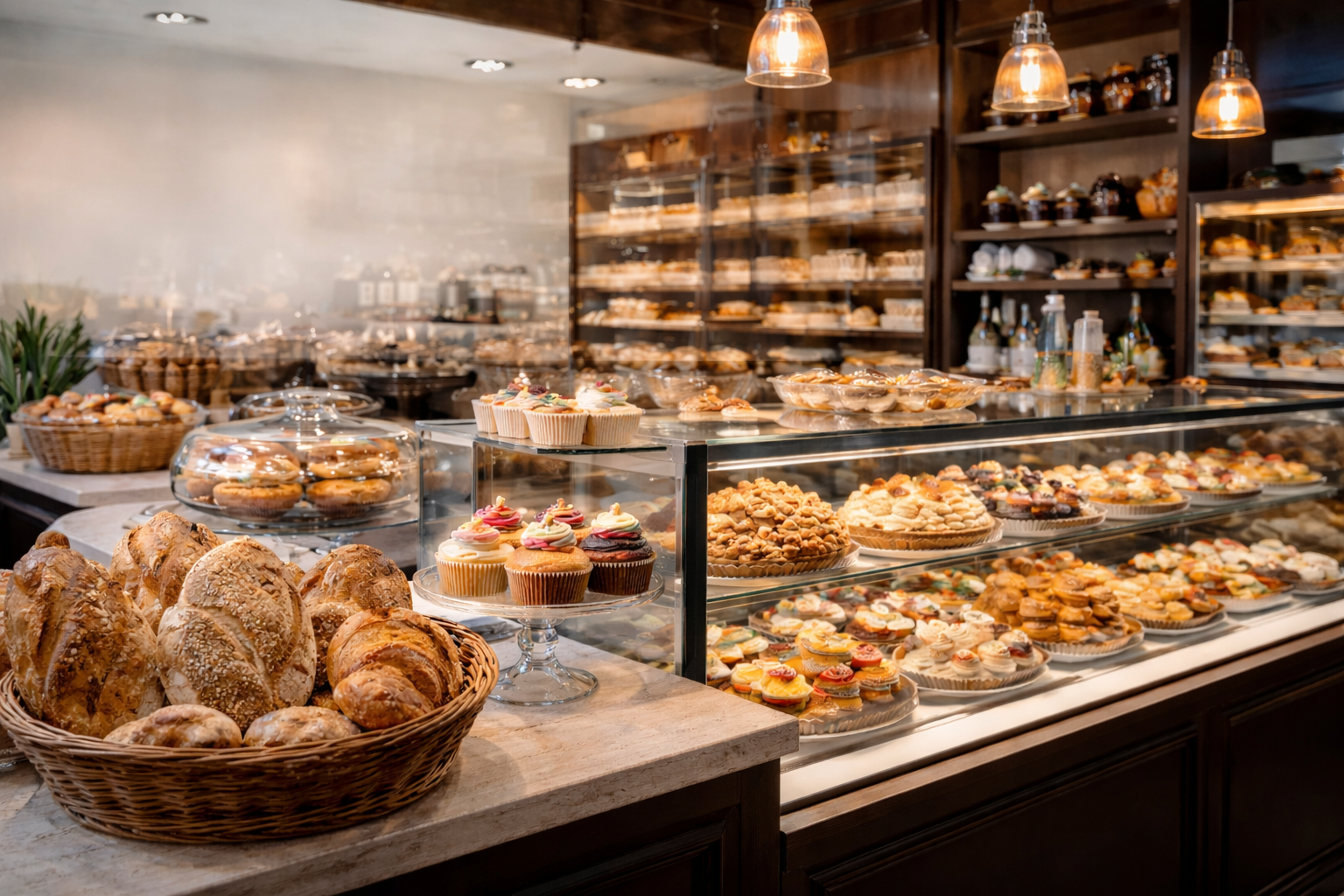
Opening a bakery sounds romantic from the outside. Fresh bread in the morning, pastry cases full of color, regulars who know your name, and a brand built around craftsmanship. But once you move from idea to execution, the real question is not simply whether you should open a bakery. The real question is what kind of bakery you should open.

That distinction matters more than many first-time operators realize. A home-based custom cake business, a wholesale bread production facility, a neighborhood bakery café, and a dessert-focused pastry boutique may all be called “bakeries,” but in practice they require very different budgets, equipment packages, staffing structures, production schedules, and customer acquisition strategies. The FDA notes that home-based food businesses must understand both federal and state or local rules, while the SBA emphasizes startup-cost planning and business-model selection as foundational steps when launching a food business.
That is why choosing the right bakery type should come before choosing paint colors, packaging, or even a final menu. Your bakery model shapes everything else: whether you need a storefront, whether foot traffic matters, how much production you can handle, which equipment will drive your output, and whether you are building a brand around walk-in retail, custom orders, wholesale accounts, or e-commerce.
Start With the Two Core Bakery Business Models: Retail vs. Wholesale
Before you think about croissants, sourdough, cupcakes, or wedding cakes, you need to decide whether your bakery is primarily a retail business, a wholesale business, or a hybrid of both. The source article correctly identifies wholesale and retail as the two main bakery business models, but this part deserves much more attention because it affects nearly every operational decision that follows.
A retail bakery sells directly to the final customer. That could happen through a storefront, café counter, farmers market stand, food truck, or online ordering system with local pickup. Retail bakeries depend heavily on presentation, convenience, location, and customer experience. In these models, front-of-house equipment such as bakery display cases, glass merchandisers, countertop refrigerators, and even coffee equipment can be just as important as the baking equipment in the back.
A wholesale bakery, on the other hand, is built around volume, consistency, and distribution. Its customers are usually cafes, restaurants, hotels, schools, grocery stores, or corporate accounts rather than individual walk-in guests. In wholesale, the operational center of gravity shifts away from décor and toward throughput. Equipment like spiral mixers, planetary mixers, commercial ovens, proofing cabinets, sheet pan racks, and work tables become central because the business lives or dies on production efficiency and repeatability.
The most interesting bakery businesses often sit somewhere in the middle. A brand may begin as retail, then add wholesale accounts to increase volume. Another may start wholesale, then open a customer-facing flagship store once production stabilizes. Toast’s bakery-opening and bakery-business-plan resources both frame format choice as one of the earliest and most important decisions because it affects layout, staffing, customer experience, and the long-term growth path.
Online Bakery: Low Overhead, High Branding Pressure
An online bakery is often attractive because it appears lean. No prime-corner lease. No fully built-out customer dining area. In some cases, no full storefront at all. That lower overhead is one reason the Webstaurant article positions online bakery models as efficient and scalable.
But online bakeries are not “easy” businesses. They simply move the pressure elsewhere. Instead of relying on foot traffic, they rely on photography, packaging, digital trust, order management, delivery or shipping execution, and clear product positioning. An online bakery has to win the sale without the advantage of aroma, impulse buying, or display-case appeal. That means the brand, website, and fulfillment process have to work harder.
This model tends to fit products that travel well. Cookies, brownies, loaf cakes, gift boxes, biscotti, and some pastries work better for e-commerce than fragile plated desserts or breads best eaten within hours of baking. If the business is local-delivery-based rather than nationwide shipping-based, then production may be supported by reach-in refrigerators, ingredient bins, work tables, and compact commercial convection ovens rather than a full retail setup.
Online bakeries are a strong fit for founders who understand content, direct-to-consumer marketing, and repeat-order systems. They are weaker fits for operators whose strengths depend on in-person hospitality or spontaneous walk-in traffic.
Pastry Shop: High Perceived Value, High Skill Requirement
Pastry shops are often misunderstood because they are lumped into the same general bucket as bakeries that focus on breads, muffins, and breakfast items. In reality, a pastry shop is a more specialized model, usually built around visual refinement, technical finishing, and a higher average selling price per item. The source article is directionally correct in positioning pastry shops around tarts, cakes, French pastries, and other premium desserts.
What that article does not fully emphasize is that pastry shops usually depend on labor precision more than volume alone. Lamination, cream handling, chocolate work, fillings, finishing, decoration, and refrigeration control all matter. These businesses often require more specialized cold-side workflow than the average neighborhood bread bakery. Depending on the menu, there may be a stronger need for reach-in freezers, bakery display cases, refrigerated display cases, sheet pan racks, dough sheeters, and precision planetary mixers for batters, creams, and meringues.
Pastry shops can be highly profitable if the brand is positioned well and the presentation is excellent, but they are usually less forgiving than simpler models. Waste can be expensive. Training matters more. Execution standards are visible to the customer in a way they are not in some broader bakery formats.
Bread Bakery: Operationally Demanding but Brand-Building
A bread bakery may look simple from the outside. In reality, bread is one of the most operationally disciplined bakery formats you can choose. Fermentation, hydration, proofing, shaping, baking curves, cooling, and production timing all have to be controlled carefully. The Webstaurant article notes the importance of fermentation and temperature control, and that point is exactly right.
What it misses is how profoundly bread bakeries are shaped by equipment selection and production rhythm. Bread businesses often rise or fall on whether the operator has the right spiral mixers, dough dividers, proofing cabinets, deck ovens, bread slicers, and staging space. A model built around artisan loaves, sourdough, baguettes, and rustic breads is not just a menu decision. It is a workflow decision.
Bread bakeries can build extraordinary customer loyalty because fresh bread creates strong habitual purchase behavior. Customers may return multiple times per week, which is a major advantage. But this model also tends to be production-heavy, labor-sensitive, and less forgiving if you miss your bake windows. It is a strong choice for operators who care deeply about craft and daily routines, and a weaker choice for founders looking for a flexible or low-touch operation.
Home Bakery: Accessible Entry Point, But Regulation Matters
Home bakeries are one of the most accessible ways to start selling baked goods, especially for custom cakes, cookies, cupcakes, and made-to-order desserts. The article you shared correctly points out their appeal around creativity, flexibility, and small-scale artisanal production.
But home bakery content is incomplete if it does not stress regulation. The FDA specifically advises home-based food businesses to check federal, state, and local rules, because requirements vary significantly by jurisdiction. Some products may be allowed under cottage food rules, while others may require commercial production, different labeling, or local health approvals.
That means a home bakery is not just a “cheap version of a bakery.” It is its own legal and operational category. For some founders, it is the right first step. It lets them test demand, refine recipes, build a following, and learn order flow before committing to a larger lease. For others, it becomes a trap if the menu outgrows what local law allows.
From an equipment perspective, home bakeries usually start lighter, but even then, the operator benefits from professional organization: ingredient bins, stainless steel work tables, compact planetary mixers, and reliable small-format commercial ovens if local regulations and space allow.
Cupcakery: Strong Visual Branding, Narrow Product Dependence
Cupcakeries had a major cultural moment, but the business model is still viable when positioned correctly. Their strength lies in visual merchandising, gifting, events, and customization. The source article captures this well with its emphasis on flavors, toppings, themed occasions, and packaging.
The challenge is product concentration. A cupcakery lives or dies on whether cupcakes are enough of a destination in its market. In a strong location with birthdays, celebrations, office gifting, and social media visibility, a focused cupcake brand can perform very well. In a weaker market, it may struggle if it lacks product range.
That is why many successful cupcakeries quietly operate as broader dessert businesses underneath the branding. They may also sell cakes, cookies, bars, and seasonal items. Equipment needs are often centered around planetary mixers, display cases, refrigerated merchandisers, work tables, and finishing tools rather than bread-production infrastructure.
Bakery Café: One of the Best Models for Daily Traffic
If your goal is to build a bakery business with recurring daytime traffic, a bakery café is one of the strongest models available. Toast’s guide specifically positions bakery cafés as versatile businesses that blend baked goods, beverages, and often light meals into one community-friendly format.
That combination matters because it broadens both daypart and ticket potential. A customer who might not make a special trip just for a muffin may absolutely stop for coffee, pastry, and a sandwich. Bakery cafés also benefit from longer customer dwell time, which can increase add-on purchases and create neighborhood loyalty.
Operationally, however, this is a more complex business than a simple retail bakery. Now you are managing espresso workflow, front-counter service, seating, sanitation, breakfast rushes, lunch transitions, and broader refrigeration needs. That means espresso machines, undercounter refrigerators, sandwich prep tables, bakery display cases, glass door refrigerators, commercial dishwashers, and commercial ovens can all become part of the package.
For many operators, bakery café is one of the best formats because it gives the business more ways to win: bakery sales, beverage sales, meal sales, and regular repeat traffic. But it only works if the operator is comfortable managing both hospitality and production.
Bakery Food Truck: Mobility Is the Advantage, Compression Is the Challenge
A bakery food truck sounds fun, and it can be a smart model in the right city or event ecosystem. Mobility gives the business access to festivals, corporate events, farmers markets, weddings, and rotating high-traffic locations. The source article also correctly notes that many bakery trucks rely on commissary kitchens for production rather than baking everything inside the vehicle.
That is a crucial operational point. Most bakery food trucks are really two-part businesses: a production site and a mobile sales site. The truck itself usually handles warming, holding, service, and merchandising more than full-scale baking. That means equipment choices are less about maximizing raw production on the truck and more about fitting a compact service model around countertop ovens, heated display cases, commercial refrigeration, point-of-sale, and safe storage.
The SBA includes food trucks among the restaurant-type entities that can qualify under certain foodservice support structures, which underscores that these are legitimate operating businesses, not simply hobby projects.
A bakery truck is best for brands with clear signature products and strong event potential. It is less ideal for concepts that depend on broad menu variety or heavy production during service hours.
Specialty Bakery: A Strong Model If the Niche Is Real
Specialty bakeries can be some of the best-positioned businesses in the category because they are not trying to be everything to everyone. Gluten-free bakeries, vegan bakeries, sourdough bakeries, keto dessert brands, and allergy-conscious bakeries all sit inside this group. The source article highlights sourdough, vegan, and gluten-free as major subtypes, which is a strong starting point.
The most important question is whether the specialty is solving a real market need or merely sounding interesting. A specialty bakery works best when the niche is large enough, underserved enough, or premium enough to support focused demand. If the audience is passionate and loyal, specialization can become a moat. If the niche is too narrow or poorly communicated, it becomes a limitation.
This model often benefits from educational marketing, clear labeling, and strong trust signals. The FDA’s food-labeling guidance is especially relevant here because specialty claims, ingredients, and packaged food disclosures need to be handled carefully.
Operationally, the equipment depends on the category, but specialty bakeries often need rigorous product separation, storage discipline, and labeling systems in addition to core tools like planetary mixers, commercial ovens, ingredient bins, and stainless steel prep tables.
Wedding Cake Bakery: High Margin Potential, Project-Based Revenue
Wedding cake bakeries are among the most visually impressive and brandable bakery businesses, but they are also among the most project-driven. The source article correctly describes them as businesses built around customization, design consultations, and highly skilled decorators.
What matters operationally is that this is not usually a strong impulse-purchase model. It is a booking model. You are selling trust, customization, taste, design interpretation, event timing, and delivery reliability. The sales cycle is longer. The stakes are higher. The client expects precision.
That means the business needs not only baking equipment but also excellent workflow for cooling, decorating, storage, and transport. Reach-in refrigerators, work tables, sheet pan racks, planetary mixers, and specialized decorating stations matter a great deal. In some shops, a blast chiller or additional cold storage can also support production consistency for decorated cakes and fillings.
Wedding cake bakeries can be highly profitable, but the operator must enjoy project management as much as baking itself.
Counter-Service Bakery: Simplicity That Can Scale
Counter-service bakeries are sometimes underestimated because they look operationally simple. But that simplicity is a real strategic advantage. The article you shared points out the value of quick transactions, visible product display, and grab-and-go ease, and that part is absolutely right.
This format works especially well in commuter corridors, neighborhood retail strips, bookstores, transit-adjacent areas, and mixed-use districts where speed matters. The customer does not need a full sit-down experience. They want something fresh, fast, and visually tempting.
That makes front-of-house presentation incredibly important. A counter-service bakery often depends on bakery display cases, open-air merchandisers, glass door refrigerators, and clean counter layout as much as it depends on the baking itself. If customers cannot immediately see the product and understand the offering, the model loses part of its edge.
This is one of the strongest formats for operators who want a manageable service model without the full complexity of a bakery café.
So Which Type of Bakery Should You Actually Open?
The best bakery is not the trendiest one. It is the one that matches your skills, budget, market, and operating temperament.
If you are excellent at digital branding and want lower front-of-house complexity, an online bakery may be the right fit. If you are technically strong and love precision, a pastry shop or wedding cake bakery may suit you better. If your identity is rooted in daily ritual and product craftsmanship, a bread bakery can become an extraordinary brand. If you want recurring daily traffic and multiple revenue streams, a bakery café is often one of the strongest long-term formats. If you want a lower-barrier launch, a home bakery can be a smart testing ground, provided the legal framework supports your menu. FDA and local regulatory guidance matter especially here.
The biggest mistake new operators make is choosing the bakery they admire most rather than the bakery they are actually built to run. Admiration is not a business model. Discipline is.