
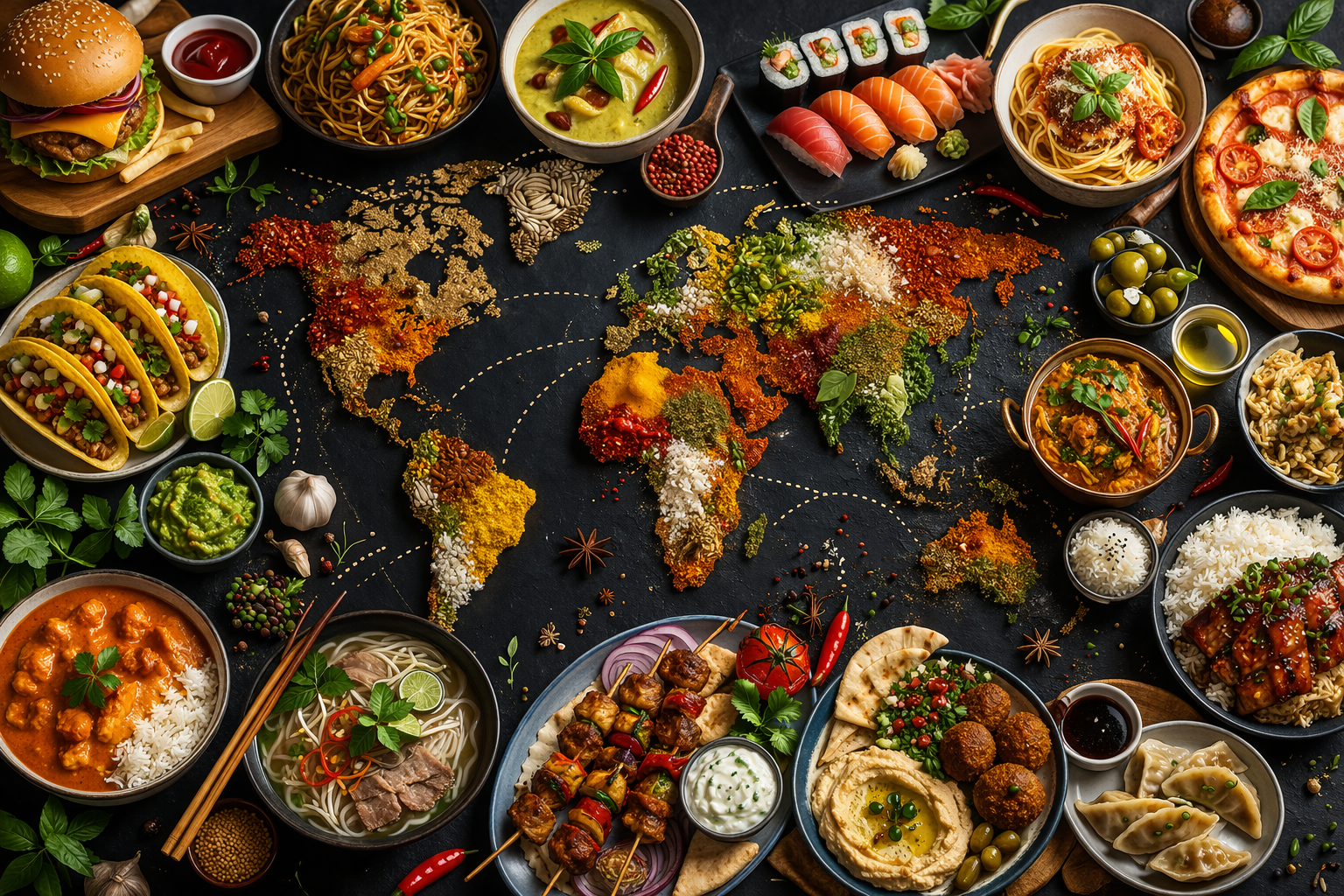
The U.S. restaurant industry is not defined by a single culinary identity. It is shaped by diversity.
From New York to Los Angeles, from small suburban towns to dense urban centers, one thing is consistent: American consumers don’t just eat—they explore. They move between cuisines, experiences, and cultural identities through food. For restaurant owners, this creates both an opportunity and a challenge.
Choosing the right cuisine is no longer just about passion. It’s a strategic decision that affects your menu structure, your kitchen design, your equipment investment, and ultimately your profitability.
Understanding the most popular cuisines in the U.S. is the first step toward building a restaurant concept that works—not just creatively, but operationally.

Why Cuisine Choice Is a Business Decision
Before selecting a cuisine, it’s important to understand how your concept will influence your overall commercial kitchen equipment setup, as this decision directly impacts efficiency, workflow, and long-term operational costs. Every cuisine comes with its own operational DNA.
Italian restaurants revolve around ovens and pasta production.
Japanese kitchens prioritize precision, refrigeration, and presentation.
Mexican concepts rely on prep flow and high-volume assembly.
Turkish restaurants depend heavily on grilling and vertical cooking.
This means your cuisine directly shapes your restaurant equipment strategy, your workflow, and your staffing model.
Many new restaurant owners overlook this. They choose a cuisine they love, then try to force a kitchen around it. Experienced operators do the opposite—they understand the kitchen first, then build the concept around what works.
The 20 Most Popular Cuisines in the United States
1. American Cuisine
American cuisine remains the backbone of the industry. Burgers, fried chicken, sandwiches, and comfort food dominate both fast food and casual dining segments.
From a business standpoint, it offers flexibility. You can operate in almost any model—QSR, fast casual, or full-service. Equipment needs are broad but standardized, making it one of the easiest cuisines to execute operationally.
2. Italian Cuisine
Italian food is one of the safest bets in the U.S. market. Pizza, pasta, and familiar flavors create consistent demand across all demographics.
What makes Italian cuisine operationally attractive is its scalability. A small pizzeria and a full-service Italian restaurant may share core equipment, but operate at completely different levels of complexity.
3. Mexican Cuisine
Mexican cuisine is deeply integrated into American food culture. From tacos and burritos to full-service restaurants, this category offers strong margins and high-volume potential.
Assembly-line service models make it ideal for fast casual concepts, especially in urban areas.
4. Chinese Cuisine
Chinese restaurants are among the most established concepts in the U.S. The cuisine adapts well to both dine-in and takeout models, which makes it resilient.
High-heat cooking techniques, particularly wok-based cooking, define the kitchen setup.
5. Japanese Cuisine
Japanese cuisine represents precision.
Sushi bars, ramen shops, and modern Japanese concepts focus heavily on ingredient quality, presentation, and consistency. This translates into specialized refrigeration, prep stations, and workflow discipline.
6. Indian Cuisine
Indian food has seen steady growth in the U.S., driven by increasing consumer interest in bold flavors and diverse menus.
The kitchen typically revolves around tandoor ovens, spice management, and multi-component dishes. It requires planning and organization but offers strong differentiation.
7. Turkish Cuisine
Turkish cuisine is one of the most underrated opportunities in the U.S. restaurant market.
Built around grilling, roasting, and fresh preparation, Turkish restaurants offer a strong balance between flavor, speed, and visual appeal. Concepts such as doner, kebab, and pide are highly adaptable to both fast casual and full-service models.
From an operational standpoint, Turkish kitchens are defined by a few key elements: vertical broilers for gyro and doner, high-heat charbroilers, and efficient prep workflows for meat-heavy menus.
For entrepreneurs looking to enter a competitive market with a differentiated concept, Turkish cuisine offers both authenticity and scalability. One of the most critical aspects of building a successful Turkish concept is selecting the right turkish restaurant equipment, as specialized tools like gyro machines and charbroilers directly impact speed, consistency, and overall kitchen performance.
8. Mediterranean Cuisine
Mediterranean concepts have grown rapidly, especially in health-conscious markets. Fresh vegetables, grilled meats, and balanced menus appeal to modern consumers.
This cuisine fits perfectly into fast casual models and integrates well with delivery platforms.
9. Thai Cuisine
Thai restaurants continue to perform well due to their strong flavor profiles and loyal customer base.
The kitchen setup often includes wok stations, prep-heavy workflows, and efficient ingredient management.
10. French Cuisine
French cuisine is associated with premium dining. It is less about volume and more about experience.
From a business perspective, this is one of the most demanding models. It requires skilled labor, refined execution, and a carefully designed environment.
11. Korean Cuisine
Korean food, particularly BBQ concepts, has seen significant growth in recent years.
Interactive dining experiences and strong flavors make it appealing, but it requires specialized equipment and ventilation systems.
12. Vietnamese Cuisine
Vietnamese restaurants, especially pho concepts, are gaining traction due to their balance of flavor and perceived health benefits.
Broth preparation and ingredient freshness are central to operations.
13. Greek Cuisine
Greek food overlaps with Mediterranean but maintains its own identity through dishes like gyros, souvlaki, and salads.
It is highly adaptable to fast casual formats and shares operational similarities with Turkish cuisine.
14. Spanish Cuisine
Spanish restaurants, particularly tapas concepts, focus on shared dining experiences.
This creates a unique operational dynamic, where kitchen timing and plating become critical.
15. Middle Eastern Cuisine
Middle Eastern concepts, including shawarma and falafel, are expanding quickly in urban markets.
They are efficient to operate and align well with fast casual models.
16. Brazilian Cuisine
Brazilian steakhouses (churrascarias) offer a distinct dining experience centered around meat service.
This is a high-investment, high-ticket model that relies heavily on experience and service.
17. Caribbean Cuisine
Caribbean food brings bold flavors and cultural storytelling into the dining experience.
While still niche in many areas, it offers strong differentiation.
18. Ethiopian Cuisine
Ethiopian restaurants provide a unique communal dining experience.
They are highly differentiated but require market awareness and education.
19. German Cuisine
German restaurants, often focused on sausages and beer, perform well in specific markets.
They are often tied to theme-based dining experiences.
20. Fusion Cuisine
Fusion concepts combine elements from multiple cuisines to create something new.
This is where creativity meets risk. When done right, it can create highly scalable brands. When done poorly, it confuses customers.
How to Choose the Right Cuisine for Your Restaurant
The best cuisine is not the most popular one. It’s the one that aligns with:
- Your budget
- Your location
- Your experience level
- Your operational capacity
A high-demand cuisine with complex requirements can fail in the wrong hands. A well-executed niche concept can outperform crowded categories.
The U.S. restaurant market rewards clarity.
Choosing a cuisine is not about following trends. It’s about understanding how that cuisine translates into a real business—how it shapes your kitchen, your workflow, and your ability to serve customers consistently.
If you approach this decision strategically, you don’t just open a restaurant. You build a system.
And in this industry, systems win.