
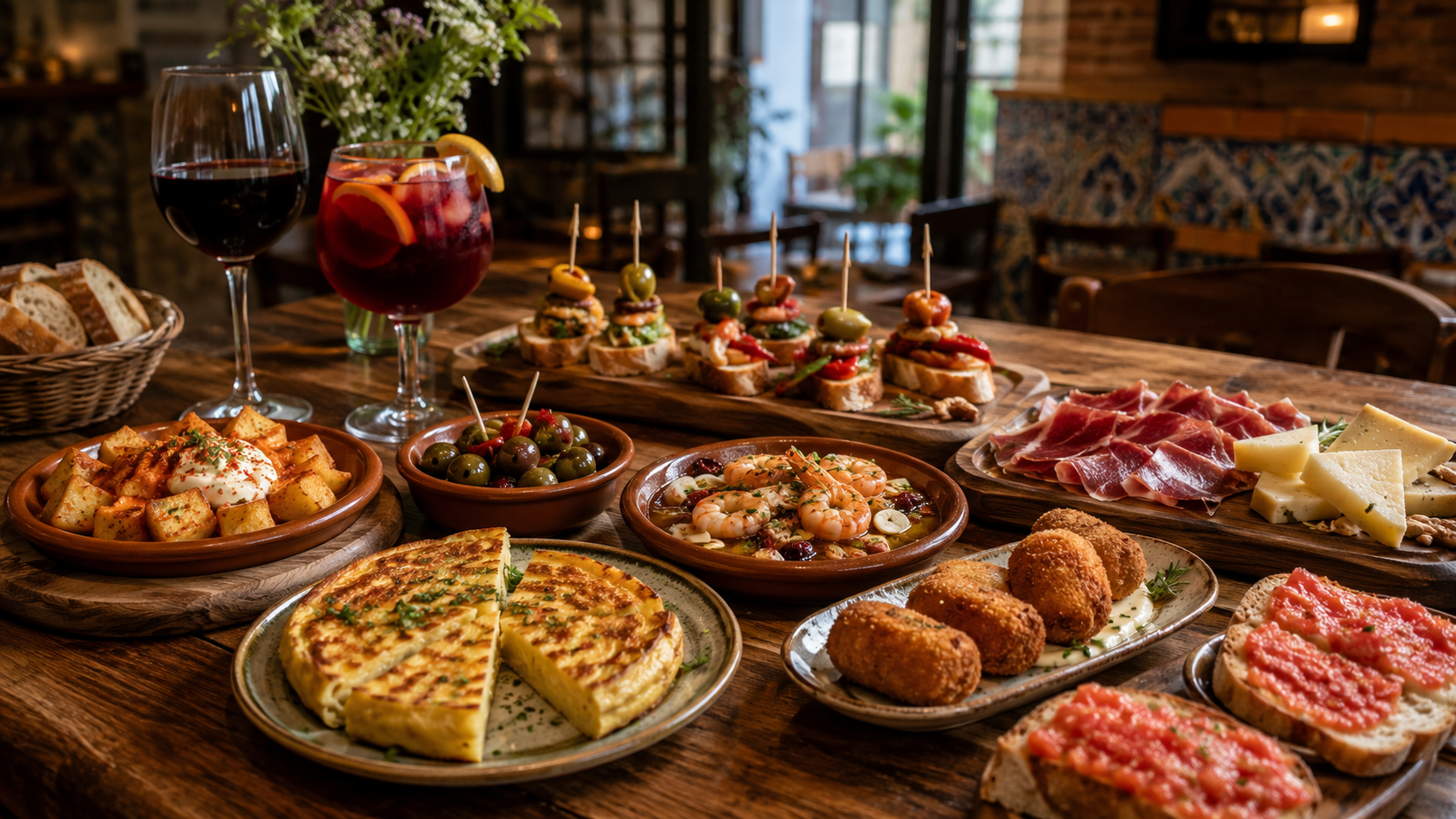
Tapas are small plates of food traditionally served with drinks in Spain. They can be simple snacks, such as olives, almonds, or cheese, or more developed dishes like patatas bravas, croquetas, tortilla española, gambas al ajillo, and grilled seafood.
But tapas are more than appetizers. They are a dining style, a social ritual, and one of the most recognizable parts of Spanish food culture. Instead of ordering one large entrée, guests share several small plates across the table. This makes tapas ideal for restaurants that want to create a lively, social, drink-friendly dining experience.
For restaurant operators in the United States, tapas can also be a smart menu concept. Small plates encourage variety, pair well with wine and cocktails, and allow chefs to build a flexible menu around seasonal ingredients, premium items, and shareable portions.
This guide explains what tapas are, where they come from, how they differ from pintxos, the most popular traditional tapas dishes, and how restaurants can build a profitable tapas menu.
What Are Tapas?
Tapas are small portions of food served as snacks, appetizers, or shareable plates. They are most closely associated with Spanish bars and restaurants, where they are often enjoyed with wine, beer, sherry, vermouth, sangria, or other drinks.
Tapas can be cold or hot. They can be served on bread, in small bowls, on plates, on skewers, or in clay cazuelas. Some tapas are extremely simple, while others are carefully plated restaurant dishes.
The key idea is portion size and sharing. Tapas are not defined by one specific ingredient. They are defined by the way they are served and eaten.
A plate of marinated olives can be tapas. So can fried potatoes with spicy sauce, garlic shrimp, sliced Iberian ham, grilled octopus, anchovies on toast, or a small portion of paella-style rice.
In other words, tapas are a serving format, not a single recipe.
What Does Tapas Mean?
The Spanish word “tapa” can mean “lid” or “cover.” The plural form is “tapas.”
One popular explanation is that early tapas began as slices of bread, ham, or cheese placed over glasses of wine or sherry to protect drinks from flies, dust, or sand. Over time, these simple covers became edible snacks served with drinks.
There are several origin stories, and historians do not all agree on one exact beginning. Some stories connect tapas to Andalusian taverns. Others connect the custom to King Alfonso X of Castile, who is said to have eaten small bites with wine. Whether or not every legend is historically exact, the cultural meaning is clear: tapas grew from the relationship between food, drink, and social life.
Today, tapas are a central part of Spanish dining culture and one of the most popular small-plate concepts in restaurants around the world.
Tapas in English
In English, “tapas” usually means small Spanish-style dishes served for sharing, often with alcoholic drinks. Many American restaurants use the word more broadly to describe small plates inspired by Spanish, Mediterranean, or global flavors.
A traditional Spanish tapas menu may include jamón, Manchego cheese, tortilla española, patatas bravas, croquetas, anchovies, olives, and garlic shrimp. A modern tapas restaurant in the US may also include seasonal vegetables, seafood, charcuterie, grilled meats, flatbreads, and chef-driven small plates.
This is why tapas menus can work across many restaurant styles. They can be casual, rustic, upscale, seafood-focused, wine-driven, or cocktail-driven.
Tapas vs Appetizers
Tapas and appetizers are similar, but they are not exactly the same.
An appetizer is usually a starter served before a main course. Tapas can be appetizers, but they can also become the entire meal. A group of guests may order six, eight, or ten tapas and share them instead of ordering entrées.
The difference is the dining structure. Appetizers lead into a meal. Tapas can be the meal.
This makes tapas appealing for guests who want variety, smaller portions, and a more social way to dine.
Tapas vs Small Plates
Tapas are a type of small plate, but not all small plates are tapas.
Small plates can come from any cuisine. A Korean fried chicken bite, Italian burrata plate, Greek mezze dish, Japanese izakaya snack, or Mexican street-food-style plate may all be small plates.
Tapas are specifically associated with Spanish food culture.
For restaurants, this distinction matters. If a menu uses the word “tapas,” guests may expect Spanish flavors, Spanish ingredients, wine pairings, and shareable plates. If the menu says “small plates,” the concept can be broader and more global.
Tapas vs Pintxos
Pintxos, sometimes spelled pinchos, are closely related to tapas but have a distinct regional identity.
Pintxos are especially associated with the Basque Country in northern Spain. They are often served on a small slice of bread and held together with a toothpick or skewer. The word comes from the idea of “piercing” or “spiking” the food.
Common pintxos may include anchovy, olive, pepper, cured meats, seafood, cheese, mushrooms, or tortilla on bread. Some are simple bar snacks. Others are highly creative chef-driven bites.
The main difference is that tapas are the broader category. Pintxos are a specific style of small bite, strongly tied to Basque bar culture.
Main Types of Tapas

Tapas can be grouped in several practical ways. These categories help restaurants build a balanced menu.
1. Cold Tapas
Cold tapas are easy to prepare in advance and can help speed up service. They are ideal for wine bars, happy hour menus, and grazing boards.
Examples include:
Marinated olives
Manchego cheese
Jamón Ibérico or Serrano ham
Boquerones, or marinated anchovies
Pan con tomate
Ensaladilla rusa
Gazpacho shooters
Cured meats
Seafood salad
Cold tapas are useful because they reduce pressure on the hot line and allow guests to receive food quickly after ordering drinks.
2. Hot Tapas
Hot tapas are cooked to order or finished during service. They create aroma, texture, and a stronger restaurant experience.
Examples include:
Patatas bravas
Croquetas
Gambas al ajillo
Chorizo al vino
Albondigas, or Spanish meatballs
Grilled octopus
Mushrooms with garlic
Fried calamari
Tortilla española
Hot tapas are often the most memorable dishes on the table. They also require more attention to kitchen workflow, holding, frying, sautéing, and plating.
3. Pintxos
Pintxos are small bites usually served on bread or skewers. They work well for bar menus, cocktail events, catering, and standing-room service.
Examples include:
Anchovy, olive, and pepper skewers
Tortilla squares on bread
Chorizo and pepper skewers
Goat cheese and roasted pepper toast
Mushroom pintxos
Seafood pintxos
Pintxos are especially useful for restaurants that want fast, visually appealing, high-margin bar snacks.
4. Cazuelas
Cazuelas are small sauced dishes served in shallow clay or ceramic dishes. The word can also refer to the cookware itself.
Examples include:
Garlic shrimp
Meatballs in tomato sauce
Chickpeas with spinach
Chorizo in wine
Braised pork
Baked cheese
Mushrooms in garlic sauce
Cazuelas create a rustic Spanish presentation and work well for warm, saucy, shareable dishes.
5. Conservas and Tinned Seafood
Conservas are high-quality preserved seafood products, including anchovies, sardines, mussels, clams, cockles, tuna, and mackerel.
In Spain, conservas are often treated as premium ingredients, not cheap substitutes. For restaurants, they can be an excellent tapas option because they require minimal cooking, reduce labor, and pair well with bread, butter, pickles, olives, and wine.
A conservas section can make a tapas menu feel more authentic and distinctive.
Traditional Spanish Tapas Dishes
A strong tapas menu should include recognizable classics. These dishes help customers understand the concept and make the menu easier to sell.
Patatas Bravas
Patatas bravas are fried potato cubes served with a spicy tomato-based sauce, aioli, or both. They are one of the most famous tapas dishes in Spain.
The best versions are crisp on the outside and soft inside. For restaurants, the challenge is keeping the potatoes crisp while delivering sauce in a way that does not make them soggy.
Tortilla Española
Tortilla española, also called tortilla de patatas, is a Spanish omelet made with eggs, potatoes, and often onions. It can be served warm, room temperature, or cold.
It is simple, filling, and cost-effective, making it one of the most practical tapas items for restaurants.
Croquetas
Croquetas are breaded and fried fritters, usually made with a creamy béchamel base and fillings such as ham, chicken, mushroom, seafood, cheese, or spinach.
They are popular because they are crisp, creamy, and easy to share. They also allow restaurants to use premium ingredients in controlled portions.
Jamón Ibérico
Jamón Ibérico is a premium Spanish cured ham made from Iberian pigs. It is prized for its rich flavor, delicate texture, and long curing process.
Because it is expensive, it is often served in small portions. This makes it a natural fit for tapas menus, where a small plate can still feel luxurious.
Pan con Tomate
Pan con tomate is toasted bread rubbed or topped with ripe tomato, garlic, olive oil, and salt. It is especially associated with Catalonia.
It is simple but depends heavily on ingredient quality. Good bread, ripe tomatoes, and excellent olive oil are essential.
Gambas al Ajillo
Gambas al ajillo are shrimp cooked in olive oil with garlic, chili, and sometimes sherry or paprika. The dish is often served sizzling and accompanied by crusty bread.
This is one of the best tapas dishes for creating aroma and table appeal.
Chorizo al Vino
Chorizo al vino is Spanish chorizo cooked in wine, often red wine or cider. It is rich, savory, and drink-friendly.
It works well as a hot tapas dish because it can be portioned easily and served in a small bowl or cazuela.
Albondigas
Albondigas are Spanish meatballs, often served in tomato sauce, almond sauce, or a rich braising sauce. They are familiar enough for American diners but still fit naturally into a Spanish menu.
Boquerones
Boquerones are white anchovies usually marinated in vinegar, olive oil, garlic, and parsley. They are bright, salty, and acidic, making them excellent with wine and vermouth.
Pulpo a la Gallega
Pulpo a la gallega is Galician-style octopus, often served with olive oil, paprika, salt, and potatoes. It can become a premium tapas dish for seafood-focused restaurants.
Regional Tapas Styles in Spain
Tapas vary by region. This is one reason the category is so flexible.
Andalusia
Andalusia is often associated with classic tapas culture, especially in cities like Seville, Granada, Cádiz, and Málaga. Common dishes include fried fish, olives, jamón, gazpacho, salmorejo, and seafood.
Basque Country
The Basque Country is known for pintxos. Bars often display beautiful small bites across the counter. San Sebastián is especially famous for its pintxo culture.
Catalonia
Catalonia is known for pan con tomate, seafood, cured meats, escalivada, and dishes that reflect Mediterranean ingredients.
Madrid
Madrid tapas may include patatas bravas, tortilla, croquetas, calamari sandwiches, olives, and stews served in small portions.
Galicia
Galicia is known for seafood, octopus, empanadas, and simple preparations that highlight product quality.
For restaurants in the US, regional framing can make a tapas menu more interesting. Instead of listing only generic small plates, a menu can tell a story through Spanish regions.
What Is a Tapas Restaurant?
A tapas restaurant is a restaurant built around shareable small plates, often inspired by Spanish bar culture. Guests order several dishes for the table instead of one entrée per person.
In Spain, tapas are often part of a bar-hopping tradition. Guests may visit multiple bars in one evening, ordering a drink and a few small plates at each stop. In the US, the experience is usually adapted into a seated restaurant format, wine bar, cocktail bar, or lounge-style concept.
A tapas restaurant may focus on:
Spanish classics
Modern small plates
Wine and sherry pairings
Seafood
Charcuterie
Pintxos
Mediterranean flavors
Chef-driven seasonal plates
The concept works because it encourages ordering variety. A table of four may order eight to twelve dishes, which creates more menu exploration and a more interactive dining experience.
Why Tapas Work Well for Restaurants
Tapas can be a strong restaurant strategy when executed correctly.
They Encourage Sharing
Tapas make dining more social. Guests pass plates, try more dishes, and talk about what they like. This creates energy at the table.
They Pair Well with Drinks
Tapas naturally support beverage sales. Salty, savory, acidic, and fried dishes pair well with wine, beer, vermouth, sherry, cocktails, and nonalcoholic aperitifs.
They Allow Menu Flexibility
Because tapas are small, restaurants can rotate seasonal specials without redesigning the entire menu. A chef can add one vegetable tapa, one seafood tapa, or one premium cured meat plate based on availability.
They Help Control Premium Ingredient Costs
A small plate can feature expensive ingredients in controlled portions. Jamón Ibérico, octopus, premium cheese, anchovies, and imported seafood can feel special without becoming a large entrée cost.
They Support Happy Hour and Late-Night Sales
Tapas work well before dinner, after work, late at night, and during bar service. This can help restaurants capture traffic outside standard dinner hours.
How Many Tapas Should Guests Order?
A common guideline is two to four tapas per person, depending on portion size and whether guests are eating a full meal.
For a light snack, one to two tapas per person may be enough.
For dinner, two to four tapas per person is more realistic.
For a larger group, restaurants can recommend a balanced mix of cold plates, hot plates, seafood, vegetables, and one or two premium items.
Menu language can help. For example:
“For a light meal, we recommend 2 to 3 plates per person.”
“For dinner, we recommend 3 to 5 plates per person.”
“Ask your server about building a balanced tapas spread.”
Clear guidance prevents confusion and helps increase average ticket size without feeling pushy.
How to Build a Tapas Menu
A successful tapas menu needs balance. If every dish is fried, heavy, salty, or meat-focused, guests may get tired quickly. The best menus include contrast.
A balanced tapas menu should include:
Cold snacks
Hot fried items
Vegetable dishes
Seafood dishes
Meat dishes
Cheese or charcuterie
Bread or toast-based items
Saucy dishes
One or two premium items
One or two simple low-cost items
A sample structure might look like this:
Snacks and Conservas
Cheese and Charcuterie
Vegetables
Seafood
Meat
Pintxos
Cazuelas
Dessert Bites
This structure gives guests an easy way to order and gives the kitchen a more organized production system.
Tapas Menu Ideas for Restaurants
Here are practical tapas menu ideas that can work in American restaurants.
Easy Cold Tapas
Marinated olives with citrus and herbs
Manchego cheese with quince paste
Pan con tomate
Boquerones with potato chips
White anchovies with olive oil and parsley
Marinated mushrooms
Roasted peppers with garlic
Spanish potato salad
Chilled gazpacho cups
Sardines with toast
Hot Tapas Ideas
Patatas bravas
Croquetas with ham or mushrooms
Garlic shrimp
Chorizo in wine
Meatballs in tomato sauce
Grilled octopus
Fried calamari
Baked goat cheese
Mushrooms with garlic and sherry
Crispy eggplant with honey
Vegetarian Tapas Ideas
Patatas bravas
Tortilla española
Pan con tomate
Roasted peppers
Mushroom cazuela
Spinach and chickpeas
Grilled artichokes
Marinated olives
Goat cheese with honey
Tomato and cucumber salad
Seafood Tapas Ideas
Gambas al ajillo
Boquerones
Grilled octopus
Fried calamari
Salt cod fritters
Mussels in escabeche
Sardines on toast
Tuna conservas plate
Clams with garlic and wine
Seafood croquetas
Premium Tapas Ideas
Jamón Ibérico
Imported Spanish cheeses
Octopus
High-quality conservas
Seafood pintxos
Sherry-braised pork
Lamb skewers
Truffle tortilla
Dry-aged beef skewers
Caviar and potato bite
Tapas Drink Pairings
Tapas are strongly connected to beverage service. Restaurants can increase guest satisfaction and revenue by pairing small plates with the right drinks.
Popular pairings include:
Sherry with olives, ham, almonds, and seafood
Cava with fried tapas and salty snacks
Spanish red wine with chorizo, meatballs, and grilled meats
White wine with seafood and vegetable tapas
Vermouth with anchovies, olives, and conservas
Sangria with casual mixed tapas
Beer with patatas bravas, croquetas, and fried seafood
Nonalcoholic spritzes with salty and acidic plates
A tapas restaurant does not need a massive wine list. A focused beverage program with a few strong Spanish options can be more effective than a long, confusing menu.
Equipment Needed for a Tapas Restaurant
Tapas restaurants need efficient prep, storage, and finishing equipment. Because the menu often includes many small dishes, organization is critical.
Useful equipment may include:
Reach-in refrigerators for prep ingredients
Undercounter refrigerators for bar and line stations
Freezers for croquetas, seafood, and batch-prepped items
Commercial fryers for patatas bravas, croquetas, calamari, and fritters
Ranges and sauté burners for garlic shrimp, meatballs, and sauces
Convection ovens for roasting vegetables and reheating baked tapas
Prep tables for portioning and plating
Food processors for sauces, aioli, romesco, and purées
Smallwares such as cazuelas, ramekins, skewers, boards, and tapas plates
A tapas kitchen must move quickly. Small plates often arrive in waves, and multiple dishes may be fired at the same time. Good refrigeration, prep flow, and cooking equipment help keep service consistent.
Food Cost and Pricing Tips for Tapas
Tapas pricing can be tricky because small plates must feel generous without becoming unprofitable.
Restaurants should calculate:
Ingredient cost per portion
Labor required
Plateware and garnish cost
Yield loss
Sauce and condiment cost
Prep time
Pickup time during service
Premium ingredient percentage
A balanced menu should include a mix of high-margin items and premium showpieces.
High-margin tapas may include potatoes, eggs, chickpeas, bread-based dishes, seasonal vegetables, croquetas, olives, and simple spreads.
Premium tapas may include octopus, imported ham, specialty cheese, seafood, conservas, and lamb.
The goal is not to make every plate cheap. The goal is to design the menu so the full table order is profitable.
Common Tapas Menu Mistakes
Avoid these mistakes when creating a tapas concept:
Making portions too small for the price
Offering too many fried items
Using the word tapas for random small plates with no Spanish identity
Building a menu that is too labor-intensive
Forgetting vegetarian and seafood options
Not training servers to guide the table
Serving all dishes at once instead of pacing them
Using too many imported ingredients without controlling cost
Creating a menu that does not pair well with drinks
Ignoring prep and storage needs
A tapas restaurant succeeds when the food, drinks, service style, and kitchen workflow all support the same experience.
How to Serve Tapas
Tapas service should feel relaxed but organized.
For casual service, dishes can arrive as they are ready. For upscale service, the kitchen may pace plates in waves.
A good sequence might be:
Cold snacks and drinks first
Bread, olives, cheese, or conservas
Vegetables and lighter hot plates
Seafood
Meat or richer dishes
Final premium plate or dessert bite
Servers should explain that tapas are meant for sharing and help guests choose enough dishes for the table.
Tapas for Catering and Events
Tapas also work well for catering, private events, wine tastings, corporate events, and cocktail receptions.
For events, the best options are easy to hold, easy to serve, and easy to eat while standing.
Good event tapas include:
Pintxos
Skewers
Croquetas
Mini tortilla squares
Cheese and charcuterie cups
Gazpacho shooters
Shrimp skewers
Olive and anchovy bites
Mini pan con tomate
Meatballs in small cups
A tapas-style event menu can feel premium without requiring full plated dinner service.
Tapas FAQ
Are tapas always Spanish?
Traditional tapas are Spanish, but many restaurants use the small-plate format with global flavors. If the menu is called tapas, guests usually expect some Spanish identity.
Are tapas served hot or cold?
Both. Cold tapas may include olives, cheese, ham, anchovies, and pan con tomate. Hot tapas may include patatas bravas, croquetas, garlic shrimp, meatballs, and grilled seafood.
Are tapas appetizers?
Tapas can be appetizers, but they can also make up the entire meal. Many guests order multiple tapas instead of entrées.
What is the difference between tapas and pintxos?
Pintxos are a specific style of small bite associated with the Basque Country. They are often served on bread and held with a toothpick. Tapas are the broader category of Spanish small plates.
What are the most popular tapas?
Popular tapas include tortilla española, patatas bravas, croquetas, jamón Ibérico, pan con tomate, gambas al ajillo, chorizo al vino, olives, anchovies, and grilled octopus.
How many tapas should one person order?
For a light meal, two to three plates per person may be enough. For dinner, three to five plates per person is often a better guideline, depending on portion size.
What drinks go with tapas?
Tapas pair well with Spanish wine, sherry, cava, vermouth, beer, sangria, and cocktails. Salty and acidic tapas are especially drink-friendly.
Can tapas be vegetarian?
Yes. Many tapas can be vegetarian, including patatas bravas, tortilla española, pan con tomate, mushrooms with garlic, grilled artichokes, roasted peppers, olives, and spinach with chickpeas.
Tapas are small plates, but the concept is much bigger than portion size. They represent a social way of eating built around sharing, variety, conversation, and drinks.
For restaurants, tapas can be a powerful menu strategy. They encourage guests to try more dishes, support beverage sales, create a lively atmosphere, and allow chefs to showcase seasonal and premium ingredients in controlled portions.
The best tapas menus balance tradition and practicality. They include familiar Spanish classics, cold and hot dishes, vegetarian options, seafood, premium items, and strong drink pairings. They also require the right kitchen setup, efficient prep, reliable refrigeration, and a service team that knows how to guide the table.
Whether you are opening a Spanish restaurant, adding a wine bar menu, building a happy hour program, or testing shareable small plates, tapas offer a flexible and proven way to create a memorable dining experience.