
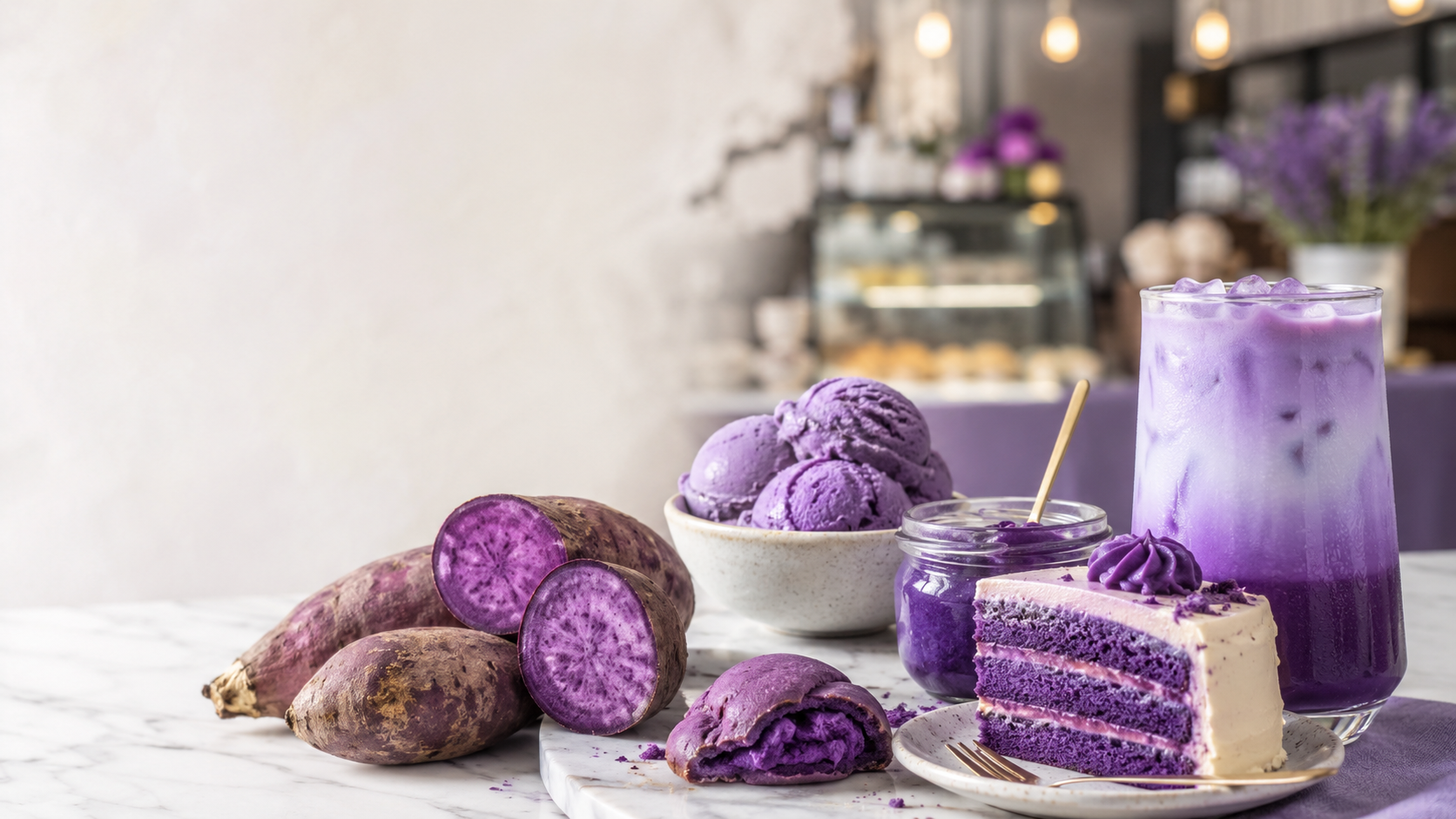
Ube has become one of the most recognizable ingredients in modern desserts and drinks. Its rich purple color stands out instantly in cakes, ice cream, donuts, pastries, bubble tea, lattes, soft serve, and plated desserts. For restaurants, bakeries, cafés, bubble tea shops, ice cream shops, and dessert businesses, ube is more than a trendy ingredient. It is a menu opportunity.
Customers are drawn to ube because it looks exciting, tastes familiar yet unique, and photographs beautifully. A single ube dessert can become a signature item, especially when it is paired with the right texture, presentation, and flavor combination. While ube has long been used in Filipino cuisine, its popularity has expanded far beyond traditional desserts. Today, food businesses use ube in everything from croissants and cheesecakes to milk teas, pancakes, soft serve, and layered parfaits.
This guide explains what ube is, what it tastes like, how it compares to taro and purple sweet potato, how to cook with it safely, and how food businesses can use ube to create high-margin, eye-catching menu items.
What Is Ube?
Ube is a purple yam commonly associated with Filipino cuisine. Its scientific name is Dioscorea alata. It is a starchy tuber with rough brown skin and purple, lavender, or violet flesh. When cooked and processed, ube develops a smooth texture and a mildly sweet flavor that works especially well in desserts.
Although ube is often described as a purple yam, it should not be confused with taro or purple sweet potato. These ingredients may look similar in some forms, especially once they are turned into powders, purees, or fillings, but they are different plants with different textures, flavors, and culinary uses.
In the Philippines, ube is traditionally used in desserts such as ube halaya, halo-halo, ube ice cream, ube cake, ube pandesal, and ube pastries. In the United States, it is now commonly found in bakeries, ice cream shops, bubble tea shops, coffee shops, and Asian-inspired dessert concepts.
How Do You Pronounce Ube?
Ube is pronounced oo-bay.
The word is commonly used in Filipino food culture and is now widely recognized on dessert menus, drink menus, bakery cases, and social media posts. Because many customers still search for “purple yam dessert,” “purple ice cream,” or “purple bubble tea,” food businesses can benefit from using both “ube” and “purple yam” in menu descriptions and online content.
What Does Ube Taste Like?
Ube has a mild, sweet, nutty flavor with notes often compared to vanilla, coconut, and sweet potato. It is not aggressively sweet on its own. Instead, it has a smooth, mellow flavor that becomes richer when combined with milk, cream, coconut milk, condensed milk, butter, sugar, or white chocolate.
This makes ube extremely useful for commercial dessert menus. It can add color and flavor without overpowering other ingredients. Ube works especially well with:
Coconut
Vanilla
Condensed milk
Cream cheese
White chocolate
Brown sugar
Mochi
Milk tea
Coffee
Pandan
Mango
Strawberry
Matcha
Caramel
Toasted coconut
Custard
Ice cream base
For chefs and bakery owners, the appeal is simple: ube gives you a bold visual result with a flavor profile that is easy for many customers to enjoy.
What Does Ube Look Like?
Fresh ube has rough, bark-like brown skin. Inside, the flesh can range from pale lavender to deep purple. Some pieces may be more vibrant than others, depending on the variety and growing conditions.
Once cooked, mashed, powdered, or turned into extract, ube can create a bright purple color in desserts and drinks. However, color intensity depends on the form of ube used. Fresh ube and frozen grated ube may create a more natural purple tone, while ube extract can produce a stronger, more vivid color.
For food businesses, consistency matters. If your goal is to create the same color every day, you may need to standardize your recipe using measured amounts of ube halaya, ube powder, ube extract, or a combination of forms.
Ube vs Taro: What Is the Difference?

Ube and taro are often confused, especially in bubble tea shops and dessert menus. Both are starchy root vegetables used in Asian cuisines, and both can appear in purple-colored drinks or desserts. However, they are not the same.
Ube is a purple yam. It usually has a sweeter, nuttier, more dessert-friendly flavor. Its flesh is naturally purple, lavender, or violet, depending on the variety.
Taro has a more earthy, starchy, slightly nutty flavor. Its flesh is usually white or pale with purple specks. Taro is commonly used in both savory and sweet dishes, while ube is most strongly associated with desserts.
From a menu perspective, ube is usually the better choice when you want a bright purple dessert with a sweet, creamy profile. Taro is often better when you want a softer, earthier flavor that works in milk tea, buns, dumplings, chips, or savory applications.
Ube vs Purple Sweet Potato: What Is the Difference?
Ube is also frequently confused with purple sweet potato. Both can have purple flesh, and both can be used in desserts, but they are not the same ingredient.
Ube is a yam. Purple sweet potato is a sweet potato. Ube usually has rougher skin and a moist, creamy texture when cooked. Purple sweet potato often has smoother skin and a denser, drier texture.
Flavor is another difference. Purple sweet potato tastes closer to a traditional sweet potato, while ube has a nuttier, more vanilla-like flavor. In commercial recipes, purple sweet potato can sometimes be used as a substitute, but it will not deliver the exact same taste or texture.
If your menu item is specifically marketed as “ube,” it is best to use real ube, ube halaya, ube powder, ube extract, or frozen grated ube rather than relying only on purple sweet potato.
Is Ube Naturally Purple?
Yes, ube can be naturally purple. The purple color comes from pigments found in the tuber. However, not every ube product will look exactly the same. Fresh ube can range from pale lavender to deep violet, and processed ube products can vary depending on the brand, recipe, and concentration.
This is why many commercial kitchens use ube extract along with ube powder, puree, or halaya. The actual yam provides flavor and body, while the extract helps with color consistency and aroma.
Can You Eat Ube Raw?
No. Ube should be cooked before serving.
Fresh ube is usually boiled, steamed, or baked before being peeled, mashed, grated, or processed into desserts. For restaurant and bakery use, many businesses avoid fresh raw ube because it requires extra labor and preparation. Instead, they use frozen grated ube, ube halaya, ube powder, or ube extract.
Even when using processed ube products, always follow the supplier’s storage, preparation, and food safety instructions.
Common Forms of Ube for Commercial Kitchens
Food businesses usually do not rely on fresh ube alone. The most practical form depends on your menu, labor capacity, storage space, and desired consistency.
Fresh Ube
Fresh ube gives you the most direct connection to the original ingredient, but it can be harder to source in the United States. It also requires washing, cooking, peeling, and mashing. This can be worthwhile for specialty bakeries or Filipino restaurants that want a more traditional preparation.
Frozen Grated Ube
Frozen grated ube is one of the most practical options for restaurants and bakeries. It saves prep time while still giving you real ube texture and flavor. It is commonly used for ube halaya, fillings, cakes, bread, and ice cream bases.
Ube Halaya
Ube halaya, also called ube jam, is a sweetened purple yam preparation. It is usually made with cooked ube, milk, coconut milk, sugar, butter, or condensed milk. It can be used as a filling, topping, spread, swirl, or base for desserts.
For commercial menus, ube halaya is extremely useful because it can be portioned into pastries, layered into parfaits, spread into cakes, or used as a topping for shaved ice and ice cream.
Ube Powder
Ube powder is made from dehydrated ube. It can be rehydrated and used in batters, doughs, fillings, drinks, and dessert bases. It is shelf-stable, easy to store, and useful for businesses that need a consistent supply.
Ube Extract
Ube extract is commonly used to boost color and aroma. It is not usually enough by itself if you want a rich ube dessert, but it is useful when paired with ube powder, ube halaya, or frozen grated ube.
Ube Syrup
Ube syrup is useful for drink programs. Cafés, bubble tea shops, coffee shops, and dessert bars can use it in lattes, milk teas, lemonades, cocktails, mocktails, and specialty beverages.
How to Cook Fresh Ube
If you are using fresh ube, it must be cooked before use. A basic preparation method is:
Wash the ube thoroughly to remove dirt from the skin.
Boil or steam the whole tuber until tender.
Let it cool enough to handle safely.
Peel away the rough skin.
Mash, grate, or puree the cooked flesh.
Use it in jams, fillings, cakes, ice cream, or other recipes.
Cooking time depends on the size of the tuber. Larger pieces may take longer and should be checked for tenderness before processing.
For commercial kitchens, consistency is important. If you plan to use fresh ube regularly, create a standard prep sheet with cooking time, batch weight, yield, cooling procedure, storage method, and shelf-life guidelines.
Popular Ube Desserts and Menu Ideas
Ube is especially valuable because it can be used across multiple menu categories. One base ingredient can support bakery items, frozen desserts, drinks, breakfast items, and plated desserts.
Ube Halaya
Ube halaya is one of the most traditional and versatile ube preparations. It can be served on its own or used as a filling, topping, or swirl. Bakeries can use it in cakes, buns, cookies, and pastries. Dessert shops can use it in parfaits, shaved ice, crepes, and soft serve.
Ube Ice Cream
Ube ice cream is one of the most popular ways to introduce customers to ube. Its color makes it visually strong, while the flavor is creamy, nutty, and approachable. Ice cream shops can offer it as a signature scoop, milkshake flavor, sundae base, or seasonal special.
Ube Cake
Ube cake can be made as a sponge cake, chiffon cake, roll cake, tres leches-style cake, cheesecake, or layer cake. It pairs especially well with whipped cream, coconut cream, cream cheese frosting, or white chocolate.
Ube Donuts
Ube donuts are ideal for bakeries and cafés because they are easy to display and photograph. Ube can be used in the dough, glaze, cream filling, or topping. A filled ube donut with a purple glaze can quickly become a high-performing display case item.
Ube Croissants and Danish Pastries
Ube works well in laminated pastry because the color contrast is dramatic. Bakeries can use ube cream, ube halaya, or ube custard inside croissants, danishes, and puff pastry desserts.
Ube Cheesecake
Ube cheesecake gives restaurants and bakeries a familiar format with a unique twist. The creamy texture of cheesecake works well with ube’s mild sweetness and nutty notes.
Ube Cookies and Crinkles
Ube crinkle cookies are popular because they are colorful, easy to portion, and suitable for grab-and-go bakery sales. They can be sold individually, in packs, or as part of seasonal dessert boxes.
Ube Pancakes and Waffles
Breakfast restaurants and brunch cafés can use ube in pancake batter, waffle batter, whipped cream, butter, syrup, or drizzle. Ube pancakes are especially useful for brunch menus because they create a strong visual presentation.
Ube Milk Tea
Bubble tea shops can use ube powder, syrup, or puree in milk tea. Ube pairs well with tapioca pearls, coconut jelly, brown sugar syrup, cheese foam, vanilla, and taro.
Ube Latte
Coffee shops can use ube syrup or ube powder to create hot or iced ube lattes. Ube can be paired with espresso, milk, coconut milk, oat milk, or vanilla cold foam.
Ube Soft Serve
Soft serve shops can use ube as a rotating flavor or signature item. It can be paired with coconut, vanilla, matcha, mango, or black sesame.
Halo-Halo
Halo-halo is a Filipino shaved ice dessert that often includes ube, sweet beans, jellies, fruits, leche flan, evaporated milk, and ice cream. For restaurants and dessert shops, halo-halo can be positioned as a premium dessert because it includes multiple textures and toppings.
Why Ube Works Well for Food Businesses
Ube is not just popular because it is purple. It works for food businesses because it solves several menu problems at the same time.
First, it creates visual differentiation. A purple dessert or drink stands out in a bakery case, on a menu board, and on social media.
Second, it has a friendly flavor profile. Ube tastes unique, but not too unfamiliar. Customers who enjoy vanilla, coconut, sweet potato, or creamy desserts can usually enjoy ube.
Third, it supports premium pricing. Ube desserts often feel more special than standard vanilla, chocolate, or strawberry items. A well-presented ube cheesecake, ube latte, or ube croissant can justify a higher price point.
Fourth, it works across dayparts. A café can sell ube lattes in the morning, ube pastries during the day, and ube desserts in the evening. A restaurant can use ube for a plated dessert, seasonal feature, or catering item.
Fifth, it is highly shareable. Customers are more likely to photograph colorful desserts and drinks, which can help generate organic exposure for the business.
Equipment Needed for Ube Menu Items
Adding ube to a menu is easier when the kitchen has the right equipment. The equipment you need depends on whether you are making drinks, baked goods, frozen desserts, or plated desserts.
For Bakeries
Bakeries working with ube may need mixers, proofers, convection ovens, bakery display cases, prep tables, sheet pans, refrigeration, and ingredient storage. Ube fillings and creams often require proper refrigeration, especially when made with dairy, coconut milk, custard, or cream cheese.
Useful equipment may include:
Commercial mixers
Convection ovens
Dough sheeters
Work tables
Reach-in refrigerators
Bakery display cases
Ingredient bins
Sheet pan racks
For Cafés and Bubble Tea Shops
Cafés and bubble tea shops can use ube in drinks, lattes, milk teas, smoothies, and dessert beverages. These operations need efficient cold storage, ice production, prep space, and beverage equipment.
Useful equipment may include:
Commercial ice machines
Undercounter refrigerators
Milk tea sealing machines
Blenders
Worktop refrigerators
Prep tables
Syrup pumps
Display refrigeration
For Ice Cream and Dessert Shops
Ice cream shops can use ube in hard ice cream, soft serve, milkshakes, sundaes, and frozen desserts. Because dairy-based desserts are temperature-sensitive, dependable refrigeration and freezing equipment are essential.
Useful equipment may include:
Ice cream dipping cabinets
Soft serve machines
Commercial freezers
Reach-in freezers
Display freezers
Prep tables
Ingredient storage containers
For Restaurants
Restaurants can use ube in plated desserts, seasonal specials, sauces, cakes, and frozen desserts. Depending on the menu, a restaurant may need refrigeration, mixers, ovens, food processors, and holding equipment.
Useful equipment may include:
Commercial refrigeration equipment
Commercial freezers
Food processors
Mixers
Convection ovens
Prep tables
Smallwares and storage containers
Food Safety and Storage Tips for Ube
Food safety is important when working with ube, especially in commercial kitchens. Fresh ube should be cooked before use. Prepared ube products should be stored according to supplier instructions.
If you make ube halaya, ube custard, ube cream, or ube filling in-house, keep time and temperature control in mind. Recipes that include dairy, coconut milk, eggs, cream cheese, or custard should be cooled properly and stored under refrigeration.
Commercial kitchens should label prepared ube products with the production date, use-by date, and storage instructions. Staff should also be trained to prevent cross-contamination and to follow standard sanitation procedures.
How to Add Ube to Your Menu
If you are introducing ube for the first time, start with one or two focused menu items instead of launching too many at once. This makes it easier to test demand, control inventory, and train staff.
A bakery might begin with ube crinkle cookies and ube cream-filled donuts. A café might start with an iced ube latte and ube milk tea. An ice cream shop might test ube as a seasonal scoop. A restaurant might add one ube cheesecake or halo-halo-inspired dessert.
Once you know which item sells best, you can expand into related products. For example, if ube latte sells well, you can introduce ube cold foam, ube milk tea, or ube frappe. If ube cheesecake performs well, you can add ube cake slices, ube cupcakes, or ube parfaits.
Ube Menu Description Examples
A strong menu description helps customers understand the flavor and feel confident ordering. Since some customers may not know what ube is, describe it in simple, appealing language.
Here are a few examples:
Ube Latte
A creamy iced latte made with sweet purple yam, milk, vanilla, and espresso.
Ube Cheesecake
Rich cheesecake blended with Filipino purple yam and finished with whipped cream.
Ube Donut
Soft donut filled with creamy ube custard and topped with purple yam glaze.
Ube Milk Tea
Sweet and nutty purple yam milk tea served with chewy tapioca pearls.
Ube Ice Cream
Creamy purple yam ice cream with notes of vanilla, coconut, and roasted nuttiness.
Halo-Halo Dessert Cup
A colorful Filipino-inspired shaved ice dessert with ube, milk, jellies, fruit, and ice cream.
Is Ube Healthy?
Ube is a starchy root vegetable that can provide carbohydrates, fiber, and naturally occurring plant pigments. However, most ube menu items are desserts or sweet drinks, which means they often include sugar, dairy, condensed milk, cream, or syrups.
For restaurants and cafés, it is best to market ube based on flavor, color, and culinary appeal rather than making strong health claims. If you offer a lighter ube item, such as an ube smoothie or reduced-sugar ube latte, describe it clearly and accurately.
Where Can Restaurants Buy Ube?
Food businesses can often find ube products through Asian food distributors, specialty grocery suppliers, frozen food distributors, bakery ingredient suppliers, and online wholesale sources. Depending on your location, you may be able to source:
Fresh ube
Frozen grated ube
Ube halaya
Ube powder
Ube extract
Ube syrup
Ube-flavored dessert mixes
Before adding ube to your menu, check product availability and lead times. If your supplier cannot provide consistent inventory, consider using a combination of shelf-stable ube powder, extract, and frozen product to maintain consistency.
Common Mistakes When Using Ube
The most common mistake is relying only on color and not enough flavor. A dessert may look purple, but if it does not taste like ube, customers may be disappointed.
Another mistake is confusing ube with taro or purple sweet potato. These ingredients can be delicious, but they are not identical. If you advertise a product as ube, use real ube ingredients whenever possible.
A third mistake is making the item too sweet. Ube already pairs well with condensed milk, coconut milk, and sugar, but too much sweetness can hide its nutty flavor. Balance is important.
Finally, some businesses do not think through storage and production. Ube fillings, creams, and dairy-based desserts need proper refrigeration and clear prep procedures.
Is Ube a Good Menu Idea for Your Business?
Ube can be an excellent menu addition for bakeries, cafés, restaurants, bubble tea shops, ice cream shops, and dessert concepts. It is colorful, versatile, and easy to adapt into familiar formats. Customers may not know every detail about ube, but they often understand the appeal immediately when they see a bright purple latte, cake, donut, or scoop of ice cream.
For food businesses, the best approach is to use ube strategically. Choose a menu item that fits your concept, use the right form of ube for consistency, train your staff to describe it clearly, and make sure your kitchen has the proper equipment to prepare, store, and serve it safely.