
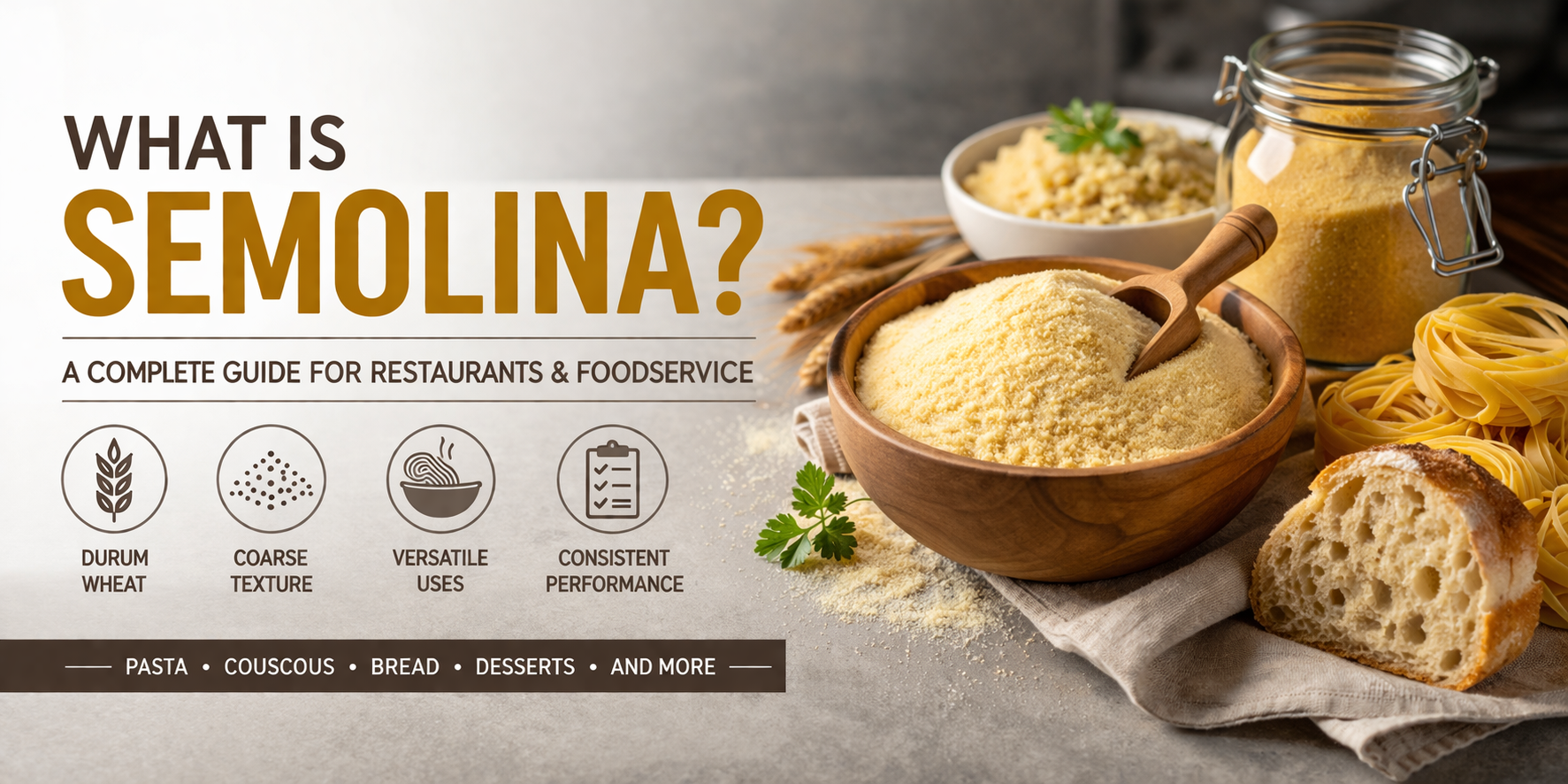
Semolina is a coarse flour made from durum wheat, a hard variety of wheat known for its high protein content and strong gluten structure.
Unlike standard all-purpose flour, semolina has a slightly granular texture and a pale yellow color. This unique composition makes it ideal for products that require firmness and structure, such as pasta, certain breads, and specialty desserts.
From a foodservice perspective, semolina is not just a flour alternative. It is a functional ingredient that affects:
- Dough elasticity
- Cooking stability
- Final product texture
- Shelf life of prepared foods
That is why it is widely used in both traditional cuisines and modern commercial kitchens.
How Semolina Is Produced
Semolina is produced by milling durum wheat and separating the endosperm from the bran and germ. The result is a coarse, high-protein flour that behaves very differently from softer wheat flours.
Durum wheat is significantly harder than common wheat varieties. This hardness is what gives semolina its defining characteristics:
- Strong gluten formation
- Higher resistance during cooking
- Less breakdown in high-temperature applications
For foodservice operations, this translates into more predictable results, especially in high-volume production environments.
Why Semolina Matters in Foodservice Operations
In a restaurant or production kitchen, consistency is everything. Semolina plays a key role in maintaining that consistency.
Unlike softer flours, semolina holds its structure during cooking. This makes it especially valuable for operations where dishes need to perform well under:
- High heat
- Extended holding times
- Batch cooking systems
For example, pasta made with semolina maintains its firmness even after cooking and reheating. This is critical for restaurants managing peak hours where dishes are prepped in advance.
In addition, semolina contributes to:
- Reduced product breakage
- Improved plating quality
- Better customer perception of texture
From a business standpoint, this means fewer remakes, less waste, and more reliable output.
Common Commercial Uses of Semolina
Semolina is used across multiple segments of the food industry. In a commercial setting, its applications extend far beyond traditional pasta.
Pasta Production
Semolina is the industry standard for pasta due to its ability to create firm, elastic dough that holds shape during cooking.
Bread and Bakery Products
Certain artisan breads use semolina to achieve a slightly chewy texture and enhanced crust quality.
Prepared Foods and Hot Holding
Semolina-based dishes perform well in hot holding equipment because they maintain structure without becoming overly soft.
Ethnic and Specialty Cuisine
Many global dishes rely on semolina, including couscous, halva, and various regional porridges. This makes it particularly relevant for diverse menus.
Semolina vs Other Flours: What Makes It Different?
From a procurement and kitchen performance standpoint, semolina stands apart from other flours.
Compared to all-purpose flour, semolina offers:
- Higher protein content
- Stronger gluten network
- Better resistance to overcooking
Compared to whole wheat flour:
- Smoother texture
- More controlled hydration
- More consistent results in large batches
For commercial kitchens, this means semolina is often the better choice when the goal is durability and consistency rather than softness.
Nutritional Profile of Semolina
Semolina is not only functional but also nutritionally relevant.
It typically contains:
- High protein content
- Moderate carbohydrates
- Low fat levels
- Enriched vitamins such as iron and B vitamins
For food businesses, this can be leveraged in menu positioning, especially for customers who value higher-protein grain options.
Is Semolina Gluten-Free?
No. Semolina contains gluten because it is derived from durum wheat.
This is an important consideration for restaurants serving customers with gluten sensitivities or celiac disease. Cross-contamination risks must also be managed in kitchens that handle both gluten and gluten-free products.
For operators, clear labeling and proper kitchen protocols are essential when semolina is part of the menu.
Best Substitutes for Semolina in Commercial Kitchens
While semolina has unique properties, there are situations where substitutes are needed.
Common alternatives include:
- Rice flour for gluten-free applications
- Chickpea flour for higher protein and gluten-free recipes
- Corn-based flours for similar texture but different flavor profile
However, it is important to note that no substitute perfectly replicates semolina’s structure. In commercial kitchens, substitutions often require recipe adjustments.
Buying and Storing Semolina for Foodservice
For restaurants and food production businesses, sourcing and storage are just as important as usage.
When purchasing semolina, operators should consider:
- Protein content consistency
- Supplier reliability
- Bulk packaging options
Storage should follow dry ingredient best practices:
- Keep in a cool, dry environment
- Use airtight containers
- Rotate inventory regularly
Proper storage ensures product stability and reduces waste.
Why Semolina Deserves a Place in Your Kitchen
Semolina is more than just a pasta ingredient. It is a performance-driven component that supports consistency, efficiency, and product quality in commercial kitchens.
For foodservice operators, understanding ingredients at this level is what separates average operations from high-performing ones.
When combined with the right equipment, proper storage, and efficient kitchen workflows, semolina becomes a strategic ingredient rather than just a basic one.