
Access to clean drinking water used to be a basic utility. Today, it has quietly become part of the customer experience.
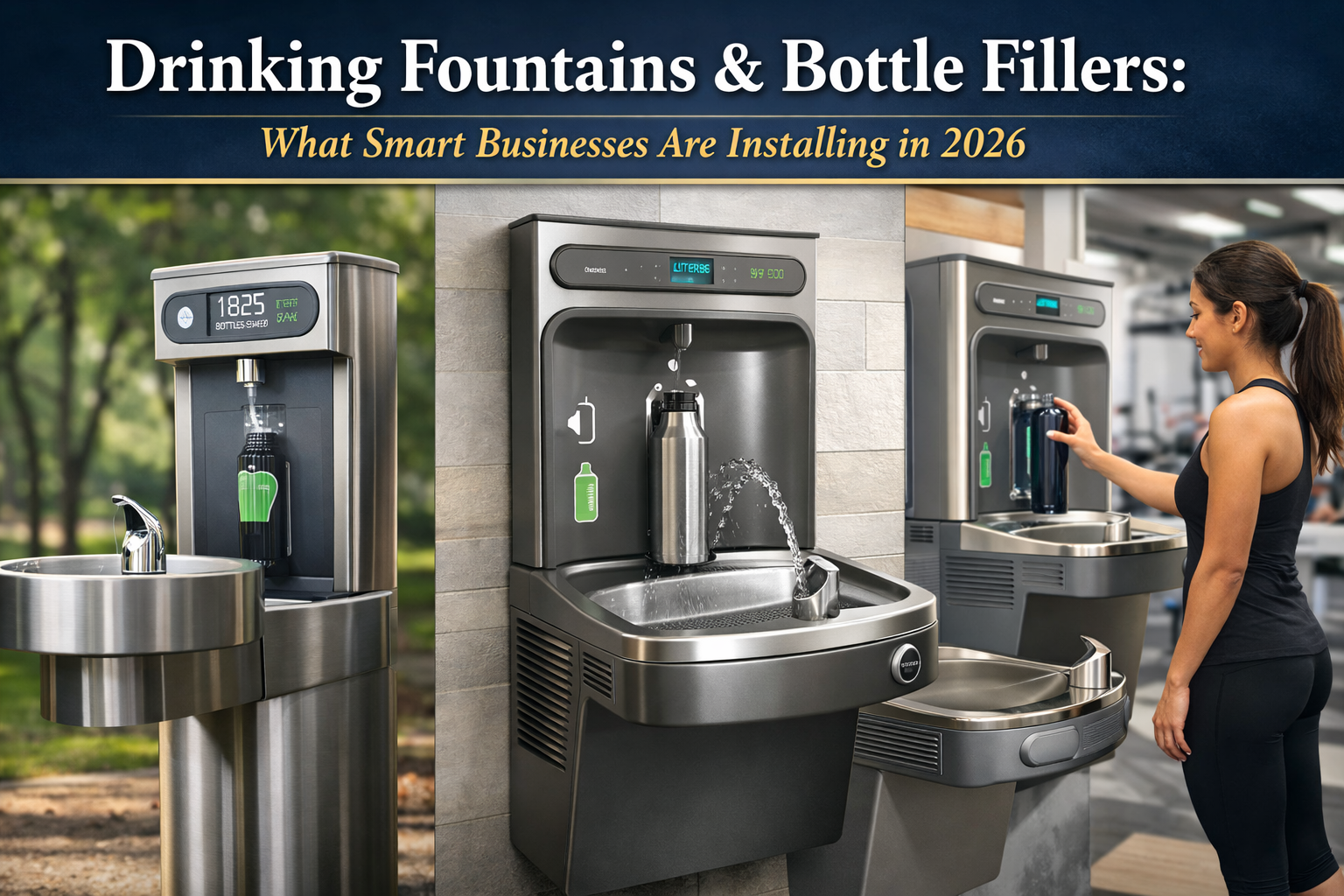
Walk into any modern gym, airport, school, or even a well-designed restaurant, and you will notice something: traditional water fountains are no longer the standard. In their place, you see sleek, touchless bottle filling stations, combination units, and systems designed not just to provide water, but to align with how people actually consume it.
This shift is not accidental. It reflects a deeper change in behavior. Customers carry reusable bottles, expect hygienic solutions, and increasingly judge businesses by how thoughtful their infrastructure feels. For operators, this creates both a challenge and an opportunity. Choosing the right drinking fountain or bottle filler is no longer about installing a fixture. It is about making a decision that affects efficiency, perception, and long-term operating costs.
Understanding the Shift
For years, bottled water filled the gap. It was easy, predictable, and widely accepted. But the economics and the optics have changed.
Stocking bottled water means ongoing purchasing, storage space, refrigeration costs, and waste management. Over time, this creates a hidden operational burden. At the same time, consumers have become more aware of plastic waste and are actively moving away from single-use products.
This is where drinking fountains and bottle filling stations step in as a more efficient alternative. They eliminate recurring inventory costs, reduce labor, and create a cleaner, more sustainable experience. More importantly, they signal something subtle but powerful: your business is designed with intention.
From a commercial standpoint, this matters more than most operators realize. Infrastructure choices like this influence how long customers stay, how comfortable employees feel, and how your brand is perceived in competitive markets.
Drinking Fountains vs Bottle Fillers
At first glance, a water fountain and a bottle filler might seem like variations of the same product. In reality, they serve very different user behaviors.
Traditional drinking fountains are designed for immediate use. A quick sip, minimal interaction, and no additional accessories required. This makes them practical in environments like schools, hospitals, and older office buildings where usage patterns are predictable.
Bottle filling stations, on the other hand, are built around a different assumption: people arrive with their own bottles. These units prioritize speed, hygiene, and convenience. Touchless sensors, faster flow rates, and integrated filtration systems are not just features; they are expectations.
What many businesses overlook is that the decision is not binary. In most modern environments, the most effective solution is a combination unit that integrates both functions. This allows you to serve every type of user without forcing a compromise.
From a commercial perspective, combination units consistently deliver the highest return. They reduce complaints, increase usage, and future-proof your installation as consumer behavior continues to evolve.
Indoor vs Outdoor Installations
The installation environment changes everything.
Indoor units are typically more flexible. They allow for cleaner design integration, easier plumbing access, and lower upfront costs. You can choose between wall-mounted systems, in-wall recessed units, or freestanding designs depending on the layout of your space.
Outdoor units operate under a completely different set of constraints. Exposure to weather, temperature fluctuations, and potential vandalism means the construction must be significantly more durable. Materials like stainless steel, powder-coated metal, and reinforced composites are not upgrades; they are necessities.
For businesses operating in regions like New York, New Jersey, or Pennsylvania, there is an additional factor that cannot be ignored: freezing temperatures. Installing a non-winterized unit outdoors is one of the most common and costly mistakes. Once temperatures drop below freezing, systems without proper protection can fail quickly.
This is not just a technical detail. It is a planning decision that directly impacts maintenance costs and operational continuity.
Filtered vs Non-Filtered Systems
One of the most underestimated decisions in this category is whether to choose a filtered system.
On paper, non-filtered units seem attractive. They are less expensive upfront and require less maintenance. However, they rely entirely on the quality of your local water supply. In many areas, this leads to inconsistent taste, which directly affects usage.
Filtered systems, while slightly more complex, create a noticeably better experience. They improve taste, remove contaminants, and give users confidence in what they are consuming. In commercial environments, perception matters as much as functionality.
The maintenance aspect is often overstated. Modern filtration systems are designed for efficiency, with some capable of handling thousands of gallons before requiring replacement. When viewed over time, the cost difference becomes negligible compared to the improvement in user satisfaction.
For most businesses, especially those focused on customer experience, filtered units are the more strategic choice.
Refrigeration: A Small Feature That Changes User Behavior
Temperature plays a bigger role than many operators expect.
Non-refrigerated units provide room-temperature water, which may be acceptable in certain environments. However, in high-traffic or performance-driven spaces like gyms, kitchens, and commercial facilities, users consistently prefer cold water.
Refrigerated units do not just improve comfort. They increase usage. When water is more appealing, people are more likely to use the system instead of seeking alternatives.
From an operational standpoint, the added complexity is minimal. Modern refrigerated systems are reliable and require little additional maintenance. In most cases, the decision comes down to whether you are optimizing for basic functionality or for user satisfaction.
Design and Installation Types
The way a unit is installed affects both usability and maintenance.
Wall-mounted systems are the most common because they balance accessibility and simplicity. They are easy to install, easy to service, and fit into most commercial environments without major modifications.
In-wall units offer a cleaner, more integrated appearance. They are often used in higher-end spaces where design matters. However, they require more planning and a more complex installation process.
Freestanding units provide flexibility. They can be placed in open areas without relying on existing walls, which makes them ideal for large facilities or outdoor spaces.
Each option has its place, but the right choice depends on how the space is used, not just how it looks.
Touchless Operation
Hygiene standards have shifted permanently.
What was once considered a premium feature is now a baseline expectation. Touchless sensors reduce contact, improve accessibility, and create a more modern user experience.
In high-traffic environments, this also reduces wear and tear. Mechanical components like push bars and buttons are more prone to failure over time, especially under heavy use.
For businesses aiming to align with current expectations, sensor-based operation is no longer optional. It is the default.
Capacity Planning
One of the biggest mistakes in selecting a drinking fountain or bottle filler is underestimating usage.
It is not just about how many people are in the building. It is about how and when they use the system. Peak hours, short breaks, and concentrated usage periods can create demand spikes that overwhelm smaller units.
A single station may seem sufficient on paper, but in practice, it can lead to congestion and frustration. This is particularly true in environments like schools, gyms, and large commercial spaces.
Planning for capacity means thinking beyond average usage. It means understanding behavior patterns and designing for peak demand.
Compliance and Accessibility
In the United States, accessibility standards are clearly defined.
ADA-compliant units are designed to accommodate users of different heights and abilities. This includes proper positioning, accessible controls, and adequate clearance.
Ignoring these requirements is not just a legal risk. It is a missed opportunity to create an inclusive environment.
Most modern commercial units are available in ADA-compliant configurations, but it is still the responsibility of the buyer to ensure the installation meets all necessary standards.
Why This Decision Impacts More Than Hydration
At a surface level, this is about water.
At a deeper level, it is about how your business operates and how it is perceived.
A well-chosen drinking fountain or bottle filling station reduces operational friction. It eliminates recurring costs, simplifies logistics, and improves efficiency. At the same time, it enhances the user experience in a way that is subtle but meaningful.
Customers may not consciously think about it, but they notice when a space feels modern, clean, and thoughtfully designed. Employees feel it too. Over time, these small details compound.
This is why businesses that take infrastructure seriously tend to outperform those that treat it as an afterthought.
What the Best Operators Are Choosing Today
Across the market, a clear pattern has emerged.
The most forward-thinking businesses are investing in systems that combine filtration, refrigeration, and touchless operation within a single unit. In many cases, these are combination systems that include both a drinking fountain and a bottle filler.
This approach does not just solve today’s needs. It anticipates future expectations.
It ensures compatibility with changing habits, reduces the need for upgrades, and positions the business as one that understands where the market is going.
Think Long-Term, Not Just Installation
The real mistake is not choosing the wrong unit. It is thinking of this as a one-time purchase.
A drinking fountain or bottle filling station is part of your operational infrastructure. It will be used daily, by hundreds or thousands of people, over years.
The right decision minimizes friction. The wrong one creates it.
When evaluated properly, this is not a cost. It is an investment in efficiency, experience, and brand perception.
And in competitive markets, those are the factors that separate average businesses from exceptional ones.