
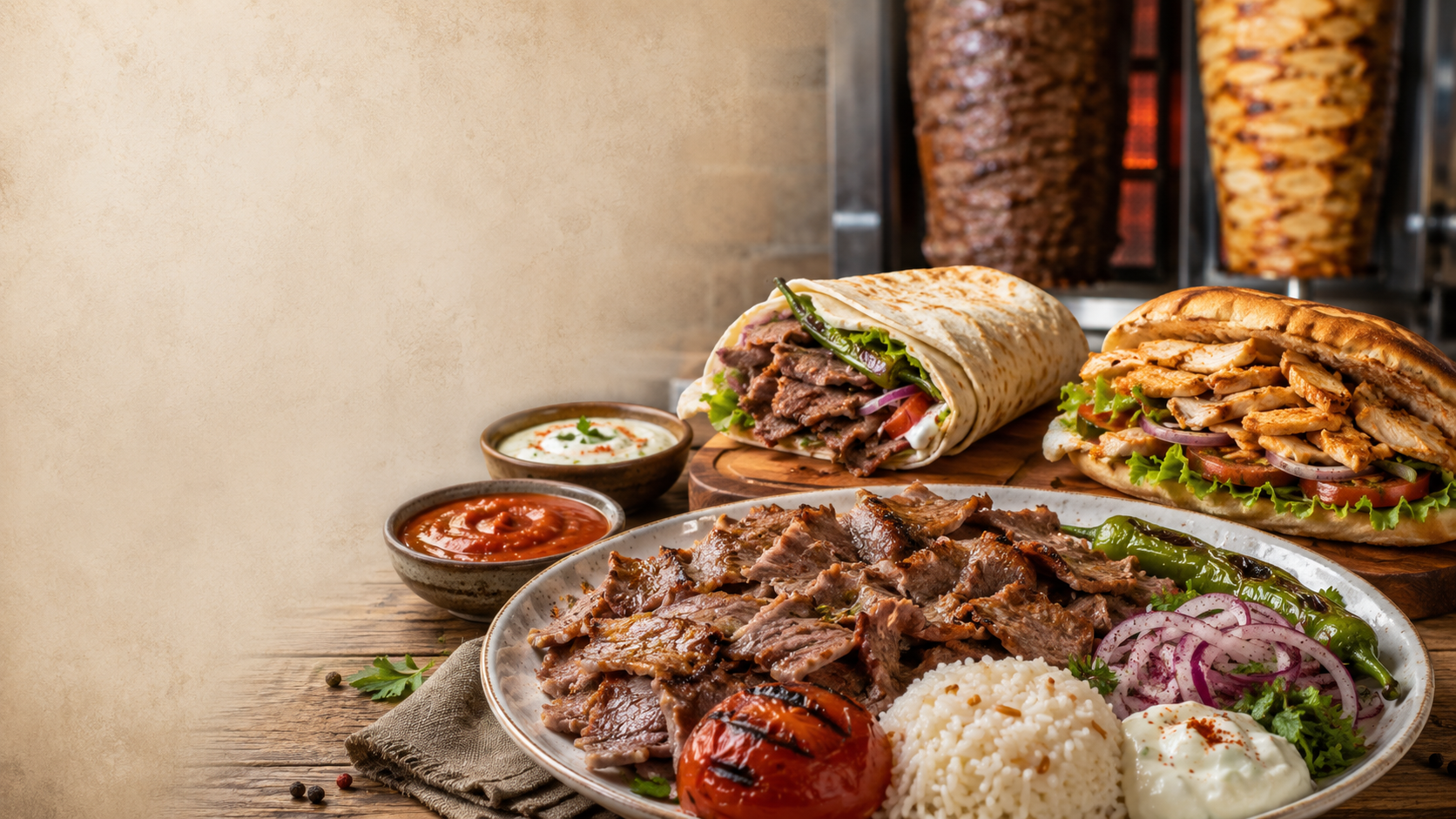
Doner kebab is one of the most famous dishes in Turkish cuisine and one of the most recognizable street foods in the world. Thin slices of seasoned meat are stacked on a vertical rotisserie, slowly roasted as the spit turns, and shaved off in tender, flavorful pieces as the outside cooks. The result is a dish that can be served in many ways: in bread, in a wrap, over rice, on a plate, with yogurt, with tomato sauce, or as part of a larger Turkish restaurant menu.
Although many people think of doner as one single food, there are actually many types of doner kebab. The differences can come from the meat, the seasoning, the cutting method, the bread, the sauce, the region, and the way it is served.
For restaurants, doner kebab is more than a menu item. It is a service system. A successful doner operation depends on meat preparation, vertical rotisserie cooking, holding, slicing, bread warming, sauce prep, refrigeration, and fast assembly during busy lunch or dinner hours. Whether you are opening a Turkish restaurant, Mediterranean grill, kebab shop, food truck, or fast-casual concept, understanding the main types of doner kebab can help you build a better menu and choose the right equipment.
What Is Doner Kebab?
Doner kebab is a Turkish dish made by stacking seasoned slices or layers of meat on a rotating vertical spit. As the meat turns near a heat source, the outside layer roasts. The cooked surface is then shaved off in thin slices and served immediately.
The word “doner” comes from the Turkish idea of turning or rotating. That is the heart of the dish: meat slowly turning in front of heat until the outside becomes browned, juicy, and slightly crisp.
Traditional doner was often made with lamb or mutton, but modern doner can be made with beef, lamb, veal, chicken, turkey, or mixed meats. In restaurants, doner may be built from whole muscle slices, ground meat mixtures, or a combination of both.
Doner Kebab vs Gyro vs Shawarma
Doner kebab, gyro, and shawarma are related, but they are not exactly the same.
Doner kebab is Turkish. It is usually seasoned with Turkish and regional spices, cooked on a vertical rotisserie, and served in Turkish-style bread, lavash, pita, or on a plate with rice, salad, and sauces.
Gyro is Greek. It is also cooked on a vertical rotisserie, but the seasoning, bread, sauces, and toppings are different. Gyro is commonly served with pita, tomato, onion, and tzatziki.
Shawarma is common across the Middle East and Levant. It is also cooked on a vertical spit, but it often uses different spice blends and is commonly served with garlic sauce, tahini, pickles, vegetables, and flatbread.
The cooking technique is similar, but the flavor profile, service style, and cultural identity are different.
Main Types of Doner Kebab by Meat

One of the easiest ways to understand doner kebab is by the type of meat used. Each meat creates a different texture, flavor, price point, and customer experience.
1. Beef Doner
Beef doner is one of the most common types of doner served in restaurants outside Turkey. It has a rich, savory flavor and works well for sandwiches, wraps, rice plates, and mixed platters.
Beef doner can be made from sliced beef, ground beef, or a combination of sliced and ground meat. Some restaurants prefer beef because it is widely accepted by customers and often easier to source consistently than lamb.
Best for: doner sandwiches, doner wraps, rice plates, lunch specials, fast-casual kebab menus
Flavor profile: savory, hearty, rich, slightly crisp on the edges
Common toppings: lettuce, tomato, onion, pickled vegetables, yogurt sauce, hot sauce, garlic sauce
2. Lamb Doner
Lamb doner is one of the most traditional and flavorful versions. It has a deeper, more distinctive taste than beef or chicken. In Turkish cuisine, lamb has long been connected with kebab culture, especially in regional dishes.
Lamb doner is often popular with customers looking for a more authentic or premium experience. Because lamb has a stronger flavor, it pairs well with simple toppings, warm bread, grilled peppers, onions, yogurt, and tomato-based sauces.
Best for: traditional Turkish restaurants, premium kebab plates, Iskender-style dishes
Flavor profile: rich, aromatic, slightly gamey, deeply savory
Common toppings: onion, sumac, parsley, grilled tomato, yogurt, tomato sauce
3. Chicken Doner
Chicken doner is lighter than beef or lamb and has become extremely popular in modern kebab shops. It is usually marinated with yogurt, oil, garlic, paprika, pepper, herbs, and spices before being stacked on the rotisserie.
Chicken doner works especially well in wraps, bowls, salads, and fast-casual menus. It is often a good choice for customers who want something lighter but still flavorful.
Best for: wraps, bowls, salads, lunch menus, food trucks
Flavor profile: juicy, mildly spiced, lighter than red meat doner
Common toppings: lettuce, tomato, cucumber, garlic sauce, white sauce, hot sauce
4. Mixed Doner
Mixed doner usually refers to a plate, wrap, or sandwich that combines two or more doner meats. For example, a restaurant may serve beef and chicken doner together, or lamb and beef doner together.
This is a strong menu option because it gives customers variety and increases perceived value. It also allows restaurants to upsell a larger plate or combo.
Best for: combo plates, mixed grill platters, large wraps, family-style meals
Flavor profile: layered, rich, balanced
Common toppings: rice, salad, pita, grilled vegetables, sauces
5. Veal Doner
Veal doner is less common than beef or chicken, but it is sometimes used in Turkish-style doner because of its tenderness. It has a milder flavor than lamb and a softer texture than standard beef.
Veal can work well in higher-end doner preparations, especially when combined with lamb or beef fat for better moisture and flavor.
Best for: premium doner plates, traditional Turkish menus, sliced meat doner
Flavor profile: mild, tender, delicate
Common toppings: simple salad, onion, tomato, yogurt, bread
Types of Doner Kebab by Preparation Style
The meat itself is important, but the preparation method also changes the character of doner. Some styles are more traditional, while others are designed for fast service and high volume.
6. Yaprak Doner
Yaprak doner means “leaf doner” in Turkish. It is made with thin slices of whole muscle meat stacked layer by layer on the spit. The name comes from the thin, leaf-like slices of meat.
This is often considered one of the highest-quality doner styles because it relies more on actual meat slices and less on ground meat. When prepared well, yaprak doner has a tender bite, natural meat texture, and crisp roasted edges.
Best for: premium Turkish restaurants, authentic doner shops, higher-price plates
Flavor profile: meaty, clean, tender, rich
Why restaurants choose it: premium perception and better texture
Operational note: requires skilled prep, careful stacking, and consistent slicing
7. Ground Meat Doner
Ground meat doner is made from seasoned ground meat shaped and stacked onto the rotisserie. This style is common in many fast-food doner operations because it is easier to portion, season, and produce consistently.
It can be flavorful and profitable when done properly, but the quality depends heavily on the meat blend, fat ratio, seasoning, and cooking control.
Best for: high-volume kebab shops, quick-service restaurants, late-night doner shops
Flavor profile: seasoned, uniform, soft, juicy
Why restaurants choose it: consistency, speed, cost control
8. Layered Mixed Doner
Some doner cones combine sliced meat and ground meat layers. This can create a balance between natural meat texture and structural stability. The sliced meat provides chew and premium appearance, while the ground mixture helps bind the stack together.
Best for: restaurants that want quality and operational consistency
Flavor profile: balanced, juicy, structured
Why restaurants choose it: reliable slicing and better yield
Popular Turkish Doner Kebab Serving Styles

Doner can be served in several ways. This is where restaurants can create variety from the same core product.
9. Doner Sandwich
The doner sandwich is one of the most popular forms of doner kebab. Shaved doner meat is served in Turkish bread, pide-style bread, pita, or sandwich bread with vegetables and sauces.
A classic doner sandwich may include meat, lettuce, tomato, onion, pickles, cabbage, garlic sauce, yogurt sauce, or hot sauce. In Turkey, the bread and toppings can vary by shop and region.
Best for: lunch service, takeout, casual dining, street food menus
Menu advantage: fast assembly and strong customer familiarity
Good pairings: fries, ayran, salad, pickles
10. Doner Wrap
A doner wrap is made with lavash or flatbread. The meat is placed inside the bread with vegetables and sauces, then rolled tightly for easy eating.
Wraps are especially useful for food trucks, takeout windows, and fast-casual restaurants because they are portable and easy to serve. Chicken doner and beef doner are both popular choices for wraps.
Best for: food trucks, fast-casual menus, lunch specials, late-night service
Menu advantage: portable, customizable, easy to upsell
Good pairings: hot sauce, garlic sauce, pickles, fries
11. Doner Plate
A doner plate is a more complete meal. It usually includes shaved doner meat served with rice, salad, bread, grilled vegetables, sauces, and sometimes fries.
This format works well for dine-in restaurants because it feels more substantial than a sandwich or wrap. It also allows restaurants to present doner as a full entree instead of only a street food item.
Best for: dine-in Turkish restaurants, Mediterranean restaurants, lunch and dinner plates
Menu advantage: higher ticket value and better presentation
Good pairings: rice pilaf, bulgur, shepherd salad, grilled tomato, yogurt sauce
12. Iskender Kebab
Iskender kebab is one of the most famous Turkish doner dishes. It is strongly associated with Bursa and is typically made with thin slices of doner served over pieces of bread, topped with tomato sauce, melted butter, and yogurt on the side.
The dish is rich, comforting, and deeply flavorful. The bread absorbs the sauce and butter, while the yogurt balances the richness of the meat.
Best for: traditional Turkish restaurants, premium menu sections, dine-in service
Flavor profile: buttery, tangy, savory, rich
Key components: doner meat, bread, tomato sauce, melted butter, yogurt
Operational note: best served hot and fresh, often on a warm plate
13. Pilav Ustu Doner
Pilav ustu doner means doner served over rice. It is a popular plate format in Turkish restaurants and casual kebab shops. The rice absorbs juices from the meat, making the dish simple but satisfying.
This is a strong menu item because it is easy to understand, easy to portion, and easy to serve quickly.
Best for: lunch plates, casual restaurants, food courts, takeout
Flavor profile: simple, savory, filling
Good pairings: salad, yogurt, pickles, grilled peppers
14. Tombik Doner
Tombik doner is served in a round, soft, pocket-style bread that is often lightly toasted. The bread is thicker and fluffier than lavash, giving the sandwich a more substantial bite.
It is popular because the bread holds the meat and sauces well while staying soft inside and slightly crisp outside.
Best for: sandwich menus, street food concepts, takeout
Menu advantage: satisfying bread texture and strong visual appeal
15. Durum Doner
Durum doner is the Turkish wrap-style version made with lavash or thin flatbread. It is one of the most practical doner formats for quick service.
Durum can be made with beef, lamb, chicken, or mixed doner. It is commonly served with tomatoes, onions, parsley, lettuce, pickles, and sauces.
Best for: quick-service restaurants, lunch menus, food trucks
Menu advantage: portable, fast, customizable
16. Doner Bowl
The doner bowl is a modern format that works well for American fast-casual restaurants. Instead of bread, the meat is served over rice, salad, bulgur, grains, or vegetables.
Customers can choose toppings and sauces, similar to Mediterranean bowl concepts. This format is especially useful for restaurants that want to appeal to customers looking for customizable meals.
Best for: fast-casual restaurants, health-conscious menus, lunch service
Menu advantage: customizable and easy to market
Good bases: rice, bulgur, salad greens, roasted vegetables, fries
17. Doner Salad
Doner salad is a lighter option that uses shaved doner meat as the protein over greens, tomatoes, cucumbers, onions, cabbage, herbs, and sauce.
Chicken doner works especially well for this format. Beef or lamb can also be used for a heartier salad.
Best for: lunch menus, lighter options, bowl concepts
Menu advantage: adds a lighter doner option without changing the core kitchen setup
18. Doner Fries
Doner fries are a modern comfort-food version. Fries are topped with shaved doner meat, sauces, cheese, pickles, onions, herbs, or hot sauce.
This dish is especially popular for late-night menus, food trucks, sports bars, and casual restaurants.
Best for: late-night menus, casual dining, delivery, bar food
Menu advantage: high perceived value and strong comfort-food appeal
Regional and Related Doner Styles
Doner has many regional and international relatives. Some are direct Turkish styles, while others developed from similar vertical rotisserie traditions.
19. Cağ Kebabı
Cağ kebabı is not the same as standard vertical doner, but it is closely related to the broader Turkish rotating meat tradition. It is associated with Erzurum and Oltu, and it is typically made with marinated lamb cooked on a horizontal rotating spit over wood fire.
Instead of shaving meat from a vertical cone, cağ kebabı is cooked horizontally and often served on small skewers. It has a smoky, lamb-forward flavor and a very traditional presentation.
Best for: regional Turkish restaurants, specialty kebab menus
Flavor profile: smoky, lamb-rich, traditional
Key difference: horizontal rotisserie instead of vertical rotisserie
20. Berlin-Style Doner
Berlin-style doner became famous through Turkish immigrant food culture in Germany. It is usually served in bread with meat, salad, cabbage, onions, tomatoes, cucumbers, and multiple sauces.
This version has become a global street food style of its own. It is colorful, filling, and highly customizable.
Best for: fast-casual kebab shops, street food concepts, high-volume takeout
Flavor profile: fresh, saucy, hearty
Menu advantage: very recognizable and visually appealing
21. Shawarma-Style Doner
Shawarma is not Turkish doner, but many customers compare the two because both are cooked on vertical rotisseries. A shawarma-style menu may use Middle Eastern spices, garlic sauce, tahini, pickles, and flatbread.
Restaurants should be careful with naming. If the dish uses Turkish flavors and service style, call it doner. If it uses Levantine seasoning and toppings, shawarma may be more accurate.
22. Gyro-Style Doner
Gyro is the Greek relative of doner. It is often served in pita with tomato, onion, and tzatziki. In the United States, many customers are already familiar with gyros, so restaurants sometimes use gyro-style descriptions to help customers understand doner.
However, a Turkish restaurant should preserve the doner identity and use menu descriptions to explain the difference.
Best Sauces for Doner Kebab
Sauce can change the entire personality of a doner dish. Turkish doner is often served more simply than some international versions, but modern restaurants use sauces to create variety.
Common sauces include:
-
Garlic yogurt sauce
-
Spicy red pepper sauce
-
Tomato sauce
-
White sauce
-
Hot sauce
-
Tahini sauce
-
Herb yogurt sauce
-
Cacik-style cucumber yogurt sauce
-
Butter tomato sauce for Iskender-style dishes
For restaurants, sauces should be standardized by recipe and portioned consistently. A sauce that tastes great one day and different the next can hurt customer trust.
Best Toppings for Doner Kebab
Toppings depend on the style of doner being served. A wrap may need crisp vegetables and sauces, while an Iskender plate needs bread, tomato sauce, butter, and yogurt.
Popular toppings include:
-
Sliced tomato
-
Lettuce
-
Onion
-
Red onion with sumac
-
Parsley
-
Cabbage
-
Pickled cucumber
-
Pickled peppers
-
Grilled tomato
-
Grilled green pepper
-
Cucumber
-
Garlic sauce
-
Yogurt sauce
-
Hot sauce
For commercial service, toppings should be prepped, chilled, and organized for fast assembly.
Best Breads for Doner Kebab
Bread is one of the most important parts of the doner experience. The wrong bread can make the sandwich fall apart, become soggy, or overpower the meat.
Common bread options include:
-
Lavash for durum wraps
-
Turkish pide-style bread
-
Pita
-
Flatbread
-
Tombik bread
-
Sandwich bread
-
Thin wraps for fast-casual service
Restaurants should choose bread based on service style. A wrap needs flexibility. A sandwich needs structure. A plate needs bread that can absorb juices and sauces.
How Restaurants Prepare Doner for Service
A successful doner program requires planning before service begins. The process usually includes:
-
Selecting the meat blend
-
Marinating or seasoning the meat
-
Stacking the meat properly on the spit
-
Cooking the meat on a vertical rotisserie
-
Shaving the cooked outer layer
-
Holding or serving the meat correctly
-
Assembling sandwiches, wraps, plates, or bowls
-
Maintaining safe temperatures and clean equipment
The vertical rotisserie is the centerpiece of the operation. A reliable gyro machine helps restaurants cook stacked meat evenly, maintain a steady rotation, and shave portions during service.
Equipment Needed for a Doner Kebab Restaurant
A doner kebab operation needs more than a rotisserie. The full kitchen setup depends on the menu, volume, and service style.
Important equipment may include:
-
Vertical broiler or gyro machine
-
Commercial refrigerators
-
Prep tables
-
Work tables
-
Rice cookers or steam tables
-
Charbroilers or griddles
-
Commercial ranges
-
Fryers for fries or sides
-
Food processors for sauces
-
Slicers and knives
-
Holding cabinets
-
Sauce bottles and portion containers
-
Salad prep containers
-
Bread warmers or contact grills
-
Ventilation equipment
Restaurants serving doner, kebabs, rice plates, wraps, and grilled meats need dependable commercial cooking equipment to keep the kitchen consistent during busy service.
For Turkish restaurants specifically, the equipment plan should match the menu. A restaurant serving doner, Iskender, Adana kebab, lahmacun, pide, rice, soups, salads, and desserts will need a broader setup than a small doner wrap shop. Choosing the right turkish restaurant equipment helps improve speed, consistency, food quality, and kitchen workflow.
How to Build a Doner Kebab Menu
A strong doner menu should be simple enough for customers to understand but flexible enough to increase average order value.
A practical doner menu might include:
Core Protein Options
-
Beef doner
-
Chicken doner
-
Lamb doner
-
Mixed doner
Serving Styles
-
Doner sandwich
-
Durum doner wrap
-
Doner rice plate
-
Doner salad
-
Doner bowl
-
Iskender kebab
-
Doner fries
Add-Ons
-
Extra meat
-
Extra sauce
-
Fries
-
Rice
-
Yogurt
-
Grilled vegetables
-
Extra bread
-
Pickles
-
Feta or cheese option
-
Spicy sauce upgrade
Combo Options
-
Wrap + fries + drink
-
Plate + salad + drink
-
Family platter
-
Mixed doner platter
-
Lunch special
The goal is to use the same core ingredients in multiple formats. This keeps inventory efficient while giving customers more choices.
Food Safety Tips for Doner Restaurants
Doner kebab service requires careful food safety control because meat is stacked in a large cone and cooked gradually from the outside.
Restaurants should:
-
Keep raw meat properly refrigerated before stacking
-
Follow approved food safety procedures for meat preparation
-
Cook meat to required internal temperatures
-
Shave only properly cooked exterior meat
-
Avoid undercooked interior meat reaching the plate
-
Keep sauces and toppings refrigerated
-
Prevent cross-contamination between raw meat, cooked meat, sauces, and vegetables
-
Clean and sanitize knives, prep surfaces, and equipment
-
Follow local health department rules for vertical rotisserie cooking
Because regulations can vary by location, restaurants should always follow local health department requirements and equipment manufacturer instructions.
How to Choose the Best Doner Style for Your Restaurant
The best type of doner depends on your concept.
Choose beef doner if you want a familiar, hearty, widely accepted protein.
Choose lamb doner if you want a more traditional and premium Turkish flavor.
Choose chicken doner if you want a lighter, lower-cost, high-volume option.
Choose yaprak doner if your restaurant focuses on authenticity and quality.
Choose ground meat doner if your priority is consistency, speed, and cost control.
Choose Iskender kebab if you want a signature dine-in dish with strong Turkish identity.
Choose doner wraps and sandwiches if you want fast service and takeout volume.
Choose doner bowls if you want to appeal to modern fast-casual customers.
Frequently Asked Questions About Doner Kebab
What is the most popular type of doner kebab?
Beef doner and chicken doner are among the most popular options in many restaurants because they are familiar, versatile, and easy to serve in wraps, sandwiches, and plates. Lamb doner is often preferred for a more traditional Turkish flavor.
What is the difference between doner and kebab?
Kebab is a broad category of grilled or roasted meat dishes. Doner is a specific type of kebab cooked on a rotating vertical spit and shaved as it cooks.
Is doner kebab Turkish?
Yes. Doner kebab is a Turkish dish and one of the most famous foods associated with Turkish cuisine.
What meat is used for doner kebab?
Doner can be made with beef, lamb, veal, chicken, turkey, or mixed meats. Traditional versions often use lamb or a lamb and beef mixture, while modern restaurants commonly serve beef and chicken doner.
What is yaprak doner?
Yaprak doner is made with thin slices of whole muscle meat stacked on the rotisserie. It is often considered a premium doner style because it has a more natural meat texture.
What is Iskender kebab?
Iskender kebab is a Turkish dish made with thin doner slices served over bread, topped with tomato sauce and melted butter, usually with yogurt on the side.
What is the difference between doner and shawarma?
Doner is Turkish, while shawarma is common in Middle Eastern and Levantine cuisine. Both use vertical rotisserie cooking, but the seasoning, sauces, bread, and toppings are different.
What is the difference between doner and gyro?
Doner is Turkish and gyro is Greek. They use similar vertical rotisserie cooking techniques, but they differ in seasoning, toppings, sauces, and serving style.
Can doner kebab be served as a bowl?
Yes. Doner bowls are a modern serving style that works well with rice, salad, bulgur, vegetables, sauces, and toppings.
What equipment do you need for doner kebab?
The most important piece of equipment is a vertical rotisserie or gyro machine. Restaurants may also need refrigeration, prep tables, cooking equipment, rice warmers, knives, slicers, sauce prep tools, bread warmers, and holding equipment.
Doner kebab is much more than a sandwich. It is a flexible, high-demand menu category with many styles, from beef doner and chicken doner to yaprak doner, Iskender kebab, doner plates, wraps, bowls, and modern fusion items.
For restaurants, the key is to match the right doner style with the right service model. A small food truck may focus on wraps and bowls. A traditional Turkish restaurant may focus on lamb doner, Iskender, rice plates, and mixed grills. A fast-casual shop may offer beef, chicken, and mixed doner in multiple formats.
With the right recipes, equipment, prep system, and service flow, doner kebab can become a profitable and memorable part of a restaurant menu.