
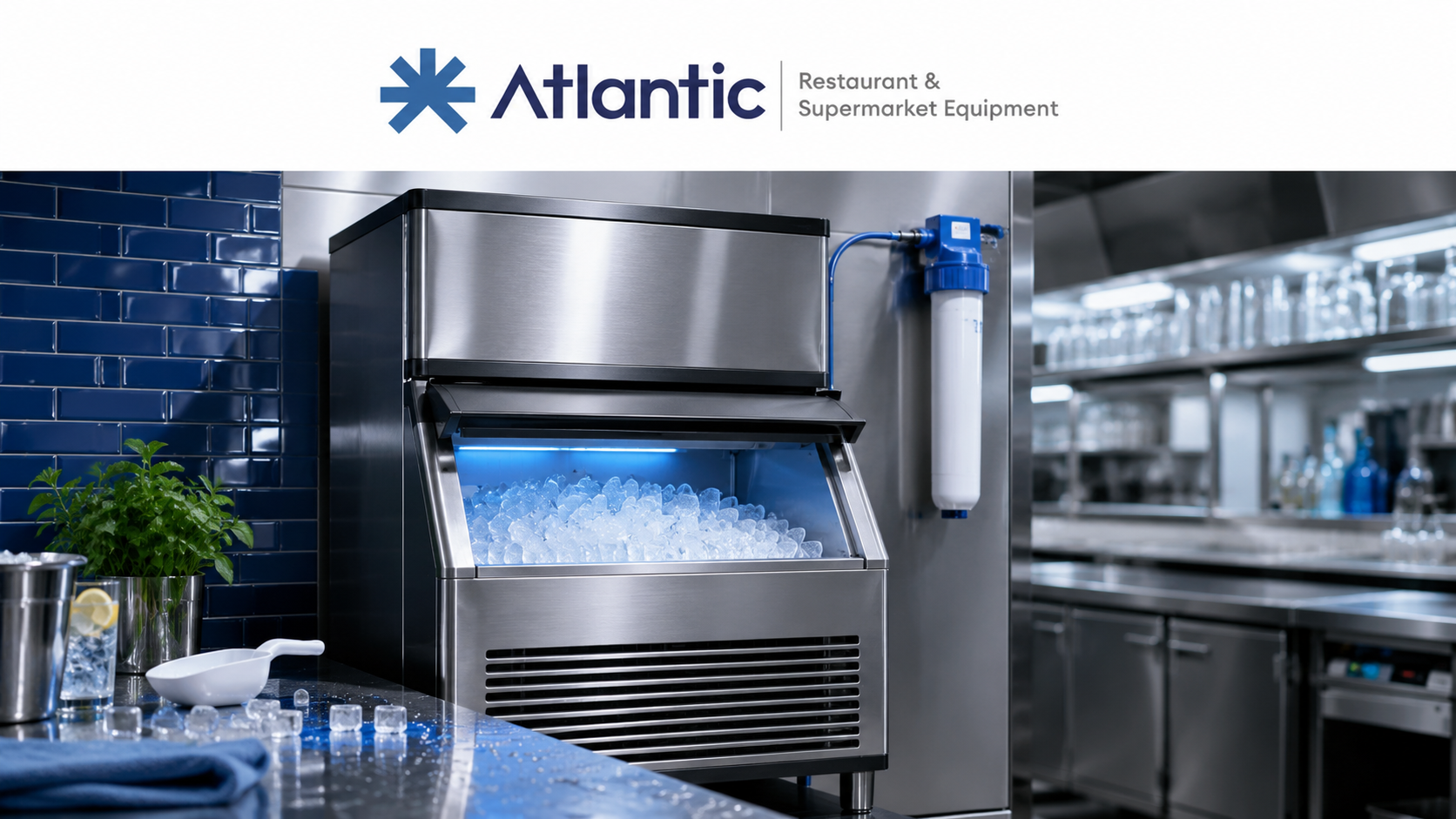
A commercial ice machine is one of those pieces of restaurant equipment that often goes unnoticed until it stops working. When the ice bin is full, the bar, kitchen, hotel floor, café station, seafood display, or convenience store beverage area runs smoothly. When the machine slows down, produces cloudy ice, leaks water, or stops making ice altogether, the problem can affect service immediately.
For restaurants, bars, hotels, grocery stores, supermarkets, coffee shops, healthcare facilities, and foodservice operations, ice is not just a beverage extra. It is part of daily production. It chills drinks, preserves food displays, supports prep work, fills hotel buckets, cools packaged items, and helps keep service moving during peak hours.
This guide explains the most common commercial ice machine problems, how to troubleshoot them, when a simple maintenance step may solve the issue, and when it is time to call a qualified service technician. It also explains how to prevent future breakdowns with proper cleaning, filtration, airflow, water supply, and equipment sizing.
Why Is My Ice Machine Not Making Ice?

If your commercial ice machine is not making ice, the most likely causes are restricted water flow, a clogged water filter, dirty condenser coils, poor airflow, scale buildup, a blocked drain, incorrect temperature conditions, or a failed component such as the water inlet valve, pump, float switch, thermostat, probe, or control board.
Start with the basics:
- Confirm the machine has power.
- Make sure the water supply valve is open.
- Check the water filter.
- Look for kinks or frozen sections in the water line.
- Make sure the air vents are not blocked.
- Inspect the condenser for dust, grease, and debris.
- Check whether the bin is full or the bin sensor is blocked.
- Look for scale buildup, slime, or mineral deposits.
- Review the error code or service light if your machine displays one.
- Call a technician if the issue involves electrical parts, refrigeration components, refrigerant, sensors, valves, or repeated shutdowns.
A commercial ice machine depends on three things working together: water, refrigeration, and airflow. If one of those systems is restricted, the machine may stop producing ice or produce far less than its rated capacity.
Common Commercial Ice Machine Problems and Solutions
1. The Ice Machine Is Not Making Any Ice
A machine that makes no ice at all usually has a power, water, control, sensor, or refrigeration issue.
First, check whether the unit is turned on and connected to power. Confirm the breaker has not tripped and that the machine has not been switched off for cleaning or service. Some commercial ice machines also have a reset process, but you should always refer to the manufacturer’s manual before resetting the unit.
Next, check the water supply. A closed water valve, kinked supply line, clogged filter, or frozen water line can prevent water from reaching the machine. Without enough water, the ice maker cannot begin a proper freeze cycle.
If power and water are both available, the issue may be internal. A faulty water inlet valve, dirty water probe, failed float switch, bad pump, stuck harvest cycle, dirty evaporator, or control board issue can stop production. These problems usually require professional diagnosis.
2. The Ice Machine Is Making Ice Too Slowly
Low ice production is one of the most common commercial ice machine complaints. The machine may still be working, but it cannot keep up with demand.
Common causes include:
- Dirty condenser coils
- Blocked airflow around the machine
- High room temperature
- Warm incoming water
- Clogged water filter
- Low water pressure
- Scale buildup on the evaporator
- Dirty sensors or probes
- Undersized machine for the business volume
- Bin too small for peak service periods
Commercial ice machines are rated under specific test conditions. In real kitchens, bars, and back-of-house spaces, the surrounding air is often warmer and dirtier than ideal. Grease, dust, lint, and heat can reduce production. If an air-cooled ice machine is installed near cooking equipment, in a tight closet, or against a wall without proper clearance, it may produce far less ice than expected.
Clean the condenser, improve ventilation, replace the water filter if needed, and check the installation clearance. If production is still low, the machine may need professional service or may simply be too small for the operation.
3. The Ice Machine Makes Thin, Hollow, or Small Ice Cubes
Thin or hollow cubes usually point to a water flow problem or a freeze-cycle issue. The machine may not be getting enough water, or the water may not be circulating properly over the evaporator.
Possible causes include:
- Clogged water filter
- Low water pressure
- Partially closed water valve
- Dirty water distribution tube
- Scale buildup
- Dirty evaporator plate
- Weak water pump
- Faulty float switch
- Ice thickness probe issue
Thin ice is not just a cosmetic problem. It melts faster, reduces drink quality, and may indicate the machine is struggling. In beverage-heavy businesses, poor ice quality can increase waste because staff use more ice to get the same cooling effect.
4. The Ice Tastes Bad or Smells Strange
Bad-tasting ice is usually caused by water quality, dirty internal surfaces, an old filter, mold, slime, scale, or odors absorbed from the surrounding environment.
Ice should be treated like food. It touches beverages, food displays, guest buckets, seafood, produce, and prep containers. If the bin, scoop, water system, or evaporator is dirty, the ice can carry off-flavors or contamination risk.
To correct this:
- Replace the water filter.
- Empty and clean the bin.
- Clean and sanitize the ice machine according to the manufacturer’s instructions.
- Store the scoop outside the ice bin or in a sanitary holder.
- Keep chemicals, onions, seafood, garbage, and strong-smelling items away from the ice machine area.
- Discard the first batch of ice after cleaning if the manual recommends it.
If ice still tastes bad after cleaning and filter replacement, test the incoming water quality and inspect the water line.
5. The Ice Looks Cloudy
Cloudy ice can be caused by trapped air, minerals, poor water quality, scale buildup, or dirty machine surfaces. In commercial settings, cloudy ice may also signal that the water filter is exhausted or that the machine needs descaling.
Cloudy ice is not always unsafe, but it can make drinks look less appealing and may indicate maintenance is overdue. Bars, cafés, hotels, and upscale foodservice operations should pay close attention to ice clarity because presentation affects customer perception.
6. The Ice Machine Is Leaking Water
Water leaks can come from the machine, the bin, the drain, the water line, or nearby plumbing.
Common leak causes include:
- Loose water connection
- Cracked or damaged water line
- Clogged drain
- Improper drain slope
- Overflowing bin drain
- Faulty water inlet valve
- Damaged pump or internal hose
- Machine not level
- Condensation from uninsulated lines
If water appears around the machine, turn the unit off before inspecting. Check whether the leak is coming from an external plumbing connection or from inside the machine. A clogged drain can cause water to back up into the bin or onto the floor. If the source is not obvious, call a service technician or plumber.
Water leaks should not be ignored. They can damage floors, create slip hazards, and cause health inspection concerns.
7. The Machine Freezes Up
An ice machine that freezes up may have poor water flow, a dirty evaporator, a stuck valve, thermostat issue, sensor problem, or refrigeration issue. Ice buildup in the wrong area can prevent normal harvesting and shut down the machine.
Do not chip ice off internal parts with sharp tools. That can damage the evaporator or refrigerant tubing. Turn the machine off, follow the manual’s thawing procedure, and call a technician if the problem returns.
8. The Ice Machine Is Noisy
Some sound is normal during freeze and harvest cycles, but loud grinding, buzzing, rattling, squealing, or knocking is not normal.
Possible causes include:
- Loose panels
- Failing fan motor
- Bad pump
- Dirty condenser fan
- Worn bearings
- Scale interfering with moving parts
- Compressor issue
- Water hammer or plumbing vibration
A sudden change in sound is often an early warning sign. If the noise is mechanical, electrical, or refrigeration-related, schedule service before the machine fails during peak hours.
9. The Bin Is Full but the Machine Keeps Running
Commercial ice machines use bin controls, thermostats, or sensors to stop production when the storage bin is full. If the machine keeps making ice after the bin is full, the bin control may be dirty, blocked, misaligned, or faulty.
This can lead to overflow, jammed ice, bridge formation, and wasted energy. Clean the sensor area if accessible and safe. If the problem continues, the bin control or control board may need service.
10. The Machine Shows an Error Code
Many newer commercial ice machines display error codes or service lights. Do not ignore them. The code may point to a long freeze cycle, long harvest cycle, water supply issue, high pressure condition, sensor fault, or cleaning reminder.
Check the owner’s manual for the exact code. If the same code returns after basic cleaning and reset, call a qualified technician.
Commercial Ice Machine Troubleshooting Checklist
Use this checklist before calling for service. It can help you identify simple problems and provide better information to a technician.
Power
- Is the machine turned on?
- Is the breaker tripped?
- Is the plug secure?
- Is the unit in cleaning mode or standby mode?
- Is there an error code?
Water Supply
- Is the water valve open?
- Is the water line kinked?
- Is the water filter clogged?
- Has the filter been changed recently?
- Is water pressure adequate?
- Is the water line frozen or blocked?
Airflow and Condenser
- Are vents blocked?
- Is the machine too close to a wall or other equipment?
- Is the condenser dirty?
- Is the room too hot?
- Is the unit installed near fryers, ovens, grills, or direct sunlight?
Drain
- Is the drain clogged?
- Is water backing up?
- Is the machine level?
- Is the drain line properly routed?
- Is there standing water near the unit?
Ice Quality
- Is the ice thin, hollow, soft, cloudy, or misshapen?
- Does the ice taste or smell bad?
- Is there scale on the evaporator?
- Is there slime in the bin or water path?
- Is the scoop being stored properly?
Demand and Sizing
- Is the machine too small for the business?
- Does the problem happen only during rush hours?
- Is the bin emptying faster than the machine can recover?
- Has the business added more seats, drinks, rooms, displays, or delivery volume?
How to Clean a Commercial Ice Machine
Cleaning is one of the most important parts of commercial ice machine maintenance. A dirty ice machine can reduce production, create bad-tasting ice, increase energy use, shorten equipment life, and create sanitation problems.
Always follow the manufacturer’s manual for your exact model. Different brands and models have different cleaning cycles, chemicals, and disassembly procedures.
A general cleaning process usually includes:
- Turn off the ice machine.
- Remove and discard all ice from the bin.
- Turn off the water supply if required by the manual.
- Remove parts that are designed to be removed for cleaning.
- Use manufacturer-approved ice machine cleaner to remove scale and mineral buildup.
- Run the cleaning cycle if the unit has one.
- Rinse parts as directed.
- Sanitize food-contact surfaces with an approved sanitizer.
- Clean the bin, door, scoop holder, and exterior surfaces.
- Restart the machine.
- Discard the first batch of ice if recommended by the manufacturer.
Do not use harsh chemicals, abrasive pads, or household cleaners unless the manufacturer specifically allows them. Ice machine cleaner and sanitizer are not the same thing. Cleaner removes mineral scale. Sanitizer reduces microorganisms on food-contact surfaces. Many machines need both steps.
How Often Should a Commercial Ice Machine Be Cleaned?
Most commercial ice machines should be cleaned and sanitized at least every six months, but many foodservice operations need more frequent cleaning. High-volume restaurants, bars, coffee shops, hotels, grocery stores, and locations with hard water may need quarterly or even monthly attention.
Clean more often if you notice:
- Slower ice production
- Cloudy ice
- Bad taste or odor
- Visible scale
- Slime or black residue
- Ice sticking together
- Error codes
- Water flow problems
- Health inspection concerns
A simple calendar schedule is not always enough. The right cleaning interval depends on water quality, usage volume, air quality, ambient temperature, and the machine’s installation environment.
Why Water Filters Matter
A water filter is one of the easiest ways to protect a commercial ice machine. It can improve taste, reduce sediment, and help limit mineral scale depending on the filter type and local water conditions.
A clogged or expired filter can restrict water flow and reduce production. A missing or poor-quality filter can allow sediment and scale to build up inside the machine. Both situations can lead to service calls.
For most operations, the filter should be replaced according to the manufacturer’s schedule or sooner if water quality is poor or usage is heavy. If your area has hard water, consider a filtration system designed for scale reduction.
Water quality affects both the machine and the customer experience. Bad water creates bad ice, and bad ice can damage the perceived quality of every drink you serve.
Why Airflow and Room Temperature Matter
Commercial ice machines reject heat while making ice. If heat cannot escape, production drops. This is especially important for air-cooled models.
Common airflow mistakes include:
- Installing the machine too close to a wall
- Blocking vents with boxes, chemicals, or supplies
- Placing the machine next to hot cooking equipment
- Installing it in a closet without ventilation
- Letting dust or grease clog condenser coils
- Ignoring manufacturer clearance requirements
A dirty condenser forces the machine to work harder. That can slow production, increase energy use, and shorten equipment life. Keep the area around the machine open and clean.
When to Call a Professional Technician
Some ice machine problems are safe for staff to inspect, such as checking the water valve, replacing a filter, cleaning the bin, or removing items blocking airflow. Other problems should be handled by a qualified technician.
Call a professional if:
- The machine repeatedly shuts down.
- Error codes return after cleaning.
- The machine has electrical issues.
- The compressor, refrigerant system, or fan motor may be involved.
- The water inlet valve, pump, probe, or control board may be faulty.
- The machine freezes up repeatedly.
- There is a persistent leak.
- Ice production is low even after cleaning and filter replacement.
- The unit is under warranty and unauthorized repairs could affect coverage.
Commercial ice machines combine water, electricity, refrigeration, and food-contact surfaces. When in doubt, do not guess. A small service issue can become an expensive breakdown if ignored.
When Should You Replace a Commercial Ice Machine?
Repair is not always the best option. If the unit is old, inefficient, undersized, or breaking down frequently, replacement may save money over time.
Consider replacing your ice machine if:
-
It is near the end of its expected service life.
-
Repairs are becoming frequent.
-
The repair cost is high compared with replacement.
-
The machine cannot keep up with daily demand.
-
Utility costs are rising.
-
Parts are difficult to find.
-
Ice quality remains poor after cleaning and service.
-
Your business volume has grown.
-
You need a different ice type or bin capacity.
Newer commercial ice machines may offer better efficiency, improved controls, better filtration compatibility, and more consistent production. For businesses that rely heavily on ice, choosing the right replacement can reduce emergency ice purchases, service disruptions, and customer complaints.
How to Choose the Right Replacement Ice Machine
If your current machine is no longer reliable, do not simply replace it with the same size without checking your actual demand. Many ice problems happen because the machine was undersized from the beginning.
Think about:
- Daily ice production in pounds
- Storage bin capacity
- Peak-hour demand
- Ice type: cube, half cube, nugget, flake, or gourmet
- Application: drinks, seafood, healthcare, hotel floors, prep, or retail display
- Available space
- Water quality
- Drain access
- Electrical requirements
- Air-cooled vs. water-cooled or remote-cooled options
- Ventilation and clearance
- Maintenance access
A restaurant with steady dining room demand may need a different machine than a cocktail bar, hotel, grocery store, or seafood department. Ice type also matters. Full cubes melt slowly and work well for many beverages. Half cubes are common for fountain drinks. Nugget ice is popular for soft drinks and healthcare. Flake ice is common for seafood, produce, and food displays.
Ice Machine Maintenance Schedule for Restaurants and Foodservice Businesses
Daily
- Use a clean scoop.
- Store the scoop outside the ice or in a sanitary holder.
- Keep hands, glasses, and containers out of the ice bin.
- Check for unusual taste, odor, or appearance.
- Keep the area around the machine clean.
Weekly
- Wipe exterior surfaces.
- Clean the bin door and high-touch areas.
- Check for leaks.
- Make sure vents are not blocked.
- Inspect the scoop and scoop holder.
Monthly
- Inspect the water filter.
- Check for scale or slime.
- Look at condenser airflow.
- Confirm the drain is flowing properly.
- Review ice production during peak periods.
Every 3 to 6 Months
- Clean and descale the machine according to the manufacturer’s instructions.
- Sanitize the bin and food-contact surfaces.
- Replace the water filter if due.
- Check condenser coils.
- Inspect water lines and drain lines.
- Schedule professional maintenance if needed.
Annually
- Have a technician inspect the machine if it is critical to your business.
- Review whether the machine still meets demand.
- Check for worn parts.
- Evaluate energy use, water use, and repair history.
FAQ: Commercial Ice Machine Troubleshooting
Why is my commercial ice machine not making ice?
The most common reasons are no water, no power, clogged filter, dirty condenser, poor airflow, scale buildup, blocked drain, faulty valve, dirty sensor, or refrigeration issue. Start with power, water supply, filter, airflow, and visible dirt or scale.
Why is my ice machine making less ice than before?
Low production often comes from dirty condenser coils, warm room temperature, blocked airflow, low water pressure, clogged filter, scale buildup, or an undersized machine. Compare production during normal conditions and peak demand.
Why does my ice taste bad?
Bad-tasting ice may come from an old filter, dirty bin, slime, mold, scale, poor water quality, or odors near the machine. Clean and sanitize the machine, replace the filter, and check the surrounding environment.
Why are my ice cubes thin or hollow?
Thin or hollow ice usually means the machine is not getting enough water or the freeze cycle is not working correctly. Check the water filter, water supply, water pressure, distribution tube, pump, float switch, and evaporator cleanliness.
Can I clean a commercial ice machine myself?
Basic cleaning may be possible if your staff follows the manufacturer’s instructions exactly. However, electrical, refrigeration, sensor, valve, pump, or repeated error-code problems should be handled by a qualified technician.
How often should I clean a commercial ice machine?
Many commercial ice machines need cleaning and sanitizing at least every six months. High-volume businesses or locations with hard water may need cleaning more often.
Is ice considered food?
In foodservice, ice should be handled like food because it directly contacts drinks, food displays, containers, and customers. Staff should never touch ice with bare hands or use glasses as scoops.
Should I repair or replace my ice machine?
Repair may make sense for a newer machine with a simple issue. Replacement may be better if the machine is old, inefficient, undersized, frequently breaking down, or expensive to repair.
A commercial ice machine is not just a convenience item. It is a production asset. When it fails, your business may need to buy emergency bagged ice, slow down beverage service, reduce menu capacity, or risk customer dissatisfaction.
The best way to avoid ice machine problems is to control the basics: clean water, clean surfaces, proper airflow, regular filter replacement, scheduled descaling and sanitizing, and correct sizing for your operation.
If your ice machine is no longer reliable or cannot keep up with demand, upgrading to the right commercial ice maker can improve daily service, reduce maintenance stress, and help your team stay ready for peak hours.
Atlantic Restaurant & Supermarket Equipment offers commercial ice machines and restaurant equipment for foodservice businesses, restaurants, bars, hotels, cafés, grocery stores, and other commercial operations. Explore commercial ice maker options and choose a machine that matches your ice type, production capacity, storage needs, and installation environment.