

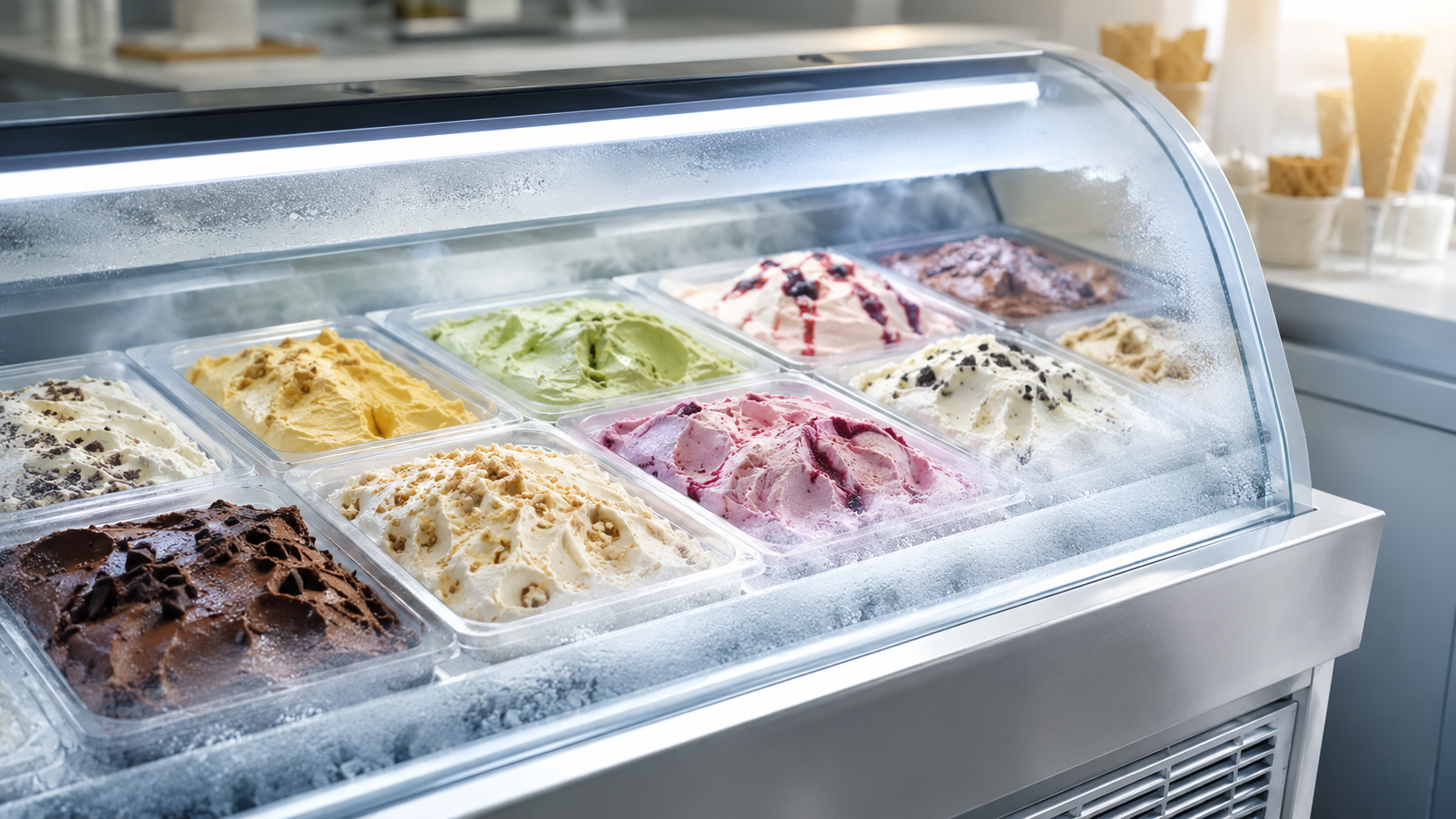
Ice cream can last about 2 to 3 months unopened and about 1 to 2 months after opening when it is stored properly in a freezer at 0°F (-18°C) or below. Technically, food kept continuously frozen at 0°F can remain safe for a very long time, but ice cream is one of those products where quality matters just as much as safety. Over time, it can develop freezer burn, ice crystals, a grainy texture, stale flavor, or signs of thawing and refreezing.
For restaurants, convenience stores, ice cream shops, supermarkets, cafeterias, and dessert businesses, the real question is not only “Is this ice cream still safe?” but also: Will it still taste good enough to serve or sell?
This guide explains how long ice cream lasts in the freezer, how to tell when it has gone bad, why freezer temperature matters, and how commercial businesses can protect ice cream quality with the right storage equipment.
Quick Answer: Ice Cream Freezer Shelf Life
| Ice Cream Type | Best Quality Window in Freezer | Notes |
|---|---|---|
| Unopened commercial ice cream | 2 to 3 months | Best if stored at 0°F or below and kept sealed |
| Opened commercial ice cream | 1 to 2 months | Quality drops faster after air exposure |
| Homemade ice cream | 2 to 4 weeks | Usually has fewer stabilizers and more texture changes |
| Soft serve mix, frozen | Follow manufacturer label | Storage depends on product formula and packaging |
| Ice cream that has melted and refrozen | Not recommended | Texture and food safety risk may be compromised |
The best rule is simple: keep ice cream frozen solid, sealed tightly, and away from temperature swings.
Does Ice Cream Actually Expire in the Freezer?
Yes, ice cream can go bad, but it does not spoil in the same way fresh milk or refrigerated dairy products do. Freezing slows down microbial growth significantly, which is why frozen foods last much longer than refrigerated foods. The USDA notes that food stored continuously at 0°F remains safe indefinitely, but freezer storage times are about maintaining quality, not indefinite freshness.

That distinction is important.
Ice cream may still be technically frozen, but after enough time, it can lose the creamy, smooth texture customers expect. It may become icy, dry, grainy, or bland. For a household, that might simply mean a disappointing dessert. For a food business, it can mean product waste, customer complaints, and lost sales.
How Long Does Unopened Ice Cream Last?
Unopened ice cream usually keeps its best quality for 2 to 3 months in a freezer set to 0°F or below. Some commercial ice cream may last longer depending on the formulation, packaging, stabilizers, and how consistently it has been frozen. However, for best flavor and texture, most businesses should rotate inventory well before quality begins to decline.
The key factor is temperature stability. Ice cream stored in the back of a stable freezer will usually hold quality better than ice cream stored near a freezer door, in a display case with frequent openings, or in a freezer that cycles above ideal storage temperature.
If the container is unopened, undamaged, and still frozen solid, it may remain safe beyond the best-quality window. But if the ice cream has large ice crystals, a shrunken surface, damaged packaging, or signs of thawing and refreezing, it should be inspected carefully before serving or selling.
How Long Does Ice Cream Last After Opening?
Opened ice cream typically tastes best within 1 to 2 months. Once the lid is opened, the product is exposed to warm air, moisture, odors, and oxygen. Every time the container is opened, the surface softens slightly, then refreezes. That repeated freeze-thaw cycle is one of the main reasons ice cream becomes icy.
Opened ice cream can also absorb freezer odors if the lid is not sealed tightly. This is especially important in commercial kitchens where frozen desserts may be stored near other frozen products.
To extend the quality of opened ice cream:
-
Press plastic wrap or parchment directly against the surface before closing the lid.
-
Keep the lid tightly sealed.
-
Return the container to the freezer as quickly as possible.
-
Store it away from the freezer door.
-
Avoid letting it soften on the counter for long periods.
-
Use clean scoops to prevent contamination.
How Long Does Homemade Ice Cream Last?
Homemade ice cream usually has a shorter freezer life than commercial ice cream. In many cases, it tastes best within 2 to 4 weeks. That is because homemade ice cream often contains fewer stabilizers, emulsifiers, and commercial-grade ingredients designed to protect texture during storage.
Homemade ice cream may become icy faster, especially if it contains fruit, alcohol, low-fat dairy, or ingredients with high water content. It is also more sensitive to temperature changes because the ice crystal structure can change quickly during thawing and refreezing.
For restaurants or dessert shops making house-made ice cream, the best practice is to label every batch with a production date and use it within a strict internal quality window.
Why Ice Cream Gets Icy in the Freezer
Ice cream is not just frozen milk and sugar. It is a delicate frozen structure made from water, fat, sugar, air, milk solids, and stabilizers. The creamy texture depends on keeping ice crystals small.
When ice cream warms up and refreezes, the small crystals can grow into larger crystals. That is when the texture becomes crunchy, icy, or grainy. Research on ice cream quality shows that storage temperature has a major effect on texture deterioration, and warmer frozen storage speeds up the development of coarseness.
This is why stable freezer temperature matters so much. Ice cream does not like temperature fluctuation. Even if it never fully melts, repeated softening and refreezing can damage the texture.
What Is the Best Freezer Temperature for Ice Cream?
For safe frozen storage, the FDA recommends keeping freezers at 0°F (-18°C) and checking temperatures periodically.
For commercial ice cream quality, many businesses prefer storage conditions colder than a typical home freezer, especially for back-of-house inventory. Display and dipping temperatures may vary depending on whether the goal is long-term storage, merchandising, or scoopability.
In general:
-
0°F (-18°C) or below: Good baseline for frozen storage.
-
Colder back storage: Better for long-term quality protection.
-
Slightly warmer dipping cabinets: Better for scoopability, but not ideal for long-term storage.
-
Unstable freezer temperatures: Bad for texture, shelf life, and product consistency.
If your ice cream is constantly too soft, icy, or freezer-burned, the issue may not be the product. It may be the freezer.
For foodservice businesses, investing in the right ice cream freezer can help protect product quality, improve presentation, and keep frozen desserts at the right serving condition.
How to Tell If Ice Cream Has Gone Bad
Ice cream should be discarded if there are signs of spoilage, unsafe thawing, or major quality loss. Watch for these warning signs:
1. Large Ice Crystals
A few small ice crystals around the lid can happen over time, but large crystals throughout the ice cream are a sign that it has thawed and refrozen. The texture will likely be icy and unpleasant.
2. Freezer Burn
Freezer burn often appears as dry, pale, icy patches on the surface. It does not always mean the ice cream is unsafe, but it usually means quality has dropped. The flavor may taste flat, stale, or freezer-like.
3. Sour or Off Smell
Ice cream should smell sweet, creamy, and clean. If it smells sour, stale, fermented, or strange, do not serve it.
4. Sticky, Gummy, or Separated Texture
If the ice cream has melted, separated, and refrozen, the texture may look uneven or gummy. This is a strong sign of poor storage history.
5. Damaged or Bloated Packaging
If the container is damaged, leaking, swollen, or no longer sealed properly, treat it as a risk.
6. Unknown Storage History
If you do not know whether the product stayed frozen during delivery, storage, or a power outage, it is safer to reject or discard questionable inventory.
Is Freezer-Burned Ice Cream Safe to Eat?
Freezer burn is mainly a quality problem. It happens when frozen food is exposed to air, causing moisture loss and ice crystal formation. USDA guidance explains that freezer storage recommendations are mainly about quality when food is held continuously at 0°F.
That said, freezer-burned ice cream is usually not pleasant to eat. It may taste dry, icy, stale, or bland. For a restaurant or retail business, freezer-burned ice cream should not be served to customers, even if it is not obviously unsafe.
At home, some people may scrape off the freezer-burned layer and use the remaining ice cream in milkshakes. In a commercial setting, the better practice is to protect quality before freezer burn starts.
Can You Refreeze Melted Ice Cream?
Refreezing melted ice cream is not recommended. Once ice cream melts, the texture changes dramatically. The air structure collapses, ice crystals grow, and the product may refreeze into a dense, icy block.
There is also a food safety concern. If ice cream has been held above safe temperatures for too long, especially above 40°F, bacterial growth may become a risk. FoodSafety.gov notes that during a power outage, a full freezer can hold a safe temperature for about 48 hours if the door stays closed, while a half-full freezer holds it for about 24 hours.
If ice cream is still partially frozen with ice crystals and has been kept cold, it may be evaluated according to your food safety procedures. But if it is fully melted, warm, or has an unknown history, it should be discarded.
Why Ice Cream Freezer Storage Matters for Businesses
For businesses, ice cream storage is not just about preventing spoilage. It affects customer experience, labor, merchandising, and profitability.
Poor freezer performance can cause:
-
Soft or melting ice cream
-
Icy texture
-
Freezer burn
-
Product shrinkage
-
Damaged packaging
-
Inconsistent scooping
-
Poor display appearance
-
Higher waste
-
Customer complaints
A standard freezer may keep products frozen, but ice cream has specific storage and display needs. The right commercial freezer should maintain stable temperatures, recover quickly after door openings, and present the product attractively to customers.
This is especially important for:
-
Ice cream shops
-
Cafes
-
Bakeries
-
Convenience stores
-
Supermarkets
-
Dessert shops
-
Restaurants
-
Hotels
-
Cafeterias
-
Caterers
-
Concession stands
If ice cream is part of your revenue, your freezer is not just storage equipment. It is part of your sales system.
Best Ways to Store Ice Cream So It Lasts Longer
Keep the Freezer at 0°F or Below
A freezer should be cold enough to keep ice cream fully frozen. Use a freezer thermometer and check it regularly. Do not rely only on the control dial.
Avoid the Freezer Door
The door is usually the warmest and most temperature-variable part of the freezer. Store ice cream deeper inside the cabinet when possible.
Keep Containers Tightly Sealed
Air exposure causes freezer burn and flavor loss. Always close lids tightly after use.
Use Surface Protection After Opening
For opened containers, place plastic wrap, parchment, or food-safe film directly on the ice cream surface before closing the lid. This limits air contact.
Do Not Let Ice Cream Sit Out Too Long
Only remove ice cream from the freezer when needed. For dipping or scooping service, use proper dipping cabinets and follow food safety procedures.
Rotate Inventory
Use FIFO: first in, first out. Label products with receiving dates and opening dates.
Check Delivery Temperatures
For commercial operations, ice cream quality starts before it reaches your freezer. Inspect deliveries for soft containers, damaged packaging, or evidence of thawing.
Choose the Right Freezer Type
A display freezer, dipping cabinet, chest freezer, or storage freezer may serve different purposes. The best choice depends on whether you need merchandising, scooping, bulk storage, or grab-and-go service.
Ice Cream Freezer vs Regular Freezer: What Is the Difference?
A regular freezer is designed to keep frozen food frozen. An ice cream freezer is designed around the specific needs of frozen desserts.
Depending on the model, an ice cream display freezer may offer:
-
Better product visibility
-
Glass lids or doors for merchandising
-
Stable frozen dessert storage
-
Easier customer access
-
Organized product presentation
-
Better fit for packaged pints, tubs, novelties, or frozen desserts
-
Commercial durability for daily business use
For retail businesses, visibility matters. Customers are more likely to buy ice cream when they can clearly see the product, flavors, packaging, and branding. That is why many stores use glass-top or glass-door ice cream display freezers instead of hiding products in back storage.
How Long Can Ice Cream Last During a Power Outage?
During a power outage, keep the freezer door closed. According to FoodSafety.gov, a full freezer can hold safe temperatures for about 48 hours if unopened, while a half-full freezer can hold for about 24 hours.
After power returns, inspect the ice cream carefully. If it is still frozen solid or contains ice crystals, it may still be usable depending on your food safety policy. If it has fully melted, become warm, leaked, separated, or refrozen into an icy block, it should be discarded.
For businesses, power outage procedures should be part of a written food safety plan.
Common Ice Cream Storage Mistakes
Storing Ice Cream Near the Door
This exposes the product to warm air every time the freezer opens.
Overloading the Freezer
Too much product can block airflow and create uneven temperatures.
Using the Wrong Freezer for Display
A back storage freezer may not merchandise well. A weak display freezer may not recover quickly enough in a busy store.
Ignoring Temperature Logs
A freezer can look fine while running too warm. Temperature monitoring helps catch problems early.
Keeping Opened Containers Too Long
Opened ice cream loses quality faster. Label and rotate opened containers.
Refreezing Melted Ice Cream
This damages texture and may create food safety concerns.
Final Answer: How Long Does Ice Cream Last in the Freezer?
Ice cream usually lasts 2 to 3 months unopened and 1 to 2 months after opening when stored at 0°F (-18°C) or below. Homemade ice cream usually has a shorter best-quality window, often around 2 to 4 weeks.
However, the real shelf life depends on temperature stability, packaging, ingredients, how often the container is opened, and whether the ice cream has ever softened or melted. If the ice cream has large ice crystals, freezer burn, an off smell, damaged packaging, or signs of thawing and refreezing, it is best not to serve it.
For businesses, the best way to protect ice cream quality is to combine good storage habits with reliable commercial freezing equipment. A stable freezer helps preserve texture, flavor, presentation, and profit.
Frequently Asked Questions
How long does ice cream last in the freezer unopened?
Unopened ice cream is usually best within 2 to 3 months when stored at 0°F or below. It may remain safe longer if continuously frozen, but the texture and flavor can decline over time.
How long does ice cream last after opening?
Opened ice cream is usually best within 1 to 2 months. Air exposure and repeated opening can cause ice crystals, freezer burn, and flavor loss.
Can ice cream go bad in the freezer?
Yes. Freezing slows spoilage, but ice cream can still lose quality or become unsafe if it has thawed, refrozen, or been contaminated.
Is freezer-burned ice cream safe?
Freezer burn is usually a quality issue, not automatically a safety issue. However, freezer-burned ice cream often tastes icy, dry, or stale and should not be served in a commercial setting.
What temperature should ice cream be stored at?
For frozen food storage, freezers should be kept at 0°F (-18°C) or below. Commercial operations should also follow product labels, local food safety rules, and equipment recommendations.
Can you refreeze melted ice cream?
It is not recommended. Refrozen ice cream often becomes icy and dense, and if it has been warm too long, it may not be safe.
Why does ice cream get icy in the freezer?
Ice cream becomes icy when small ice crystals grow larger due to temperature changes, air exposure, or thawing and refreezing.
Where is the best place to store ice cream in the freezer?
Store ice cream in the coldest, most stable area of the freezer, away from the door and away from frequent warm-air exposure.
How can businesses reduce ice cream waste?
Use proper freezer equipment, monitor temperatures, rotate inventory, label opened containers, inspect deliveries, and avoid refreezing melted product.
What type of freezer is best for selling ice cream?
For retail sales, a commercial ice cream display freezer is usually best because it keeps frozen desserts visible, organized, and ready for customers.
