

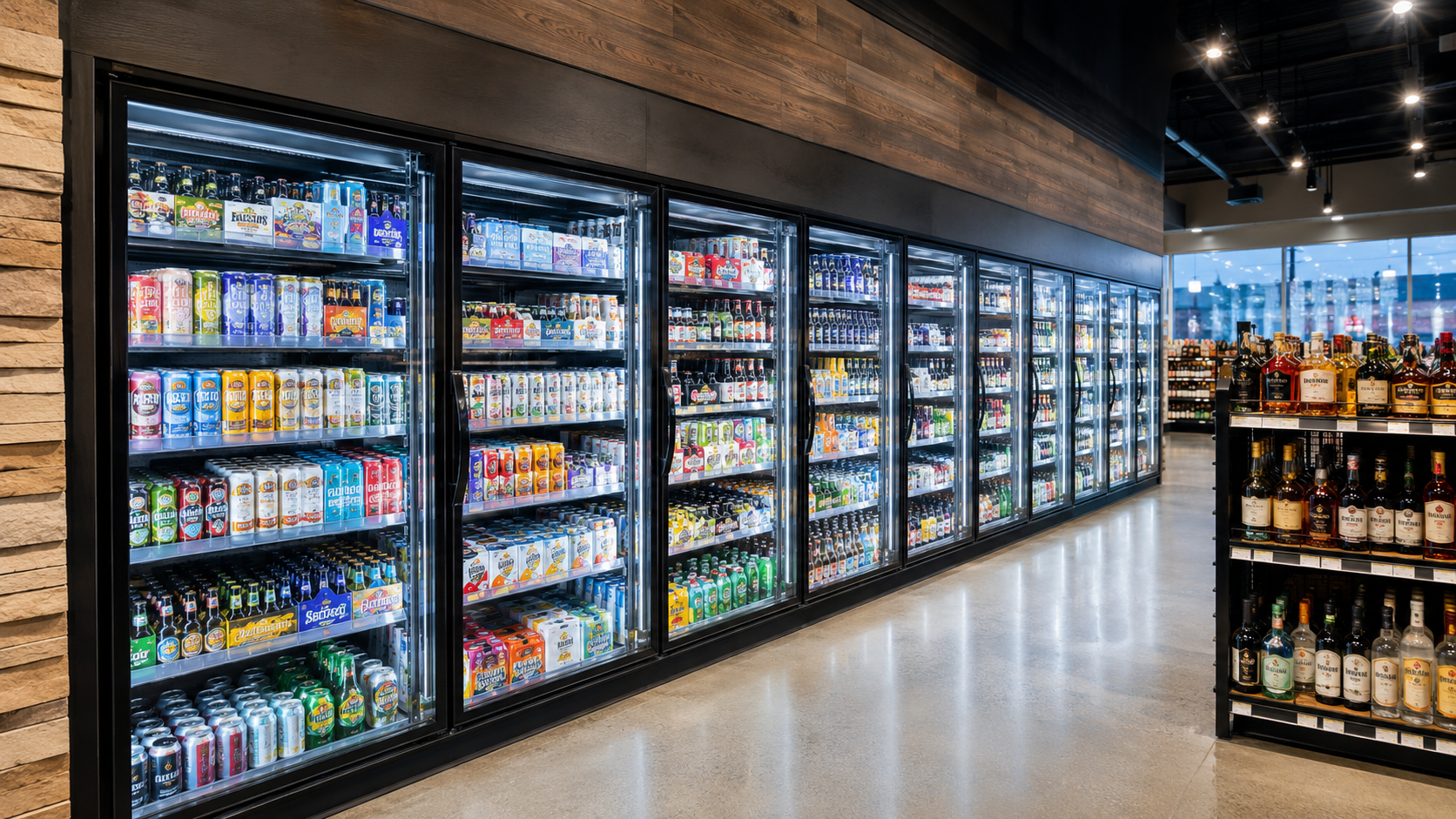
For liquor stores, cold storage is more than a back-of-house requirement. The right cooler can improve product visibility, make restocking easier, support higher beverage sales, and create a cleaner shopping experience for customers.
That is why many liquor stores choose display walk-in coolers with glass doors. These systems combine the storage capacity of a walk-in cooler with the selling power of a refrigerated display wall. Customers can easily see and access cold beer, hard seltzers, ready-to-drink cocktails, soda, and other beverages, while store staff can restock products from inside the cooler.
If you are planning a new liquor store, remodeling an existing location, or replacing old refrigeration equipment, this guide will help you understand your best options before requesting a quote.
What Is a Display Walk-In Cooler with Glass Doors?
A display walk-in cooler with glass doors is a commercial walk-in cooler designed with one or more glass display doors on the customer-facing side. From the sales floor, it looks like a long refrigerated display case. Behind the doors, there is a walk-in storage area where staff can organize and restock beverages.

Astra 12' x 7' x 8' Walk-In Display Cooler with 4 Glass Doors
This setup is especially useful for liquor stores because it allows you to combine product display, cold storage, and easy replenishment in one system.
Instead of using several separate reach-in coolers, a display walk-in cooler gives your store a more professional, organized, and scalable beverage section.
Why Liquor Stores Use Glass Door Walk-In Coolers
Liquor stores often need to keep a large volume of beverages cold while still making products easy to shop. A glass door walk-in cooler helps solve both needs.
The main benefits include:
-
Better product visibility for beer, seltzers, soda, and ready-to-drink beverages
-
More storage space behind the display doors
-
Easier restocking from inside the cooler
-
Cleaner merchandising compared to multiple standalone coolers
-
More flexible layouts for small, medium, and large stores
-
A stronger in-store presentation for high-volume beverage categories
For many stores, the cooler becomes one of the most important selling areas in the building.
Display Walk-In Cooler vs. Beer Cave vs. Reach-In Cooler
Before choosing a system, it helps to understand the difference between the most common options.
A glass door display walk-in cooler allows customers to grab products from the outside through glass doors. Staff can walk inside the cooler to stock products from the back. This is one of the most practical setups for most liquor stores.
A beer cave allows customers to walk directly into a refrigerated room. This can create a strong “cold beer destination” experience, but it usually requires more floor space and careful layout planning.
A glass door reach-in cooler is a standalone refrigerated cabinet. It can work well for smaller stores or limited beverage sections, but it does not offer the same back-stock capacity or custom layout flexibility as a walk-in cooler.
For most liquor stores, a display walk-in cooler with glass doors offers the best balance of visibility, storage, and everyday usability.
Best Display Walk-In Cooler Options for Liquor Stores

The best option depends on your store size, layout, product mix, and sales volume. These are the most common configurations.
1. Straight Glass Door Lineup
This is the most common setup. The glass doors run along one wall of the store, creating a clean refrigerated display section.
It works well for beer, hard seltzers, soda, energy drinks, and ready-to-drink cocktails. For many small and mid-size liquor stores, this is the simplest and most efficient choice.
2. Glass Door Front with Side Entry Door
This is one of the best options for liquor stores. Customers shop from the glass doors in front, while employees enter the cooler through a solid side door to restock products.
This layout keeps the shopping experience clean while making operations easier for staff.
3. Large Beverage Wall
For larger liquor stores, supermarkets, and beverage retailers, a longer glass door lineup can create a full cold beverage wall. This setup is ideal for stores with high beer and beverage volume.
The key is to plan the door count, shelving, traffic flow, and refrigeration system correctly before ordering.
4. Beer Cave Hybrid
Some stores combine a glass door display cooler with a beer cave-style experience. This can work well for stores that want both quick grab-and-go access and a more premium cold room section.
This type of project usually requires more planning, but it can create a strong customer experience when designed correctly.
How Many Glass Doors Do You Need?
There is no single answer because every liquor store is different. However, these general guidelines can help you start planning:
| Store Type | Common Starting Point |
|---|---|
| Small liquor store | 3–5 glass doors |
| Medium liquor store | 6–10 glass doors |
| Large beverage retailer | 10+ glass doors |
| Beer cave concept | Walk-in entry plus interior shelving |
| Hybrid display cooler | Glass door front plus side entry door |
The number of doors should not be based only on available wall space. You also need to consider product variety, case storage, restocking needs, customer traffic, and future growth.
If your store sells a lot of beer, hard seltzers, craft beverages, or ready-to-drink cocktails, it may be worth planning extra cold storage capacity from the beginning.
Key Questions to Ask Before Buying
Before requesting a quote, try to answer these questions:
What are the available width, depth, and height dimensions?
How many glass doors do you want on the customer-facing side?
Do you need a side entry door for staff?
Will the cooler be indoor or outdoor?
Will customers access products from outside, or do you want a beer cave where customers walk in?
What products will be stored inside: beer, soda, wine, seltzers, RTD cocktails, or other beverages?
Do you need shelving for cans, bottles, cases, or kegs?
Do you prefer a top-mount or remote refrigeration system?
Is this a new installation or a replacement for an existing cooler?
Do you have any special layout challenges, such as columns, low ceilings, narrow delivery access, or limited electrical space?
Having these answers ready will make the quote process faster and more accurate.
Refrigeration Options: Top-Mount vs. Remote
The refrigeration system is just as important as the cooler box itself.
A top-mount refrigeration system is installed on top of the cooler. It is often a practical option for smaller and mid-size projects because it is compact and straightforward.
A remote refrigeration system places the condensing unit away from the cooler, often outside or in another mechanical area. This can be a better choice for larger glass door lineups, high-traffic stores, or locations where noise and heat inside the store are a concern.
The right choice depends on your store layout, cooler size, ambient conditions, and installation requirements. For liquor store projects, it is best to confirm this with a refrigeration professional before finalizing the order.
Shelving and Merchandising Tips
A good cooler layout should help customers shop quickly and help staff restock efficiently.
Use eye-level shelves for high-margin or high-demand products. Keep fast-moving domestic beer, popular seltzers, and large packs easy to reach. Group similar products together so customers can quickly compare options.
Common sections include:
-
Domestic beer
-
Imported beer
-
Craft beer
-
Hard seltzers
-
Ready-to-drink cocktails
-
Soda and mixers
-
Energy drinks
-
Seasonal beverages
-
Bulk packs and cases
Inside the cooler, leave enough room for staff to move safely and restock products without blocking airflow. Poor shelf planning can reduce cooling performance and make daily operations harder.
Energy Efficiency Considerations
Glass door walk-in coolers are highly effective for merchandising, but they should be planned carefully to avoid unnecessary energy waste.
Important factors include:
-
Insulated wall panels
-
Quality glass doors
-
Proper door seals
-
LED lighting
-
Correct refrigeration sizing
-
Good airflow inside the cooler
-
Door placement and traffic patterns
-
Indoor vs. outdoor installation conditions
The goal is not just to buy the lowest-priced cooler. The better long-term choice is a system that balances purchase price, performance, energy use, product visibility, and serviceability.
Common Mistakes to Avoid
Many liquor store cooler problems start during the planning stage. Avoid these common mistakes:
Choosing only by price instead of total value.
Ordering too few glass doors for your product mix.
Forgetting to plan back-stock space inside the cooler.
Ignoring staff access and restocking workflow.
Choosing the wrong door swing direction.
Blocking airflow with poor shelving placement.
Using an indoor system for an outdoor application.
Underestimating how much refrigerated beverage sales may grow.
Not confirming electrical, drainage, delivery, and installation requirements in advance.
A display walk-in cooler is a major investment. Careful planning before purchase can prevent expensive issues later.
Project Planning Checklist
Before moving forward, prepare the following information:
-
Store layout or rough floor plan
-
Desired cooler width, depth, and height
-
Number of glass display doors
-
Preferred door locations
-
Indoor or outdoor placement
-
Product categories to be stored
-
Shelving needs
-
Refrigeration preference, if known
-
Delivery address
-
Photos of the installation area
-
Any special building limitations
Even a simple sketch with measurements can help the sales team understand your project and recommend a better solution.
Why Work with Atlantic?
Atlantic offers commercial refrigeration solutions for liquor stores, convenience stores, supermarkets, grocery stores, and beverage retailers. If you are planning a glass door display walk-in cooler, Atlantic can help you choose a practical configuration based on your store layout and storage needs.
Whether you need a simple glass door lineup, a side-entry display cooler, a larger beverage wall, or a custom walk-in cooler project, Atlantic can help you compare your options and request the right quote.
A liquor store cooler should do more than keep drinks cold. It should help your store look better, operate more efficiently, and sell more refrigerated products.
Ready to Plan Your Liquor Store Cooler?
If you are not sure what size, door count, or layout is right for your store, Atlantic can help.
Send us your available space, desired number of glass doors, and the type of products you plan to store. Our team can help you find the right display walk-in cooler solution for your liquor store.
