
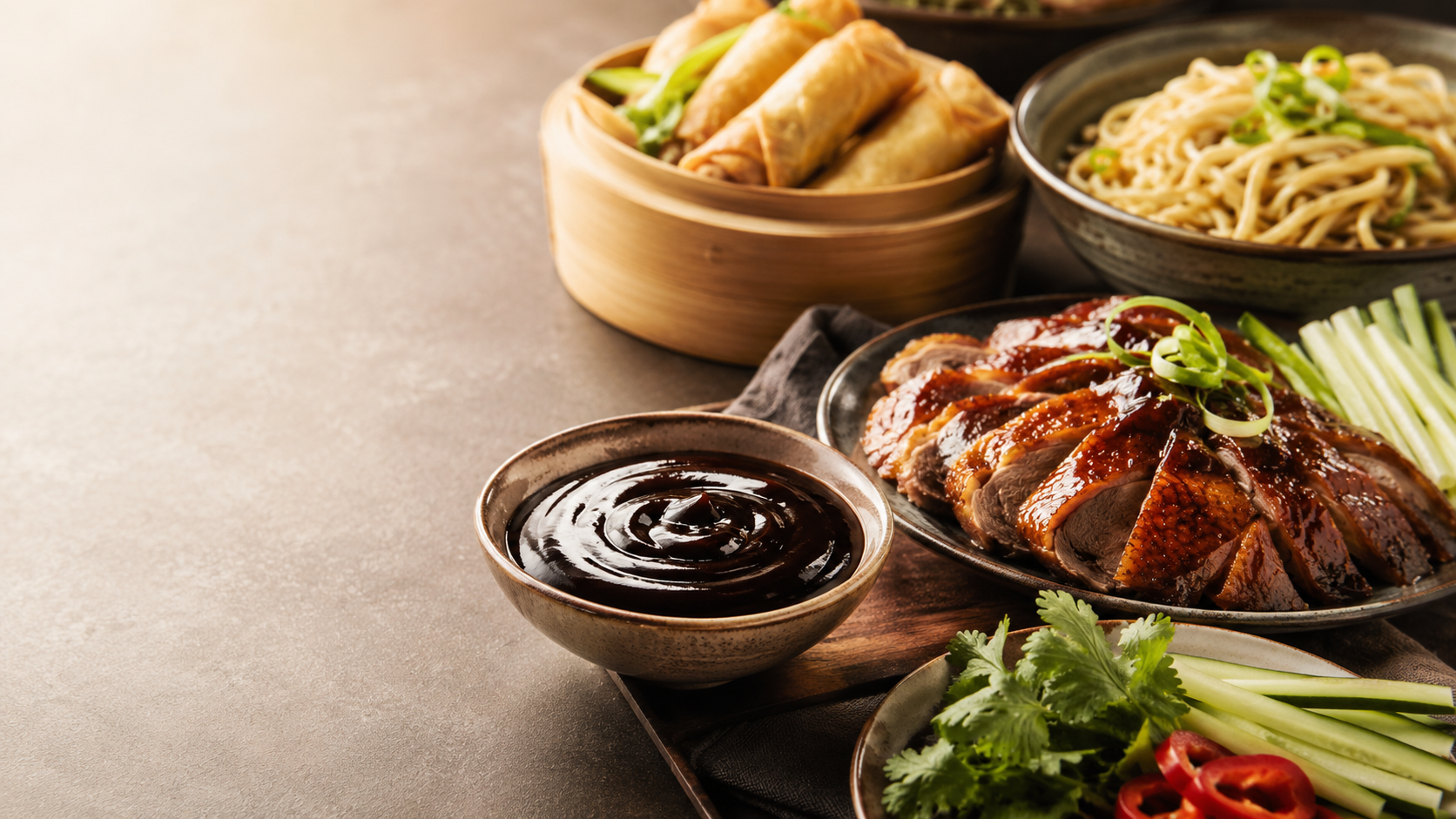
Hoisin sauce is one of the most useful condiments in Asian cooking. It is thick, dark, glossy, sweet, salty, tangy, and packed with umami. A small amount can add depth to grilled meats, stir-fries, noodle dishes, dumpling sauces, lettuce wraps, rice bowls, and marinades.
For restaurants, hoisin sauce is especially valuable because it works in several parts of the kitchen. It can be used as a dipping sauce, a finishing drizzle, a glaze, a marinade base, a stir-fry ingredient, or a house-made sauce component. Whether you run a Chinese restaurant, Vietnamese pho shop, Asian fusion concept, food truck, catering operation, or casual dining kitchen, hoisin sauce can help you build bold flavor quickly and consistently.
What Is Hoisin Sauce?
Hoisin sauce is a thick Chinese-style condiment made with a sweet, salty, and savory flavor profile. It is commonly associated with Cantonese cooking and is often used with dishes such as Peking duck, char siu, moo shu, rice noodle rolls, lettuce wraps, and stir-fried meats or vegetables.
Although the word “hoisin” is often translated as “seafood,” modern hoisin sauce typically does not contain seafood. It is also not mainly used as a seafood sauce. Instead, it is most often used with roasted meats, poultry, pork, noodles, vegetables, pancakes, and dipping sauces.
Because of its thick texture and sweet-savory profile, hoisin is sometimes called “Chinese barbecue sauce.” That comparison makes sense, but hoisin is not the same as American barbecue sauce. It is usually more concentrated, saltier, more aromatic, and more soy-forward.
What Is Hoisin Sauce Made Of?

Recipes vary by brand and region, but most hoisin sauces include a combination of the following ingredients:
- Fermented soybean paste or soybean sauce
- Sugar or another sweetener
- Vinegar
- Garlic
- Chili peppers or chili paste
- Sesame oil or sesame paste
- Salt
- Starch or other thickener
- Spices such as Chinese five-spice, fennel, or star anise
The fermented soybean base is what gives hoisin its deep umami character. Sugar gives it sweetness and shine. Vinegar adds tang. Garlic, chili, sesame, and spices create the warm, aromatic finish that makes hoisin different from plain soy sauce or teriyaki sauce.
Commercial hoisin sauce can also contain wheat, modified starch, caramel color, preservatives, stabilizers, or other flavoring ingredients, depending on the manufacturer. Restaurants should always check the ingredient label before serving it to customers with allergies or dietary restrictions.
What Does Hoisin Sauce Taste Like?
Hoisin sauce tastes sweet, salty, tangy, and savory all at once. It has a deep umami flavor from fermented soybeans, a mild sharpness from vinegar, and aromatic notes from garlic, sesame, chili, and spices.
The texture is thick and smooth, usually closer to barbecue sauce than soy sauce. It clings well to roasted meats, grilled chicken, ribs, pork belly, duck, tofu, noodles, and stir-fried vegetables.
A simple way to describe hoisin sauce to customers is:
Hoisin sauce is a thick, sweet-savory Chinese condiment with a soy-based umami flavor, mild tang, garlic notes, and a glossy barbecue-like texture.
Is Hoisin Sauce Spicy?
Most hoisin sauce is not very spicy. It may contain chili peppers, but the heat level is usually mild. The dominant flavors are sweetness, saltiness, tanginess, and umami.
However, hoisin is easy to turn into a spicy sauce. Restaurants often mix it with:
- Sriracha
- Chili garlic sauce
- Sambal oelek
- Crushed red pepper
- Chili oil
- Gochujang
- Fresh minced chilies
For example, a simple spicy hoisin dipping sauce can be made by combining hoisin sauce, sriracha, rice vinegar, sesame oil, and a small amount of warm water to loosen the texture.
Is Hoisin Sauce Gluten Free?
Some hoisin sauce is gluten free, but many commercial hoisin sauces are not. Traditional-style recipes may be gluten free, but bottled hoisin sauce often contains wheat, wheat-based soy sauce, or wheat starch.
Restaurants should not assume hoisin sauce is gluten free unless the product is clearly labeled gluten free. This is especially important for menus that advertise gluten-free dishes. If you are serving gluten-free customers, use a certified gluten-free hoisin sauce or make a house version with gluten-free tamari and verified gluten-free ingredients.
Is Hoisin Sauce Vegan?
Most modern hoisin sauce is vegan because it is usually made from soybeans, sugar, vinegar, garlic, sesame, chili, and spices. It normally does not contain seafood, despite the meaning of the name.
However, restaurants should still check the label. Some brands may use ingredients, processing aids, or cross-contact warnings that matter for vegan, vegetarian, allergy-sensitive, or religious dietary needs.
Hoisin Sauce Allergens Restaurants Should Watch
Hoisin sauce can contain several major allergens. The most common ones to check are:
-
Soy
-
Wheat
-
Sesame
-
Peanuts or tree nuts in some house-made recipes
-
Cross-contact warnings for shellfish, fish, eggs, dairy, or nuts, depending on the manufacturer
Soy is one of the most common ingredients in hoisin sauce. Wheat may appear in soy sauce, wheat flour, or thickening agents. Sesame oil or sesame paste is also common. Since sesame is now treated as a major allergen in the United States, restaurants should be especially careful when labeling dishes and training staff.
For safe menu management, keep the original product label, note allergens in your recipe system, and make sure front-of-house staff know which sauces contain soy, wheat, sesame, or other allergens.
Does Hoisin Sauce Need to Be Refrigerated?
Unopened hoisin sauce is usually shelf stable and can be stored in a cool, dry pantry. Once opened, most hoisin sauce should be refrigerated unless the product label says otherwise.
Refrigeration helps preserve quality, prevent spoilage, and maintain flavor. Opened bottles should be tightly closed, dated, and stored in a refrigerator or refrigerated prep area. Restaurants should follow the manufacturer’s label for exact shelf life after opening.
For commercial kitchens, best practice is to:
-
Refrigerate opened hoisin sauce
-
Keep containers sealed when not in use
-
Use clean utensils to prevent cross-contamination
-
Date opened bottles
-
Avoid leaving sauce at room temperature for extended periods
-
Discard sauce if it smells off, changes texture, grows mold, or shows signs of contamination
If hoisin sauce is mixed with fresh garlic, cooked meat juices, broth, fresh herbs, or other perishable ingredients, treat the mixed sauce as a refrigerated prepared food and follow your local food safety rules.
What Is Hoisin Sauce Used For?

Hoisin sauce is extremely versatile. It can be used straight from the bottle or mixed into house-made sauces. Here are some of the most common restaurant uses.
1. Dipping Sauce
Hoisin is often served with dumplings, spring rolls, lettuce wraps, scallion pancakes, rice paper rolls, and roasted meats. Because it is thick, it works well as a dipping sauce on its own, but many kitchens thin it slightly with water, rice vinegar, soy sauce, sesame oil, or citrus juice.
2. Glaze for Meat
Hoisin makes an excellent glaze for roasted, grilled, or broiled meats. It pairs especially well with pork, duck, chicken, beef, ribs, and meatballs. Because it contains sugar, it caramelizes quickly and creates a shiny, flavorful finish.
Use it carefully over high heat. Hoisin can burn if applied too early. For best results, brush it on near the end of cooking or use it as a finishing glaze.
3. Marinade Base
Hoisin can be combined with soy sauce, rice vinegar, garlic, ginger, sesame oil, and chili paste to create a marinade for chicken, pork, beef, tofu, or mushrooms. Its thickness helps coat ingredients evenly.
4. Stir-Fry Sauce
Hoisin adds body and sweetness to stir-fry sauces. It works well with broccoli, bell peppers, onions, mushrooms, carrots, snap peas, bok choy, noodles, rice, chicken, shrimp, tofu, and beef.
A basic restaurant-style hoisin stir-fry sauce can include hoisin sauce, soy sauce, rice vinegar, garlic, ginger, cornstarch slurry, and stock or water.
5. Noodle Sauce
Hoisin can be used in lo mein, chow mein, rice noodles, cold noodle salads, and fusion pasta dishes. It gives noodles a glossy coating and a deep sweet-savory flavor.
6. Pho and Vietnamese Dishes
In many Vietnamese restaurants, hoisin sauce is served with pho, especially alongside sriracha. Some customers add it directly to the broth, while others use it as a dipping sauce for meat.
Hoisin is also commonly paired with fresh spring rolls, grilled meats, rice bowls, vermicelli bowls, and lettuce wraps.
7. Burger, Sandwich, and Fusion Menus
Hoisin can be used outside traditional Asian dishes. It works well in fusion menus, especially with burgers, fried chicken sandwiches, bao buns, pulled pork, tacos, wings, ribs, and loaded fries.
For example, a hoisin barbecue burger sauce can be made with hoisin, mayo, rice vinegar, garlic, and chili sauce. A hoisin wing glaze can combine hoisin, honey, soy sauce, ginger, garlic, and chili flakes.
Popular Dishes That Use Hoisin Sauce
Restaurants can use hoisin sauce in classic dishes or modern menu items such as:
- Peking duck pancakes
- Char siu pork
- Moo shu pork or chicken
- Chinese barbecue ribs
- Hoisin chicken wings
- Beef and broccoli stir-fry
- Vegetable lo mein
- Tofu lettuce wraps
- Asian meatballs
- Vietnamese pho
- Fresh spring rolls
- Rice paper rolls
- Scallion pancakes
- Bao buns
- Pork belly rice bowls
- Hoisin glazed salmon
- Grilled chicken skewers
- Short rib tacos
- Asian-style burgers
- Stir-fried noodles
Hoisin Sauce vs. Oyster Sauce
Hoisin sauce and oyster sauce may look similar, but they are not the same.
Hoisin sauce is usually thicker, sweeter, and more aromatic. It is made with a soy-based foundation and often includes garlic, sugar, vinegar, sesame, chili, and spices. It is commonly used as a glaze, dipping sauce, marinade, and stir-fry ingredient.
Oyster sauce is made with oyster extract or oyster flavoring. It has a savory, salty, slightly sweet flavor with a seafood-based umami profile. It is often used in stir-fries, vegetable dishes, beef dishes, and Cantonese sauces.
In general:
-
Use hoisin when you want sweetness, thickness, and a barbecue-like glaze.
-
Use oyster sauce when you want savory depth without as much sweetness.
-
Do not use oyster sauce for vegan dishes unless it is a vegan mushroom-based oyster sauce.
-
Do not assume one can replace the other in a 1:1 ratio.
Hoisin Sauce vs. Soy Sauce
Soy sauce is thin, salty, and liquid. Hoisin sauce is thick, sweet, tangy, and more complex.
Soy sauce is mainly used to add salt and umami. Hoisin adds body, sweetness, color, and a glossy texture. If a recipe calls for hoisin, soy sauce alone will usually make the dish too salty and too thin.
Hoisin Sauce vs. Teriyaki Sauce
Teriyaki sauce is usually sweeter, thinner, and more ginger-forward, depending on the recipe. Hoisin is thicker, darker, more concentrated, and more soy-fermented in flavor.
Teriyaki can work as a quick substitute in some grilled meat dishes, but it will not taste the same. If replacing hoisin with teriyaki, consider adding a small amount of miso, garlic, five-spice, or peanut butter to build more depth.
Hoisin Sauce vs. Plum Sauce
Plum sauce is fruitier, brighter, and usually lighter in body. Hoisin is more savory, soy-based, and umami-rich.
Plum sauce is often used as a dipping sauce for fried appetizers, duck, or egg rolls. Hoisin is better for glazes, marinades, stir-fries, and richer meat dishes.
Best Hoisin Sauce Substitutes
There is no perfect hoisin sauce substitute, but a few options can work depending on the dish.
1. Homemade Hoisin-Style Sauce
The best substitute is usually a quick homemade version. Mix soy sauce or tamari, peanut butter or miso, rice vinegar, garlic, sesame oil, honey or brown sugar, and a pinch of five-spice powder.
This gives you sweetness, saltiness, body, and umami in one sauce.
2. Garlic Teriyaki Sauce
Garlic teriyaki can work for grilled meats, chicken, ribs, and stir-fries. It is usually thinner than hoisin, so you may need to reduce it or thicken it slightly.
3. Kecap Manis
Kecap manis is a sweet Indonesian soy sauce. It is thinner than hoisin but has a similar sweet-salty direction. It works best in stir-fries, rice dishes, and noodle dishes.
4. Oyster Sauce
Oyster sauce can work in savory stir-fries, especially beef or seafood dishes, but it is not a good substitute for vegan, vegetarian, or allergy-sensitive menus. It is also less sweet than hoisin.
5. Barbecue Sauce with Soy Sauce and Five-Spice
For fusion dishes, American barbecue sauce can be adjusted with soy sauce, garlic, sesame oil, and Chinese five-spice. This will not be authentic, but it can work for wings, ribs, burgers, and pulled pork.
Quick Homemade Hoisin Sauce for Restaurants
A simple house-made hoisin-style sauce can help restaurants control flavor, allergens, sweetness, and texture.
Basic Hoisin-Style Sauce Formula
Combine:
-
1/2 cup soy sauce or gluten-free tamari
-
1/4 cup peanut butter, miso, or black bean paste
-
2 tablespoons honey, brown sugar, or molasses
-
2 tablespoons rice vinegar
-
1 tablespoon sesame oil
-
1 tablespoon chili garlic sauce or sriracha
-
1 garlic clove, minced
-
1/2 teaspoon Chinese five-spice powder
-
Warm water as needed to adjust texture
Blend until smooth. Taste and adjust with more vinegar for tang, more sweetener for glaze, more chili for heat, or more water for a thinner dipping sauce.
For commercial use, standardize the recipe by weight, record allergens, label and date each batch, and store it under refrigeration.
Restaurant Menu Ideas with Hoisin Sauce
Hoisin sauce is useful because it can support both traditional and modern menu development. Here are some practical ways to use it.
Appetizers
-
Hoisin chicken wings
-
Crispy spring rolls with spicy hoisin dip
-
Scallion pancakes with hoisin sesame sauce
-
Pork dumplings with hoisin chili oil
-
Tofu lettuce cups with hoisin glaze
Entrees
-
Hoisin glazed ribs
-
Char siu-style pork shoulder
-
Hoisin grilled chicken rice bowl
-
Beef and vegetable hoisin stir-fry
-
Crispy duck pancakes
-
Hoisin salmon with bok choy
Noodles and Rice
-
Hoisin lo mein
-
Hoisin fried rice
-
Cold sesame hoisin noodles
-
Rice noodles with chicken and vegetables
-
Vermicelli bowls with hoisin-lime dressing
Sandwiches and Fusion Items
-
Hoisin pulled pork bao
-
Hoisin fried chicken sandwich
-
Short rib tacos with hoisin slaw
-
Hoisin barbecue burger
-
Pork belly banh mi with hoisin mayo
Sauces and Condiments
-
Hoisin mayo
-
Spicy hoisin wing glaze
-
Hoisin barbecue sauce
-
Hoisin peanut dipping sauce
-
Hoisin sesame noodle dressing
-
Hoisin-lime drizzle for rice bowls
How to Buy Hoisin Sauce for a Restaurant
When choosing hoisin sauce for a commercial kitchen, compare more than price. The best option depends on your menu, dietary needs, and how the sauce will be used.
Look for:
-
Flavor balance: not too sweet, not too salty
-
Texture: thick enough for glazing and dipping
-
Allergen profile: soy, wheat, sesame, peanut, or cross-contact concerns
-
Gluten-free certification if needed
-
Container size for your volume
-
Label clarity for staff training
-
Cost per ounce or cost per serving
-
Consistency between cases
-
Shelf life after opening
-
Compatibility with squeeze bottles, pumps, or portion cups
For high-volume operations, gallon containers may be more cost-effective. For lower-volume kitchens, smaller containers may reduce waste and help maintain freshness.
How to Store and Serve Hoisin Sauce in a Commercial Kitchen
Proper storage helps maintain quality and food safety. Keep unopened containers in a cool, dry storage area away from direct heat. Once opened, refrigerate the sauce according to the label.
For service:
-
Transfer sauce into clean, food-safe squeeze bottles only when needed
-
Label squeeze bottles with product name and date
-
Keep backup containers refrigerated
-
Do not top off old sauce with new sauce
-
Wash and sanitize bottles before refilling
-
Use separate utensils to avoid allergen cross-contact
-
Discard sauce that has been contaminated by raw meat, seafood, or dirty utensils
If you use hoisin in marinades, never reuse marinade that touched raw meat unless it is properly cooked according to food safety procedures.
Equipment That Helps Restaurants Use Hoisin Sauce Efficiently
Hoisin sauce is simple, but using it consistently in a restaurant depends on the right prep and cooking setup.
Helpful equipment includes:
-
Commercial refrigerators for opened sauces and prepared batches
-
Prep tables for building bowls, wraps, and appetizer plates
-
Woks and ranges for stir-fries
-
Charbroilers and grills for glazed meats
-
Convection ovens for roasted chicken, ribs, duck, and pork
-
Food processors or blenders for house-made sauces
-
Stainless steel mixing bowls for marinades
-
Portion cups and squeeze bottles for takeout and service
-
Steam tables or holding equipment for cooked menu items
For restaurants adding Asian-inspired dishes, rice bowls, stir-fries, wings, ribs, or house-made sauces, the right equipment helps keep service fast, safe, and consistent.
Frequently Asked Questions About Hoisin Sauce
What is hoisin sauce in simple terms?
Hoisin sauce is a thick, sweet, salty, and savory Chinese condiment made with a soy-based foundation. It is often used as a dipping sauce, glaze, marinade, or stir-fry sauce.
Does hoisin sauce contain seafood?
Modern hoisin sauce usually does not contain seafood, even though the word “hoisin” is often translated as “seafood.” Always check the label to confirm ingredients and allergen warnings.
Is hoisin sauce the same as oyster sauce?
No. Hoisin sauce is usually soy-based, sweet, thick, and aromatic. Oyster sauce is made with oyster extract or oyster flavoring and has a more seafood-like savory taste.
Is hoisin sauce the same as soy sauce?
No. Soy sauce is thin and salty. Hoisin sauce is thick, sweet, tangy, and more complex.
Can you use hoisin sauce as a marinade?
Yes. Hoisin works well as a marinade base for chicken, pork, beef, tofu, mushrooms, and vegetables. It is often mixed with soy sauce, garlic, ginger, vinegar, sesame oil, or chili paste.
Can you use hoisin sauce as a glaze?
Yes. Hoisin is excellent as a glaze because it is thick and contains sugar. Apply it near the end of cooking to prevent burning.
Is hoisin sauce spicy?
Most hoisin sauce is mild. You can make it spicy by adding sriracha, chili garlic sauce, chili oil, sambal, or crushed red pepper.
Is hoisin sauce gluten free?
Not always. Many commercial hoisin sauces contain wheat or wheat-based soy sauce. Use a certified gluten-free product if you need a gluten-free menu item.
Is hoisin sauce vegan?
Most hoisin sauces are vegan, but restaurants should always check the label to confirm ingredients and cross-contact warnings.
How long does hoisin sauce last after opening?
Shelf life depends on the brand. Most opened hoisin sauce should be refrigerated and used according to the manufacturer’s label. Restaurants should date opened containers and discard sauce that shows signs of spoilage or contamination.
What can I substitute for hoisin sauce?
The best substitute is a homemade hoisin-style sauce made with soy sauce or tamari, miso or peanut butter, vinegar, garlic, sweetener, sesame oil, chili, and five-spice. For some dishes, garlic teriyaki, kecap manis, oyster sauce, or modified barbecue sauce may work.
Hoisin sauce is one of the most versatile ingredients in a commercial kitchen. It can add sweetness, saltiness, tang, umami, color, and gloss to a wide range of dishes. From classic Peking duck and char siu to wings, bowls, stir-fries, noodles, bao buns, and fusion sandwiches, hoisin sauce gives restaurants an easy way to build bold flavor.
If you are expanding your menu with stir-fries, Asian-inspired appetizers, rice bowls, noodle dishes, grilled meats, or house-made sauces, make sure your kitchen is set up for consistent prep, cooking, refrigeration, and service.
Atlantic Restaurant & Supermarket Equipment offers commercial kitchen equipment for restaurants, cafés, delis, supermarkets, bakeries, food trucks, and other foodservice businesses. From refrigeration and prep equipment to ranges, ovens, grills, fryers, and food holding solutions, Atlantic can help you choose equipment that supports your menu and daily operation.