
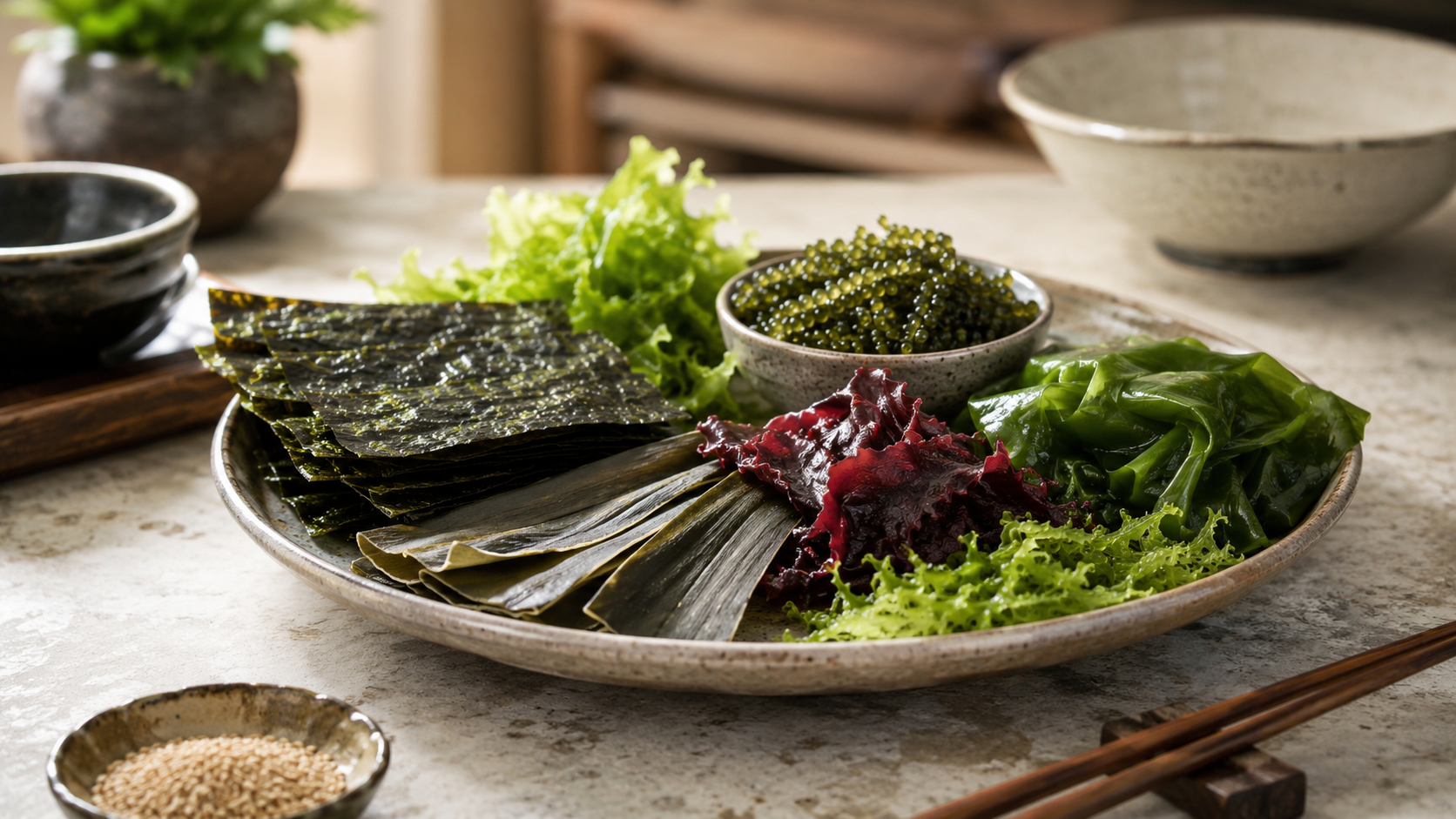
Seaweed has moved far beyond sushi rolls. Today, edible seaweed appears in ramen bowls, poke bowls, miso soup, seaweed salads, vegan seafood alternatives, spice blends, broths, snacks, sauces, bakery products, and even desserts. For restaurants and foodservice businesses, seaweed is not just an unusual ingredient. It is a practical way to add umami, texture, color, nutrition, and global flavor to a menu.

For many American customers, nori is still the most familiar seaweed because of sushi. But the edible seaweed category is much broader. Wakame brings a silky texture to soups and salads. Kombu creates rich, savory broth. Dulse adds a salty, smoky flavor that chefs often compare to bacon. Sea lettuce can be used as a fresh green sea vegetable. Irish moss and agar are used as thickening or gelling ingredients. Sea grapes create a delicate popping texture that feels almost like plant-based caviar.
For restaurant operators, understanding seaweed is useful for several reasons. It can support plant-based menu development, improve the depth of broths and soups, create seafood-like flavor without using fish, add visual contrast to cold dishes, and help differentiate a menu from competitors. At the same time, seaweed should be sourced, stored, and portioned carefully because different types vary widely in flavor, texture, iodine content, and culinary use.
This guide explains the most common types of edible seaweed, how they taste, how restaurants can use them, and what foodservice kitchens should know before buying seaweed in bulk.
What Is Edible Seaweed?
Seaweed is a general term for many types of marine algae and sea vegetables that grow in oceans, seas, rivers, and other aquatic environments. In foodservice, the term usually refers to larger edible marine plants or macroalgae that are harvested, dried, processed, and sold for culinary use.
Seaweed is often grouped by color: red, brown, and green. These color groups matter because they often indicate differences in flavor, texture, and use.
Red seaweeds include nori, dulse, Irish moss, and agar-producing seaweeds. These are often used in sushi sheets, snacks, flakes, thickeners, and desserts.
Brown seaweeds include kombu, wakame, arame, hijiki, and many types of kelp. These are often used in broths, salads, soups, noodle dishes, and seasoning blends.
Green seaweeds include sea lettuce, sea grapes, and aonori. These can be used fresh, dried, powdered, or as garnishes.
For restaurants, the most important thing to understand is that seaweed is not one ingredient. It is a category. Nori and kombu behave completely differently in the kitchen. Wakame is not the same as sea lettuce. Dulse flakes are not used the same way as agar. A chef who understands these differences can use seaweed much more effectively.
Why Restaurants Are Adding Seaweed to Menus
Seaweed is becoming more popular because it fits several major menu trends at once. It is plant-based, globally familiar, rich in umami, often shelf-stable when dried, and useful in both traditional and modern recipes. For sushi bars and Japanese restaurants, it is essential. For ramen shops, kombu and wakame are important flavor-building ingredients. For vegan and vegetarian restaurants, seaweed can help create an ocean-like flavor without seafood. For modern cafés and health-focused concepts, seaweed can add nutritional appeal and visual interest.
Seaweed also helps restaurants create depth of flavor without relying only on meat, bones, or seafood stock. Kombu is especially important for plant-based broths because it adds savory complexity. Nori flakes can be used in vegan “fish” tacos, seafood-style sauces, rice bowls, and seasoning blends. Dulse can bring a smoky, salty note to sandwiches, dips, and salads. Wakame can turn a simple cucumber salad or miso soup into something more complete.
In foodservice, a small amount of seaweed can have a large flavor impact. That makes it useful not only as a main ingredient, but also as a seasoning, garnish, broth base, or texture component.
1. Nori
Nori is probably the best-known edible seaweed in the United States. It is most commonly sold as thin, dark sheets used to wrap sushi rolls and hand rolls. Although many people think of nori as a green seaweed because of its final appearance, it actually comes from red algae that is processed into sheets.
Nori has a crisp texture when dry and a savory, slightly salty, lightly roasted flavor. High-quality nori is usually dark, glossy, and aromatic. Lower-quality nori can be pale, brittle, or less flavorful.
For restaurants, nori is essential for sushi bars, but its uses go far beyond sushi. Toasted nori can be cut into strips for ramen, rice bowls, poke bowls, salads, and noodle dishes. It can be crushed into flakes and added to spice blends, vegan seafood recipes, sauces, dips, and popcorn seasoning. Nori can also be used as a wrap for rice-free sushi-style appetizers or plant-based snacks.
Best uses for restaurants: sushi rolls, hand rolls, rice balls, ramen garnish, poke bowls, seasoning blends, vegan seafood flavor, snack sheets
Flavor: savory, briny, lightly sweet, roasted
Texture: crisp when dry, tender when moist
Best menu fit: sushi bars, Japanese restaurants, poke shops, vegan menus, Asian-inspired cafés
2. Wakame
Wakame is a brown seaweed that usually turns green after soaking. It is best known for miso soup and seaweed salad. Dried wakame looks dark and shriveled, but it expands quickly in water and becomes tender, silky, and slightly slippery.
Wakame has a mild ocean flavor, making it more approachable than some stronger seaweeds. It works well in soups, salads, noodle dishes, rice bowls, and cold appetizers. In foodservice, wakame is valuable because it rehydrates quickly and can be used in small portions to add texture and color.
Seaweed salad, often seen on sushi restaurant menus, is commonly made with seasoned wakame. The salad is usually flavored with sesame oil, soy sauce or a soy-free alternative, vinegar, sugar, chili, and sesame seeds. It can be served as a side dish, appetizer, topping, or prepared food item.
Best uses for restaurants: miso soup, seaweed salad, cucumber salad, ramen, noodle bowls, rice bowls, cold appetizers
Flavor: mild, briny, slightly sweet
Texture: silky, tender, slightly slippery
Best menu fit: sushi restaurants, ramen shops, Asian buffets, prepared food counters
3. Kombu
Kombu is a type of edible kelp and one of the most important seaweeds in Japanese cooking. Its primary value is umami. Kombu is used to make dashi, the foundational Japanese broth that appears in miso soup, noodle broths, sauces, simmered dishes, and many traditional preparations.
Dried kombu often has a white powdery coating on the surface. This is natural and contributes to its savory flavor. In most cases, kombu should be gently wiped if there is grit, but not aggressively washed, because washing can remove flavor.
For restaurants, kombu is especially useful in broth production. It can be soaked in cold water overnight for a delicate infusion or gently heated to build a deeper stock. Kombu is also valuable for vegan and vegetarian kitchens because it creates savory depth without meat or fish. It can be paired with dried mushrooms, onions, carrots, ginger, garlic, or miso to build plant-based broths.
Kombu can also be added when cooking dried beans to improve flavor and texture, though this use depends on the recipe and kitchen preference.
Best uses for restaurants: dashi, ramen broth, vegan stock, miso soup, simmered dishes, sauces, bean cooking
Flavor: deep umami, savory, oceanic
Texture: thick and leathery when dry, firm when cooked
Best menu fit: ramen shops, Japanese restaurants, vegan restaurants, broth-focused kitchens
4. Dulse
Dulse is a red seaweed with a deep red to purple color. It is commonly sold as flakes, powder, or whole dried leaves. Dulse has a strong savory flavor that is often described as smoky, salty, and bacon-like when pan-fried.
This makes dulse especially interesting for modern restaurant menus. It can be used in vegan BLT-style sandwiches, plant-based seafood dishes, compound butter, salads, soups, chowders, dips, sauces, and seasoning blends. When fried or toasted, it becomes crisp and intense. When added to soups or stews, it brings background umami and mineral flavor.
Dulse is useful in small amounts. Too much can overpower a dish, especially for customers who are new to seaweed. The best approach is to use it as a seasoning or accent rather than the entire flavor base.
Best uses for restaurants: vegan bacon-style toppings, chowders, soups, compound butter, dips, salads, seafood-style sauces
Flavor: salty, smoky, savory, mineral-rich
Texture: chewy when rehydrated, crisp when fried
Best menu fit: vegan restaurants, seafood restaurants, gastropubs, modern cafés, chef-driven menus
5. Arame
Arame is a mild brown seaweed that is usually sold dried in thin, dark strands. It has a softer, sweeter flavor than many other seaweeds, which makes it a good entry-level option for customers who may not enjoy stronger ocean flavors.
After soaking, arame becomes tender and noodle-like. It works well in salads, stir-fries, grain bowls, noodle dishes, vegetable sides, and rice dishes. Because it has a delicate flavor, it pairs well with sesame oil, soy sauce, rice vinegar, ginger, carrots, mushrooms, scallions, and tofu.
For restaurants, arame is especially useful when you want seaweed texture without overwhelming the plate. It can also be a safer menu choice than hijiki for operators who want a similar appearance but want to avoid hijiki concerns.
Best uses for restaurants: salads, stir-fries, rice bowls, noodle dishes, vegetable sides
Flavor: mild, slightly sweet, lightly briny
Texture: thin, tender, noodle-like
Best menu fit: Japanese restaurants, vegetarian menus, health-focused cafés, prepared food counters
6. Hijiki
Hijiki is a dark brown seaweed with a thin, wiry appearance. It has traditionally been used in Japanese cooking, often simmered with soy sauce, mirin, carrots, tofu, and vegetables. It has a strong, earthy, oceanic flavor and a distinctive texture.
However, hijiki requires special caution. Some food safety authorities have warned that hijiki may contain higher levels of inorganic arsenic compared with other seaweeds. For this reason, many restaurants choose not to serve hijiki or choose arame as a substitute.
If a restaurant decides to use hijiki, it should buy from reputable suppliers, follow local regulations, and clearly understand the safety concerns. From a menu-development perspective, arame is often the more practical choice because it provides a similar strand-like appearance with a milder flavor.
Best uses for restaurants: traditional simmered dishes, small side dishes, rice toppings
Flavor: earthy, strong, oceanic
Texture: firm, wiry, chewy
Best menu fit: traditional Japanese menus, but use with caution
7. Sea Lettuce
Sea lettuce is a green seaweed with thin, leafy sheets that resemble tender greens. It can be sold fresh, dried, or powdered. Its flavor is generally mild, fresh, briny, and slightly grassy.
Fresh sea lettuce can be used in salads, seafood dishes, soups, sandwiches, and garnishes. Dried sea lettuce can be crushed into flakes and used in seasoning blends, breading, pasta dough, sauces, compound butter, and soups.
For restaurants, sea lettuce is appealing because it looks more familiar than some other seaweeds. Its green color and leafy texture make it useful for modern plating, seafood programs, and coastal-inspired menus.
Best uses for restaurants: salads, seafood garnish, soups, sauces, seasoning blends, compound butter
Flavor: fresh, green, mild, briny
Texture: delicate and leafy
Best menu fit: seafood restaurants, coastal menus, modern American restaurants, health-focused cafés
8. Sea Grapes / Umibudo
Sea grapes, also known as umibudo, are one of the most visually distinctive edible seaweeds. They look like tiny green pearls attached to stems, which is why they are sometimes called green caviar. When eaten, the small bubbles pop in the mouth and release a salty, ocean-like flavor.
Sea grapes are common in Okinawan and Southeast Asian cuisines, but they are less common in mainstream American foodservice. They are often served fresh with dipping sauce, soy sauce, citrus, ponzu, sashimi, sushi, rice bowls, or seafood dishes.
For restaurants, sea grapes are more of a premium garnish or specialty ingredient than a bulk pantry item. They can create a memorable customer experience because of their texture and appearance.
Best uses for restaurants: sushi garnish, sashimi garnish, seafood plates, rice bowls, tasting menus
Flavor: salty, fresh, slightly acidic
Texture: popping, crisp, delicate
Best menu fit: sushi bars, seafood restaurants, chef-driven tasting menus, Asian fusion concepts
9. Irish Moss
Irish moss is a red seaweed used less for its direct flavor and more for its thickening properties. It contains carrageenan-like compounds that can help create body and gel-like texture in certain recipes. Traditionally, Irish moss has been used in drinks, puddings, desserts, and thickened preparations.
In modern foodservice, Irish moss may appear in vegan desserts, plant-based beverages, smoothies, custards, and specialty health-focused products. It is not usually used the same way as nori, wakame, or kombu. Instead, it functions more as a texture-building ingredient.
Because Irish moss can vary by supplier and preparation method, restaurants should test it carefully before putting it into a menu item. Texture, soaking time, and final mouthfeel can change significantly.
Best uses for restaurants: vegan desserts, puddings, beverages, smoothies, thickened sauces
Flavor: mild, oceanic if not rinsed well
Texture: gel-like when prepared
Best menu fit: vegan cafés, dessert programs, health-focused beverage concepts
10. Agar-Agar
Agar-agar, often simply called agar, is derived from red algae. It is widely used as a plant-based gelling agent and is especially important in vegan desserts because it can replace gelatin in some applications.
Agar is commonly used in jellies, custards, fruit gels, panna cotta-style desserts, molded desserts, confectionery, and molecular gastronomy applications. It sets more firmly than gelatin and behaves differently, so chefs need to test recipes carefully.
For restaurants, agar is valuable because it supports vegan and vegetarian dessert development. It is also useful for bakeries, pastry programs, bubble tea shops, and modern plating.
Best uses for restaurants: vegan gels, desserts, fruit jellies, panna cotta-style dishes, pastry applications
Flavor: neutral
Texture: firm gel
Best menu fit: pastry kitchens, vegan restaurants, cafés, bakeries, modern restaurants
11. Aonori
Aonori is a green seaweed commonly sold as dried flakes or powder. It is used as a finishing seasoning in Japanese cooking, often sprinkled over okonomiyaki, takoyaki, yakisoba, fries, rice, noodles, and snacks.
Aonori has a bright green color and a noticeable ocean aroma. It is more of a condiment than a main ingredient. For restaurants, it can be used to add instant visual and flavor impact to fried foods, snacks, noodles, and rice dishes.
Because it is usually used in small amounts, aonori is easy to add to a menu without changing the entire prep system. It can also be blended into salt, spice mixes, aioli, mayo, breading, or batters.
Best uses for restaurants: fries, noodles, rice dishes, okonomiyaki, takoyaki, seasoning blends, sauces
Flavor: aromatic, briny, green
Texture: flaky or powdery
Best menu fit: Japanese restaurants, snack menus, bar food, Asian fusion concepts
12. Ogo / Gracilaria
Ogo is a red seaweed often used in Hawaiian and Pacific cuisines. It has a branching, wiry appearance and a crisp texture. It is commonly used in poke, seafood salads, garnishes, and cold dishes.
For restaurants serving poke bowls, Hawaiian-inspired menus, or seafood plates, ogo can add texture and authenticity. It pairs well with tuna, salmon, shrimp, sesame, soy sauce, scallions, chili, citrus, and rice.
Ogo is more specialized than nori or wakame, but it can be valuable for restaurants that want to improve the quality and authenticity of their poke or seafood offerings.
Best uses for restaurants: poke, seafood salads, garnishes, cold appetizers
Flavor: briny, fresh, mild
Texture: crisp, branching, slightly crunchy
Best menu fit: poke shops, seafood restaurants, Hawaiian-inspired concepts
13. Sugar Kelp
Sugar kelp is a brown seaweed that has become more visible in North American seaweed farming. It can be used in broths, salads, pickles, noodles, seasonings, and value-added food products. It has a savory, slightly sweet flavor and a sturdy texture.
For restaurants, sugar kelp can be interesting because it connects culinary use with sustainability storytelling. Some domestic seaweed farms grow kelp as part of regenerative aquaculture systems. Restaurants that care about local sourcing, climate-conscious menus, or coastal food systems may find sugar kelp especially appealing.
Best uses for restaurants: broths, salads, pickles, noodles, kelp flakes, seasoning blends
Flavor: savory, mineral-rich, slightly sweet
Texture: firm, ribbon-like
Best menu fit: seafood restaurants, farm-to-table concepts, sustainability-focused menus
Fresh Seaweed vs Dried Seaweed
Most restaurants in the United States will encounter seaweed in dried form. Dried seaweed is easier to ship, store, portion, and use consistently. It also has a long shelf life when stored properly. Nori sheets, dried wakame, kombu strips, dulse flakes, arame strands, aonori powder, and agar are all common dried products.
Fresh seaweed can offer better texture and brighter flavor, but it is more perishable and less widely available. Fresh sea grapes, fresh sea lettuce, and fresh ogo may require specialty suppliers and careful cold storage. These products are best for restaurants that can move volume quickly or use them as premium garnishes.
For most foodservice kitchens, dried seaweed is the practical starting point. Fresh seaweed can be added later for specialty dishes, seasonal menus, or high-end presentations.
How to Choose the Right Seaweed for Your Menu
The best seaweed depends on what you want it to do.
If you need a wrap, choose nori.
If you need broth, choose kombu or kelp.
If you need a salad ingredient, choose wakame, arame, sea lettuce, or ogo.
If you need a smoky, savory seasoning, choose dulse.
If you need a plant-based gel, choose agar.
If you need a premium popping garnish, choose sea grapes.
If you need a green finishing powder, choose aonori.
If you need a mild entry-level seaweed for customers, choose wakame or arame.
If you need a strong umami base for vegan cooking, choose kombu.
Restaurants should also think about customer familiarity. Nori and wakame are easier for many customers to understand. Sea grapes, Irish moss, and ogo may need more menu explanation. If your guests are adventurous, specialty seaweeds can be a differentiator. If your guests prefer familiar dishes, use seaweed as a subtle flavor enhancer rather than the main feature.
Best Seaweed for Popular Restaurant Dishes
For sushi rolls, nori is the standard choice. It holds rice and fillings together and adds roasted ocean flavor.
For miso soup, wakame and kombu both play important roles. Kombu can be used for broth, while wakame adds texture to the finished soup.
For ramen broth, kombu is one of the best choices because it adds umami and depth.
For seaweed salad, wakame is the most familiar choice, though other seaweeds can be blended in for texture.
For vegan seafood dishes, nori and dulse are especially useful because they create a seafood-like flavor.
For poke bowls, nori strips, wakame, ogo, and sea grapes can all be used depending on the style of the dish.
For plant-based desserts, agar and Irish moss are useful because of their texture-building properties.
For seasoning blends, nori flakes, dulse flakes, aonori, and kelp powder are all practical options.
For soups and stews, kombu, wakame, dulse, sea lettuce, and kelp can add depth.
Seaweed Flavor Guide
Seaweed flavors range from mild and green to deeply savory and oceanic. Understanding flavor intensity helps chefs use the right amount.
Nori is roasted, savory, salty, and slightly sweet.
Wakame is mild, silky, and lightly briny.
Kombu is deeply savory, mineral-rich, and umami-heavy.
Dulse is salty, smoky, and bold.
Arame is mild, sweet, and delicate.
Sea lettuce is fresh, green, and grassy.
Sea grapes are salty, crisp, and ocean-fresh.
Aonori is aromatic, briny, and concentrated.
Irish moss is mild but can taste oceanic if not prepared well.
Agar is nearly neutral and used mostly for texture.
For customers new to seaweed, start with nori, wakame, or kombu-based broth. These are familiar and approachable. For adventurous menus, dulse, sea grapes, ogo, and sea lettuce can make the dish more memorable.
Seaweed and Plant-Based Cooking
Seaweed is one of the most useful ingredients for plant-based cooking because it helps replace the savory depth that often comes from seafood, fish sauce, shellfish, or meat stock. A vegan broth made with kombu, mushrooms, ginger, and aromatics can feel rich without animal products. Nori flakes can add a seafood-like flavor to vegan crab cakes, chickpea tuna salad, tofu fish sticks, and plant-based tacos. Dulse can add smoky flavor to vegan sandwiches, dips, or breakfast plates.
This makes seaweed valuable for restaurants that want plant-based dishes to feel complete, not like an afterthought. Instead of simply removing seafood or meat, chefs can use seaweed to rebuild flavor in a smart way.
Seaweed Safety and Sourcing
Seaweed can be a nutritious and flavorful ingredient, but restaurants should source it carefully. Seaweed absorbs minerals from the water where it grows. That is one reason it can be rich in iodine and other minerals, but it also means quality depends on the harvesting environment.
Restaurants should buy seaweed from reputable suppliers with clear labeling and traceable sourcing. Avoid unknown products without species information, origin details, or storage guidance. This is especially important for specialty seaweeds, powders, and supplements.
Iodine is another consideration. Many seaweeds contain iodine, and some brown seaweeds can contain very high levels. For most restaurant uses, seaweed is served in small amounts as a seasoning, garnish, broth ingredient, or side dish. Still, operators should avoid making exaggerated health claims and should be mindful that customers with thyroid conditions may need to monitor iodine intake.
Hijiki deserves special caution because some authorities have warned about inorganic arsenic levels. If your restaurant wants a strand-like seaweed for salads or sides, arame may be a better choice.
Foodservice menus should present seaweed as a flavorful culinary ingredient, not as a miracle health food. That tone is more accurate, more professional, and more trustworthy.
How to Store Seaweed in a Restaurant
Dried seaweed should be stored in a cool, dry, dark place away from moisture, heat, steam, and strong odors. Once opened, it should be kept in airtight containers or resealed packaging. Nori is especially sensitive to humidity and can lose its crisp texture quickly if left exposed.
Best practices for dried seaweed storage:
Keep nori sheets sealed until service.
Store dried wakame, kombu, dulse, arame, and aonori in airtight containers.
Label containers with product name and opening date.
Keep seaweed away from steam tables, dish areas, and damp prep zones.
Use FIFO rotation.
Check for moisture, off odors, discoloration, or clumping.
Fresh seaweed should be refrigerated and used quickly according to supplier guidance. Because fresh seaweed can be delicate, it should be stored carefully and handled like a perishable specialty ingredient.
Prepared seaweed salads should be held cold, labeled, dated, and handled according to food safety procedures. If a restaurant prepares seaweed salad in bulk, reliable refrigeration is essential for consistent quality.
Restaurant Equipment That Helps with Seaweed Prep
Seaweed does not require complicated equipment, but the right foodservice setup makes it easier to prepare and serve consistently.
For sushi bars, nori storage matters. Nori should stay dry and crisp, so sealed containers and dry storage are important. Sushi prep tables, refrigerated prep rails, rice warmers, cutting boards, knives, and smallwares all support efficient service.
For ramen shops, kombu broth production may require stock pots, induction ranges, commercial ranges, steam kettles, strainers, and refrigerated storage for prepared broth.
For seaweed salads and cold appetizers, prep tables, mixing bowls, food storage containers, refrigeration, and display cases help maintain freshness.
For vegan dips, sauces, and seasoning blends, food processors, spice grinders, blenders, and mixers can help turn nori, dulse, or sea lettuce into usable components.
For prepared food departments, reach-in refrigerators, walk-in coolers, deli display cases, and cold prep stations are important because seaweed salads and cold seaweed dishes need proper holding temperatures.
Seaweed may be a small ingredient, but in commercial kitchens, consistency depends on storage, prep flow, and equipment.
Frequently Asked Questions About Edible Seaweed
What is the most common edible seaweed?
Nori is probably the most common edible seaweed in the United States because it is used for sushi rolls, hand rolls, rice balls, snacks, and seasoning flakes.
What seaweed is used in miso soup?
Wakame is the seaweed most commonly seen floating in miso soup. Kombu is also important because it can be used to make the dashi broth that forms the base of many Japanese soups.
What seaweed is best for sushi?
Nori is the standard seaweed for sushi rolls and hand rolls. High-quality nori should be dark, crisp, aromatic, and easy to fold without falling apart.
What seaweed is best for ramen?
Kombu is one of the most important seaweeds for ramen broth because it adds umami. Wakame and nori can also be used as toppings.
What seaweed is used in seaweed salad?
Wakame is the most common seaweed used in seaweed salad. It is usually rehydrated and seasoned with sesame oil, soy sauce, vinegar, sugar, sesame seeds, and other flavorings.
Is kelp the same as seaweed?
Kelp is a type of brown seaweed. All kelp is seaweed, but not all seaweed is kelp. Kombu and sugar kelp are examples of edible kelp.
Is seaweed the same as algae?
Seaweed is a type of large algae, often called macroalgae. It is different from microscopic algae, which are too small to see with the naked eye.
Is all seaweed edible?
No. Many types of seaweed are edible, but not all seaweed is pleasant, practical, or safe to eat. Restaurants should only buy food-grade seaweed from reputable suppliers.
Is seaweed safe to eat?
Seaweed is safe for most people when sourced properly and eaten in normal food amounts. However, iodine and heavy metal content can vary by species and growing environment. Restaurants should avoid questionable sources and be cautious with hijiki.
What does seaweed taste like?
Seaweed can taste salty, briny, savory, smoky, sweet, grassy, or deeply umami depending on the type. Nori is roasted and savory, wakame is mild and silky, kombu is umami-rich, and dulse is salty and smoky.
How long does dried seaweed last?
Dried seaweed can last a long time when stored properly, but quality declines if it is exposed to humidity, heat, light, or air. Restaurants should keep it sealed, dry, and rotated.
Can seaweed be used in vegan cooking?
Yes. Seaweed is very useful in vegan cooking because it can add seafood-like flavor and umami without using fish, shellfish, or meat-based stock.
Edible seaweed is one of the most flexible ingredients a restaurant can add to its pantry. It can be a wrap, garnish, broth base, salad ingredient, seasoning, thickener, snack, or plant-based flavor enhancer. The key is choosing the right seaweed for the right job.
Use nori for sushi and seasoning. Use wakame for soups and salads. Use kombu for broth and umami. Use dulse for smoky, savory flavor. Use arame for mild salads and stir-fries. Use sea lettuce for fresh green color. Use sea grapes for premium texture. Use agar for vegan desserts. Use ogo for poke and seafood dishes.
For foodservice operators, seaweed is especially powerful because small amounts can create big flavor. It supports plant-based menus, Asian-inspired dishes, seafood programs, sushi bars, ramen shops, prepared food counters, and modern health-focused menus. But like any ingredient, it should be sourced carefully, stored properly, and used with a clear culinary purpose.
When handled well, seaweed can help restaurants build dishes that are more flavorful, more distinctive, and more memorable.