

What Is a Commercial High-Speed Oven?
Commercial high-speed and rapid cook ovens help foodservice operations reduce ticket times while producing consistent browning, crisping, reheating, and finishing results. These compact commercial ovens can combine microwave energy with convection, impingement, radiant heat, or other cooking technologies. Compare ventless countertop models, cavity sizes, electrical requirements, controls, and cooking capabilities to find the right oven for your menu and workflow.Read more
Commercial high-speed and rapid cook ovens help foodservice operations reduce ticket times while producing consistent browning, crisping, reheating, and finishing results. These compact commercial ovens can combine microwave energy with convection, impingement, radiant heat, or other cooking technologies. Compare ventless countertop models, cavity sizes, electrical requirements, controls, and cooking capabilities to find the right oven for your menu and workflow.
Show less


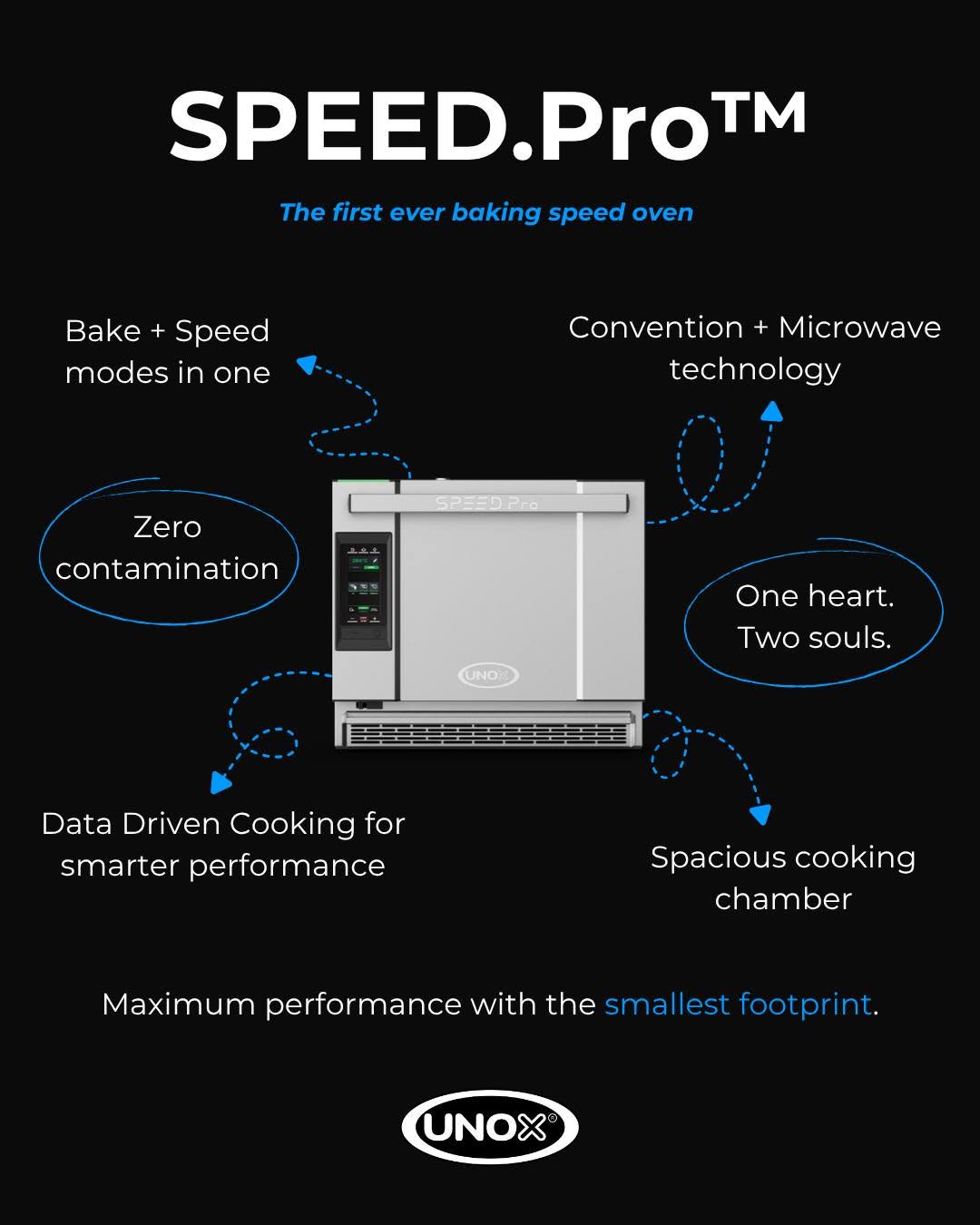

UNOX
UNOX XAMA-01NS-MCDS SPEED.Compact ECO Microwave Convection Speed Oven
Regular price$7,708.00
/ Ea. Free Shipping
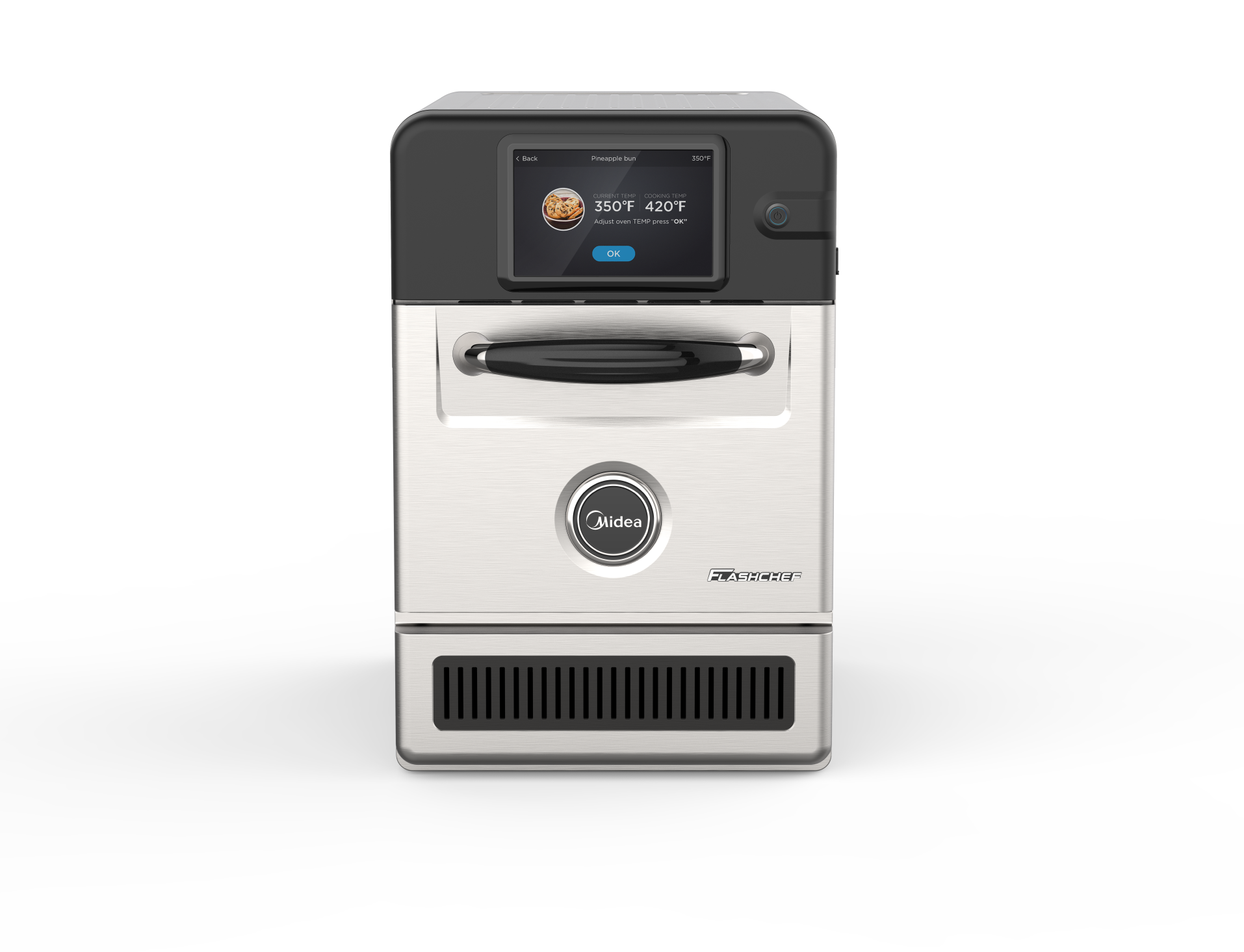
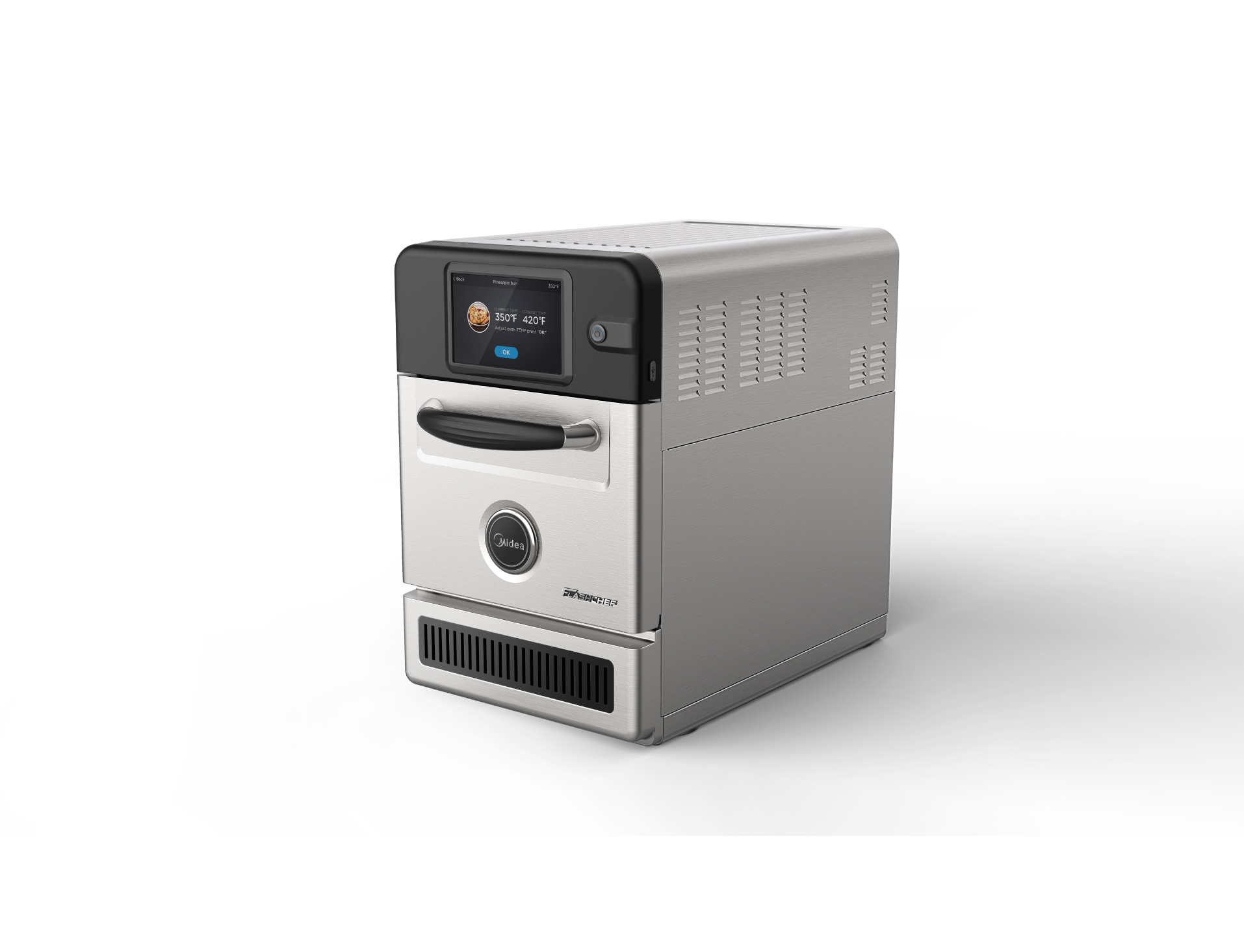
Midea
MIDEA G1 0.66 Cu Ft. 2000W FlashChef High Speed Oven Heavy Duty Microw...
Regular price$6,694.00
/ Ea. Recently viewed
What to Know Before Buying a Commercial High-Speed Oven
A commercial high-speed oven can reduce ticket times, expand a limited menu, and add valuable cooking capacity without taking up the space required by many full-size ovens. However, the best model is not simply the one with the shortest advertised cook time. Your decision should be based on menu performance, peak-hour throughput, cavity size, electrical requirements, ventilation status, cleaning needs, and service support. Test Your Actual Menu Start with the food you plan to sell. High-speed ovens may combine microwave or RF energy with convection, impingement, radiant heat, infrared heat, or a conductive cooking surface. Each combination produces different results. Test your thickest, largest, highest-moisture, and highest-volume items under realistic operating conditions. Use the same portions, starting temperatures, trays, baskets, and packaging your staff will use during service. A short cook time is only valuable when the finished product meets your standards for internal temperature, browning, crispness, moisture, and presentation. Calculate Peak-Hour Throughput Do not size the oven using daily sales or cooking time alone. Determine how many oven-prepared items you expect during the busiest sustained hour. Then include loading, cooking, unloading, garnishing, packaging, and station-reset time in the complete cycle. Use this preliminary formula: Items per Batch × 3,600 ÷ Complete Cycle Time in Seconds × Utilization Factor = Planned Items per Hour Allow room for uneven order flow, mixed recipes, employee movement, and cleaning. If several products require different programs or cannot be cooked together, calculate their demand separately. In some operations, two smaller ovens provide better menu separation, flexibility, and backup capacity than one larger unit. Compare Cooking Technologies Microwave or RF energy can raise internal temperature quickly. Convection circulates heated air for more even cooking. Impingement directs high-velocity air toward the food to accelerate surface heating. Radiant or infrared heat improves browning, while heated plates or stones can strengthen bottom crisping. Not every commercial high-speed oven uses every technology. Choose the cooking system that produces the texture your menu requires rather than selecting a model only because it has more features. Check the Usable Cavity Exterior dimensions and total cubic capacity do not tell the complete story. Confirm the usable interior width, depth, and height, along with the largest approved tray, basket, pan, or pizza size. Make sure your intended batch fits without blocking critical airflow. Measure the installation area as well. Account for counter depth and strength, door swing, side and rear clearances, air intake, hot-air discharge, filter access, and space required for cleaning and service. Never place an oven where walls, equipment, or stored items can obstruct its ventilation openings. Verify Electrical Requirements Before Ordering Commercial high-speed ovens are available in different electrical configurations. Depending on the model, the oven may require 120, 208, or 240 volts; single- or three-phase service; a dedicated circuit; and a specific amperage and NEMA plug. The electrical configuration must match the complete model number. Do not assume that two ovens in the same product family use the same power connection. Have a qualified electrician verify available voltage, phase, circuit capacity, receptacle, and installation conditions before purchase. Adapters, extension cords, and field-modified plugs should not be used unless specifically permitted by the equipment documentation and applicable code. Confirm Ventless and Hood Requirements A ventless high-speed oven is designed and tested to manage specified cooking emissions internally. In an approved application, this may allow the oven to operate without a traditional externally ducted hood. However, ventless does not automatically mean that the oven can be installed anywhere or used for every food. Approval can depend on the exact model, menu, grease production, filtration or catalytic components, clearances, room ventilation, and local building, mechanical, fire, and health requirements. Before ordering, provide the model documentation, proposed location, and intended menu to the local authority having jurisdiction or the qualified professionals responsible for the project. Review Cleaning, Maintenance, and Service Support High-speed ovens rely on controlled airflow and clean cooking surfaces. Compare how easily staff can remove and clean trays, racks, jet plates, splatter shields, filters, and cavity components. Review approved chemicals, cooldown procedures, filter replacement intervals, and daily cleaning time. Also consider warranty coverage, authorized service availability, parts support, and how the operation will continue if the oven is temporarily unavailable. A model that is easy to clean and service may provide more long-term value than one selected only by purchase price. Compare the Total Installed Cost Include more than the oven price when comparing options. The total investment may include electrical work, ventilation or HVAC changes, permits, delivery, installation, an equipment stand or reinforced counter, approved cooking accessories, cleaning supplies, replacement filters, employee training, and recipe development. Atlantic Restaurant & Supermarket Equipment can help you compare commercial high-speed and rapid cook ovens based on your menu, available space, utility requirements, and production goals. Confirm all installation requirements before placing your order.
Frequently Asked Questions About Commercial High-Speed Ovens
What is a commercial high-speed oven?
A commercial high-speed oven is an electric foodservice oven designed to cook, reheat, toast, brown, or crisp food quickly by combining two or more cooking methods. Depending on the model, it may use microwave or RF energy, convection, impingement, radiant heat, infrared heat, or a heated cooking surface. These ovens are commonly used for sandwiches, pizza, breakfast items, appetizers, baked goods, and grab-and-go foods that need fast internal heating and an oven-finished exterior.
What is the difference between a high-speed oven and a commercial microwave?
A commercial microwave primarily uses microwave energy for fast heating and reheating. A high-speed oven may also use microwave or RF energy, but it combines that internal heating with convection, impingement, radiant heat, or another surface-cooking method. This allows a high-speed oven to toast bread, brown cheese, crisp crusts, and create textures that a standard microwave may not provide. A microwave is often sufficient for basic reheating, while a high-speed oven is better suited to made-to-order foods requiring a finished exterior.
Does a ventless high-speed oven require a hood?
It depends on the exact oven, menu, installation, and local requirements. A model listed for ventless operation may be permitted without a traditional hood in an approved application, but the ventless designation is not a universal exemption. Local building, mechanical, fire, and health authorities may consider the foods being cooked, grease and smoke production, room ventilation, clearances, filtration, and the oven's listing documentation. Obtain approval from the authority having jurisdiction before purchasing or installing the equipment.
What electrical connection does a commercial high-speed oven need?
Electrical requirements vary by model. Many commercial high-speed ovens use 208 or 240 volts and may require a dedicated 20-, 30-, or higher-amp circuit, while some lower-power models operate on 120 volts. Models may also be available in single- or three-phase configurations with different NEMA plugs. Always verify the voltage, phase, amperage, wattage, plug, and circuit requirements for the complete model number. A qualified electrician should confirm that the site can support the oven before it is ordered.
How do I choose the right high-speed oven capacity?
Start with the number of oven-prepared items expected during the busiest sustained hour. Test the complete cycle for the actual menu, including loading and unloading, and determine how many items fit in a usable batch. Calculate theoretical hourly output, then reduce it by a realistic utilization factor to allow for uneven orders, mixed recipes, handling, and cleaning. Also verify that the cavity fits the required pans, baskets, or pizza size. The correct oven must meet peak demand without sacrificing food quality or workflow.