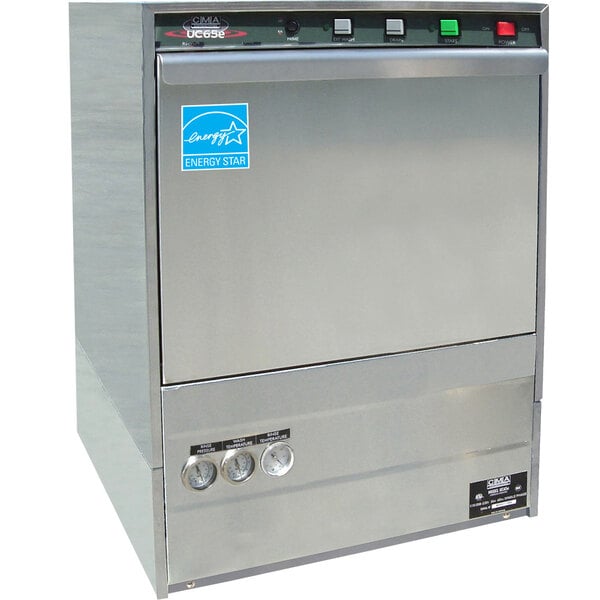
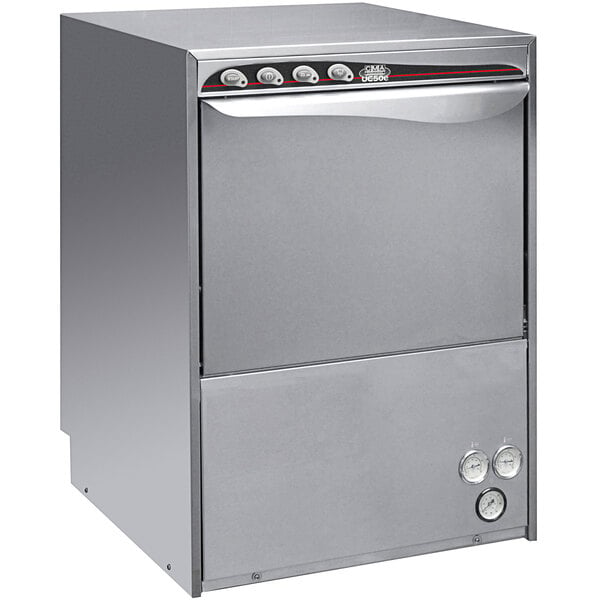
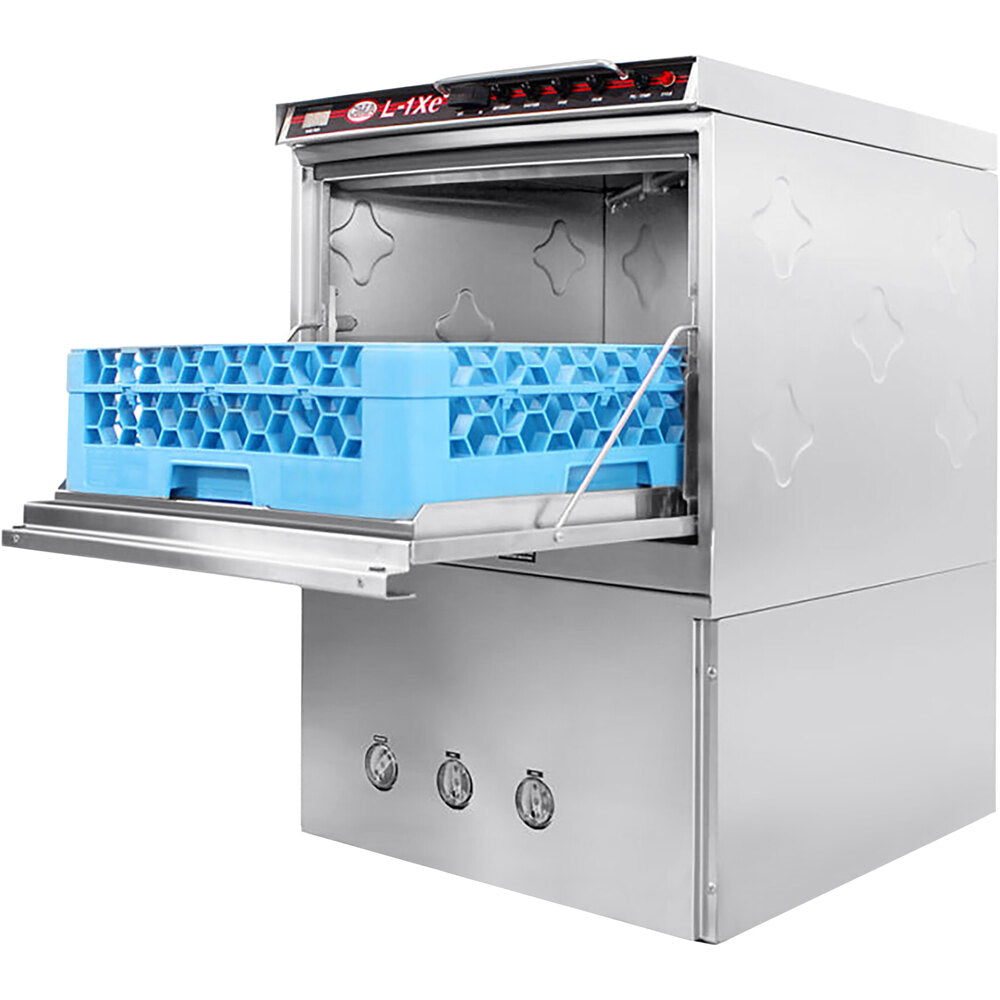
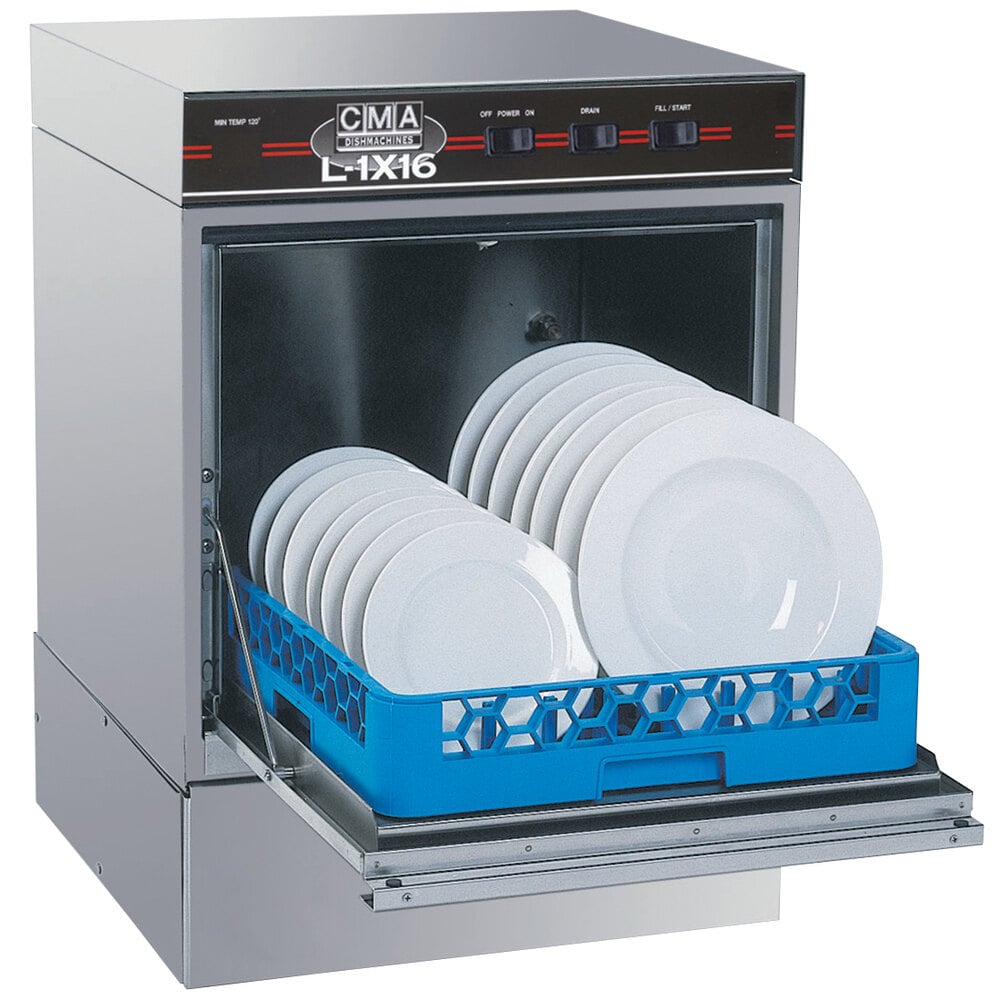
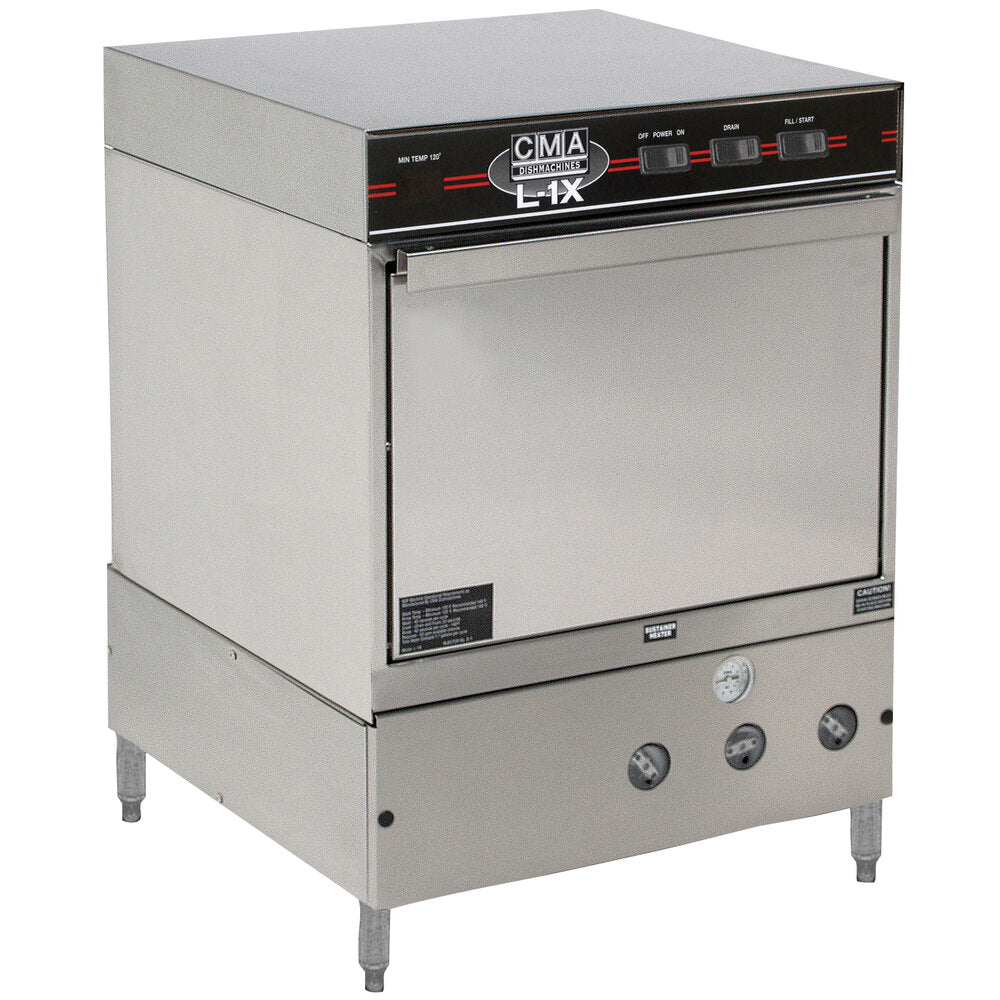
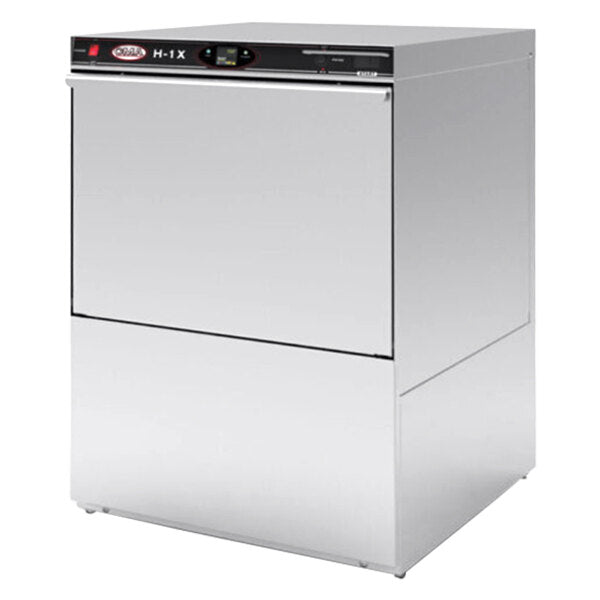
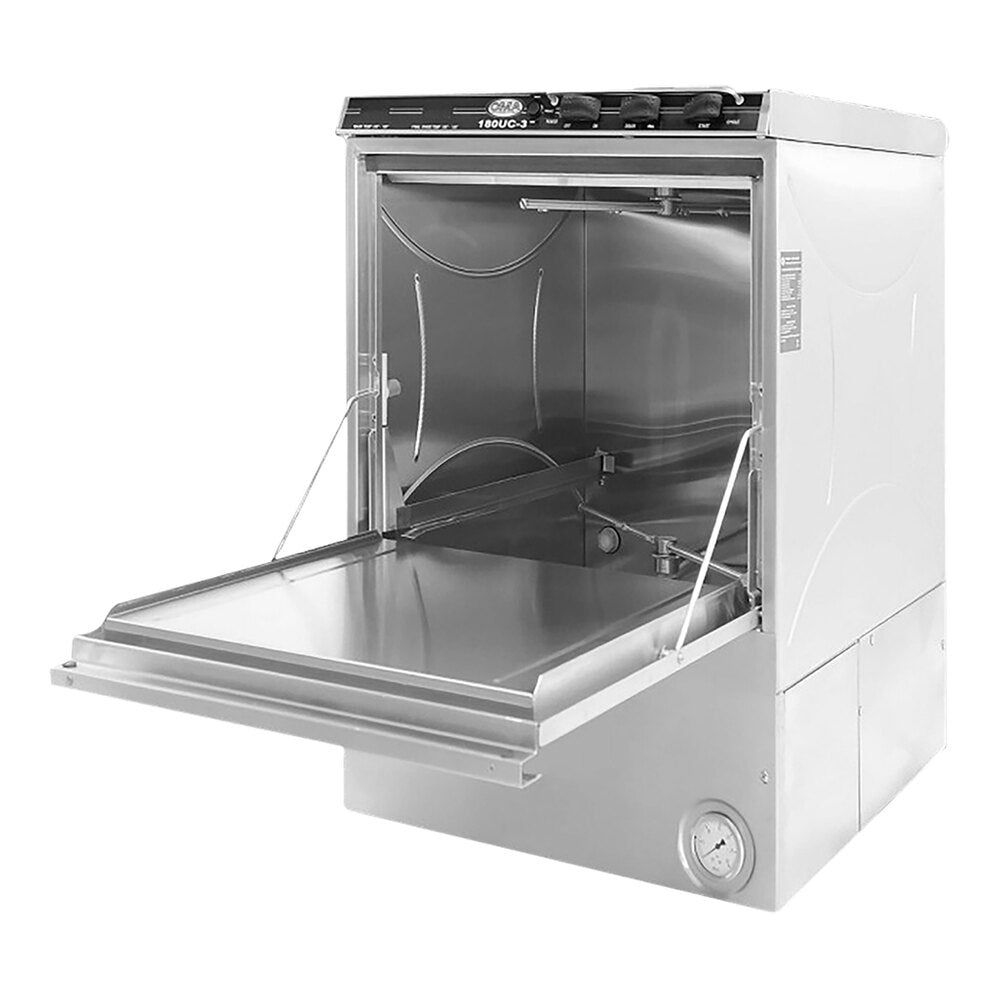
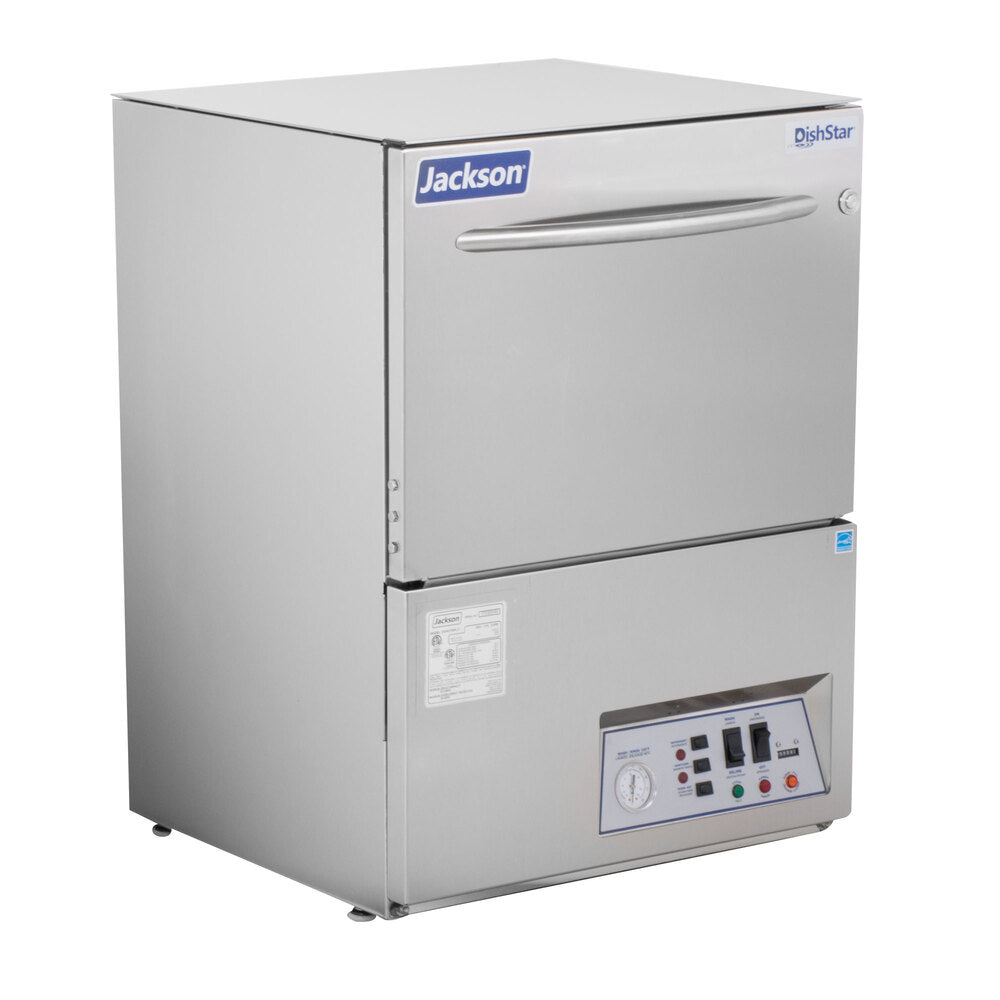
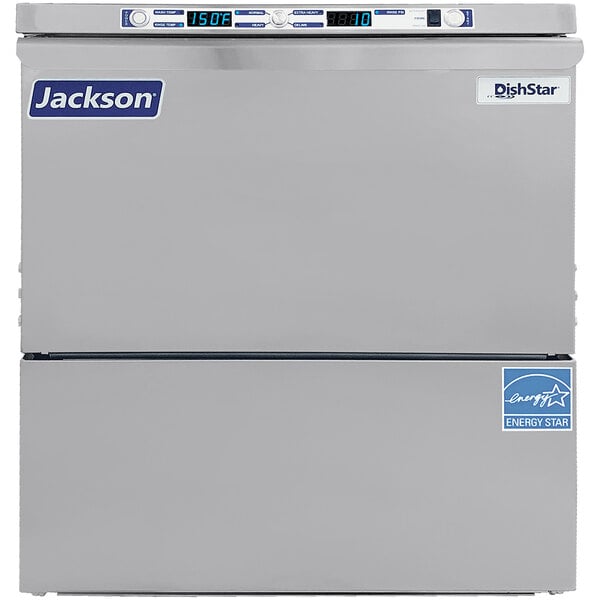
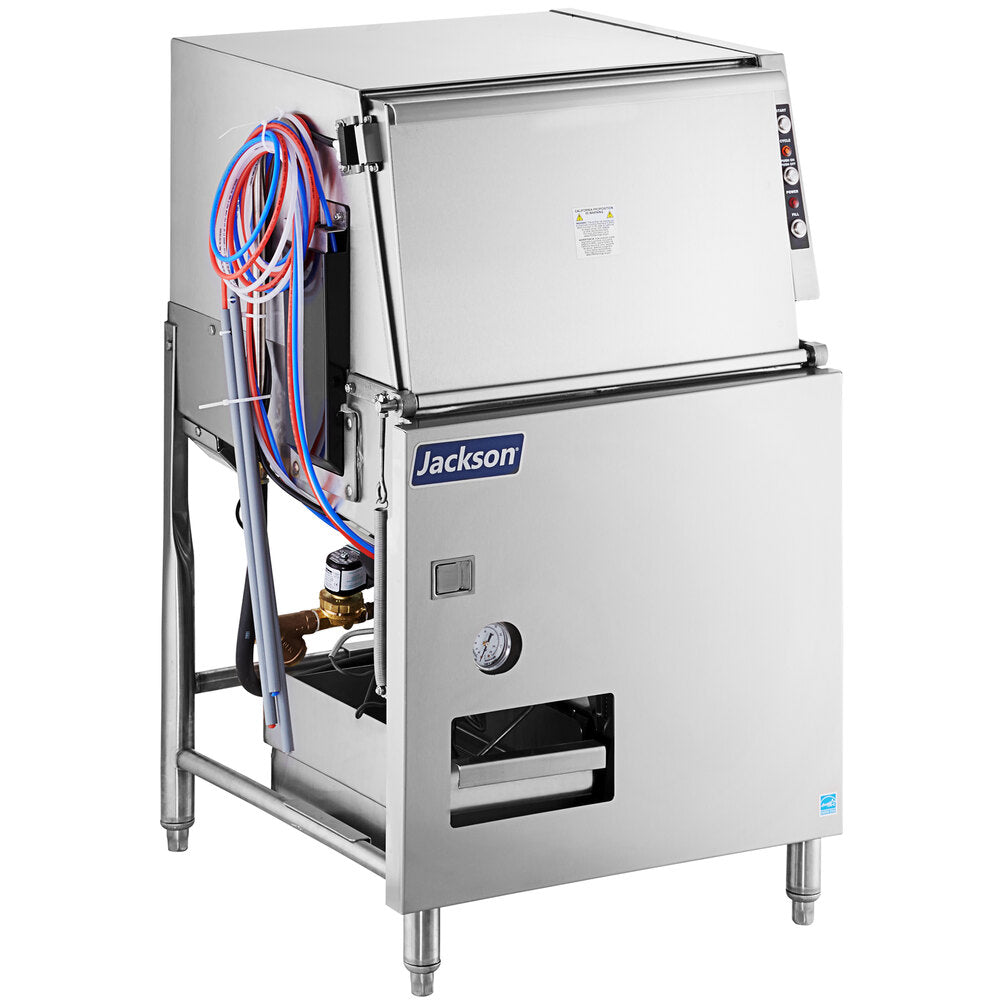
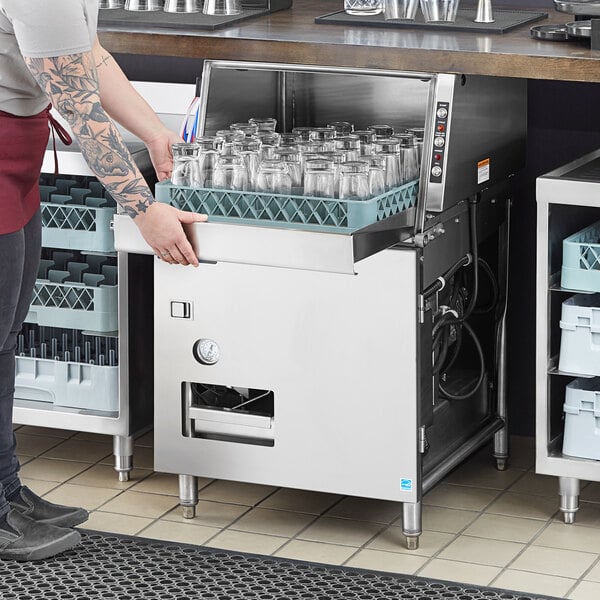
Shop commercial undercounter dishwashers designed for fast, reliable warewashing in restaurants, bars, cafés and compact commercial kitchens. Compare high-temperature and low-temperature models by racks per hour, voltage, drain configuration, booster heater, dimensions and water usage. These space-saving machines deliver much faster wash cycles than residential dishwashers while meeting the demands of professional foodservice operations. Need help checking compatibility? Atlantic’s equipment specialists can help you compare models based on your space, utilities and peak-hour dishwashing volume.
Shop commercial undercounter dishwashers designed for fast, reliable warewashing in restaurants, bars, cafés and compact commercial kitchens. Compare high-temperature and low-temperature models by racks per hour, voltage, drain configuration, booster heater, dimensions and water usage. These space-saving machines deliver much faster wash cycles than residential dishwashers while meeting the demands of professional foodservice operations. Need help checking compatibility? Atlantic’s equipment specialists can help you compare models based on your space, utilities and peak-hour dishwashing volume.
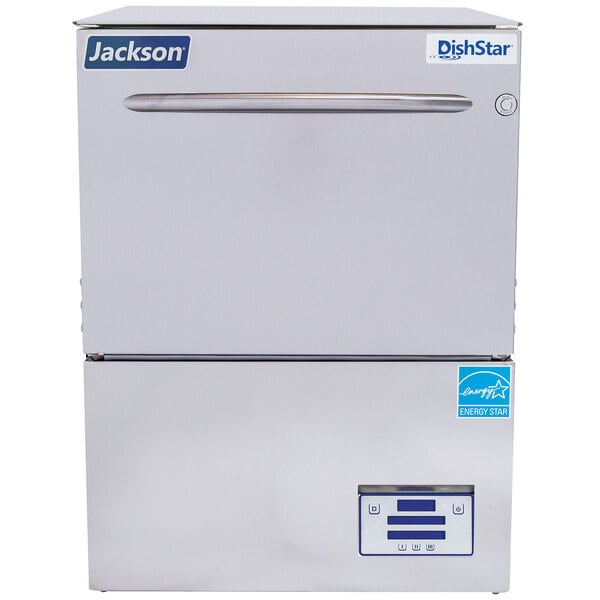
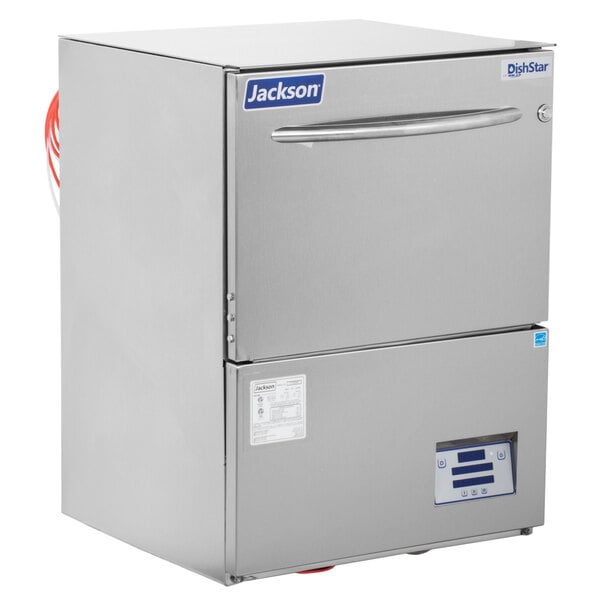
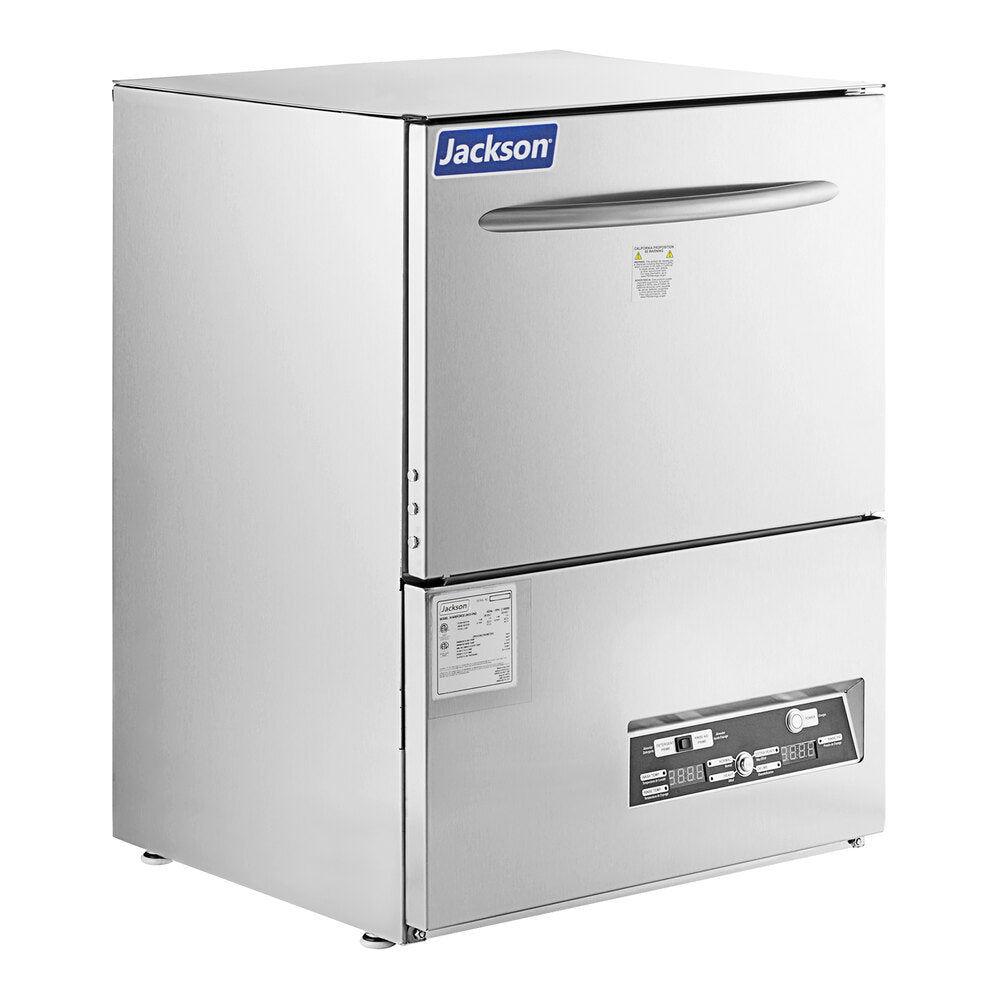
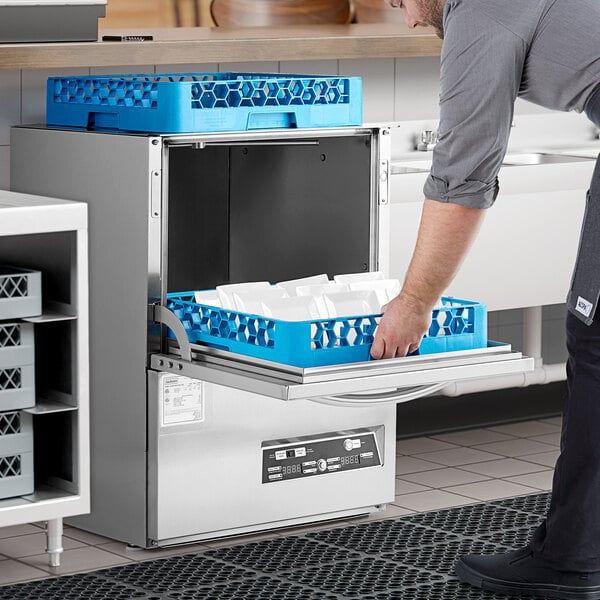
A commercial undercounter dishwasher provides the speed and durability of a professional dishwashing machine in a compact footprint. Designed to fit beneath many standard commercial counters and worktables, these front-loading machines are popular in bars, cafés, coffee shops, bakeries, small restaurants and other foodservice operations where floor space is limited. Unlike residential dishwashers, commercial undercounter dishwashers are engineered for repeated use throughout the workday. Many models complete a wash and sanitizing cycle in only a few minutes and measure their capacity in racks per hour. This allows staff to continuously clean plates, glasses, cups, flatware and small kitchen tools during service. Selecting the right machine requires more than comparing prices. Sanitizing method, hourly capacity, electrical requirements, incoming water temperature, drain location and available installation space can all determine whether a dishwasher will work properly in your facility. High-Temp vs. Low-Temp Undercounter DishwashersOne of the most important decisions is choosing between a high-temperature and low-temperature commercial undercounter dishwasher. High-temp undercounter dishwashers use high-temperature final rinse water to sanitize dishes. These machines generally provide faster drying and can be an excellent choice for restaurants that want to reduce their reliance on chemical sanitizer. However, high-temp models often require greater electrical capacity and may need a built-in or external booster heater to reach the required final rinse temperature. Low-temp undercounter dishwashers sanitize using approved commercial chemicals at lower water temperatures. Many low-temp models can operate with more accessible electrical connections, making them a practical option for bars, cafés and facilities with limited electrical capacity. They generally have lower heating demands but require an ongoing supply of detergent, rinse aid and chemical sanitizer. FeatureHigh-Temperature ModelsLow-Temperature ModelsSanitizing methodHigh-temperature final rinseChemical sanitizerCommon electrical demandUsually higherOften lowerBooster heaterFrequently included or requiredUsually not requiredDrying performanceGenerally fasterMay require more air-drying timeOngoing suppliesDetergent and rinse aidDetergent, rinse aid and sanitizerCommon applicationsRestaurants and higher-demand kitchensBars, cafés and utility-limited locations Always review the manufacturer’s specification sheet and local health and plumbing requirements before choosing a sanitizing method. How Many Racks Per Hour Do You Need?Racks per hour measures how many fully loaded dish racks a machine can process under its rated operating conditions. It is one of the most useful specifications for comparing commercial undercounter dishwashers. A small coffee shop may need to wash cups, saucers and utensils throughout the day but experience relatively low peak-hour volume. A busy bar may need rapid glassware turnover during evening service, while a small restaurant may need to process plates, bowls, glasses and flatware at the same time. The dishwasher should be sized for the busiest part of the day rather than average daily use. If dirty dishes regularly accumulate faster than the machine can process them, the dishwashing station can become a bottleneck that slows service. Many undercounter models are designed for approximately 20 to 40 racks per hour, although actual ratings vary by model and wash cycle. Operations that consistently exceed the capacity of an undercounter machine may be better served by a higher-capacity door-type commercial dishwasher. Check Electrical Requirements Before OrderingCommercial dishwashers can have very different electrical requirements, even when their exterior dimensions appear similar. Depending on the model, the machine may require: 115V or 120V power208V, 230V or 240V powerSingle-phase or three-phase serviceA dedicated circuitHardwired installationA specific breaker sizeAdditional electrical capacity for a booster heaterLow-temperature machines are more commonly available in 115V or 120V configurations. High-temperature units with booster heaters frequently require 208–240V power, although requirements vary considerably. Never select a commercial dishwasher based only on the voltage shown in the product name. Confirm voltage, phase, amperage, connection type and booster-heater requirements using the model’s specification sheet and a qualified installer. Drain Pump vs. Gravity DrainThe location of the building drain can determine which undercounter dishwasher you need. A gravity-drain dishwasher relies on gravity to remove wastewater. The receiving drain must be positioned below the dishwasher’s drain outlet and installed according to applicable plumbing requirements. A dishwasher with a drain pump can move wastewater to a higher drain connection. This can be useful when the available wall or sink drain is positioned above the machine’s outlet. Before ordering, measure the height and location of the drain and compare it with the manufacturer’s installation instructions. Choosing the wrong drain configuration can lead to additional installation costs or prevent the machine from draining correctly. Measure the Complete Installation AreaMost commercial undercounter dishwashers have a compact footprint, but “undercounter” does not mean every model will fit every counter opening. Measure: Opening widthCounter heightAvailable depthDoor swing clearanceSpace for water and drain connectionsSpace for electrical connectionsRequired ventilation clearanceLoading and unloading spaceNearby rack storage and air-drying spaceThe dishwasher door must be able to open completely without blocking the main kitchen walkway. Staff should also have enough room to load dirty racks, unload clean dishes and allow washed items to air-dry. ADA-height undercounter dishwashers are available for installations beneath lowered counters. Do not assume that a standard-height model will fit an ADA-compliant counter; verify the exact height and installation clearances first. Consider Water Quality and Water ConsumptionWater quality can directly affect cleaning results and the long-term condition of a commercial dishwasher. Hard water can cause mineral buildup on heating elements, wash arms, rinse jets and interior surfaces. It can also leave spotting on dishes and glassware. If the facility has hard water, a properly selected water treatment or softening system may help reduce scale buildup and maintenance requirements. Water treatment should be matched to the manufacturer’s recommendations and local water conditions. Water usage per rack is also an important operating-cost consideration. A model that uses less water per cycle may reduce water, sewer, chemical and energy expenses over time. Compare water consumption together with rack capacity and cycle length rather than evaluating any one specification by itself. Useful Features to CompareCommercial undercounter dishwashers may include features that improve installation, operation or efficiency: Built-in booster heaterBuilt-in drain pumpAutomatic detergent dispenserAutomatic rinse-aid dispenserChemical sanitizer pumpsMultiple wash cyclesDigital temperature displayAutomatic deliming cycleEnergy-recovery systemVentless operationDouble-wall or insulated constructionSoft-start wash action for delicate glasswareENERGY STAR certificationNSF, ETL or UL listingsNot every operation needs every available feature. Focus first on capacity, sanitizing method and utility compatibility, then compare convenience and efficiency features. Best Uses for an Undercounter Commercial DishwasherCommercial undercounter dishwashers are especially well suited for: Bars and pubsCoffee shopsCafésBakeriesSmall restaurantsHotel service areasChurchesOffice kitchensConcession standsSatellite dishwashing stationsFront-of-house beverage areasThey are generally designed for plates, cups, glasses, flatware and smaller kitchen tools. Large pots, sheet pans and heavily soiled cookware may require a pot washer, three-compartment sink or larger commercial dishwasher. If your operation produces a continuous flow of heavily soiled dishes or needs significantly more than approximately 40 racks per hour, compare an undercounter unit with a door-type model before making a final decision. You can explore additional machine styles in Atlantic’s commercial dishwasher collection. What to Check Before BuyingBefore ordering a commercial undercounter dishwasher, confirm: Peak-hour racks per hourHigh-temp or low-temp sanitizingAvailable voltage and phaseBreaker and amperage requirementsHardwired or cord-and-plug connectionIncoming water temperature and pressureBooster-heater requirementsDrain height and drain configurationMachine dimensions and door clearanceWater treatment requirementsIncluded chemical dispensersLocal health, electrical and plumbing requirementsVerifying these details before purchase can help prevent installation delays, unexpected electrical work and drainage problems. Find the Right Undercounter Dishwasher at AtlanticAtlantic offers commercial undercounter dishwashers for restaurants, bars, cafés and professional foodservice operations. Compare models by sanitizing method, rack capacity, electrical requirements, dimensions, drain type and available features. Atlantic is located in Kearny, New Jersey, and ships commercial restaurant equipment nationwide. If you are unsure which machine fits your kitchen, contact our equipment specialists with your available voltage, drain location, installation dimensions and estimated peak-hour volume. We can help you compare compatible options before you order.
Helpful guides
Common questions
What is a commercial undercounter dishwasher?
A commercial undercounter dishwasher is a compact, front-loading dishwashing machine designed for professional foodservice use. It fits beneath many commercial counters and provides much faster wash cycles than a residential dishwasher. These machines are commonly used in bars, cafés, coffee shops and smaller restaurant kitchens.
What is the difference between a commercial and residential undercounter dishwasher?
Commercial undercounter dishwashers are built for repeated daily use, rapid wash cycles and commercial sanitizing requirements. Residential dishwashers typically take much longer to complete a cycle and are not designed for the workload or turnaround speed required in a professional kitchen. Local authorities may also require certified commercial equipment in licensed foodservice facilities.
Should I choose a high-temp or low-temp undercounter dishwasher?
Choose based on your utilities, operating preferences and local requirements. High-temp machines sanitize with high-temperature final rinse water and often dry dishes faster, but they may require 208–240V power and a booster heater. Low-temp machines use chemical sanitizer and are frequently available in 115V or 120V configurations, but they require a continuous supply of appropriate chemicals.
Can a commercial undercounter dishwasher operate on 120V?
Yes, some commercial undercounter dishwashers operate on 115V or 120V power. These are commonly low-temperature, chemical-sanitizing models. Many high-temperature machines require 208–240V power because of their heating and booster-heater demands. Always verify voltage, phase, amperage and connection type before ordering.
How many racks per hour should my dishwasher handle?
The correct capacity depends on the number of dishes generated during your busiest service period. Many commercial undercounter models process approximately 20 to 40 racks per hour. Small cafés and bars may need less capacity, while busy restaurants may require a faster undercounter unit or a higher-capacity door-type dishwasher.
Do I need a booster heater?
A booster heater may be required when a high-temperature dishwasher’s incoming water supply is not hot enough to reach the manufacturer’s required final rinse temperature. Some machines include a booster heater, while others require one to be purchased separately. Check the product specification sheet and incoming water requirements before ordering.
What is the difference between a drain pump and a gravity drain?
A gravity-drain machine requires the receiving drain to be positioned below the dishwasher’s drain outlet. A pumped-drain model uses an internal pump to move wastewater to a higher drain connection. Measure the drain height and review the installation diagram before selecting a model.