
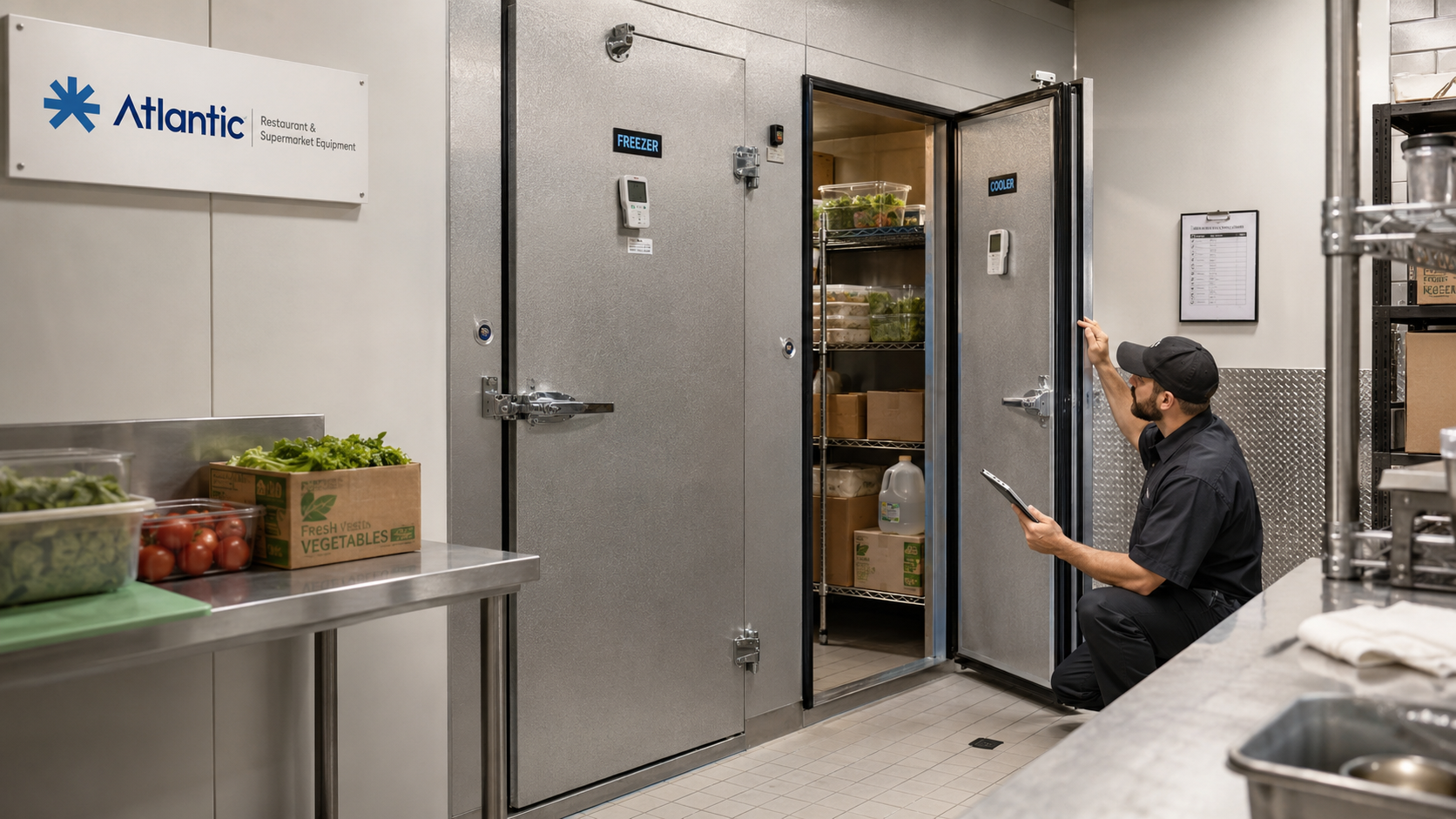
When a walk-in cooler fails, the problem is rarely small. Product can spoil. Service can stop. Health inspection risk can increase. Staff may have to move food in a hurry. Repair costs can rise quickly. In some cases, one ignored maintenance issue, such as a torn door gasket, dirty condenser coil, clogged drain line, or frozen evaporator coil, can turn into a much larger refrigeration problem.
The good news is that many walk-in cooler and freezer problems can be prevented with a simple maintenance routine. You do not need to be a refrigeration technician to spot warning signs early. Restaurant owners and kitchen managers can monitor temperatures, keep the box clean, inspect door seals, protect airflow, prevent ice buildup, and know when to call a professional.

This guide covers everything restaurants should know about walk-in cooler and freezer maintenance, including temperature checks, cleaning schedules, coil maintenance, door gasket care, drain line problems, freezer ice buildup, common troubleshooting issues, food safety, energy efficiency, and when replacement may make more sense than repeated repairs.
Why Walk-In Cooler and Freezer Maintenance Matters
Walk-in maintenance is not just about keeping equipment clean. It affects food safety, energy costs, repair bills, product quality, staff workflow, and the lifespan of the refrigeration system.
A poorly maintained walk-in cooler may run longer than necessary, struggle to hold temperature, build up moisture, grow mold, leak water, or create uneven cold spots. A poorly maintained walk-in freezer may develop frost, ice on the floor, blocked drain lines, frozen evaporator coils, door seal problems, or defrost failure.
For restaurants, these problems can create several risks:
- Food can enter unsafe temperature ranges.
- Compressors and fan motors can wear out faster.
- Energy bills can increase.
- Ice buildup can damage panels, doors, shelving, and flooring.
- Water leaks can create slip hazards.
- Door gaskets can fail faster.
- Product quality can decline.
- Emergency service calls can become more frequent.
- Health inspection issues can appear if cold food is not held at safe temperatures.
A walk-in box is a long-term investment. Preventive maintenance protects that investment and helps avoid downtime.
Walk-In Cooler vs Walk-In Freezer: Maintenance Differences
Walk-in coolers and walk-in freezers look similar, but they operate under different conditions and have different maintenance priorities.
A walk-in cooler is designed to keep refrigerated products cold, usually in a range suitable for fresh food storage. Common restaurant cooler items include produce, dairy, meat, seafood, sauces, beverages, prepared foods, and ingredients waiting for prep.
A walk-in freezer operates at much lower temperatures and is designed to keep frozen products frozen. Common freezer items include frozen meat, seafood, fries, desserts, ice cream, dough, vegetables, and backup inventory.
The colder environment in a freezer creates extra maintenance challenges:
- Moist air entering the box turns into frost or ice.
- Door gasket leaks become more serious.
- Drain lines can freeze.
- Defrost systems are more important.
- Ice on the floor can become a safety hazard.
- Evaporator coils can ice over faster.
- Door heaters, drain line heaters, and pressure relief ports may need attention.
A walk-in cooler may show problems as warm temperatures, condensation, water leaks, odors, or product spoilage. A walk-in freezer may show problems as frost, ice buildup, hard-to-open doors, frozen drains, or product softening.
Both need maintenance, but freezers usually require more attention to door seals, defrost, drainage, and moisture control.
Correct Walk-In Cooler and Freezer Temperatures
Temperature control is the first part of maintenance.
A walk-in cooler should generally hold food at safe refrigeration temperatures. Many foodservice operations target around 35°F to 38°F for the air temperature, while keeping food at or below the local cold-holding requirement. In many jurisdictions, time and temperature control for safety foods must be held at 41°F or below. Always follow your local health department requirements.
A walk-in freezer is commonly set around 0°F or lower, depending on the product and operation. Ice cream and some frozen desserts may need colder conditions than standard frozen storage.
Recommended practical targets:
- Walk-in cooler air temperature: about 35°F to 38°F
- Cold holding food safety target: 41°F or below, depending on local code
- Walk-in freezer temperature: about 0°F or lower
- Ice cream storage: often colder than 0°F, depending on product
The air temperature inside the box can fluctuate when doors are opened, when large deliveries arrive, or when hot food is placed inside. What matters is whether the system recovers quickly and holds product safely.
Restaurants should use accurate thermometers and keep a written or digital temperature log. Do not rely only on the thermostat display. The display may show air temperature near the sensor, not actual product temperature in different areas of the box.
Daily Walk-In Cooler and Freezer Maintenance Checklist
Daily maintenance should be quick. The goal is to catch small problems before they become major failures.
1. Check and Record Temperatures
Check the temperature at least once per shift. Many restaurants check during opening, mid-shift, and closing. Record the temperature in a log.
Look for trends, not just single readings. If your cooler normally runs at 37°F but starts reading 40°F every afternoon, something may be changing. It may be a door issue, dirty coil, heavy loading, thermostat problem, fan problem, or refrigeration issue.
2. Make Sure Doors Close Completely
Every time staff enters the walk-in, the door should close and latch properly. A door that stays slightly open can let warm, moist air into the box. In a cooler, this can cause condensation and temperature rise. In a freezer, it can cause frost and ice buildup.
Check that the door closer works and that staff are not propping the door open unnecessarily.
3. Look for Ice, Frost, or Water
A small amount of frost in a freezer can happen, but heavy frost or ice buildup is a warning sign. Water inside a cooler is also a warning sign.
Check:
- Ice on the floor
- Ice around the door
- Frost on the evaporator coil
- Water under shelving
- Water near the drain
- Condensation on walls or ceiling
- Dripping from the evaporator
- Wet product boxes
These signs usually point to air leaks, drain problems, defrost issues, humidity, or refrigeration trouble.
4. Keep Airflow Clear
Do not stack boxes against evaporator fans. Do not block air discharge or return airflow. Walk-in coolers and freezers need air movement to maintain even temperatures.
Blocked airflow can cause:
Warm spots
Frozen spots
Long compressor run times
Product spoilage
Ice buildup near the evaporator
Uneven cooling
Leave space around the evaporator and avoid overpacking the box.
5. Clean Spills Immediately
Food spills, broken packages, leaking meat juices, and spilled liquids should be cleaned right away. Spills can create odors, mold, slip hazards, and sanitation problems.
Use appropriate food-safe cleaning procedures and avoid harsh chemicals that can damage metal surfaces, gaskets, or flooring.
6. Listen for Unusual Sounds
Staff should report strange noises. Rattling, grinding, buzzing, scraping, or clicking can indicate fan motor problems, loose components, ice hitting fan blades, electrical issues, or compressor trouble.
Noise is often an early warning sign.
Weekly Walk-In Maintenance Checklist
Weekly maintenance goes deeper than daily checks but should still be manageable for restaurant staff.
1. Wipe Door Gaskets
Door gaskets collect grease, food particles, dust, and moisture. Dirty gaskets may not seal correctly. Clean them with mild soap and warm water, then dry them.
Do not use sharp tools, harsh chemicals, or abrasive pads on gaskets.
2. Inspect Door Gaskets for Damage
Look for:
Cracks
Tears
Brittle areas
Loose sections
Flattened areas
Mold inside folds
Gaps where light comes through
A damaged gasket allows warm air to enter. In a cooler, this can cause condensation and longer run times. In a freezer, it can cause frost, ice, and door sealing problems.
A simple test is to close the door on a piece of paper. If the paper pulls out easily with no resistance, the gasket may not be sealing well in that area.
3. Check Door Hinges, Latches, and Closers
A good gasket cannot work if the door is misaligned. Check that the door closes smoothly, latches correctly, and does not sag.
If the door needs to be slammed, sticks, rubs, or does not self-close, it needs attention.
4. Clean Shelving and Organize Inventory
Remove old product, clean shelving, and organize inventory using FIFO: first in, first out. Poor organization can block airflow and increase door-open time because staff spend too long searching for items.
Better organization improves both food safety and energy efficiency.
5. Check Thermometers
Make sure thermometers are visible, working, and placed correctly. Replace broken or inaccurate thermometers.
For better monitoring, consider using a digital temperature monitoring system with alerts.
Monthly Walk-In Maintenance Checklist
Monthly checks help catch mechanical and structural issues.
1. Inspect the Evaporator Area
The evaporator is the walk in refrigeration unit inside the walk-in that moves cold air through the box. Look for:
Ice on the coil
Ice on fan guards
Water dripping
Dust or debris buildup
Fan blades not spinning
Unusual noise
Bent fins
If the evaporator coil is heavily iced, do not chip the ice with sharp tools. That can puncture the coil and cause a refrigerant leak. Call a qualified technician if the ice buildup is significant or recurring.
2. Inspect the Condensing Unit Area
The condensing unit may be located indoors, outdoors, on the roof, or near the walk-in. Make sure the area around it is clear.
Remove leaves, cardboard, trash, grease buildup, dust, or anything blocking airflow. A condenser that cannot breathe will run hotter, work harder, and may fail earlier.
Do not store boxes, supplies, or cleaning chemicals around the condensing unit.
3. Check Drain Lines and Drain Pans
Drain lines remove water created during normal refrigeration and defrost cycles. If the drain line is blocked or frozen, water can back up and leak into the box. In a freezer, it can turn into ice.
Look for:
Standing water
Slow drainage
Ice near the drain
Bad odors
Dripping from the evaporator
Water pooling on the floor
Drain issues are one of the most common causes of leaks and ice buildup.
4. Inspect Walls, Ceiling, Floor, and Panels
Look for damage to the box itself:
Rust
Cracked panels
Loose seams
Damaged floor
Ceiling condensation
Mold growth
Separated panel joints
Damaged door frame
Water infiltration
Panel damage can reduce insulation performance and allow moisture into the box.
5. Check Lighting
Walk-in lights should work properly and be protected. Replace burned-out bulbs with appropriate fixtures rated for cold environments. Make sure staff can safely see inside the box.
Quarterly and Semiannual Maintenance
Some maintenance should be performed every few months or at least twice a year, depending on kitchen conditions and manufacturer recommendations.
1. Clean Condenser Coils
Dirty condenser coils are one of the biggest causes of refrigeration problems. Dust, grease, flour, lint, and debris restrict airflow. When the condenser coil is dirty, the system has to work harder to reject heat.
This can lead to:
Higher energy use
Longer run times
Higher head pressure
Compressor strain
Temperature problems
System shutdown
Shorter equipment life
In a greasy kitchen, coils may need cleaning more often than twice a year. Bakeries, fried-food operations, and dusty environments may need more frequent cleaning.
Cleaning should be done carefully. Turn off power before cleaning. Use proper coil cleaning methods and avoid damaging the fins. If the coil is heavily greased or hard to access, use a professional technician.
2. Clean Evaporator Coils and Drain Pans
Evaporator coils can collect dust, grease, and biological buildup. Dirty evaporators reduce heat transfer and can affect air quality inside the box.
Drain pans can also collect slime, debris, and odors. A dirty drain pan can contribute to drainage problems and unpleasant smells.
This is often best handled by a refrigeration technician during preventive maintenance.
3. Check Fan Motors and Blades
Fan motors move air across the coils and through the box. If a fan fails, temperatures can rise quickly.
Signs of fan problems include:
Weak airflow
Uneven temperatures
Noisy operation
Fan blade wobble
Ice hitting fan blades
Motor not running
Vibration
A technician should inspect motor mounts, bearings, wiring, blades, and controls.
4. Check Electrical Connections and Controls
Loose electrical connections, worn contactors, failing relays, and damaged wiring can cause intermittent problems. These issues should be handled by qualified service personnel.
5. Check Defrost Controls on Freezers
Walk-in freezers depend on defrost cycles to remove frost from the evaporator coil. If defrost is not working correctly, ice can build up until airflow is blocked.
A technician may check:
Defrost timer
Defrost heaters
Defrost termination control
Drain pan heater
Drain line heater
Fan delay control
Temperature sensors
Electrical connections
Repeated freezer ice buildup is often a defrost or air infiltration problem.
Annual Walk-In Cooler and Freezer Maintenance
At least once per year, schedule a professional refrigeration inspection. High-volume restaurants, supermarkets, and kitchens with heavy use may need professional service more often.
An annual professional maintenance visit may include:
Checking refrigerant charge and system pressures
Inspecting for refrigerant leaks
Cleaning condenser and evaporator coils
Checking compressor operation
Testing fan motors
Inspecting defrost system
Checking drain line and drain pan
Testing temperature controls
Checking door heaters and pressure relief ports on freezers
Inspecting electrical components
Checking insulation and panel condition
Verifying thermostat accuracy
Checking overall system performance
Do not wait for a breakdown to call a technician. Preventive service is usually less expensive than emergency service plus spoiled inventory.
Common Walk-In Cooler Problems and What They Mean
Problem 1: Walk-In Cooler Not Cooling
A walk-in cooler that is not cooling can have many causes. Some are simple, while others require professional service.
Possible causes:
Door left open
Thermostat set incorrectly
Dirty condenser coil
Evaporator fan not running
Condenser fan not running
Blocked airflow inside the box
Overloaded cooler
Warm product loaded in large quantity
Damaged door gasket
Iced evaporator coil
Low refrigerant
Compressor problem
Electrical issue
What to check first:
Confirm the door is closed.
Check the temperature setting.
Look for blocked evaporator airflow.
Check whether fans are running.
Look for ice on the evaporator.
Check the condenser area for blocked airflow.
Review recent deliveries or loading changes.
If the temperature does not recover quickly, move food to another safe cold storage area and call a technician.
Problem 2: Walk-In Cooler Running Constantly
A cooler that runs all the time is usually fighting heat gain or mechanical inefficiency.
Possible causes:
Dirty condenser coil
Door gasket leak
Door left open too often
Warm kitchen air entering the box
Overloaded cooler
Poor airflow
Low refrigerant
Thermostat problem
Undersized refrigeration system
High ambient temperature around condensing unit
If the system runs constantly but still holds temperature, the problem may be early-stage. If it runs constantly and temperature rises, service is needed quickly.
Problem 3: Walk-In Cooler Temperature Too High
High temperature can be caused by simple operational issues or serious refrigeration problems.
Check:
Are employees leaving the door open?
Was a large warm delivery recently loaded?
Is product blocking the evaporator?
Are fans running?
Are coils dirty?
Is the door gasket sealing?
Is the condenser area too hot or blocked?
Is the thermostat accurate?
If food temperature goes above safe limits, follow your food safety policy and local health department rules.
Problem 4: Walk-In Cooler Too Cold or Freezing Product
A cooler that freezes lettuce, produce, sauces, or dairy can create waste and customer complaints.
Possible causes:
Thermostat set too low
Bad thermostat or sensor
Poor airflow pattern
Product stored too close to evaporator discharge
Incorrect refrigeration control setting
Oversized system or short cycling
Blocked return airflow
Move sensitive products away from direct cold air discharge and check temperature settings. If the issue continues, call a technician.
Problem 5: Water Leaking Inside Walk-In Cooler
Water inside a walk-in cooler is a common issue and should not be ignored.
Possible causes:
Clogged drain line
Dirty drain pan
Improper drain slope
Frozen drain
Evaporator coil icing and melting
Door gasket leak causing condensation
High humidity entering the box
Damaged panel seams
Product spills
What to check:
Is water coming from the evaporator area?
Is the drain pan overflowing?
Is the drain line clogged?
Is the door sealing?
Is there condensation on the ceiling or walls?
Is the evaporator iced?
Water creates slip hazards and can damage product boxes, flooring, and panels.
Problem 6: Condensation on Walls, Ceiling, or Door
Condensation usually means warm, moist air is entering the box or surfaces are not staying cold enough.
Possible causes:
Door gasket leak
Door left open too long
High humidity kitchen environment
Improperly sealed panel joints
Damaged insulation
Air leak around penetrations
Poor door alignment
Missing strip curtain
Frequent deliveries
In a cooler, condensation can lead to mold and water damage. In a freezer, moisture becomes frost or ice.
Problem 7: Bad Smell Inside Walk-In Cooler
Odors can come from spills, spoiled food, dirty drains, mold, or packaging.
Possible causes:
Old product
Spilled liquids
Dirty shelving
Dirty drain pan
Clogged drain line
Mold or mildew
Unsealed food containers
Absorbent cardboard holding moisture
Clean and sanitize surfaces, remove spoiled product, check drains, and improve storage practices. If odors keep returning, inspect the drain pan, floor seams, and evaporator area.
Problem 8: Mold or Mildew in Walk-In Cooler
Mold can appear when moisture, food residue, and poor airflow combine.
Common locations:
Gaskets
Door frames
Ceiling corners
Shelving
Drain pan
Floor seams
Behind stored product
Clean visible mold according to safe sanitation procedures. Then fix the moisture source. If you clean mold but ignore condensation, gasket leaks, or drain problems, it will return.
Problem 9: Walk-In Cooler Door Will Not Close Properly
A door that does not close correctly can cause major cooling problems.
Possible causes:
Bad door closer
Worn hinges
Damaged latch
Door sagging
Gasket out of place
Ice buildup around frame
Floor obstruction
Damaged threshold
Door alignment issue
Do not treat this as a minor inconvenience. A poorly closing door can waste energy and create food safety risk.
Problem 10: Walk-In Cooler Compressor Short Cycling
Short cycling means the compressor turns on and off too frequently. This can damage equipment over time.
Possible causes:
Dirty condenser coil
Low refrigerant
High pressure control issue
Thermostat problem
Electrical issue
Oversized system
Poor airflow
Short cycling should be diagnosed by a qualified technician.
Common Walk-In Freezer Problems and What They Mean
Problem 1: Ice Buildup Inside Walk-In Freezer
Ice buildup is one of the most common walk-in freezer complaints. A little frost may occur, but heavy ice is a warning sign.
Possible causes:
Door left open
Damaged gasket
Door heater failure
Warm moist air entering the freezer
Defrost cycle not working
Clogged or frozen drain line
Drain line heater failure
Evaporator fan issue
Pressure relief port problem
Product loaded warm
High traffic into the freezer
Where ice appears can help identify the cause.
Ice near the door often points to gasket, door closure, or air infiltration.
Ice on the evaporator coil often points to defrost, airflow, or refrigerant problems.
Ice on the floor often points to drainage or door moisture issues.
Ice on the ceiling may point to air leaks, humidity, or poor door practices.
Never chip ice off an evaporator coil with a knife or sharp object. You can puncture the coil and create a refrigerant leak.
Problem 2: Walk-In Freezer Not Freezing
If product is softening or the freezer temperature is rising, act quickly.
Possible causes:
Door left open
Heavy warm load
Iced evaporator coil
Defrost stuck on
Fan motor failure
Dirty condenser coil
Low refrigerant
Compressor issue
Thermostat or control problem
Electrical issue
Move product to backup frozen storage if needed. Call a technician if temperature does not recover.
Problem 3: Freezer Door Hard to Open
A freezer door that is hard to open may be caused by pressure differences or ice buildup.
Possible causes:
Pressure relief port problem
Door heater issue
Gasket freezing to frame
Moisture infiltration
Ice buildup around threshold
Frequent door opening
Do not force the door aggressively. This can damage hinges, handles, or gaskets.
Problem 4: Freezer Drain Line Frozen
A frozen drain line prevents defrost water from leaving the evaporator drain pan. The water can overflow, freeze on the floor, or build up around the evaporator.
Possible causes:
Failed drain line heater
Improper drain slope
Clogged drain
Poor insulation
P-trap located in freezer space
Defrost problem
Frozen drains often require professional service.
Problem 5: Frost Around Freezer Door
Frost around the door usually means warm moist air is entering.
Possible causes:
Torn gasket
Door not closing
Door closer problem
Door heater failure
Damaged threshold
Staff leaving door open
Missing strip curtain
Frequent traffic
Fix the air leak first. Otherwise, cleaning the frost will only be temporary.
Door Gasket Maintenance
Door gaskets are one of the most important and overlooked parts of a walk-in cooler or freezer.
A gasket creates the seal between the door and frame. When it fails, the refrigeration system has to work harder. Warm air enters the box. Moisture enters the box. Cooler temperatures become unstable. Freezers begin to frost and ice.
Signs of a Bad Door Gasket
Visible cracks or tears
Mold inside gasket folds
Loose gasket sections
Gasket pulling away from the door
Hard or brittle gasket material
Door not sealing evenly
Light visible around the door
Condensation near the frame
Frost around freezer door
Compressor running longer than normal
How to Maintain Door Gaskets
Clean weekly with mild soap and water.
Dry after cleaning.
Do not use harsh chemicals.
Do not scrape with sharp tools.
Inspect for damage.
Replace torn or loose gaskets quickly.
Make sure the door is aligned.
Train staff not to kick or push the door with carts.
A low-cost gasket issue can become a high-cost refrigeration issue if ignored.
Coil Maintenance: Condenser vs Evaporator
Walk-in refrigeration systems have two major coils: condenser coils and evaporator coils.
The evaporator coil is inside the walk-in. It absorbs heat from the box.
The condenser coil is outside the refrigerated space. It rejects heat from the system.
Both must stay clean and functional.
Dirty Condenser Coil Symptoms
Cooler not holding temperature
Freezer struggling to freeze
Compressor running constantly
High energy bills
System shutting off on high pressure
Hot condensing unit area
Shortened compressor life
Condenser coils get dirty from dust, grease, pollen, leaves, flour, cardboard fibers, and kitchen debris.
Dirty Evaporator Coil Symptoms
Weak airflow
Uneven box temperatures
Ice buildup
Poor cooling performance
Water dripping
Fan strain
Bad odors
Evaporator coils should be cleaned carefully. If your evaporator is iced over or hard to access, call a technician.
Drain Line Maintenance
Drain lines are critical in both coolers and freezers. They remove water from normal operation and defrost cycles.
Signs of Drain Line Problems
Water on the floor
Ice on the freezer floor
Overflowing drain pan
Bad odor
Water dripping from evaporator
Recurring ice near the evaporator
Slow drainage
Drain line clogs can be caused by slime, food particles, debris, dirt, ice, improper slope, or failed drain line heaters.
Restaurants should visually inspect drains regularly, but many drain issues require professional cleaning or repair.
Defrost System Maintenance for Walk-In Freezers
A freezer evaporator naturally collects frost. The defrost system removes that frost before it blocks airflow.
A defrost system may include:
Defrost timer
Defrost heaters
Drain pan heater
Drain line heater
Fan delay
Defrost termination control
Temperature sensors
If the defrost system fails, the evaporator can become a block of ice. Once airflow is blocked, the freezer may no longer hold temperature.
Signs of Defrost Problems
Heavy ice on evaporator
Fans hitting ice
Freezer temperature rising
Ice returning after manual defrost
Water refreezing on floor
Long or irregular defrost cycles
Product softening
Defrost problems should be diagnosed by a refrigeration technician.
How to Prevent Ice Buildup in a Walk-In Freezer
Preventing ice buildup is mostly about controlling moisture and maintaining defrost.
Best practices:
Keep the freezer door closed.
Repair door gaskets quickly.
Make sure the door closes by itself.
Do not prop the door open.
Use strip curtains in high-traffic freezers.
Do not load hot or steaming product into the freezer.
Keep drain lines clear and heated where required.
Maintain defrost controls.
Check for ice around the evaporator.
Inspect door heaters and pressure relief systems.
Avoid damaging the door frame or threshold.
Ice buildup is not just a housekeeping problem. It is a sign that moisture is entering or water is not draining properly.
How to Reduce Energy Costs
Walk-in coolers and freezers can use a lot of energy, especially when they are poorly maintained.
To reduce energy use:
Keep condenser coils clean.
Replace damaged gaskets.
Do not leave doors open.
Use strip curtains for high-traffic walk-ins.
Keep product organized to reduce door-open time.
Do not block evaporator airflow.
Maintain proper temperature settings.
Repair door closers and latches.
Avoid overloading the box.
Keep condensing units clear.
Schedule preventive maintenance.
Consider energy-efficient refrigeration equipment when replacing old systems.
A walk-in that runs constantly usually costs more to operate and is more likely to break down.
Food Storage Best Practices Inside a Walk-In
Maintenance is not only mechanical. How you store product affects performance.
Leave Space for Airflow
Cold air must move around the box. Do not stack product tight against walls, ceilings, or evaporator fans.
Do Not Put Hot Food Directly Into the Walk-In in Large Deep Containers
Large hot batches can raise the box temperature and cool too slowly. Use proper cooling methods, shallow pans, ice baths, blast chilling if available, and your food safety procedures.
Keep Food Covered and Labeled
Uncovered food releases moisture and odors. Covered and labeled food improves sanitation and organization.
Avoid Storing Product on the Floor
Use proper shelving. Floor storage can block cleaning, create sanitation problems, and damage packaging.
Rotate Inventory
Use FIFO: first in, first out. This reduces waste and prevents old product from sitting in the box.
Keep Raw and Ready-to-Eat Foods Separated
Store raw meats, seafood, and poultry according to safe food storage hierarchy to avoid cross-contamination.
Cleaning the Interior of a Walk-In Cooler or Freezer
A clean box performs better and is safer for food storage.
What to Clean
Floors
Walls
Ceiling
Shelving
Door handles
Door gaskets
Door frame
Threshold
Drain area
Evaporator exterior surfaces
Light covers
Cleaning Tips
Use food-safe cleaners.
Avoid harsh chemicals that damage metal or gaskets.
Do not spray electrical components.
Do not flood the floor.
Dry surfaces after cleaning.
Clean spills immediately.
Remove cardboard debris and broken packaging.
Sanitize according to your kitchen procedures.
For freezers, cleaning may require moving product and allowing safe access. Do not use excessive hot water that can refreeze into dangerous ice.
Walk-In Cooler and Freezer Maintenance Schedule
Daily
Check and log temperatures.
Make sure doors close completely.
Look for water, ice, frost, and condensation.
Keep evaporator airflow clear.
Clean spills immediately.
Check for unusual noises.
Weekly
Clean door gaskets.
Inspect gaskets for cracks or gaps.
Check door hinges, latches, and closers.
Organize inventory.
Clean shelves and high-touch surfaces.
Check thermometers.
Monthly
Inspect evaporator area.
Check condenser area for blocked airflow.
Inspect drain lines and drain pans.
Check walls, ceiling, floor, and panels.
Check lighting.
Look for rust, mold, and damaged seams.
Quarterly
Deep clean interior surfaces.
Review temperature logs for trends.
Inspect strip curtains if installed.
Check door alignment.
Check for recurring ice or condensation.
Clean accessible coils if trained and safe.
Twice a Year
Schedule professional preventive maintenance.
Clean condenser coils thoroughly.
Clean evaporator coils and drain pans.
Inspect fan motors and blades.
Check electrical components.
Check defrost system on freezers.
Check refrigerant system performance.
Annually
Perform a full professional inspection.
Review repair history.
Review energy use.
Check whether the system is still properly sized for the business.
Plan replacement if repair costs are becoming excessive.
When to Call a Professional Technician
Restaurant staff can clean, inspect, organize, and monitor. But some issues require a qualified refrigeration technician.
Call a professional if:
Temperature does not recover.
Product is warming or softening.
Evaporator coil is heavily iced.
Compressor is short cycling.
Fans are not running.
Breaker trips repeatedly.
There is a refrigerant leak or suspected leak.
Drain line is frozen or blocked deep inside.
Defrost system is not working.
Electrical components smell hot or burned.
Water leaks continue after basic cleaning.
Door heaters or pressure relief systems fail.
The system runs constantly and cannot hold temperature.
Do not attempt refrigerant repairs yourself. Refrigeration systems require proper tools, training, and compliance with applicable regulations.
Repair vs Replacement: When Is It Time for a New Walk-In?
Maintenance can extend equipment life, but every walk-in cooler or freezer eventually reaches a point where replacement may make more sense than repair.
Consider replacement if:
The box panels are damaged or separating.
Insulation is wet or compromised.
The door frame is badly damaged.
Floor is failing or unsafe.
The system has repeated refrigerant leaks.
The compressor has failed and the box is old.
Repair costs are becoming frequent and expensive.
The walk-in no longer fits your storage needs.
Energy bills are too high.
The unit cannot consistently hold temperature.
The business has outgrown the current size.
For some restaurants, replacing the refrigeration system may be enough. For others, the box itself may need replacement. If the panels, insulation, door, or floor are in poor condition, a new walk-in box may be the smarter long-term investment.
Walk-In Cooler and Freezer Maintenance for Different Businesses
Restaurants
Restaurants need daily temperature logs, organized storage, clean gaskets, and strong door discipline. High traffic makes door maintenance especially important.
Delis and Cafés
Smaller operations may use walk-ins for beverages, dairy, produce, and prepared foods. Organization and FIFO are key.
Bakeries
Flour and dust can affect condenser coils. Bakeries should pay close attention to coil cleaning and airflow.
Butcher Shops and Seafood Markets
Odor control, sanitation, temperature logs, and drainage are especially important. Product quality depends on consistent cold storage.
Grocery Stores and Supermarkets
High inventory volume requires strong preventive maintenance and backup plans. Temperature monitoring systems are highly recommended.
Catering Kitchens
Large batch cooling and event prep can overload walk-ins. Catering businesses need strict cooling procedures and storage planning.
Emergency Steps If Your Walk-In Cooler or Freezer Fails
If your walk-in stops holding temperature, act quickly.
-
Keep the door closed as much as possible.
-
Check the temperature and record it.
-
Move high-risk product to another working cooler or freezer if available.
-
Do not load more warm product into the box.
-
Check simple issues: door open, breaker, thermostat, blocked airflow.
-
Call a qualified refrigeration technician.
-
Follow your food safety plan for deciding what product must be discarded.
-
Document the incident.
Do not guess with food safety. If product has been out of safe temperature range, follow local health department rules and your internal policy.
Frequently Asked Questions
How often should a walk-in cooler be serviced?
A walk-in cooler should be checked daily by staff and professionally serviced at least once or twice per year. High-volume kitchens may need more frequent professional maintenance.
How often should condenser coils be cleaned?
Condenser coils should be inspected regularly and cleaned as needed. Many operations clean them at least twice per year, but greasy, dusty, or high-volume kitchens may need more frequent cleaning.
Why is my walk-in cooler not cooling?
Common causes include a door left open, dirty condenser coil, blocked airflow, damaged gasket, iced evaporator coil, fan motor failure, thermostat problem, low refrigerant, or compressor issue.
Why is my walk-in freezer building ice?
Common causes include warm moist air entering through a bad gasket or open door, a clogged or frozen drain line, failed defrost components, poor drainage, or high traffic.
Why is there water on the floor of my walk-in cooler?
Water on the floor may come from a clogged drain line, dirty drain pan, evaporator icing, condensation, damaged gasket, product spills, or improper drainage.
Why does my walk-in cooler smell bad?
Bad odors can come from spoiled product, spills, dirty shelving, mold, drain pan buildup, clogged drains, or uncovered food.
How do I know if my walk-in door gasket is bad?
Look for cracks, tears, loose sections, mold, hard spots, gaps, frost around the door, condensation near the frame, or light coming through when the door is closed.
Can I clean walk-in cooler coils myself?
Some basic exterior cleaning may be possible if your staff is trained and the coil is accessible, but deep coil cleaning and mechanical inspection should be handled by a professional. Always turn off power before cleaning and avoid damaging coil fins.
Should I turn off my walk-in freezer to melt ice?
Do not shut down a freezer full of product without a plan. If the evaporator is heavily iced, move product to safe storage and call a technician. Chipping ice with sharp tools can damage the coil.
How do I prevent mold in a walk-in cooler?
Control moisture, clean spills, keep food covered, maintain airflow, clean gaskets, fix condensation problems, and check drains. Mold returns when the moisture source is not fixed.
Why does my walk-in cooler run all the time?
It may be caused by dirty coils, bad door gaskets, frequent door opening, high ambient temperature, blocked airflow, low refrigerant, thermostat problems, or an undersized system.
What temperature should a walk-in cooler be?
Many restaurants target an air temperature around 35°F to 38°F, while ensuring food stays at or below local cold-holding requirements. Always follow your local health department rules.
What temperature should a walk-in freezer be?
A common target is around 0°F or lower. Some frozen products, such as ice cream, may require colder storage.
How long should a walk-in cooler last?
Lifespan depends on construction quality, usage, maintenance, environment, and refrigeration system condition. A well-maintained walk-in can last many years, but damaged panels, failing doors, wet insulation, or repeated refrigeration failures may justify replacement.
Is ice inside a walk-in freezer normal?
Light frost can happen, but heavy ice buildup is not normal. It usually indicates air infiltration, drainage problems, defrost problems, or door seal issues.
Should I use strip curtains on a walk-in cooler or freezer?
Strip curtains can help reduce warm air entry in high-traffic walk-ins. They are especially helpful when employees open the door frequently or move product in and out during service.
Walk-in cooler and freezer maintenance is one of the simplest ways to protect your restaurant’s inventory, reduce emergency repair costs, improve food safety, and extend the life of your equipment.
The most important habits are simple: check temperatures daily, keep doors closed, clean gaskets, protect airflow, clean spills, inspect drains, watch for ice, keep coils clean, and schedule professional maintenance before a breakdown happens.
Small warning signs matter. A torn gasket can become a frost problem. A dirty condenser coil can become a compressor problem. A clogged drain line can become an ice hazard. A small temperature drift can become a food safety issue.
If your current walk-in cooler or freezer is no longer reliable, too small for your operation, or costing too much in repairs, it may be time to compare replacement options. Atlantic Restaurant & Supermarket Equipment offers walk-in cooler and freezer solutions for restaurants, markets, cafés, delis, bakeries, and foodservice businesses looking for dependable cold storage.