
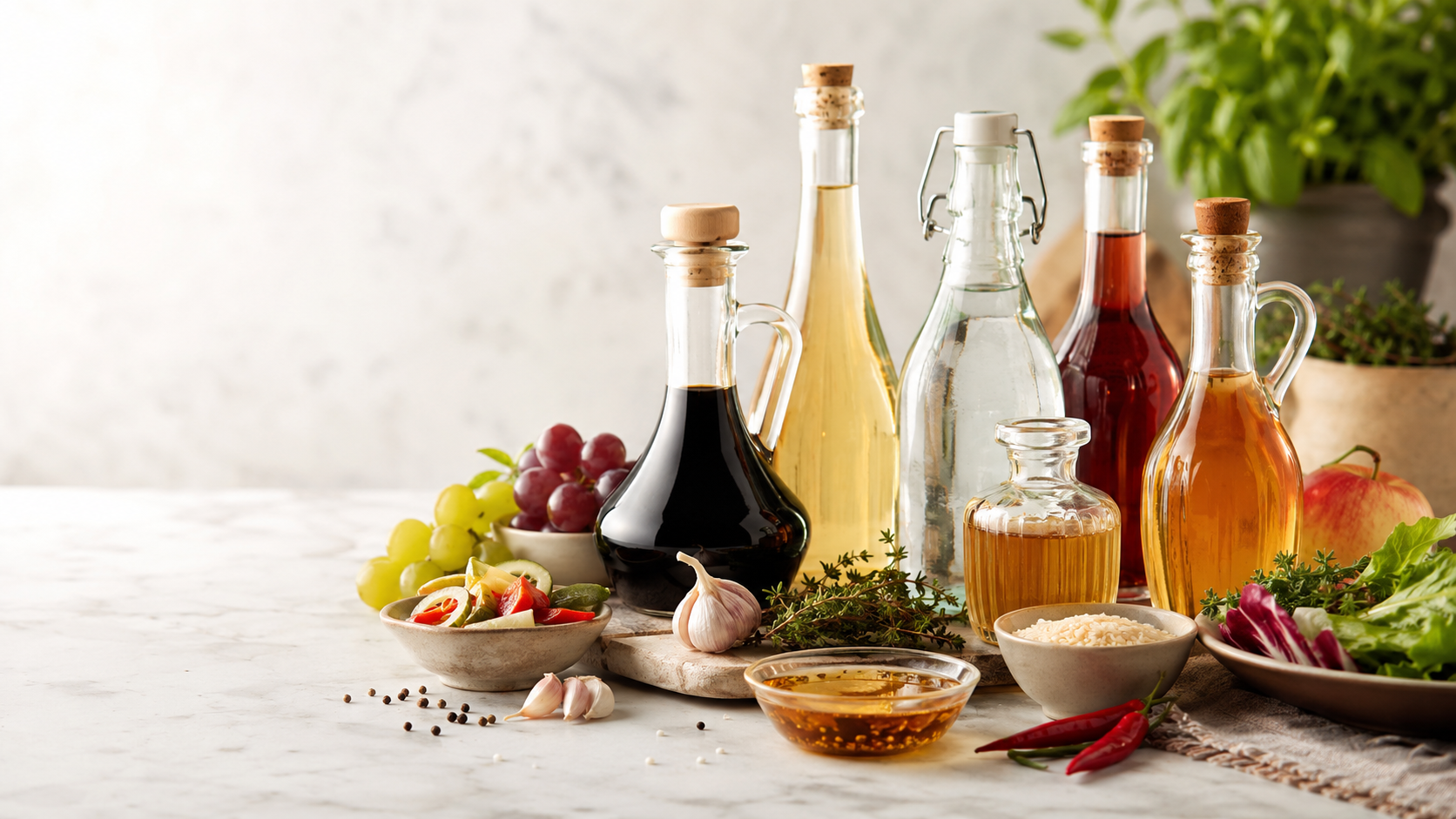
Vinegar is one of the most useful ingredients in a commercial kitchen. It can brighten sauces, balance rich foods, tenderize proteins, preserve vegetables, sharpen salad dressings, finish soups, flavor marinades, and add complexity to drinks, glazes, condiments, and desserts.
For restaurants, cafés, delis, bakeries, bars, catering businesses, and foodservice operations, choosing the right vinegar matters. A sharp distilled white vinegar will not behave the same way as a sweet balsamic vinegar. Rice vinegar will not taste like malt vinegar. Apple cider vinegar may work beautifully in barbecue sauce, but it may not be the best choice for a delicate beurre blanc or sushi rice.

This guide explains the main types of vinegar, how they are made, what they taste like, how to use them, and which vinegars are best for cooking, pickling, dressings, marinades, baking, sauces, beverages, and commercial kitchen production.
What Is Vinegar?
Vinegar is an acidic liquid made through fermentation. In simple terms, vinegar begins with a liquid that contains sugar or alcohol. Yeast first converts sugar into alcohol. Then acetic acid bacteria convert that alcohol into acetic acid, which gives vinegar its sour flavor and preserving power.
Most vinegars contain water, acetic acid, and flavor compounds from the ingredient used to make them. That ingredient might be apples, grapes, rice, barley, sugar cane, wine, beer, coconut sap, or other fermentable materials.
The flavor of vinegar depends on its base ingredient, acidity level, aging method, and production style. This is why vinegars can taste sharp, fruity, sweet, floral, nutty, smoky, earthy, malty, mild, or complex.
Why Vinegar Matters in Commercial Kitchens
Vinegar does much more than make food taste sour. In professional kitchens, vinegar is used to control flavor, texture, preservation, color, and balance.
A small amount of vinegar can cut through fat in fried foods, barbecue, braised meats, and creamy sauces. It can make vegetables taste fresher, help marinades penetrate proteins, support pickling, balance sweetness in glazes, and add structure to dressings.
Vinegar is also cost-effective. A small amount can improve the flavor of large batches of sauces, slaws, dressings, marinades, soups, and condiments. For food businesses, that makes vinegar one of the most practical pantry ingredients to understand.
Quick Vinegar Comparison Chart
| Vinegar Type | Flavor Profile | Best Uses |
|---|---|---|
| Distilled White Vinegar | Sharp, clean, strong | Pickling, cleaning, brines, sauces, baking |
| Apple Cider Vinegar | Fruity, tart, slightly sweet | BBQ sauce, slaw, marinades, vinaigrettes |
| Balsamic Vinegar | Sweet, dark, complex | Glazes, salads, meats, roasted vegetables |
| White Balsamic Vinegar | Sweet, mild, clean | Light dressings, fruit salads, seafood |
| Red Wine Vinegar | Tangy, bold, fruity | Vinaigrettes, marinades, Mediterranean dishes |
| White Wine Vinegar | Light, crisp, mild | Sauces, seafood, pickles, dressings |
| Rice Vinegar | Mild, sweet, delicate | Sushi rice, Asian sauces, slaws, pickles |
| Black Vinegar | Smoky, earthy, umami-rich | Dumplings, noodles, stir-fry sauces |
| Malt Vinegar | Toasty, malty, rich | Fish and chips, fries, pickles, pub food |
| Sherry Vinegar | Nutty, deep, complex | Soups, pan sauces, vinaigrettes, Spanish dishes |
| Champagne Vinegar | Floral, delicate, bright | Fine dining sauces, seafood, light salads |
| Cane Vinegar | Mild, clean, lightly sweet | Filipino dishes, marinades, sauces |
| Coconut Vinegar | Tangy, slightly sweet | Southeast Asian cooking, dipping sauces |
| Beer Vinegar | Malty, nutty, complex | Pub sauces, marinades, pickles, fried foods |
1. Distilled White Vinegar
Distilled white vinegar is one of the most common vinegars in restaurants and commercial kitchens. It has a clear color, sharp aroma, and clean acidic taste. Because it does not add much sweetness, fruitiness, or color, it is useful when you want acidity without changing the appearance of the dish.
White vinegar is often used for pickling, brines, marinades, sauces, and certain baking applications. It can also be used in kitchen cleaning tasks, but food businesses should keep cleaning vinegar and cooking vinegar clearly separated to avoid misuse.
Best uses for distilled white vinegar:
Pickled cucumbers
Pickled onions
Pepper sauces
Coleslaw dressing
Brines
Boiled egg coloring
Baking with baking soda
Cleaning non-food-contact areas when appropriate
Best for: delis, sandwich shops, barbecue restaurants, cafeterias, food prep kitchens, and operations that make pickles or sauces in volume.
2. Apple Cider Vinegar
Apple cider vinegar is made from fermented apple cider. It has a golden color, fruity aroma, and tart flavor. It is less neutral than distilled white vinegar, which makes it useful when you want acidity with a slightly sweet apple note.
Apple cider vinegar is especially common in American cooking. It works well in barbecue sauce, pulled pork, slaw, chutneys, marinades, salad dressings, and braised dishes. It is also popular in health-focused beverages, though restaurants should be careful about making strong health claims on menus.
Best uses for apple cider vinegar:
Barbecue sauce
Pulled pork sauce
Carolina-style vinegar sauce
Coleslaw
Apple chutney
Chicken marinades
Pork marinades
Salad dressings
Pickled vegetables
Best for: barbecue restaurants, delis, cafés, salad concepts, catering kitchens, and casual restaurants.
3. Balsamic Vinegar
Balsamic vinegar is dark, sweet, rich, and complex. It is traditionally associated with Modena, Italy, and is made from grape must. Many commercial balsamic vinegars are more affordable than traditional aged balsamic, but they still bring sweetness, acidity, and color to dishes.
Balsamic vinegar is useful in glazes, reductions, vinaigrettes, marinades, roasted vegetables, cheese plates, and desserts. A balsamic reduction can turn a simple dish into a premium menu item.
Best uses for balsamic vinegar:
Caprese salad
Balsamic glaze
Roasted Brussels sprouts
Grilled chicken
Steak glaze
Balsamic vinaigrette
Strawberry desserts
Cheese boards
Flatbreads and panini
Best for: Italian restaurants, cafés, catering businesses, salad bars, sandwich shops, and upscale casual restaurants.
4. White Balsamic Vinegar
White balsamic vinegar is lighter in color and milder than dark balsamic. It is useful when you want the sweetness and gentle acidity of balsamic vinegar without turning the dish dark.
This makes white balsamic a smart choice for light-colored dressings, fruit salads, seafood dishes, poultry, fresh greens, and composed salads. It is also useful for catering because it helps preserve a clean visual presentation.
Best uses for white balsamic vinegar:
Light vinaigrettes
Fruit salads
Seafood salads
Chicken marinades
Cucumber salads
Summer vegetable dishes
Catering salads
Best for: cafés, caterers, salad concepts, seafood restaurants, and event kitchens.
5. Red Wine Vinegar
Red wine vinegar is made from fermented red wine. It has a bold, tangy, fruity flavor that works well in Mediterranean, Italian, Greek, French, and Middle Eastern dishes.
It is stronger than many mild vinegars, but less sharp than distilled white vinegar. Red wine vinegar is especially useful in vinaigrettes, marinades, tomato-based sauces, bean salads, pickled onions, and meat dishes.
Best uses for red wine vinegar:
Greek salad dressing
Italian vinaigrette
Pickled red onions
Bean salads
Meat marinades
Tomato salads
Mignonette for oysters
Mediterranean sauces
Best for: Mediterranean restaurants, seafood restaurants, delis, pizzerias, salad shops, and catering operations.
6. White Wine Vinegar
White wine vinegar is made from fermented white wine. It is lighter and more delicate than red wine vinegar. It brings acidity without overpowering seafood, poultry, butter sauces, cream sauces, herbs, or vegetables.
For chefs, white wine vinegar is one of the most useful vinegars for sauces and dressings. It works well in beurre blanc, hollandaise-style sauces, vinaigrettes, quick pickles, and light marinades.
Best uses for white wine vinegar:
Seafood sauces
Chicken marinades
Light vinaigrettes
Quick pickles
Herb dressings
Butter sauces
Potato salad
Mustard-based sauces
Best for: fine dining restaurants, seafood restaurants, cafés, bistros, and catering kitchens.
7. Rice Vinegar
Rice vinegar is made from fermented rice. It is usually milder, sweeter, and less aggressive than distilled white vinegar or wine vinegar. It is a key ingredient in many Asian-style sauces, dressings, dipping sauces, and sushi rice preparations.
There are different versions of rice vinegar, including seasoned rice vinegar. Seasoned rice vinegar usually contains added sugar and salt, so it should not be used as a direct replacement in every recipe.
Best uses for rice vinegar:
Sushi rice
Asian slaws
Dumpling sauces
Noodle salads
Cucumber salad
Pickled carrots
Teriyaki-style sauces
Sweet and sour sauces
Best for: sushi restaurants, Asian restaurants, poke shops, noodle bars, salad concepts, and fusion kitchens.
8. Chinese Black Vinegar
Chinese black vinegar, often associated with Chinkiang vinegar, is dark, complex, earthy, and slightly smoky. It is often made from grains such as glutinous rice and may include wheat or other grains depending on the style.
Black vinegar is excellent in dipping sauces, noodle dishes, braises, stir-fry sauces, and dumpling service. It adds acidity, but also brings umami and depth.
Best uses for black vinegar:
Dumpling dipping sauce
Noodle sauces
Braised meats
Stir-fry sauces
Cold sesame noodles
Duck dishes
Asian barbecue sauces
Best for: Chinese restaurants, dumpling shops, noodle bars, Asian fusion restaurants, and ghost kitchens.
9. Malt Vinegar
Malt vinegar is made from malted barley. It has a toasty, malty flavor and is strongly associated with fish and chips. Its flavor is richer than distilled white vinegar, which makes it useful as both a condiment and cooking ingredient.
Malt vinegar works well with fried foods because its acidity cuts through oil while its malty flavor complements breading, batter, potatoes, and seafood.
Best uses for malt vinegar:
Fish and chips
French fries
Fried seafood
Pub-style sauces
Pickled onions
Beer-battered dishes
Condiments
Best for: pubs, fish and chips shops, seafood restaurants, casual restaurants, and food trucks.
10. Sherry Vinegar
Sherry vinegar is made from sherry wine and is especially associated with Spanish cuisine. It has a nutty, rich, slightly sweet flavor that can add depth to soups, sauces, stews, dressings, and reductions.
Because sherry vinegar has a strong personality, a small amount can significantly improve a dish. It is especially useful for chefs who want complexity without adding too much sweetness.
Best uses for sherry vinegar:
Gazpacho
Pan sauces
Roasted vegetables
Spanish marinades
Vinaigrettes
Soups
Braised meats
Mushroom dishes
Best for: Spanish restaurants, tapas bars, fine dining kitchens, bistros, and chef-driven restaurants.
11. Champagne Vinegar
Champagne vinegar is a delicate vinegar made from wine grapes. It has a light, floral, crisp flavor that works well in refined applications where stronger vinegars would overpower the dish.
It is excellent for light vinaigrettes, seafood, poultry, delicate greens, fruit salads, and fine dining sauces. Because it is usually more expensive than basic vinegars, it is best used where its flavor will be noticed.
Best uses for champagne vinegar:
Fine vinaigrettes
Seafood salads
Light sauces
Citrus dressings
Fruit-based dressings
Delicate greens
Chicken salad
Best for: fine dining restaurants, seafood restaurants, hotels, catering businesses, and upscale cafés.
12. Cane Vinegar
Cane vinegar is made from sugar cane juice or syrup. It is common in some tropical and Southeast Asian cuisines, including Filipino cooking. Despite its sugar cane origin, cane vinegar is not usually very sweet. It has a clean, mild acidity.
Cane vinegar is a strong choice for adobo-style dishes, marinades, dipping sauces, and grilled meats. It can bring acidity without the strong sharpness of distilled white vinegar.
Best uses for cane vinegar:
Chicken adobo
Pork adobo
Dipping sauces
Grilled meats
Marinades
Tropical sauces
Pickled vegetables
Best for: Filipino restaurants, Caribbean concepts, Southeast Asian restaurants, and fusion kitchens.
13. Coconut Vinegar
Coconut vinegar is made from fermented coconut sap or coconut water, depending on the product. It is tangy, slightly sweet, and common in Southeast Asian cooking. It can be used in marinades, dipping sauces, pickles, and braised dishes.
Coconut vinegar works especially well with garlic, chilies, soy sauce, ginger, fish sauce, citrus, and grilled meats.
Best uses for coconut vinegar:
Dipping sauces
Grilled chicken
Pork marinades
Seafood marinades
Filipino-style dishes
Southeast Asian sauces
Pickled vegetables
Best for: Filipino restaurants, Thai restaurants, Southeast Asian concepts, island-inspired menus, and catering kitchens.
14. Beer Vinegar
Beer vinegar is made from beer that has gone through acetic fermentation. Its flavor depends on the beer used. A stout-based vinegar may taste dark and roasty, while a pale ale vinegar may taste lighter and more hoppy.
Beer vinegar is useful in pub-style kitchens, barbecue sauces, fried food condiments, marinades, and pickles. It can be a good way for breweries, gastropubs, and beer-focused restaurants to create unique house-made condiments.
Best uses for beer vinegar:
Pub sauces
Mustard sauces
Pickled onions
Fried food condiments
Barbecue sauces
Beer-braised meats
Gastropub marinades
Best for: breweries, gastropubs, pubs, barbecue restaurants, and casual dining concepts.
15. Flavored Vinegars
Flavored vinegars are vinegars infused with herbs, fruits, spices, garlic, chilies, citrus, berries, or other ingredients. They can be used to create signature dressings, shrubs, mocktails, marinades, and finishing sauces.
Common flavored vinegars include raspberry vinegar, fig vinegar, garlic vinegar, tarragon vinegar, chili vinegar, citrus vinegar, and herb-infused vinegar.
Best uses for flavored vinegars:
House vinaigrettes
Seasonal salads
Cocktail shrubs
Mocktails
Dessert sauces
Marinades
Finishing drizzles
Best for: cafés, bars, restaurants, catering businesses, salad shops, and specialty food concepts.
Best Vinegar for Pickling
For pickling and canning, acidity matters. Many tested pickling recipes call for vinegar with 5% acidity. This is especially important for shelf-stable pickled products.
Distilled white vinegar and apple cider vinegar are the most common choices for pickling. White vinegar gives a clean, sharp flavor and keeps light-colored vegetables brighter. Apple cider vinegar adds a fruity note and works well with relishes, chutneys, onions, cabbage, and some vegetables.
For refrigerator pickles that are kept cold and not intended for shelf-stable storage, chefs may use more delicate vinegars for flavor. However, commercial kitchens should always follow food safety rules, local regulations, and tested recipes when producing pickled foods for sale.
Best vinegars for pickling:
Distilled white vinegar
Apple cider vinegar
White wine vinegar for quick pickles
Rice vinegar for refrigerated Asian-style pickles
Malt vinegar for pub-style pickles
Best Vinegar for Salad Dressings
The best vinegar for salad dressing depends on the type of salad.
For bold greens, red wine vinegar and balsamic vinegar work well. For delicate greens, white wine vinegar, champagne vinegar, or white balsamic vinegar may be better. For Asian-style salads, rice vinegar is often the best choice.
Best pairings:
Romaine and Greek salad: red wine vinegar
Arugula and goat cheese: balsamic vinegar
Seafood salad: champagne vinegar
Cucumber salad: rice vinegar
Grain bowls: apple cider vinegar
Fruit salads: white balsamic vinegar
Chef salads: red wine vinegar or white wine vinegar
Best Vinegar for Marinades
Vinegar helps marinades taste brighter and can help tenderize some foods when used properly. However, too much vinegar or too much marinating time can make proteins mushy or overly sour.
For poultry, apple cider vinegar, white wine vinegar, rice vinegar, and cane vinegar work well. For beef, red wine vinegar, balsamic vinegar, sherry vinegar, and beer vinegar can add depth. For seafood, use milder vinegars like rice vinegar, champagne vinegar, or white wine vinegar.
Best marinade choices:
Chicken: apple cider vinegar, white wine vinegar, rice vinegar
Pork: apple cider vinegar, cane vinegar, sherry vinegar
Beef: red wine vinegar, balsamic vinegar, beer vinegar
Seafood: champagne vinegar, rice vinegar, white wine vinegar
Vegetables: balsamic vinegar, red wine vinegar, white wine vinegar
Best Vinegar for Sauces and Glazes
Vinegar is essential in sauces because it balances sweetness, saltiness, richness, and fat. A barbecue sauce without acidity can taste flat. A rich pan sauce can feel heavy without a small amount of vinegar. A glaze can become too sweet unless acid balances the sugar.
Best sauce uses:
Barbecue sauce: apple cider vinegar
Hot sauce: distilled white vinegar
Balsamic glaze: balsamic vinegar
Pan sauce: sherry vinegar or red wine vinegar
Seafood sauce: champagne vinegar or white wine vinegar
Asian dipping sauce: rice vinegar or black vinegar
Pub sauce: malt vinegar or beer vinegar
Best Vinegar for Baking
Vinegar can support baking in specific recipes. When vinegar reacts with baking soda, it can help create lift. It is also used in some pie crusts to help control gluten development and improve tenderness.
Distilled white vinegar and apple cider vinegar are the most common baking vinegars because they are widely available and predictable. Use vinegar carefully in baking, since too much can affect flavor.
Best baking uses:
Cakes with baking soda
Vegan cakes
Red velvet-style cakes
Pie crust
Quick breads
Some frostings and glazes
Vinegar Substitutes
Vinegar substitutions depend on the recipe. You can usually replace one vinegar with another, but flavor and acidity may change.
| If Recipe Calls For | Best Substitute |
|---|---|
| Apple cider vinegar | White wine vinegar, rice vinegar, or distilled white vinegar with a small amount of apple juice |
| White vinegar | Apple cider vinegar or rice vinegar for cooking, but use tested vinegar for canning |
| Red wine vinegar | Sherry vinegar or white wine vinegar |
| White wine vinegar | Champagne vinegar or rice vinegar |
| Balsamic vinegar | Red wine vinegar with a small amount of sugar or honey |
| Rice vinegar | Champagne vinegar or white wine vinegar |
| Sherry vinegar | Red wine vinegar or balsamic vinegar in small amounts |
| Malt vinegar | Beer vinegar or apple cider vinegar |
| Champagne vinegar | White wine vinegar or rice vinegar |
| Black vinegar | Rice vinegar with soy sauce, though the flavor will not be identical |
For canning or shelf-stable pickling, do not substitute vinegars casually. Use the vinegar type and acidity level required by a tested recipe.
Does Vinegar Go Bad?
Vinegar has a long shelf life because of its acidity. Over time, it may become cloudy, change color, develop sediment, or form a vinegar mother. These changes are common in some vinegars and do not always mean the vinegar is spoiled.
For commercial kitchens, quality still matters. Even if vinegar remains safe for a long time, flavor can change with heat, light, oxygen exposure, or poor storage. Store vinegar in a cool, dry place with the cap tightly closed. Keep premium vinegars away from heat and direct sunlight.
What Is the Mother of Vinegar?
The mother of vinegar is a cloudy, gelatinous substance made of cellulose and acetic acid bacteria. It may appear in raw or unfiltered vinegar. It is part of the fermentation process and is not usually harmful.
Some apple cider vinegar products are sold “with the mother.” In cooking, it can be strained out if a clear appearance is desired.
Cooking Vinegar vs Cleaning Vinegar
Foodservice operations should understand the difference between cooking vinegar and cleaning vinegar.
Cooking vinegar is food-grade and intended for recipes. Cleaning vinegar may have a higher acidity level and may not be intended for food use. Never use cleaning vinegar in food preparation.
If your restaurant uses vinegar for both recipes and cleaning tasks, store them separately and label them clearly. Staff should be trained to use only food-grade vinegar in recipes.
How to Store Vinegar in a Commercial Kitchen
Vinegar should be stored in a cool, dry place away from direct sunlight and heat. Keep bottles closed when not in use. For high-volume kitchens, use clear labeling and first-in, first-out inventory rotation.
Bulk vinegar should be stored in food-safe containers. If vinegar is transferred from its original container, label it with the product name, date, and acidity if relevant.
Restaurants that make sauces, dressings, marinades, or pickles in batches should also label finished products with production dates and storage instructions.
Equipment That Helps with Vinegar-Based Prep
Vinegar is simple, but vinegar-based menu production still requires the right commercial kitchen setup. Restaurants, delis, cafés, bakeries, and catering businesses often use vinegar in batch prep, sauces, dressings, marinades, and cold storage items.
Useful equipment may include:
Commercial refrigeration equipment for holding dressings, marinades, sauces, and pickled products
Commercial food processors for emulsified dressings, sauces, and chutneys
Commercial mixers for bakery recipes, batters, and doughs that use vinegar
Prep tables for salad, sandwich, and pickling production
Commercial ranges for reductions, glazes, and sauces
Storage containers for brines, marinades, and bulk ingredients
Work tables and sinks for vegetable prep and washing
Commercial dishwashing equipment for sanitation and high-volume cleanup
For businesses that produce pickled vegetables, vinaigrettes, barbecue sauces, deli salads, or marinades in volume, the right equipment helps improve consistency, food safety, and workflow.
How Restaurants Can Use Vinegar to Improve Menus
Vinegar can help food businesses create more balanced and memorable menu items. It is especially useful when building sauces, dressings, condiments, and sides that make a dish feel complete.
A sandwich shop can use red wine vinegar in Italian subs, apple cider vinegar in slaw, and white vinegar in pickled peppers. A barbecue restaurant can use apple cider vinegar in pulled pork sauce and distilled white vinegar in hot sauce. A sushi restaurant can use rice vinegar for sushi rice and dipping sauces. A pub can use malt vinegar with fried fish and beer vinegar in house mustard. A café can use white balsamic in fruit salads and champagne vinegar in light vinaigrettes.
The best approach is to match the vinegar to the food concept. Do not use one vinegar for everything. Use sharp vinegar when you want clean acidity, fruity vinegar when you want depth, sweet vinegar when you want richness, and mild vinegar when you want balance without overpowering the dish.