

How to Choose Commercial Cooking Equipment for a Restaurant
Commercial griddles are a staple in restaurants that need fast, consistent cooking on a flat top surface. From diners serving breakfast all day to delis, burger concepts, and high-volume commercial kitchens, a restaurant griddle gives operators the flexibility to cook eggs, pancakes, burgers, sandwiches, and other menu items efficiently during busy service. For many food businesses, a commercial griddle is not just another piece of cooking equipment, it is one of the most important tools on the line. When choosing a commercial griddle, it is important to consider cooking surface size, plate thickness, fuel type, and daily output. Smaller kitchens may prefer compact countertop units, while larger restaurants often need wider flat top griddles designed for continuous production. Many operators also compare restaurant flat top grills and commercial griddles when planning a new kitchen, especially when menu speed, consistency, and available line space all matter. At Atlantic, our commercial griddles are selected for real restaurant use. Whether you need a flat top griddle for breakfast service, a durable restaurant griddle for burgers and sandwiches, or a heavy-duty commercial griddle for daily kitchen production, our collection is built to support dependable performance in professional foodservice environments.Read more
Commercial griddles are a staple in restaurants that need fast, consistent cooking on a flat top surface. From diners serving breakfast all day to delis, burger concepts, and high-volume commercial kitchens, a restaurant griddle gives operators the flexibility to cook eggs, pancakes, burgers, sandwiches, and other menu items efficiently during busy service. For many food businesses, a commercial griddle is not just another piece of cooking equipment, it is one of the most important tools on the line.
When choosing a commercial griddle, it is important to consider cooking surface size, plate thickness, fuel type, and daily output. Smaller kitchens may prefer compact countertop units, while larger restaurants often need wider flat top griddles designed for continuous production. Many operators also compare restaurant flat top grills and commercial griddles when planning a new kitchen, especially when menu speed, consistency, and available line space all matter.
At Atlantic, our commercial griddles are selected for real restaurant use. Whether you need a flat top griddle for breakfast service, a durable restaurant griddle for burgers and sandwiches, or a heavy-duty commercial griddle for daily kitchen production, our collection is built to support dependable performance in professional foodservice environments.
Show less
Choose Your Power Type
Choose Your Width
Free ShippingQuick Shipping
Free ShippingQuick Shipping
Free ShippingQuick Shipping
Free ShippingQuick Shipping
Free ShippingQuick Shipping
Free ShippingQuick Shipping
Free ShippingQuick Shipping
Free ShippingQuick Shipping
Free ShippingQuick Shipping
Free ShippingQuick Shipping
Free ShippingQuick Shipping
Free ShippingQuick Shipping
Recently viewed
What to know before you buy
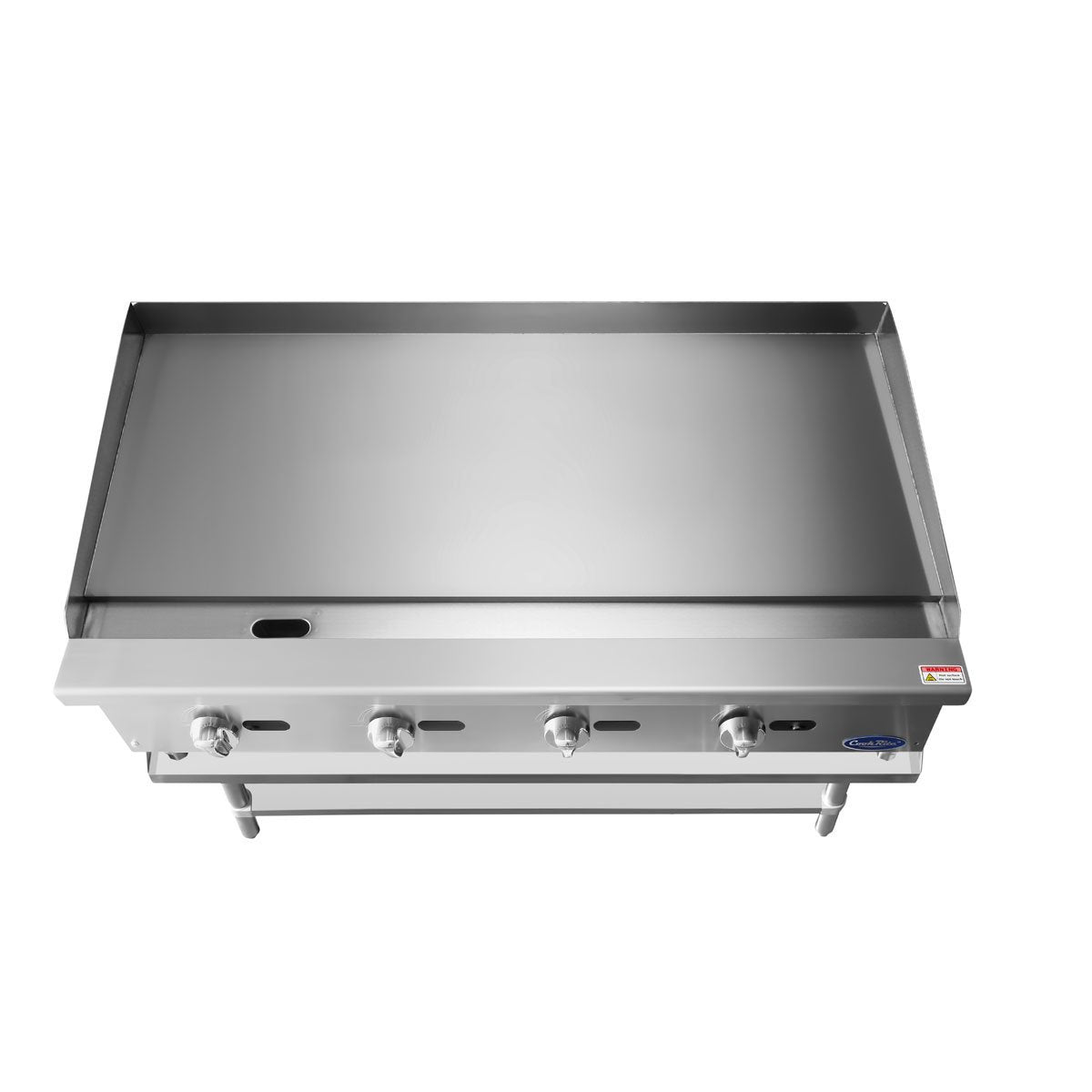
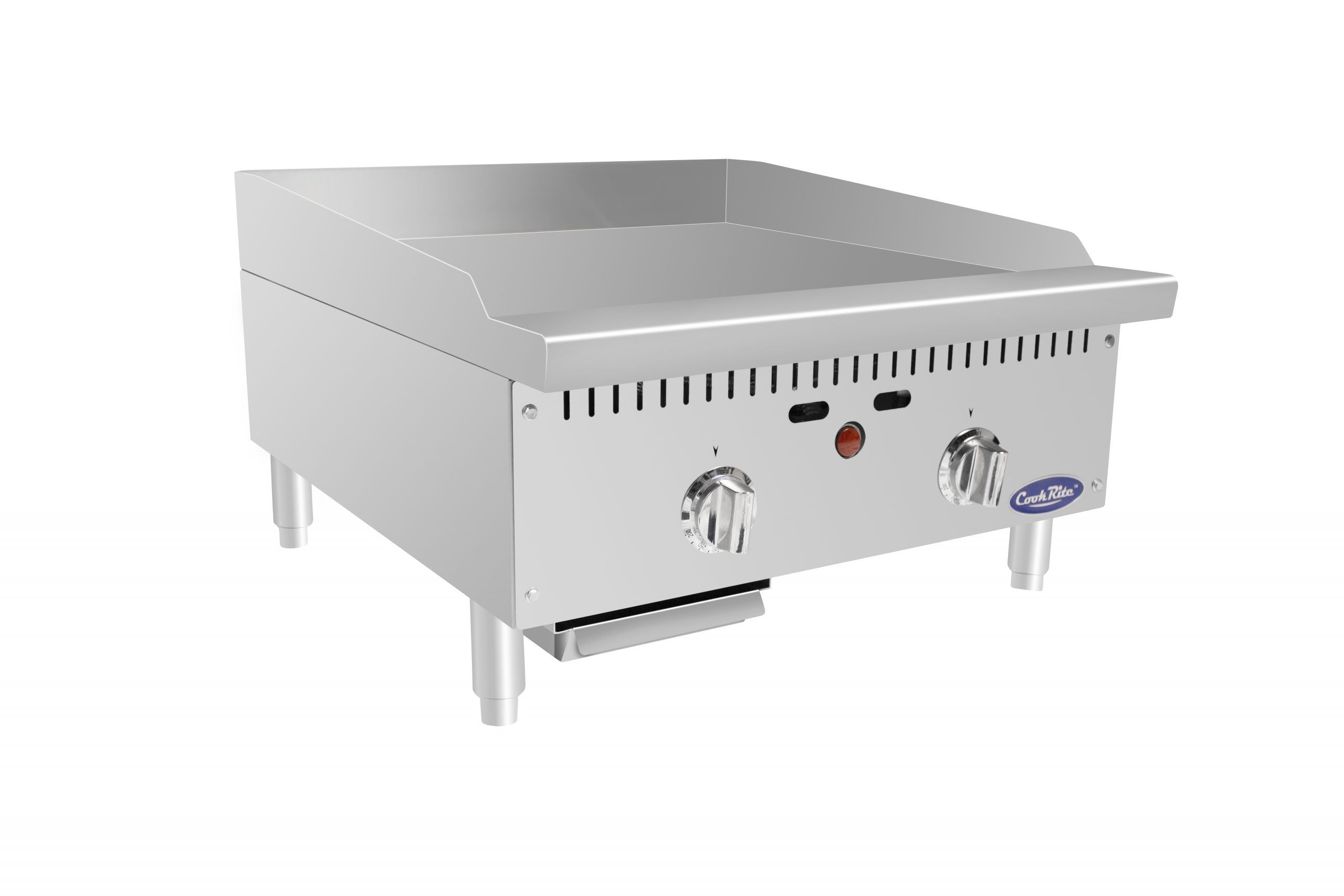
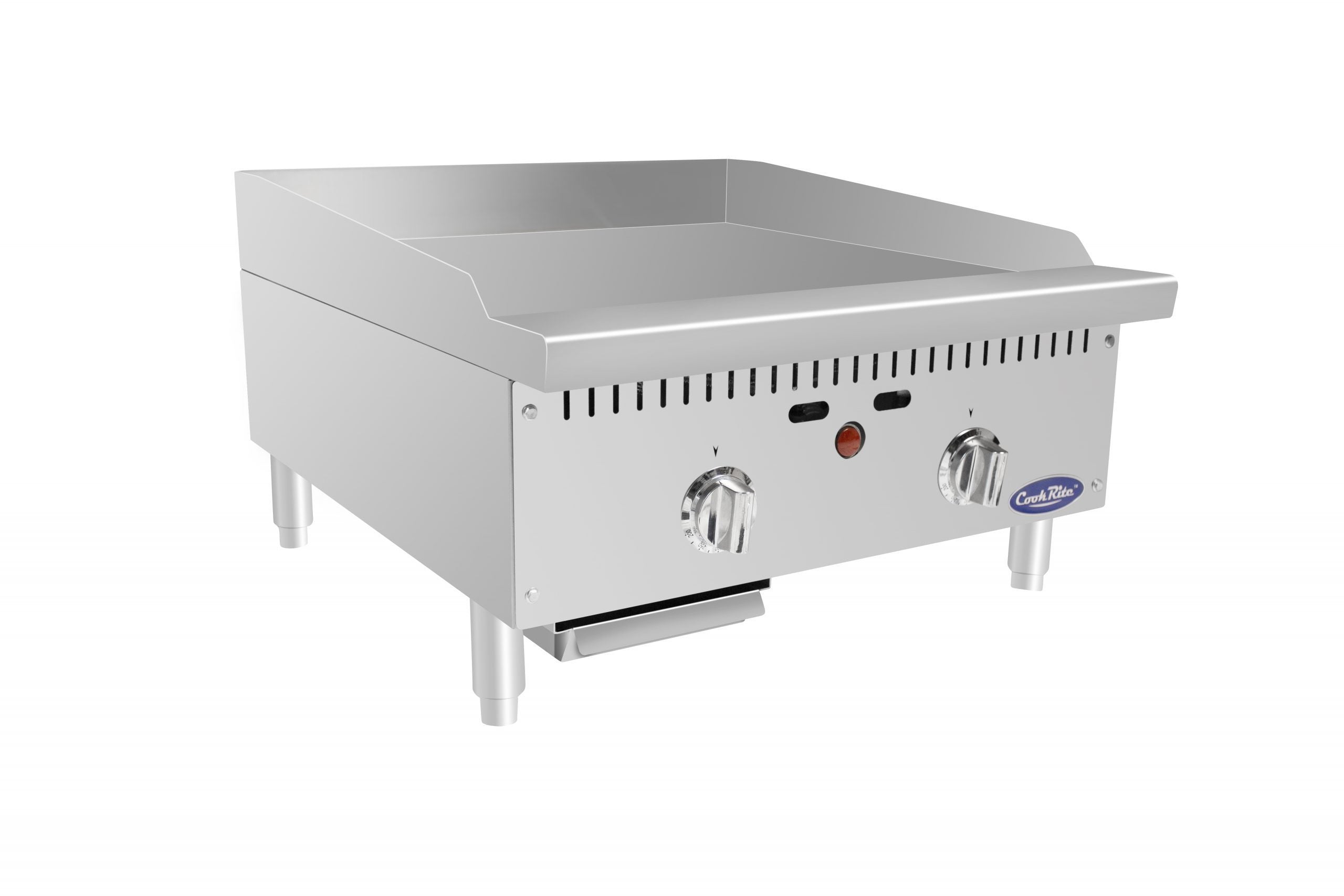
A commercial griddle is one of the most practical pieces of cooking equipment for restaurants that need speed, flexibility, and consistent results on a flat cooking surface. Whether you run a diner, deli, burger concept, café, or full-service restaurant, the right griddle can help you handle breakfast items, sandwiches, burgers, steaks, and other high-demand menu items throughout the day. Before buying, the first thing to consider is how your griddle will fit into your actual workflow. A small kitchen with a focused menu may only need a compact countertop unit, while a busy restaurant line often requires a wider commercial griddle built for continuous production. Cooking surface size is one of the most important factors. If the unit is too small, your team may struggle during rush periods. If it is too large, you may give up valuable kitchen space that could be used more efficiently elsewhere. Plate thickness, heat distribution, and recovery performance also matter, especially in restaurants that rely on steady output and consistent cooking across the surface. Buyers comparing restaurant griddles often focus on width and fuel type first, but long-term performance depends just as much on build quality and how evenly the griddle holds temperature during service. You should also think carefully about fuel type and kitchen setup. Many operators prefer gas griddles for strong performance and responsive heat control, especially in high-volume restaurant environments. Others may choose a different configuration based on utility access, kitchen design, or cooking preferences. It is also important to understand the difference between a commercial griddle and a grill. A grill uses an open grate or grilling surface, while a griddle provides a flat top cooking area designed for items that require full-surface contact and even browning. If your menu includes eggs, pancakes, burgers, sandwiches, or breakfast items, a commercial griddle is often the better fit. The best commercial griddle is not simply the biggest model or the lowest-priced option. It is the one that matches your menu, cooking style, kitchen space, and daily production needs. Taking time to choose the right restaurant griddle before you buy can improve line efficiency, support better food consistency, and help your kitchen perform more smoothly during peak hours.
F.A.Q.
What is the difference between a commercial griddle and a commercial grill?
A commercial griddle has a flat cooking surface, while a commercial grill typically uses grates or an open grilling surface. Griddles are better for foods like eggs, pancakes, burgers, and sandwiches that benefit from direct contact across the entire cooking area.
How do I choose the right size commercial griddle for my restaurant?
The right size depends on your menu, available line space, and how much food you need to produce during busy periods. Smaller operations may do well with a compact unit, while high-volume restaurants usually need a wider griddle that can handle multiple items at once.
Are gas griddles better for restaurants?
Gas griddles are a popular choice in many restaurants because they offer strong performance and responsive heat control. The best option depends on your kitchen setup, utility access, cooking volume, and how the equipment fits into your line.
What foods are best cooked on a restaurant griddle?
Commercial griddles are ideal for eggs, pancakes, bacon, burgers, grilled sandwiches, cheesesteaks, and many breakfast or lunch menu items. Their flat top surface makes them especially useful for restaurants that need versatility and fast cooking during service.
What should I consider before buying a commercial griddle?
Before buying, consider cooking surface size, fuel type, heat consistency, kitchen space, menu requirements, and daily output. It is also important to choose a griddle that fits your workflow and can keep up with your restaurant’s service demands.