

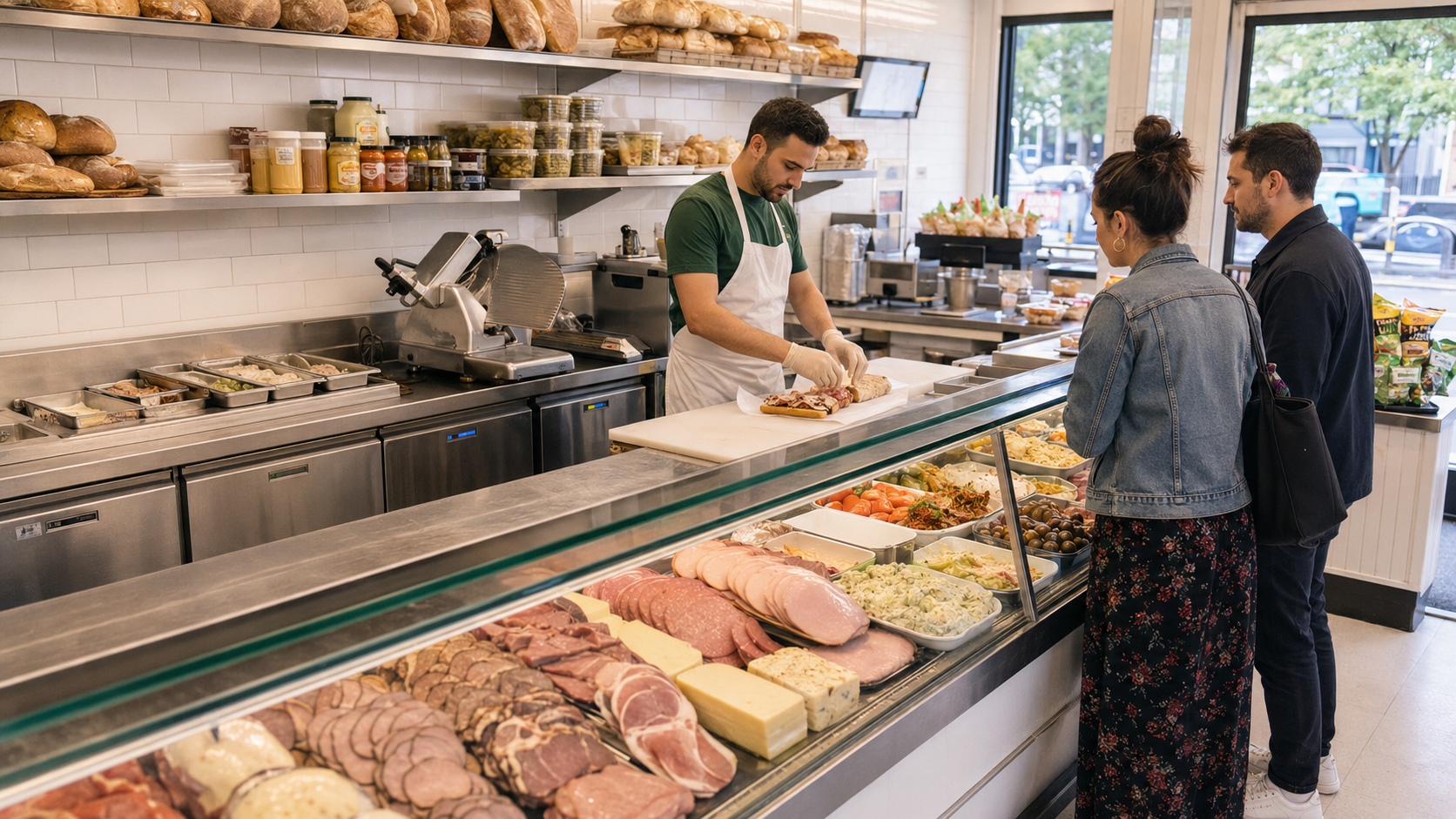
Opening a deli in New York can mean several different things: a neighborhood sandwich counter, a traditional Jewish or Italian deli, a bodega with hot food, a grocery-deli hybrid, or a high-volume breakfast and lunch shop. The right permits, space, equipment, staffing plan, and startup budget depend on which version you intend to build.
The strongest deli concepts do not begin with a long equipment list. They begin with a clear menu and service model. Those decisions determine almost everything that follows—from which agency regulates the business to whether the space needs a cooking hood, how much refrigeration is required, and how quickly orders can move through the counter.
This guide walks through the process of opening a deli in New York, with special attention to New York City requirements and the commercial equipment needed to operate efficiently.
Quick answer: To open a deli in New York, define your deli format and menu, create the business entity, confirm zoning and legal use before signing a lease, obtain the applicable food permit or license, register for sales tax, complete food-safety certification, build a compliant kitchen, purchase commercial deli equipment, pass required inspections, and retain enough working capital for the first several months.
1. Decide What Type of Deli You Are Opening
“Deli” is a customer-facing description, not a single legal business category. Start by choosing your operating model.

Sandwich-Focused Deli
This model earns most of its revenue from made-to-order sandwiches, breakfast items, salads, soups, beverages, and takeout. It usually needs a sandwich prep table, meat slicer, reach-in refrigeration, hot-holding equipment, and possibly a griddle, range, fryer, or oven.
Grocery-Deli or Bodega
This concept combines packaged groceries, beverages, household products, and refrigerated retail items with a deli counter. It needs more sales-floor refrigeration, shelving, POS inventory control, and refrigerated display capacity than a sandwich-only shop.
Traditional Specialty Deli
A Jewish, Italian, halal, Eastern European, or other specialty deli may prepare or merchandise cured meats, cheeses, salads, rotisserie items, smoked products, pickles, baked goods, or imported foods. Specialized preparation or processing may trigger additional review, so the menu and production method should be finalized early.
Grab-and-Go Deli
This model emphasizes prepared sandwiches, salads, fruit, beverages, and packaged meals. It can reduce made-to-order labor, but it requires disciplined production forecasting, labeling, date control, and attractive refrigerated merchandising.
Before looking for a storefront, write down:
- Every item you plan to sell
- Which items will be cooked, reheated, sliced, assembled, packaged, or sold as received
- Expected breakfast, lunch, dinner, delivery, catering, and grocery sales
- Whether customers will eat on-site
- Whether you will sell beer, tobacco, lottery products, or accept SNAP or WIC
This one-page operating description will help your architect, equipment supplier, contractors, and licensing agencies give you accurate guidance.
2. Build a Deli Business Plan Around New York Economics
A useful deli business plan is an operating model, not just a document for a lender. It should show how many orders the store needs to process each day and whether the space can support that volume.
At minimum, estimate:
- Average transaction value for breakfast, lunch, grocery, delivery, and catering
- Daily transactions required to break even
- Food and packaging cost by menu item
- Labor by shift, including preparation and cleanup time
- Rent, common-area charges, real estate tax pass-throughs, utilities, insurance, waste removal, pest control, software, repairs, and delivery commissions
- Spoilage, discounts, complimentary items, credit-card fees, and theft
- Debt payments and an emergency repair reserve
New York City’s general minimum wage is $17.00 per hour in 2026, so a menu that requires too many labor-intensive steps can become difficult to scale. The same $17.00 minimum applies in Long Island and Westchester, while the 2026 minimum is $16.00 in the remainder of New York State. Confirm current rates with the New York State Department of Labor when preparing your projections.
Test the Concept With Three Sales Cases
Build conservative, expected, and strong sales scenarios. Your conservative case should still cover essential expenses without assuming immediate delivery-app success or a line out the door.
Include enough working capital for at least several months rather than spending the entire budget on construction and equipment.
3. Choose the Location But Verify the Space Before Signing
Foot traffic matters, but a “cheap” storefront can become expensive if it cannot legally or physically support a deli.
Evaluate the location at the times you expect to be busiest. Count nearby residents, offices, schools, hospitals, construction sites, transit stops, and competitors. Study morning and lunchtime traffic separately. A breakfast-and-lunch deli needs a different customer base than a late-night bodega.
Before signing a lease, have qualified professionals verify:
- The permitted use shown by the Certificate of Occupancy or applicable building records
- Zoning and whether your proposed use is allowed
- Electrical service, gas availability, water, sewer, and hot-water capacity
- The feasibility of kitchen exhaust, make-up air, fire suppression, and rooftop penetrations
- Grease-interceptor requirements
- ADA access and restroom requirements
- Floor drains and the placement of hand, warewashing, food-preparation, and mop sinks
- Refrigeration condenser placement and heat rejection
- Signage restrictions and landlord approvals
- Delivery access, trash storage, and private carting
NYC specifically advises businesses to make sure the intended use is consistent with the property’s Certificate of Occupancy. Some older buildings may instead require a Letter of No Objection. Use the City’s Step-by-Step Business tool and have an architect or other licensed professional review the site.
Lease protection tip: Try to make the lease contingent on approvals for your intended food use, permits, ventilation, and construction. Do not assume that a former retail store—or even a former food business—is automatically ready for your concept.
4. Register the Business and Set Up Tax Accounts
Choose a legal structure with advice from an attorney and accountant. Many owners use an LLC or corporation, but the right choice depends on ownership, taxes, financing, and liability.
Typical setup steps include:
- Registering the entity with the New York Department of State, or filing the appropriate county business certificate if operating under an assumed name as a sole proprietor or partnership.
- Obtaining a free Employer Identification Number directly from the IRS.
- Opening dedicated business banking and bookkeeping accounts.
- Registering as a New York sales tax vendor. Businesses expecting taxable sales generally must apply at least 20 days before beginning those sales, and the resulting Certificate of Authority must be displayed. Review the New York State Tax Department’s registration requirements.
- Arranging workers’ compensation, disability, unemployment, liability, property, equipment-breakdown, and other applicable insurance.
Prepared restaurant-type food sold by delicatessens is generally subject to New York sales tax, while the tax treatment of grocery items can differ. Configure the POS with an accountant rather than assigning the same tax rule to every product.
5. Determine Which Deli Licenses and Permits Apply
This is the part that causes the most confusion. In New York, the responsible food agency depends on what the business does—not simply whether the sign says “deli.”
NYC Food Service Establishment Permit
A deli that prepares and serves food like a restaurant or takeout operation will generally need a Food Service Establishment Permit from the NYC Department of Health and Mental Hygiene.
The City lists the standard permit fee as $280 annually, with an additional fee when manufacturing frozen desserts.
The City states that an applicant may begin operating 22 days after submitting the application even if the pre-permit inspection has not yet occurred, subject to its rules and a later inspection. Operators who want to open sooner can request a pre-operational inspection.
Review the current Food Service Establishment Permit requirements before setting an opening date.
NYS Retail Food and Food-Processing Licenses
The New York State Department of Agriculture and Markets regulates retail food stores such as grocery stores, bodegas, convenience stores, and deli stores.
A retail location that slices meat or cheese, makes sandwiches, heats food, dispenses beverages, or performs other food preparation may fall under the state’s Article 20-C Food Processing Establishment licensing rules.
The Department provides a current overview through its Food Business Licensing page.
What if the Deli Is Both a Restaurant and a Grocery Store?
Hybrid concepts must be classified according to their actual operations. The mix of prepared-food service, retail grocery sales, processing, packaging, and wholesale activity can change which approval is required.
Do not rely on a neighbor’s license or a generic online checklist. Present your menu, expected sales mix, floor plan, and food-handling methods to NYC Business and the relevant food agency before construction.
Food Protection Certificate
In NYC, a supervisor holding a Food Protection Certificate must be on-site whenever the establishment is operating and supervising food preparation.
Because one certified person cannot cover every shift, vacation, or illness, certifying multiple managers is practical. The City offers online and classroom Food Protection courses.
Other Permits and Programs That May Apply
Depending on the concept, you may also need:
- Building, plumbing, electrical, gas, sign, and construction permits
- FDNY approval or permits for cooking systems, suppression, fuel, or other regulated conditions
- A license from the New York State Liquor Authority for beer or other alcoholic beverages
- A NYC Tobacco Retail Dealer License to sell cigarettes or tobacco products
- A Stoop Line Stand License for certain products displayed and sold outside the storefront
- Frozen dessert manufacturing approval if you make frozen desserts on-site
- Halal or kosher registration where applicable
- USDA authorization to accept SNAP, which has store eligibility and stocking requirements
- New York State authorization to participate as a WIC vendor
Requirements can change, and locations outside NYC use county or local health departments in addition to state agencies. Always generate a location- and activity-specific checklist before committing funds.
6. Design the Deli Around the Order Flow
A compact deli succeeds when employees can move quickly without crossing paths. Map one sandwich from order to payment:
Order → bread and wrap → cold ingredients → hot ingredients → finishing and packaging → pickup or register
Then map food in the opposite direction:
Receiving → dry or cold storage → preparation → service line → customer
Keep raw-product handling, ready-to-eat assembly, dishwashing, and waste routes separated as much as the space allows.
Place high-use refrigerated ingredients within one or two steps of the sandwich station. Avoid making employees repeatedly cross the kitchen for bread, packaging, cheese, or condiments.
The final plan should account for:
- Door swings
- Equipment service clearances
- Ventilation
- Plumbing
- Electrical loads
- Floor drains
- Aisle widths
- Delivery access
- Space for cleaning
Provide equipment specification sheets to the architect and contractors before utilities are installed.
7. Essential Deli Equipment Checklist
The menu should determine the equipment—not the other way around.
A breakfast-heavy shop may prioritize a griddle and undercounter refrigeration, while a grocery-deli may invest more in display cases, merchandisers, and a walk-in cooler.
Refrigeration and Display Equipment
Refrigerated Deli Case
A refrigerated deli case displays sliced meats, cheeses, salads, and prepared items while supporting counter service.

Coldline DC80-SS 80" Stainless Steel Curved Glass Refrigerated Deli Display Case
Compare:
- Customer sight lines
- Rear service access
- Usable display depth
- Temperature range
- Defrost design
- Interior lighting
- Self-contained versus remote refrigeration
Explore Atlantic’s commercial deli cases.
Sandwich Prep Table
A sandwich prep table keeps portioned ingredients at the assembly line and provides refrigerated storage underneath.

Leader NSFM72 72" Refrigerated Sandwich and Salad Prep Table, 3 Door
Choose the pan capacity and overall width based on the menu and expected peak-hour output. Shop sandwich and salad prep tables.
Reach-In Refrigerator and Freezer
Reach-in refrigeration supports daily inventory, backup ingredients, proteins, beverages, and frozen foods.
Browse Atlantic’s selection of commercial refrigerators.
Walk-In Cooler or Freezer
A walk-in cooler becomes valuable when beverage inventory, catering production, delivery volume, or backup ingredients exceed the capacity of reach-in units.

Astra CNF5X6 5' x 6' Walk-In Cooler, No Floor
A properly sized walk-in cooler can centralize bulk cold storage, but it must be planned early. Panels, doors, refrigeration systems, drainage, and condenser placement can all affect the building layout.
Glass-Door Merchandisers
Glass-door merchandisers encourage self-service beverage and grab-and-go sales without slowing down the deli counter. Positioning them close to the customer path can increase add-on purchases.

Atlantic GM36-2 35.4" 2-Door Glass Door Refrigerator, 31.7 cu. ft., GlassMax Series, 33-40°F, R290, 115V
Do not size refrigeration only for an average Tuesday. Account for delivery days, weekend inventory, holiday volume, catering orders, airflow around stored food, and the possibility that one unit may be temporarily unavailable for service.
Food Preparation Equipment
Commercial Meat Slicer
Choose a commercial meat slicer based on:
- Blade size
- Motor power
- Expected daily volume
- Carriage capacity
- Manual or automatic operation
- Ease of disassembly and cleaning
- Availability of replacement parts
A slicer must be powerful enough for the expected workload but also easy for employees to clean safely.

Globe G12 12" Medium Duty Manual Slicer
Compare commercial meat slicers.
Other preparation equipment may include:
- Stainless steel worktables and overshelves
- Color-coded cutting boards
- Commercial knives
- Food processors
- Vegetable cutters
- Cheese graters
- Commercial mixers
- Legal-for-trade portion scales when products are sold by weight
- Ingredient bins
- Shelving and dunnage racks
- Food-storage containers
Cooking and Hot-Holding Equipment
Depending on the menu, a deli may need:
- Commercial griddle
- Range
- Charbroiler
- Fryer
- Convection oven
- Panini grill
- Conveyor or pop-up toaster
- Microwave
- Soup kettle
- Steam table
- Heated holding cabinet
Start with the smallest cooking line that can execute the core menu at peak volume.
Every additional cooking method can affect ventilation, fire suppression, utilities, cleaning, employee training, and permits. Atlantic’s commercial cooking equipment collection can help you compare the available formats.
Warewashing, Handwashing, and Sanitation
NYC Health Code generally requires a three-compartment sink for manual washing, rinsing, and sanitizing. The compartments must be large enough to immerse the largest item being washed.
Dedicated and accessible handwashing facilities are also essential. Depending on the operation, the plan may require:
- Three-compartment sink
- Dedicated handwashing sink
- Food-preparation sink
- Mop or service sink
- Commercial dishwasher
- Grease interceptor
- Chemical storage
- Adequate hot-water capacity
- Drainboards and drying space
Do not order sinks from a generic equipment checklist. Have the agency and design professional confirm the number, size, placement, faucets, drainboards, drainage connections, and water-heater load required for your menu and floor plan.
Front Counter and Operating Systems
A complete deli setup may also include:
- POS system with correct New York sales-tax mapping
- Receipt printer
- Cash drawer
- Card terminals
- Online-order integration
- Kitchen display system or ticket printers
- Label printer for grab-and-go items
- Security cameras
- Adequate interior and exterior lighting
- Digital or easy-to-update menu boards
- Packaging stations
- Waste and recycling systems
- Cooking-oil handling equipment
- Probe thermometers
- Refrigerator thermometers
- Temperature logs
You can review a broader range of commercial deli equipment in one place, but the final package should always be built around an approved menu and floor plan.
8. How Much Does It Cost to Open a Deli in New York?
There is no reliable single average because taking over an operating deli is completely different from converting an empty retail space.
For early planning—not contractor bidding—use the following ranges and replace every estimate with a written quote.
| Startup category | Early planning range |
|---|---|
| Lease deposit, legal review, and pre-opening occupancy | $10,000–$50,000+ |
| Design, professional services, permits, and filings | $5,000–$30,000+ |
| Construction, plumbing, electrical, HVAC, hood, and finishes | $40,000–$300,000+ |
| Refrigeration, cooking, prep, display, sinks, and storage equipment | $30,000–$150,000+ |
| POS, smallwares, signage, security, and technology | $8,000–$35,000+ |
| Opening food, beverage, packaging, and retail inventory | $8,000–$30,000+ |
| Hiring, training, marketing, insurance, and utility deposits | $8,000–$30,000+ |
| Working capital and repair reserve | $30,000–$150,000+ |
A small second-generation deli with usable infrastructure may open for significantly less than a full build-out. A new NYC location requiring major ventilation, electrical, plumbing, structural, or refrigeration work can move well beyond $300,000.
Treat extremely low online startup figures cautiously. They often exclude:
- Lease deposits
- Professional services
- Code upgrades
- Utility work
- Opening inventory
- Employee training
- Working capital
- The cost of correcting an unsuitable space
Where to Save and Where Not to
Used equipment can reduce upfront costs when its condition, sanitation, electrical requirements, parts availability, and warranty are carefully checked.
Cosmetic items and noncritical stainless steel tables are often safer places to economize than:
- Primary refrigeration
- Ventilation
- Fire suppression
- Hot-water systems
- The main meat slicer
- High-use cooking equipment
Avoid buying equipment before the menu and plan are approved.
A bargain unit becomes expensive if it:
- Does not fit through the door
- Lacks required commercial certifications
- Uses the wrong voltage or phase
- Requires more gas than the building can provide
- Rejects too much heat into the space
- Cannot support peak-hour volume
- Has no readily available replacement parts
9. Prepare for Food-Safety Inspections From Day One
Inspection readiness is not an opening-week project. Build it into the layout and daily routines.
Key controls include:
- Maintaining cold time/temperature-control-for-safety food at required temperatures; NYC inspection materials use 41°F or below for most cold TCS foods
- Preventing cross-contamination between raw food and ready-to-eat items
- Providing accessible handwashing sinks with hot and cold water, soap, and an approved hand-drying method
- Correctly washing, rinsing, sanitizing, and air-drying utensils
- Cleaning and sanitizing slicers and food-contact surfaces at required intervals
- Using calibrated probe thermometers
- Keeping temperature records
- Following approved labeling and date-marking procedures
- Cooling, reheating, and hot-holding food correctly
- Maintaining pest exclusion and waste control
- Keeping floors, walls, ceilings, and storage areas clean
- Protecting food and single-service items from contamination
- Keeping food and supplies off the floor
- Ensuring the certified Food Protection Certificate holder is present
Review NYC Health Code Article 81 and the latest inspection materials with managers.
A beautiful deli case cannot compensate for unsafe temperatures, blocked hand sinks, poor cleaning, or weak employee routines.
10. Build a Menu That Is Fast, Distinctive, and Profitable
New delis often open with too many menu items. A large menu increases inventory, spoilage, training time, equipment needs, and ticket times.
Build the opening menu around:
- A small group of signature sandwiches customers cannot easily replace
- High-frequency breakfast and lunch staples
- Ingredients used across several profitable items
- Add-ons such as drinks, chips, soup, sides, desserts, and premium toppings
- Catering platters or office lunch packages where local demand supports them
- A limited grab-and-go selection based on actual sales data
Calculate the full cost of every item, including:
- Bread
- Meat and cheese
- Condiments
- Garnishes
- Side items
- Packaging
- Credit-card fees
- Delivery commission
- Discounts
- Expected waste
Track contribution dollars—not only food-cost percentage.
A popular sandwich that occupies the slicer and prep line for too long can still hurt the business during the lunch rush.
11. Plan the Opening Timeline Backward
A realistic opening schedule depends on the property and construction scope, but the sequence often looks like this:
Four to Six Months or More Before Opening
- Finalize the concept and menu
- Prepare the startup budget
- Create the business entity
- Secure financing
- Evaluate locations with a broker and licensed design professional
- Negotiate lease contingencies
- Confirm the regulatory path
Three to Four Months Before Opening
- Complete plans and permit submissions
- Finalize the equipment schedule
- Confirm utility requirements
- Order long-lead refrigeration
- Order custom counters, ventilation equipment, and signage
- Begin Food Protection Certificate training
One to Three Months Before Opening
- Complete construction and utility connections
- Set up food and beverage suppliers
- Install and configure the POS system
- Confirm sales-tax mapping
- Arrange insurance and payroll
- Hire a private waste-removal company
- Arrange pest-control service
- Set up internet and phone service
- Hire managers and key employees
- Develop standardized recipes
- Establish portion standards
- Create cleaning schedules and temperature logs
Final Weeks
- Complete required inspections and sign-offs
- Receive and test equipment under operating conditions
- Train every shift on food safety and order flow
- Conduct a soft opening with a reduced menu
- Verify Google Business Profile information
- Test the website and online ordering
- Confirm delivery-platform menus and prices
- Check business hours, photos, phone routing, and pickup instructions
Build buffer time into the schedule.
Announcing an opening date before construction, inspections, and equipment commissioning are complete creates unnecessary pressure and expensive last-minute decisions.
Common Mistakes When Opening a New York Deli
1. Signing a Lease Before Verifying Legal Use and Ventilation
Low rent does not compensate for an impossible or six-figure build-out.
2. Confusing a Restaurant Permit With a Retail Food or Processing License
The menu, sales mix, and food-preparation methods determine the regulatory path.
3. Buying Equipment Before Finalizing the Floor Plan
Utility, clearance, drainage, ventilation, and heat-load problems often appear after delivery.
4. Underestimating Refrigeration
Deli cases and sandwich prep tables are not substitutes for adequate backup storage.
5. Opening With an Oversized Menu
Complexity slows service, increases waste, and makes employee training more difficult.
6. Ignoring Working Capital
Construction may end months before cash flow becomes predictable.
7. Designing for Appearance but Not Cleaning
If employees cannot access a surface, caster, condenser, filter, or drain, it will be difficult to keep clean.
8. Depending on One Certified Supervisor
One absence can leave the store without required Food Protection Certificate coverage.
9. Treating Delivery Revenue Like Counter Revenue
Commissions, promotions, refunds, discounts, and additional packaging change the economics of delivery orders.
10. Failing to Plan Equipment Service Access
A technician must be able to reach condensers, filters, controls, and shutoffs without dismantling the store.
