
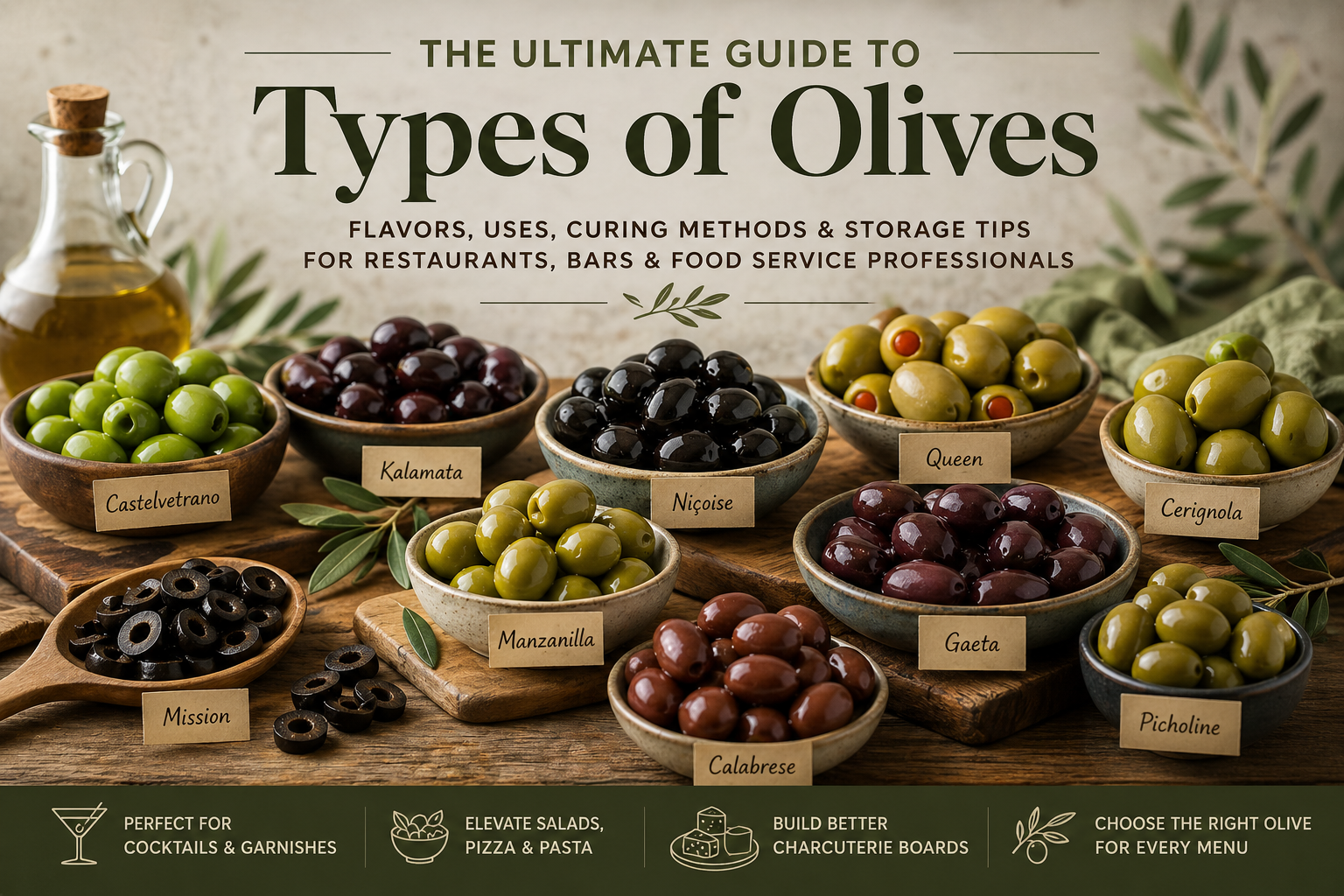
Olives may look like a small ingredient, but in a restaurant kitchen they can do a lot of work. They can finish a Greek salad, add salt and depth to pasta, create a better martini, upgrade a charcuterie board, or bring Mediterranean character to a sandwich, pizza, appetizer, or seafood dish. For chefs, bar managers, caterers, delis, and restaurant owners, understanding the different types of olives is not just about flavor. It is also about consistency, food cost, storage, presentation, and choosing the right olive for the right menu item.

Olives are technically fruits, specifically drupes, the same broad category as cherries, peaches, and apricots. Fresh olives are naturally bitter and usually not eaten straight from the tree. They need to be cured through water, brine, lye, dry salt, or other methods before they become table olives. UC Davis notes that curing is used to remove the natural bitterness from olives before they are ready to eat.
For restaurants, the most important thing to know is this: not all olives are interchangeable. A buttery Castelvetrano olive works beautifully on a cheese board, but it will not deliver the same sharp Mediterranean punch as a Kalamata. A mild canned black olive may be perfect for pizza, but it will feel flat in a premium antipasto platter. A large Queen olive is excellent for stuffing or martinis, while a small Niçoise olive is better suited for composed salads and French-style dishes.
What Are Table Olives?
Table olives are olives prepared for direct eating, cooking, garnishing, or serving. Most olives grown globally are used for olive oil, while a smaller portion becomes table olives. The Webstaurant article correctly explains that only a portion of olives are designated for table olive use, while the majority are processed for oil.
Table olives vary by variety, harvest maturity, curing method, size, texture, salt level, and region. This is why two green olives can taste completely different from each other. One may be firm, bitter, and briny, while another may be buttery, mild, and almost sweet.
For commercial kitchens, the main buying factors are:
olive variety
whole, pitted, sliced, or stuffed format
brine level and saltiness
texture and firmness
intended use
pack size
storage requirements
cost per serving
Green Olives vs Black Olives
Green and black olives are not always separate species. In many cases, the color tells you when the olive was harvested. Green olives are harvested earlier, before full ripeness. Black olives are harvested later, when the fruit has matured. As olives ripen, they can move from green to yellow-green, red, purple, brown, and eventually black.
Green olives are usually firmer, denser, more bitter, and more assertive. Black olives are often softer, smoother, and richer because mature olives generally contain more oil. UC Davis postharvest guidance notes that black olives can have oil content in the range of 12% to 25%, depending on cultivar.
For restaurants, the practical difference is simple. Use green olives when you want crunch, brightness, and visual color. Use black or purple olives when you want depth, softness, and a more developed Mediterranean flavor.
1. Kalamata Olives
Kalamata olives are one of the most recognizable Greek olives and one of the most useful olives for restaurants. They are usually almond-shaped, dark purple to black, and known for a rich, fruity, tangy flavor. They work especially well in Greek salads, Mediterranean bowls, flatbreads, grain bowls, roasted fish dishes, and tapenade.
For restaurants, Kalamata olives are valuable because customers already recognize the name. If you are building a Mediterranean menu, a Greek salad, or a premium appetizer board, Kalamata olives are usually a safe choice.
Best uses: Greek salad, hummus plates, tapenade, Mediterranean pasta, roasted chicken, seafood, flatbreads.
2. Castelvetrano Olives
Castelvetrano olives come from Sicily and are known for their bright green color, buttery texture, and mild flavor. They are one of the best olives for customers who usually think they do not like olives. Compared with sharper brined olives, Castelvetranos are more approachable.
They are excellent for charcuterie boards, cheese boards, cocktails, upscale appetizers, and premium deli displays. Their color also makes them highly photogenic, which matters for restaurants using social media to promote appetizer boards or catering trays.
Best uses: charcuterie boards, cheese boards, antipasto, cocktails, poultry dishes, seafood dishes.
3. Niçoise Olives
Niçoise olives are small, dark, and intensely flavored. They are closely associated with the classic Salade Niçoise. Their flavor is briny, earthy, and slightly bitter, which makes them better for composed dishes than casual snacking.
Because of their size and flavor intensity, they are not the best all-purpose olive. But for French or Mediterranean menus, they bring authenticity and strong culinary identity.
Best uses: Salade Niçoise, tuna dishes, roasted vegetables, French-style salads, goat cheese pairings.
4. Manzanilla Olives
Manzanilla olives are one of the most common Spanish green olives. They are frequently sold whole, pitted, sliced, or stuffed with pimento. Their firm texture and balanced briny flavor make them useful in both kitchen and bar operations.
For bars, Manzanilla olives are a standard martini olive. For kitchens, they work in tapas, paella, salads, sandwiches, and relish-style preparations.
Best uses: martinis, Bloody Marys, tapas, paella, sandwiches, stuffed olives.
5. Queen Olives
Queen olives are large, firm, and meaty. Their size makes them one of the best choices for stuffing. They are common in cocktail programs and appetizer service because they look substantial and premium.
If your restaurant serves martinis, Bloody Marys, antipasto, or stuffed olive appetizers, Queen olives are a practical choice. They can be filled with pimento, garlic, blue cheese, almonds, jalapeño, feta, or other ingredients.
Best uses: martinis, stuffed olives, cocktail garnishes, antipasto, mezze platters.
6. Cerignola Olives
Cerignola olives, also known as Bella di Cerignola, come from Puglia, Italy. They are among the largest table olives and are known for a mild, buttery flavor. They can appear green, black, or even red. Red Cerignola olives are often colored during processing rather than naturally red, a point noted in food publications discussing table olive color.
Their large size and mild profile make them ideal for high-end presentation. They are not always the cheapest option, but they can make an appetizer plate feel more premium.
Best uses: antipasto, premium olive boards, catering trays, salads, Italian appetizers.
7. Gaeta Olives
Gaeta olives are small Italian olives, usually dark purple or black, with a wrinkled appearance and a tart, salty flavor. They are often used in Italian cooking, especially where olives are part of a stronger flavor base.
Gaeta olives work well with capers, garlic, anchovies, tomatoes, and olive oil. They are a strong choice for puttanesca sauce or rustic Italian appetizers.
Best uses: puttanesca, pasta, pizza, tapenade, antipasto, roasted fish.
8. Picholine Olives
Picholine olives are French green olives with a crisp texture and a slightly lemony, briny flavor. They are elegant and firm, which makes them useful for cocktails, seafood plates, and refined appetizer service.
They are also a good alternative to basic green olives when you want a more distinctive menu description.
Best uses: martinis, seafood, charcuterie, salads, French appetizers.
9. Mission Olives
Mission olives are associated with California and are commonly used in the U.S. market. They are often seen as black olives, especially in canned or sliced formats. They have a milder flavor than many Mediterranean olives, which makes them useful for American-style menus.
For pizza shops, sandwich shops, and salad bars, Mission-style black olives are practical because they are familiar, affordable, and easy to portion. Sliced olives are a staple topping in many kitchens using pizza preparation refrigerators.
Best uses: pizza, sandwiches, salads, tacos, nachos, American-style pasta salads.
10. Calabrese Olives
Calabrese olives come from Calabria in Southern Italy. They tend to have a firmer texture and a bolder flavor, sometimes with fruity, bitter, or spicy notes. They are useful when you want an olive that can stand up to strong ingredients.
They pair well with cured meats, aged cheeses, roasted peppers, spicy sauces, and Italian appetizers.
Best uses: antipasto, pizza, pasta, spicy Italian dishes, catering trays.
Olive Curing Methods
Curing changes the flavor, texture, color, and bitterness of olives. UC Agriculture and Natural Resources lists common olive curing methods including water, brine, lye, and dry salt, noting that each method creates a different flavor and texture result.
Brine-cured olives are soaked in saltwater and often develop a deep, savory flavor. Lye-cured olives cure faster and can produce a milder taste. Dry-salt-cured olives are usually wrinkled, concentrated, and intensely flavored. Water-cured olives are often milder but may retain some bitterness.
For restaurants, curing method matters because it affects how the olive performs on the plate. A dry-cured olive may be too intense for a casual salad but excellent in a rustic appetizer. A mild lye-cured olive may be better for high-volume service where broad customer appeal matters.
Pitted, Whole, Sliced, or Stuffed Olives?
The format you buy should depend on labor, presentation, and food safety.
Whole olives often have the best texture and appearance, but they require clear communication to customers because of the pit. Pitted olives save labor and are easier to use in salads, pasta, and kitchen prep. Sliced olives are efficient for pizza shops, sandwich shops, and salad bars. Stuffed olives are best for bars, appetizers, and premium garnish programs.
For high-volume restaurants, the best choice is often not the most “authentic” olive. It is the olive that gives consistent flavor, fast prep, predictable portioning, and low waste.
Best Olives by Restaurant Use
For martinis, use Queen, Manzanilla, Picholine, or blue cheese-stuffed olives.
For Greek salads, use Kalamata olives.
For pizza, use sliced black Mission-style olives, Kalamata olives, or Gaeta olives depending on the menu style.
For charcuterie boards, use Castelvetrano, Cerignola, Kalamata, and dry-cured black olives.
For tapas, use Manzanilla, Queen, garlic-stuffed olives, and anchovy-stuffed olives.
For Italian pasta, use Gaeta, Calabrese, Kalamata, or Cerignola olives.
For catering trays, use a mix of green, black, stuffed, and large-format olives for visual contrast.
How to Store Olives in a Restaurant
Storage is important because olives are often opened, used gradually, and held over multiple services. Commercially packed olives should be stored according to the manufacturer’s instructions. Once opened, they should generally be refrigerated and kept covered in brine or liquid to maintain quality. Food storage references commonly recommend keeping opened olives submerged in their liquid and refrigerated after opening.
Avoid storing olives in opened metal cans. Transfer them to a clean food-safe container with a lid. Label the container with the opening date, keep the olives submerged, and use clean utensils to avoid cross-contamination.
For restaurant operations, this matters because olive quality can decline when olives dry out, absorb off-flavors, or sit uncovered in a walk-in cooler.
How Restaurants Should Choose Olives
Choosing olives should not start with the variety. It should start with the menu item.
A pizza shop needs consistency, price control, and easy portioning. A cocktail bar needs garnish quality and visual appeal. A Mediterranean restaurant needs authenticity and variety. A caterer needs olives that hold well on trays. A deli needs olives that look fresh in display cases and taste good in prepared salads.
Before buying olives, ask:
Will this olive be used as a garnish, ingredient, or appetizer?
Does the customer expect a mild or bold flavor?
Does the dish need a firm olive or a softer olive?
Will the olive be served whole, chopped, sliced, or stuffed?
Will it sit in a display case, salad bar, or catering tray?
How quickly will the opened container be used?
The right olive is the one that matches the dish, the customer, and the operation.
FAQ
What are the most popular types of olives?
Some of the most popular olives include Kalamata, Castelvetrano, Manzanilla, Queen, Cerignola, Niçoise, Gaeta, Picholine, Mission, and Calabrese olives.
Are green olives and black olives different?
Green olives are usually harvested earlier, while black olives are harvested when more mature. Green olives tend to be firmer and more bitter, while black olives are often softer and richer.
What are the best olives for martinis?
Queen olives, Manzanilla olives, Picholine olives, and stuffed green olives are among the best choices for martinis.
What are the best olives for charcuterie boards?
Castelvetrano, Cerignola, Kalamata, Gaeta, and mixed stuffed olives work very well on charcuterie boards.
What olives are best for Greek salad?
Kalamata olives are the classic choice for Greek salad because of their rich, tangy, fruity flavor.
Should restaurants buy whole or pitted olives?
Whole olives often have better texture and appearance, but pitted olives save labor and are easier for salads, cooking, and high-volume prep.
How should opened olives be stored?
Opened olives should usually be refrigerated, kept covered, and stored submerged in their brine or liquid in a clean food-safe container.
Why are raw olives so bitter?
Fresh olives contain bitter compounds and need to be cured before eating. Curing methods like brine, water, lye, and dry salt help make olives palatable.