
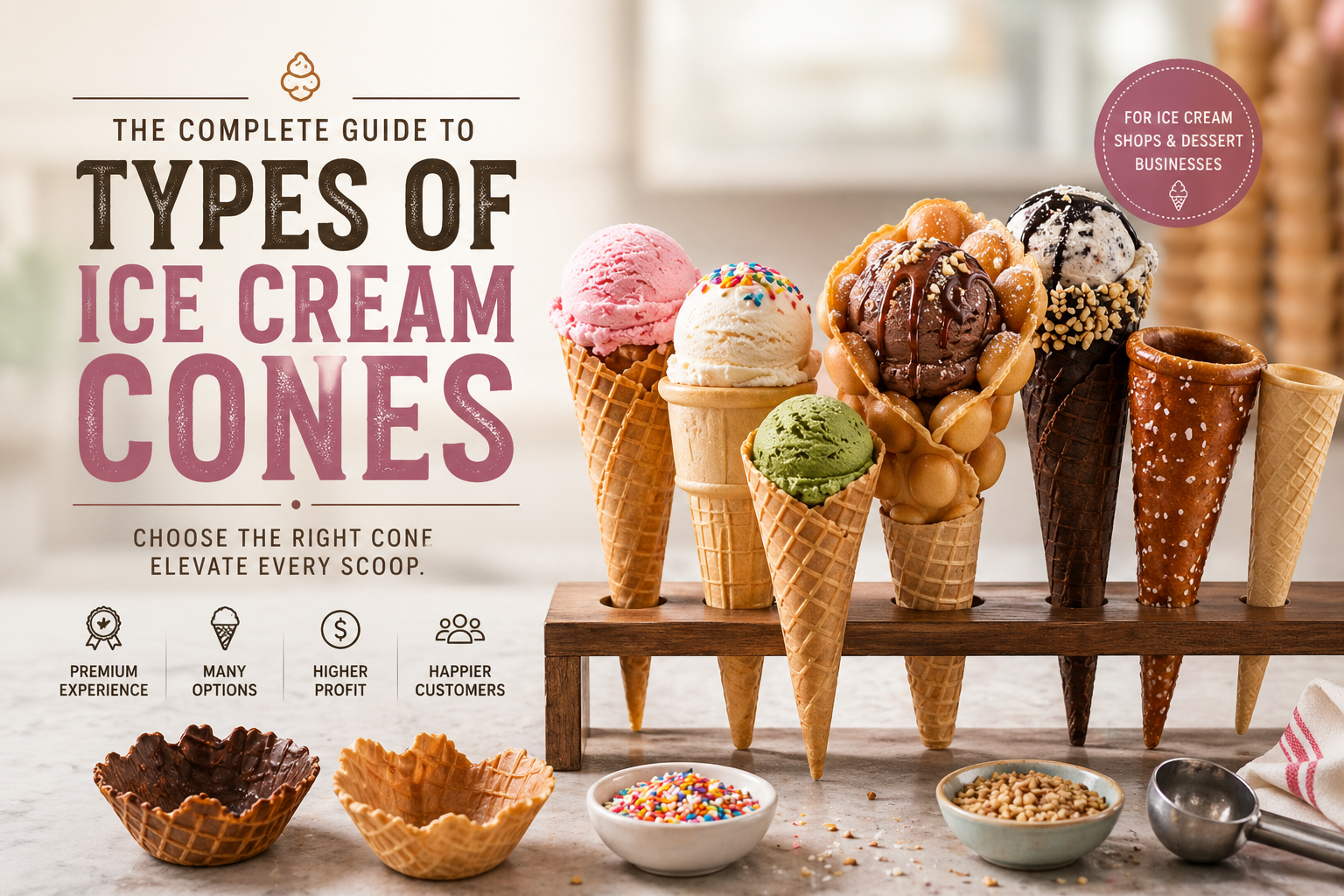
Ice cream cones may seem like a simple detail, but in reality, they play a critical role in how your product is perceived, priced, and consumed. In a competitive dessert market, where differentiation is often subtle, the type of cone you serve can directly influence customer satisfaction and profitability. A well-chosen cone enhances texture, supports the structure of the ice cream, and most importantly, shapes the overall experience.

For many businesses, cones are treated as a default rather than a strategic decision. However, when approached correctly, they become a powerful lever for increasing average order value, improving operational efficiency, and strengthening brand positioning.
Why Ice Cream Cone Selection Matters More Than You Think
The majority of ice cream shops focus heavily on flavors, toppings, and presentation, but overlook the foundation that holds everything together. The cone is the first tactile interaction a customer has with your product. It determines whether the ice cream melts too quickly, whether it holds multiple scoops, and even whether the experience feels premium or standard.
From a business perspective, the right cone selection allows you to segment your menu naturally. Customers who want a basic experience can choose a simple option, while those looking for something more indulgent can upgrade without hesitation. This subtle differentiation is what allows successful dessert shops to increase margins without increasing complexity.
Waffle Cones: The Foundation of Premium Positioning
Waffle cones are widely recognized as the premium standard in the industry. Their golden color, slightly caramelized flavor, and crisp texture create an immediate sense of quality. When a customer sees a waffle cone, they instinctively associate it with freshness and craftsmanship.
What makes waffle cones particularly valuable is their ability to elevate even the simplest ice cream flavors. A single scoop served in a waffle cone feels more complete, more indulgent, and more worth the price. This is why many boutique ice cream shops and gelato concepts rely heavily on waffle cones as part of their brand identity.
However, waffle cones require a certain level of operational awareness. They tend to soften faster than other cone types, especially in warmer environments or when paired with high-moisture ice cream. This makes them ideal for controlled environments where service is relatively fast and consistent.
Sugar Cones: Stability and Performance Under Pressure
If waffle cones represent experience, sugar cones represent reliability. Their dense structure and crisp texture make them one of the most durable options available. For businesses that serve large portions or operate in high-temperature environments, sugar cones provide a level of consistency that is difficult to match.
Customers who prefer multiple scoops or slower consumption tend to gravitate toward sugar cones because they maintain their structure longer. From an operational standpoint, this reduces product waste and minimizes the risk of complaints caused by collapsing or soggy cones.
Sugar cones also offer flexibility in menu design. They can support heavier toppings, layered scoops, and more complex builds without compromising stability. This makes them a strong choice for businesses that focus on volume and efficiency.
Cake Cones: Efficiency, Simplicity, and Cost Control
Cake cones, often referred to as wafer cones, are one of the most practical options for high-volume operations. Their flat-bottom design allows them to stand upright, which simplifies both service and consumption. This small structural difference has a significant impact on workflow, especially during peak hours.
Unlike waffle and sugar cones, cake cones have a more neutral flavor. This allows the ice cream itself to take center stage, which can be advantageous when serving high-quality or strongly flavored products. Their lighter texture also makes them a popular choice for children and casual consumers.
From a cost perspective, cake cones are typically more economical, making them an ideal option for businesses that prioritize speed and consistency over premium positioning. They are often used in environments such as cafeterias, schools, and high-traffic dessert counters where efficiency is critical.
The Rise of Experience-Driven Cones
In recent years, the ice cream industry has shifted toward more visually engaging and experience-driven products. Customers are no longer just buying ice cream; they are buying something worth sharing. This shift has led to the rise of cones that go beyond functionality and focus on presentation and novelty.
Bubble waffle cones are a clear example of this trend. Their unique structure and soft interior create a completely different eating experience. More importantly, they are highly photogenic, making them ideal for businesses that rely on social media exposure. While they may require additional preparation and equipment, the marketing value they generate often justifies the investment.
Chocolate-dipped cones represent a more subtle but equally powerful upgrade. By adding a chocolate coating, businesses can instantly reposition a standard cone as a premium offering. This small modification not only enhances flavor but also improves durability by creating a protective layer inside the cone. It is one of the most effective ways to increase perceived value with minimal operational change.
Specialty Cones and Differentiation Strategy
For businesses looking to stand out in saturated markets, specialty cones offer a unique opportunity. Flavors such as matcha, red velvet, or even floral-infused cones allow you to create signature products that are difficult for competitors to replicate. These cones act as a branding tool, helping your business develop a recognizable identity.
Pretzel cones, with their sweet and salty contrast, appeal to a more adventurous audience. While they may not be suitable for every concept, they can be highly effective in gourmet or experimental menus. The key is not to offer everything, but to choose options that align with your brand and target audience.
At the same time, dietary inclusivity has become increasingly important. Offering gluten-free cones is no longer a niche decision but a strategic one. Customers expect flexibility, and businesses that accommodate these needs are more likely to build long-term loyalty.
How Cone Selection Impacts Equipment and Operations
One aspect that is often overlooked is how cone selection interacts with your overall equipment setup. The type of cone you offer can influence how your product is stored, displayed, and served.
For example, if your menu includes large, multi-scoop servings or premium presentations, maintaining consistent temperature becomes critical. This is where having a reliable commercial freezer ensures that your ice cream retains its structure and quality regardless of volume. Similarly, visually driven concepts benefit significantly from a well-designed ice cream display freezer, which enhances product visibility and encourages impulse purchases.
At a broader level, integrating your cone strategy with your commercial kitchen equipment setup allows you to streamline operations and reduce bottlenecks. When every element of your workflow is aligned, from storage to service, the result is a smoother operation and a better customer experience.
Choosing the Right Ice Cream Cone Strategy for Your Business
There is no single “best” ice cream cone. The right choice depends entirely on your business model, pricing strategy, and target audience. Some businesses benefit from focusing on premium cones that increase margins, while others prioritize durability and speed.
The most effective approach is often a balanced one. By offering a mix of cone types, you create natural upsell opportunities while giving customers the freedom to customize their experience. This not only increases revenue but also makes your menu feel more dynamic and engaging.
Ultimately, the ice cream cone is not just a container. It is an extension of your product, your brand, and your strategy. Businesses that understand this and treat it as a core component of their offering are far more likely to stand out, scale efficiently, and build a memorable customer experience.
FAQ
What is the most popular type of ice cream cone?
Waffle cones are the most popular in premium ice cream shops due to their flavor and presentation, while cake cones are more common in high-volume environments.
Which cone is best for multiple scoops?
Sugar cones are the best choice for multiple scoops because of their dense structure and durability.
Do waffle cones get soggy quickly?
Yes, waffle cones tend to soften faster than sugar cones, especially in warm conditions or with melting ice cream.
Are specialty cones worth offering?
Yes, specialty cones can significantly improve brand differentiation and allow businesses to charge premium prices.
What cone type is best for kids?
Cake cones are ideal for children due to their flat bottom, mild flavor, and ease of handling.