

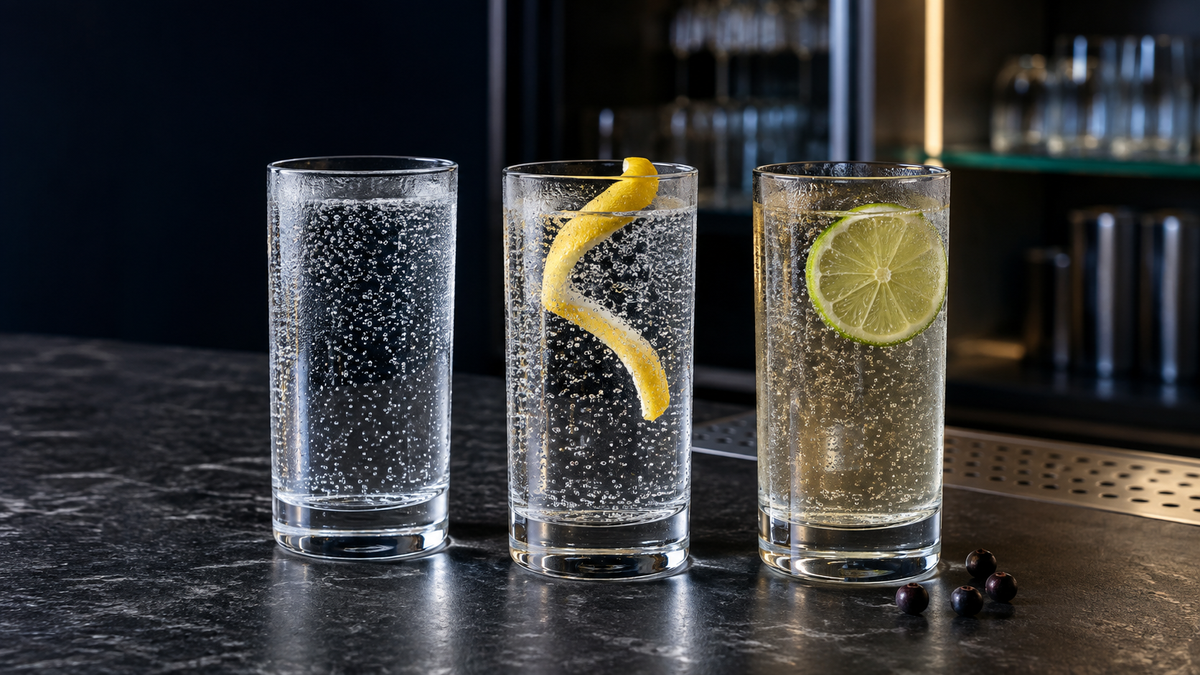
Club soda, seltzer, tonic water, and sparkling mineral water all contain bubbles, but they are not the same drink. The difference comes down to what is in the water, how it is carbonated, how it tastes, and what happens when it is mixed into a cocktail.
For the fastest answer: plain seltzer is generally water plus carbon dioxide; club soda usually contains added mineral salts; tonic water contains quinine and usually a sweetener; and sparkling mineral water contains naturally occurring minerals from its source. Those differences can be subtle in a glass of water and dramatic in a mixed drink.
| Beverage | Typical ingredients | Flavor | Calories in plain versions | Best uses |
|---|---|---|---|---|
| Seltzer | Water and added carbon dioxide | Clean and neutral | Usually zero | Everyday drinking, mocktails and neutral mixers |
| Club soda | Carbonated water plus added mineral salts | Slightly mineral or mildly salty | Usually zero | Highballs, Collins-style drinks and spritzes |
| Tonic water | Carbonated water, quinine and usually sweetener | Bitter, sweet and citrus-like | Regular tonic generally contains calories | Gin or vodka tonics and bitter mocktails |
| Sparkling mineral water | Mineral water with natural or added carbonation | Varies by mineral source | Usually zero | Table service, sipping and spirit-forward drinks |
Formulas vary by brand, so the ingredient list and Nutrition Facts panel should settle any question about sugar, sodium, flavorings, or sweeteners.
What Is Seltzer Water?
Seltzer is ordinarily plain water carbonated by adding carbon dioxide under pressure. Traditional unflavored seltzer contains no sugar, calories, or added mineral salts, giving it the most neutral flavor of the group.
That neutrality makes seltzer useful when a bartender wants bubbles and dilution without adding bitterness, sweetness, or a noticeable mineral character. It works in wine spritzers, fruit-forward mocktails, hard-seltzer-style drinks, and simple mixed beverages.
Flavored seltzers may include natural flavors, acids, sweeteners, juice, or other ingredients. “Seltzer” therefore does not automatically mean that every product has only two ingredients. Check the label when nutrition or flavor neutrality matters.
What Is Club Soda?
Club soda is carbonated water formulated with added mineral salts. Depending on the brand, these may include sodium bicarbonate, sodium citrate, potassium sulfate, or sodium chloride. The minerals can create a faintly salty, alkaline, or mineral-like finish.
Club soda is a classic bar mixer because it adds effervescence while allowing the base spirit and citrus to remain prominent. It is commonly used in whiskey sodas, vodka sodas, Tom Collins variations, mojitos, spritzes, and alcohol-free highballs.
Club Soda vs Seltzer
The main difference is added minerals: seltzer is normally carbonated water without mineral salts, while club soda is deliberately mineralized. They are often interchangeable when a recipe only needs carbonation, but they are not guaranteed to taste identical.
In a delicate highball with few ingredients, club soda’s mineral profile may be noticeable. In a drink with citrus, syrup, and strong spirits, the difference is usually smaller.
Both plain products are commonly calorie-free, but sodium varies. Bars and consumers should compare labels instead of assuming every club soda has the same mineral content.
What Is Tonic Water?
Tonic water is a carbonated soft drink flavored with quinine, the ingredient responsible for its characteristic bitterness. Regular tonic is typically balanced with sugar, high-fructose corn syrup, or another sweetener, while diet and zero-sugar versions use different sweetening systems.
This makes tonic fundamentally different from club soda and seltzer. It does not merely add bubbles: it adds bitterness, sweetness, acidity, and its own aroma. The flavor complements botanical spirits, which is why tonic is associated with gin and tonic, vodka tonic, and modern nonalcoholic aperitif drinks.
U.S. regulations permit quinine in carbonated beverages as a flavor at no more than 83 parts per million and require its presence to be declared. (21 CFR §172.575) The quinine in tonic is a flavoring component; tonic water should not be treated as a medication.
Tonic Water vs Club Soda
Club soda is unsweetened carbonated water with added minerals. Tonic water is a bitter, generally sweetened mixer containing quinine.
Replacing club soda with tonic can substantially change a drink’s flavor and calorie or sugar content. Replacing tonic with club soda removes the bitter-sweet structure that defines drinks such as a gin and tonic.
What Is Sparkling Water?
“Sparkling water” is widely used as an umbrella term for fizzy water, but packaging language can describe different products. Some sparkling waters are purified water with added carbon dioxide; others come from mineral or spring sources and have a distinctive mineral composition.
The FDA distinguishes certain bottled-water identities more precisely. Under federal rules, mineral water must come from a protected underground source, contain at least 250 parts per million of total dissolved solids, and receive no minerals after collection.
“Sparkling bottled water” may be used when the finished water retains the same amount of carbon dioxide from its source that it had when it emerged, after permitted treatment and possible replacement of that carbon dioxide. (FDA bottled-water definitions)
Seltzer vs Sparkling Mineral Water
Seltzer receives carbonation mechanically and is usually designed to taste neutral. Sparkling mineral water contains source-derived minerals that can make it taste salty, chalky, crisp, or subtly metallic. Its carbonation may be natural, added, or restored depending on the product and label.
The two can substitute for one another when bubbles are the main objective, but their flavors are not necessarily identical. A strongly mineral sparkling water can noticeably alter a light cocktail or coffee drink.
Can They Be Used Interchangeably?
Use this practical rule:
- Seltzer and club soda: Usually interchangeable, with a possible mineral or sodium difference.
- Seltzer and sparkling water: Often interchangeable, but mineral water may contribute more flavor.
- Club soda and sparkling mineral water: Both work in many highballs, although mineral character and carbonation intensity vary.
- Tonic and any unsweetened carbonated water: Not direct substitutes. Tonic adds quinine, bitterness, and usually sweetness.
Carbonation intensity also matters. A highly carbonated mixer can keep a tall drink lively after ice and spirits are added, while a softer sparkling water may suit table service or slow sipping.
Choosing Carbonated Water for a Bar or Restaurant
Bars should choose mixers according to their beverage program rather than stocking every category automatically. Seltzer or club soda covers most neutral-mixer applications. Tonic deserves a separate position because its flavor is essential to tonic-based drinks. Premium sparkling mineral water can support bottled table service and higher-end cocktail presentation.
For consistent results, keep mixers cold, open single-serve containers only when needed, and minimize unnecessary stirring. Cold liquid retains carbonation better during service, while fresh ice limits rapid dilution.
Bars with high volume may produce carbonated water through a soda gun or commercial carbonator, but the water supply, filtration, carbon dioxide pressure, line cleaning, and serving temperature all affect quality.
The equipment behind the drink matters too. Atlantic offers back bar coolers for organizing and chilling mixers and commercial ice machines for beverage programs with dependable peak-hour ice demand.
