
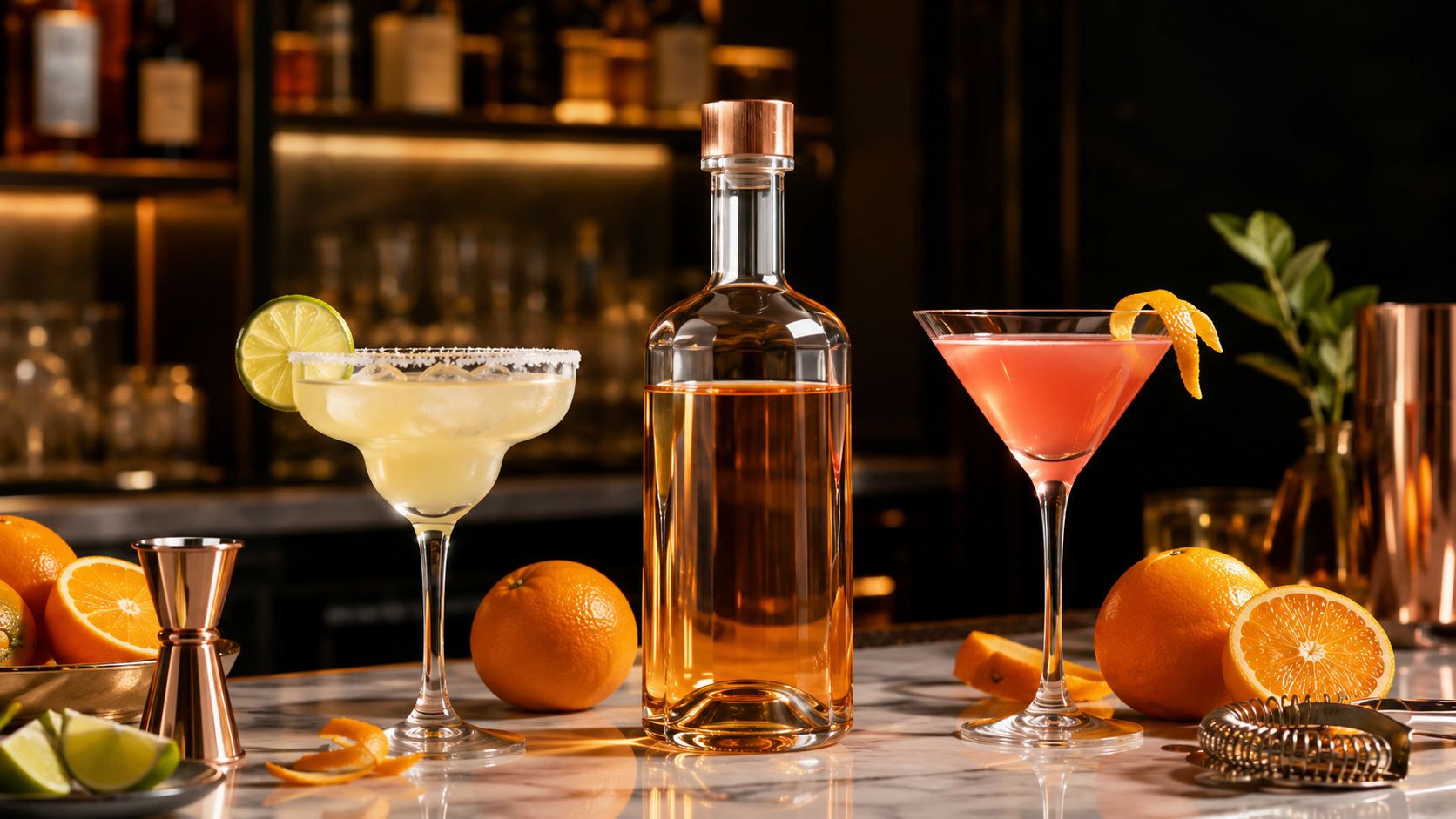
Triple sec is one of the most important orange liqueurs behind the bar. It adds citrus aroma, sweetness, balance, and structure to classic cocktails like margaritas, cosmopolitans, sidecars, Long Island iced teas, and sangrias. For restaurants, bars, hotels, catering companies, and event venues, triple sec is not just another bottle on the shelf. It is a core cocktail ingredient that can shape the flavor, cost, consistency, and profitability of a beverage program.
At its simplest, triple sec is a sweet, orange-flavored liqueur traditionally made by flavoring distilled spirits with orange peel. It is usually clear, citrus-forward, lightly bitter, and sweet enough to balance sour ingredients like lime or lemon juice. Depending on the brand, triple sec can be inexpensive and syrupy, clean and cocktail-friendly, or premium enough to use in refined classic drinks.
Understanding how triple sec works helps beverage professionals build better cocktails, choose the right substitute, control pour cost, and create a more consistent bar menu.
What Is Triple Sec?
Triple sec is an orange-flavored liqueur used primarily in cocktails. It is typically made by combining distilled alcohol with flavor from dried orange peels, then sweetening the finished spirit. In the United States, cordials and liqueurs are federally defined as flavored distilled spirits made with flavoring materials such as fruits, flowers, plants, juices, or extracts, and they must contain sugar in the finished product.

The flavor of triple sec usually comes from bitter and sweet orange peels. Bitter orange peel contributes sharpness, aroma, and a slightly pithy edge, while sweet orange peel gives the liqueur a rounder citrus profile. The result is a bright orange liqueur that can soften strong spirits, lift citrus cocktails, and add sweetness without using plain simple syrup.
Triple sec is most often used as a modifier in cocktails. That means it is not usually the main spirit in the drink, but it plays a major role in balance. In a margarita, for example, tequila brings the base flavor, lime juice brings acidity, and triple sec brings orange aroma, sweetness, and roundness.
What Does “Triple Sec” Mean?
The name “triple sec” is French. “Sec” means dry, and “triple sec” is often interpreted as “triple dry.” In practice, the term has been used historically to describe a style of orange liqueur that is drier and more refined than some earlier, sweeter orange liqueurs.
There is debate in the drinks world about the exact meaning of “triple.” Some producers connect it to distillation, concentration, or recipe style. For restaurant and bar operators, the most useful definition is practical: triple sec is a clear or lightly colored orange liqueur that brings citrus flavor and sweetness to cocktails.
Where Did Triple Sec Come From?
Triple sec has strong roots in France. Combier, one of the historic producers associated with the category, traces the birth of its triple sec to 1834 in Saumur, France. According to Combier’s history, Jean-Baptiste Combier created a crystalline orange liqueur in a still behind his confectionery shop and later established Distillerie Combier in 1848.
This origin story matters because it explains why triple sec sits between confectionery and spirits. It is sweet, aromatic, and citrus-driven, but it is also alcoholic and structured enough to function in serious cocktails.
Today, “triple sec” can refer to many products at different price points. Some are budget-friendly mixing liqueurs. Others, such as Cointreau and Combier, are premium expressions used by professional bartenders.
What Does Triple Sec Taste Like?
Triple sec tastes like sweet orange peel with a bright citrus aroma and a light bitter edge. A good triple sec should not taste like plain orange juice. It should have more depth from peel oils, more concentration, and enough bitterness to keep the sweetness from feeling flat.
Common flavor notes include:
Orange zest
Candied orange peel
Bitter orange
Sweet citrus
Light floral aroma
Sugar syrup
Mild spice depending on brand
Clean alcohol warmth
Lower-cost triple sec may taste sweeter and more artificial. Premium triple sec usually tastes cleaner, drier, and more balanced, which makes it better for cocktails where the orange liqueur is highly noticeable.
Is Triple Sec Alcoholic?
Yes. Traditional triple sec is alcoholic. The alcohol by volume varies by producer, but many orange liqueurs fall somewhere between lower-proof liqueurs and full-strength spirits. Cointreau, for example, identifies itself as an iconic triple sec and lists Cointreau Liqueur at 40% alcohol by volume.
For responsible beverage planning, bartenders should remember that liqueurs still contribute alcohol to a drink. The National Institute on Alcohol Abuse and Alcoholism defines a U.S. standard drink as containing 0.6 fluid ounces of pure alcohol; it also notes that 2–3 ounces of cordial, liqueur, or aperitif at about 24% alcohol can represent a standard drink depending on strength and pour size.
This is important for restaurants because a cocktail with tequila, triple sec, and another alcoholic modifier can be stronger than guests realize. Accurate recipes, jiggers, training, and responsible alcohol service all matter.
Is There Non-Alcoholic Triple Sec?
Yes. Non-alcoholic triple sec syrup or orange cocktail syrup can be used for mocktails. These products imitate the sweet orange flavor of triple sec without alcohol. They are useful for restaurants that want to offer alcohol-free margaritas, citrus spritzers, zero-proof cosmopolitans, and family-friendly event beverages.
However, non-alcoholic triple sec syrup is usually sweeter and less complex than alcoholic triple sec. When using it in mocktails, reduce other sweeteners and increase fresh citrus or soda to keep the drink balanced.
Triple Sec vs Orange Liqueur
Triple sec is a type of orange liqueur, but not every orange liqueur is triple sec.
“Orange liqueur” is the broader category. It includes triple sec, curaçao, brandy-based orange liqueurs, cognac-based orange liqueurs, and modern craft orange liqueurs.
Triple sec is usually clear, bright, and cocktail-focused. Curaçao can be clear or colored and may have a more bitter orange profile. Grand Marnier is an orange liqueur made with cognac and bitter orange, giving it a richer and warmer taste. Grand Marnier describes itself as a blend of fine French cognac and exotic bitter orange liqueur.
For bars, the difference matters because each product changes the drink.
Use triple sec when you want brightness.
Use Cointreau when you want a premium, clean orange profile.
Use Grand Marnier when you want richness, cognac depth, and a more luxurious finish.
Use curaçao when you want a slightly different orange character or visual color impact.
Cointreau vs Triple Sec
Cointreau is a premium triple sec. It is not simply a substitute for triple sec; it belongs to the triple sec family but is usually considered a higher-end expression.
Cointreau is known for a clean, balanced orange flavor and a higher alcohol content than many budget triple sec products. Cointreau’s official U.S. site describes it as “The Iconic Triple Sec” and lists it at 40% alcohol by volume.
For restaurants, the choice between Cointreau and standard triple sec depends on concept and pricing.
Use standard triple sec for high-volume, cost-sensitive cocktails where orange liqueur is not the star.
Use Cointreau for premium margaritas, cosmopolitans, sidecars, and cocktail menus where quality and balance are part of the brand promise.
A bar can also carry both: one well triple sec for standard drinks and one premium orange liqueur for upgraded cocktails.
Grand Marnier vs Triple Sec
Grand Marnier is not the same as standard triple sec. It is richer, deeper, and more complex because it combines cognac with bitter orange liqueur. Grand Marnier’s official description emphasizes its blend of French cognac and bitter orange.
In cocktails, Grand Marnier brings notes of orange, oak, vanilla, cognac, and warmth. That makes it excellent for premium margaritas, sidecars, dessert cocktails, and sipping-style drinks. However, it may be too heavy or expensive for simple high-volume cocktails where a clean triple sec would work better.
A practical bar rule:
Triple sec = bright, clean, citrusy
Cointreau = premium, balanced, strong orange clarity
Grand Marnier = rich, cognac-based, deeper and warmer
Curaçao vs Triple Sec
Curaçao is another orange liqueur category. It is often slightly more bitter and can be clear, orange, blue, or green. Blue curaçao is especially common in tropical cocktails where color is part of the presentation.
Triple sec is generally more neutral in color and easier to use across classic cocktails. Curaçao is useful when a bar wants visual drama, a tropical profile, or a slightly different bitter orange note.
For serious cocktail programs, dry curaçao can be excellent. For casual bars, blue curaçao is often used in colorful drinks, frozen cocktails, and poolside menus.
Best Triple Sec Substitutes
The best triple sec substitute depends on the drink.
Cointreau
Best for premium margaritas, cosmopolitans, sidecars, and cocktails where orange flavor needs to be clean and balanced.
Grand Marnier
Best for richer cocktails, premium margaritas, sidecars, brandy-based drinks, dessert drinks, and upscale menus.
Curaçao
Best for tropical cocktails, blue cocktails, tiki-style drinks, and recipes that benefit from a slightly more bitter orange liqueur.
Combier
Best for classic cocktail programs and bars that want a historic French triple sec profile.
Orange Syrup
Best for mocktails, lemonades, non-alcoholic margaritas, and alcohol-free citrus drinks.
Orange Juice
Best only as a quick non-alcoholic flavor replacement. It does not have the same concentration, aroma, bitterness, or sweetness as triple sec, so the recipe will need adjustment.
Orange Extract + Simple Syrup
Useful for kitchens or bars creating a non-alcoholic substitute, but it must be used carefully because orange extract can overpower a drink quickly.
Best Cocktails with Triple Sec
Triple sec appears in many classic and modern cocktails because it pairs well with tequila, vodka, gin, rum, cognac, whiskey, wine, citrus, cranberry, and tropical fruit.
Margarita
The margarita is one of the most important triple sec cocktails. The International Bartenders Association lists the margarita with tequila, triple sec, and freshly squeezed lime juice.
Triple sec balances the acidity of lime and supports the agave flavor of tequila. For restaurants, margaritas are also highly profitable because they can be batched, flavored, frozen, spicy, smoky, or premiumized with better tequila and orange liqueur.
Cosmopolitan
A cosmopolitan combines vodka, triple sec or Cointreau, cranberry juice, and lime juice. Triple sec gives the drink citrus lift and sweetness while supporting the tart cranberry flavor.
Sidecar
A sidecar is typically made with cognac, orange liqueur, and lemon juice. Triple sec gives the drink sweetness and orange brightness. Cointreau or Grand Marnier can be used for a more premium version.
Long Island Iced Tea
Triple sec helps connect the multiple base spirits in a Long Island iced tea. Because the drink is strong, consistent measuring and responsible service are especially important.
White Lady
A White Lady is a gin-based sour made with orange liqueur and lemon juice, often with egg white depending on recipe style. Triple sec softens the gin and balances the lemon.
Sangria
Triple sec can be used in red, white, or sparkling sangria to add orange flavor and sweetness. It works especially well with sliced citrus, apples, berries, brandy, and wine.
Kamikaze
A kamikaze uses vodka, triple sec, and lime juice. It can be served as a shot or cocktail.
Frozen Margaritas
Triple sec is especially useful in frozen margaritas because it helps support flavor after dilution from ice. Bars using frozen drink machines should test sweetness and citrus balance carefully.
How Restaurants Should Choose Triple Sec
A restaurant should not choose triple sec only by price. The right bottle depends on cocktail volume, menu positioning, guest expectations, and pour cost.
Consider these questions:
Are margaritas a major part of the beverage menu?
Will the triple sec be used in well drinks or premium cocktails?
Do guests expect craft cocktails or casual bar drinks?
Is the bar using fresh lime and lemon juice?
Is the cocktail menu priced to support premium liqueurs?
Will the product be used in frozen drinks, batched drinks, or shaken cocktails?
Does the bar need a non-alcoholic orange syrup for mocktails?
A high-volume casual bar may need a reliable standard triple sec for speed and cost control. A cocktail bar may need Cointreau, Combier, Grand Marnier, or dry curaçao for better flavor precision.
How to Store Triple Sec
Triple sec should be stored upright in a cool, dry place away from direct sunlight and heat. Most traditional triple sec does not require refrigeration because it contains alcohol and sugar. However, storage quality still matters.
Best practices for restaurants:
Keep bottles tightly closed.
Store away from heat and sunlight.
Use speed pourers only during active service.
Cap bottles after service to reduce evaporation and contamination.
Date backup bottles if your inventory moves slowly.
Keep non-alcoholic syrups refrigerated after opening if the label requires it.
Rotate stock using first-in, first-out inventory practices.
An unopened bottle can last a long time, but opened liqueurs can lose aroma and freshness over time. If triple sec smells dull, musty, oxidized, or unusually harsh, replace it.
Does Triple Sec Go Bad?
Triple sec does not spoil quickly like fresh juice, dairy, or wine-based products. Its alcohol and sugar help preserve it. However, it can lose quality over time.
Signs that triple sec should be replaced include:
Weak orange aroma
Flat or stale flavor
Visible sediment
Cloudiness that was not present before
Damaged cap or contaminated pour spout
Musty smell
Sticky crystallized residue around the bottle opening
For cocktail quality, freshness matters. A margarita made with tired triple sec will taste dull even if the tequila and lime juice are good.
How Much Triple Sec Should Be Used in Cocktails?
Triple sec is usually used in small amounts, often between 1/2 ounce and 1 ounce per cocktail depending on the recipe. The exact amount depends on the acidity of the citrus, the sweetness of the liqueur, the strength of the base spirit, and the desired style of the drink.
For a balanced cocktail, think in three parts:
Base spirit: tequila, vodka, gin, rum, cognac
Acid: lime or lemon juice
Sweetness and aroma: triple sec or another orange liqueur
If the drink tastes too sharp, increase orange liqueur slightly or adjust sweetener. If it tastes too sweet, reduce triple sec or increase fresh citrus. If it tastes flat, the problem may be old citrus juice, low-quality triple sec, or too much dilution.
Triple Sec for Margaritas: What Bars Should Know
Margaritas are one of the best reasons to understand triple sec. The orange liqueur affects the drink’s sweetness, alcohol strength, aroma, and perceived quality.
For a standard margarita, use a consistent recipe and measure every pour. For a premium margarita, upgrade the orange liqueur and tequila. For a spicy margarita, triple sec helps soften heat from jalapeño or chili. For frozen margaritas, triple sec helps maintain flavor after blending with ice.
Operational tips:
Use fresh lime juice when possible.
Measure triple sec with a jigger.
Do not rely only on sour mix for flavor.
Batch carefully and label batched mixes.
Account for triple sec in drink cost.
Offer premium upgrades with Cointreau or Grand Marnier.
How Triple Sec Impacts Bar Profitability
Triple sec can help a bar increase profitability when used strategically. It is relatively shelf-stable, works in many drinks, and allows one bottle to support multiple menu items.
A bar can use triple sec in:
House margaritas
Premium margaritas
Cosmopolitans
Sangrias
Sidecars
Frozen cocktails
Signature citrus cocktails
Mocktails with non-alcoholic syrup
Seasonal drinks
Event cocktails
The key is recipe discipline. Overpouring triple sec can increase cost, make drinks too sweet, and reduce consistency. Underdosing it can make cocktails taste sharp or unbalanced. A standardized recipe card helps bartenders produce the same drink every time.
Commercial Bar Equipment for Triple Sec Cocktails
A strong cocktail program depends on more than spirits. Restaurants serving triple sec cocktails also need the right bar equipment.
Commercial Ice Machines
Ice is one of the most important ingredients in cocktails. Margaritas, cosmopolitans, sidecars, and shaken drinks all depend on clean, consistent ice. Poor ice quality can dilute drinks too quickly or create inconsistent texture.
Bar Refrigeration
Fresh lime juice, lemon juice, mixers, garnishes, syrups, fruit, and batched cocktail ingredients should be kept cold. Undercounter bar refrigerators, back bar coolers, and reach-in refrigerators help bartenders maintain speed and quality.
Glass Washers and Dishwashing Equipment
Cocktail service requires clean glassware. Bars with high drink volume need efficient dishwashing or glass-washing equipment to keep up during service.
Blenders and Frozen Drink Machines
Frozen margaritas and citrus slush cocktails require reliable blending or frozen beverage equipment. Triple sec works especially well in frozen drinks because its orange flavor remains noticeable after ice dilution.
Stainless Steel Prep Tables
Bars and restaurant kitchens need sanitary prep space for cutting citrus, preparing garnishes, batching syrups, and organizing cocktail mise en place.
Speed Rails and Bottle Storage
Triple sec should be easy to reach during service, especially in margarita-heavy operations. Well-organized speed rails improve bartender efficiency and reduce mistakes.
Triple Sec Menu Ideas for Restaurants
Triple sec can support a full cocktail section, not just one or two drinks.
Menu ideas include:
House Margarita
Spicy Margarita
Blood Orange Margarita
Frozen Lime Margarita
Cosmopolitan
White Cranberry Cosmo
Classic Sidecar
Grand Sidecar
Red Sangria
White Sangria
Orange Spritz
Citrus Rum Punch
Blue Curaçao Tropical Cooler
Zero-Proof Orange Margarita
Orange-Lime Sparkling Mocktail
For restaurants, the best strategy is to build a small but flexible cocktail menu where ingredients overlap. Triple sec, lime juice, lemon juice, cranberry juice, tequila, vodka, and sparkling water can create multiple drinks without overcomplicating inventory.
Triple Sec FAQ
What is triple sec?
Triple sec is a sweet orange-flavored liqueur used in cocktails. It is usually made by flavoring distilled spirits with orange peel and adding sugar.
Is triple sec the same as Cointreau?
Cointreau is a premium type of triple sec. It has a cleaner, more refined orange flavor and is bottled at 40% alcohol by volume.
Is triple sec the same as Grand Marnier?
No. Grand Marnier is an orange liqueur made with cognac and bitter orange, so it is richer and deeper than standard triple sec.
Is triple sec alcoholic?
Yes. Traditional triple sec contains alcohol. Alcohol content varies by brand.
Can you use triple sec in mocktails?
Traditional triple sec is alcoholic, but non-alcoholic triple sec syrup can be used in mocktails.
What does triple sec taste like?
Triple sec tastes sweet, citrusy, and orange-forward, with a light bitter orange peel note.
Does triple sec need to be refrigerated?
Most alcoholic triple sec does not need refrigeration, but it should be stored tightly closed in a cool, dark place. Non-alcoholic syrups should be stored according to the label.
What cocktails use triple sec?
Common triple sec cocktails include margaritas, cosmopolitans, sidecars, Long Island iced teas, White Ladies, sangrias, and kamikazes.
What is the best substitute for triple sec?
Cointreau is the best premium substitute. Grand Marnier works when a richer flavor is desired. Curaçao works for tropical or colorful cocktails. Orange syrup works for non-alcoholic drinks.
Is triple sec necessary for margaritas?
Many classic margarita recipes use triple sec. The International Bartenders Association lists margarita ingredients as tequila, triple sec, and freshly squeezed lime juice.