

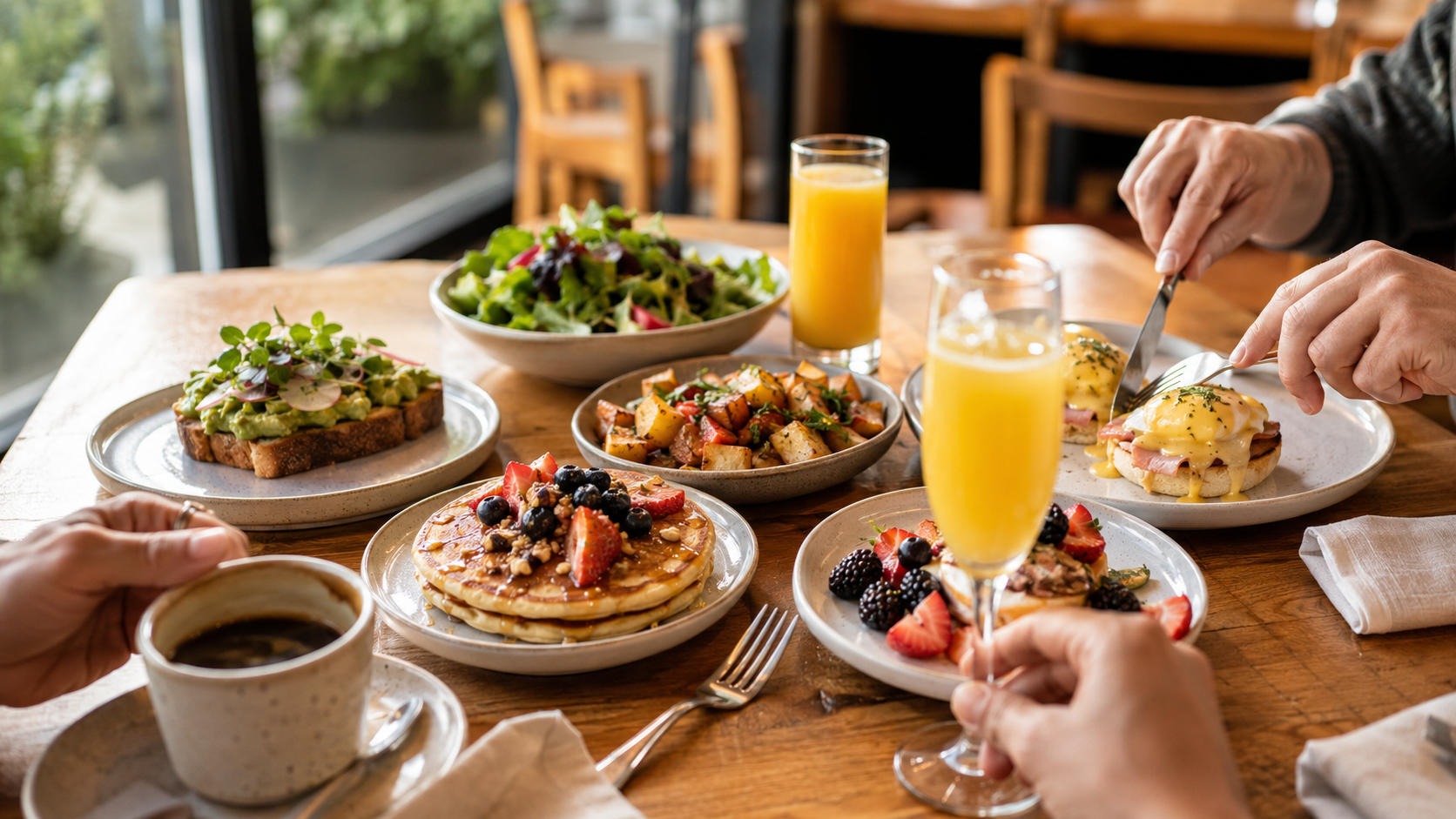
Brunch is typically served between 10:00 a.m. and 3:00 p.m., with 11:00 a.m. to 2:00 p.m. considered the most traditional brunch window. It begins late enough to feel different from breakfast but ends before the usual dinner hours.
There is no official rule that determines when brunch must start or end. Some restaurants begin brunch as early as 9:00 a.m., while others continue serving until 4:00 p.m. The right time depends on the restaurant, location, customer base, day of the week, and type of event.
What Is Brunch?
Brunch is a meal that combines elements of breakfast and lunch. The word itself blends the words “breakfast” and “lunch,” but brunch is defined by more than its timing.
A typical brunch menu may include breakfast favorites such as eggs, pancakes, waffles, and French toast alongside lunch dishes such as sandwiches, salads, burgers, seafood, and roasted meats. Coffee, juice, and brunch cocktails are also commonly served.
Unlike a quick weekday breakfast, brunch is usually designed to be a slower and more social experience. Guests may stay longer, order multiple courses, share dishes, or gather for birthdays, holidays, and other celebrations.
What Time Does Brunch Start?
Most brunch services begin between 10:00 and 11:00 a.m.
A 10:00 a.m. start works well for families, early risers, hotel guests, and customers who prefer breakfast-style dishes. Starting at 11:00 a.m. creates a more traditional weekend brunch atmosphere and makes lunch entrées and cocktails feel more appropriate.
Restaurants with an established breakfast business may begin serving brunch as early as 8:00 or 9:00 a.m. However, a meal served that early will often be perceived as breakfast unless the restaurant specifically promotes it as an all-day brunch concept.
What Time Does Brunch End?
Brunch generally ends between 2:00 and 3:00 p.m., although some restaurants extend service until 4:00 p.m.
Ending brunch around 2:00 p.m. gives the kitchen time to clean, restock, and prepare for dinner. A later closing time may work better for brunch-focused restaurants, bars, hotels, and establishments in busy urban or entertainment districts.
The published end time usually indicates when the restaurant stops seating brunch customers or taking brunch orders. Guests already seated may remain beyond that time, so restaurants should account for table turnover and kitchen transition time when planning service.
Typical Brunch Hours by Occasion
| Type of brunch | Suggested time |
|---|---|
| Weekend restaurant brunch | 10:00 a.m.–3:00 p.m. |
| Brunch with friends | 11:00 a.m.–2:00 p.m. |
| Family brunch | 10:00 a.m.–1:00 p.m. |
| Holiday brunch | 10:00 a.m.–3:00 p.m. |
| Wedding or post-wedding brunch | 9:30 a.m.–12:30 p.m. |
| Late or social brunch | 12:00 p.m.–4:00 p.m. |
These times are flexible. The best schedule is the one that fits the guests, menu, location, and purpose of the occasion.
Is Brunch Only Served on Sundays?
Sunday remains the day most closely associated with brunch, but brunch is not limited to Sundays.
Many restaurants offer brunch on both Saturday and Sunday. Saturday brunch can attract shoppers, tourists, families, and groups celebrating birthdays or other occasions. It may also help restaurants generate revenue during a period that would otherwise have limited daytime traffic.
Brunch-focused cafés and diners may serve brunch every day. In these establishments, the menu—not the day of the week—defines the experience.
Holiday brunches are also popular, particularly on:
- Easter
- Mother’s Day
- Father’s Day
- Thanksgiving weekend
- Christmas and New Year’s Day
Restaurants expecting high demand on these days may benefit from reservations, timed seatings, prix fixe menus, or buffet service.
How Long Does Brunch Usually Last?
A social brunch usually lasts between two and three hours. Restaurant guests may stay longer than they would during a weekday breakfast or lunch, especially when ordering cocktails or dining as part of a large group.
Restaurant operators should factor longer dining times into reservation intervals and table-turn expectations. Packing too many reservations into a short window can overwhelm the kitchen, slow service, and leave arriving guests waiting for tables.
For a brunch party at home, two to three hours generally provides enough time to eat, socialize, and enjoy drinks without making the event feel rushed.
What Foods Are Served at Brunch?
A successful brunch menu offers a balanced selection of sweet breakfast dishes, savory entrées, lighter options, sides, and beverages. It does not need to include dozens of items.
Egg dishes
Popular choices include:
- Eggs Benedict
- Omelets
- Frittatas
- Scrambled eggs
- Breakfast sandwiches
- Shakshuka
- Breakfast burritos
Egg dishes are strongly associated with brunch, but restaurants should consider how many customized egg preparations their kitchen can manage during peak service.
Sweet brunch dishes
Pancakes, waffles, crepes, and French toast add visual appeal and provide an alternative to savory entrées. These dishes can be customized with fruit, chocolate, whipped cream, flavored butter, syrups, or seasonal toppings.
Lunch-inspired entrées
Adding lunch options makes the menu suitable for guests who do not want breakfast food. Common choices include:
- Chicken and waffles
- Burgers and sandwiches
- Salads and grain bowls
- Shrimp and grits
- Avocado toast
- Steak and eggs
- Fried chicken
- Smoked salmon and bagels
Sides and shareable dishes
Breakfast potatoes, bacon, sausage, pastries, fresh fruit, biscuits, and small appetizers can increase average order value while giving groups something to share.
Brunch beverages
Coffee, tea, juice, sparkling water, smoothies, and specialty coffee drinks should be available alongside alcoholic beverages. Popular brunch cocktails include mimosas, Bloody Marys, Bellinis, sangria, and espresso martinis.
Alcohol service and promotions such as bottomless brunch must comply with applicable state and local regulations.
How Restaurants Can Choose the Best Brunch Hours
There is no single brunch schedule that works for every establishment. Restaurants should evaluate several operational and customer factors before setting their hours.
Understand your target customer
Families and older customers may prefer an earlier start, while younger groups and nightlife-oriented customers may arrive closer to noon. Tourist districts and hotels may see demand throughout the morning.
Review existing sales patterns
Restaurants that already serve breakfast can transition into brunch by adding a limited number of lunch dishes. Dinner-only restaurants may use brunch to generate revenue during otherwise unused weekend hours.
Allow time between services
A restaurant serving dinner should leave enough time after brunch for cleaning, prep, deliveries, and staff breaks. An overly long brunch service can interfere with dinner quality and readiness.
Start with a focused menu
A smaller menu is generally easier to execute consistently. Look for ingredients that can be used in multiple dishes, such as eggs, potatoes, bacon, bread, fresh fruit, greens, and sauces. This can reduce waste while simplifying prep and inventory.
Plan for the busiest period
Even if brunch runs from 10:00 a.m. to 3:00 p.m., demand may be concentrated between 11:00 a.m. and 1:30 p.m. Schedule kitchen staff, servers, bartenders, and dishwashers around the actual rush rather than the full service window alone.
Essential Equipment for Brunch Service

Brunch can place unusual pressure on a commercial kitchen because breakfast and lunch dishes must often be produced at the same time. The right equipment helps the kitchen maintain speed and consistency during peak hours.
A brunch operation may require:
- Commercial griddles for pancakes, French toast, eggs, and breakfast meats
- Commercial ranges for omelets, sauces, and sautéed dishes
- Convection ovens for pastries, roasted meats, and batch cooking
- Fryers for potatoes, chicken, and other high-volume sides
- Commercial refrigerators and refrigerated prep tables
- Coffee brewers and espresso equipment
- Ice machines for cold drinks and cocktails
- Food warmers or holding cabinets
- Commercial dishwashers for rapid tableware turnover
Restaurant owners should choose equipment based on menu volume, available kitchen space, ventilation, utility requirements, and anticipated peak demand—not solely on the total number of menu items.
Brunch Buffet Food Safety
Brunch buffets require close temperature and time control, particularly when serving eggs, dairy products, meats, seafood, cut fruit, and other perishable foods.
Commercial operators should follow their local health code. The FDA Food Code generally calls for time/temperature control for safety foods to be held at 135°F or above when hot and 41°F or below when cold. Requirements can vary depending on how individual jurisdictions adopt the Food Code. FDA guidance also provides specific temperature recommendations for eggs and egg-containing foods.
Use properly sized hot-holding equipment, refrigerated displays, ice beds, sneeze guards, serving utensils, and food thermometers. Replace buffet pans with fresh pans instead of adding new food to containers that have already been in service.
For home-hosted buffets, the FDA recommends discarding perishable foods left at room temperature for more than two hours—or one hour when the surrounding temperature is above 90°F. Review the FDA’s buffet safety recommendations.
A Brief History of Brunch
The term “brunch” is commonly traced to British writer Guy Beringer’s 1895 essay, Brunch: A Plea. Beringer proposed a relaxed late-morning Sunday meal as an alternative to the heavier meals traditionally served after church.
The idea eventually became popular in the United States as hotels and restaurants began offering combined breakfast and lunch menus. What started as a late Sunday meal has since developed into a major restaurant daypart and a popular setting for social gatherings and celebrations. Beringer’s original essay is available through Wikisource.
