
A restaurant menu is not just a list of dishes. It is one of the most important business tools inside a foodservice operation. It tells customers what you sell, shapes how they order, influences your average ticket, supports your brand identity, and affects how your kitchen, refrigeration, prep area, cooking line, and service flow need to be organized.

For a new restaurant owner, choosing a menu style may seem like a design decision. In reality, it is an operational decision. A small café with a rotating breakfast menu does not need the same menu system as a fast-casual burger concept, a full-service diner, a hotel restaurant, a buffet, a pizzeria, a food truck, or a fine dining establishment. The way you structure your menu determines how many ingredients you keep in inventory, how much refrigeration space you need, how your kitchen line is arranged, how many prep tables you use, how quickly your staff can serve guests, and how easily your business can control food costs.
This guide explains the most common restaurant menu types, menu display styles, menu board options, menu holders, menu paper choices, and practical menu planning tips for commercial foodservice businesses. Whether you are opening a new restaurant or upgrading an existing operation, understanding your menu format can help you build a smoother, more profitable business.
What Is a Restaurant Menu?
A restaurant menu is the organized presentation of food and beverage items offered to guests. It may be printed, laminated, displayed on a wall, written on a chalkboard, shown on a digital screen, placed inside a menu cover, built into a QR code system, or presented verbally by a server.
But from an operator’s perspective, a menu is much more than a customer-facing document. It is the blueprint for your kitchen. Every menu item creates a chain of operational requirements: ingredients, storage, prep time, refrigeration, cooking equipment, plating space, labor, packaging, and service speed.
For example, a menu with fresh seafood may require dependable refrigerated storage, ice machines, prep sinks, and proper cold holding. A pizza menu requires dough prep, refrigerated topping storage, pizza ovens, work tables, and possibly heated holding. A bakery menu may require mixers, proofers, ovens, display cases, and reach-in refrigeration. A deli menu may require refrigerated prep tables, slicers, sandwich units, beverage coolers, and display merchandisers.
That is why choosing the right menu style matters before you buy equipment, design your kitchen, or finalize your food concept.
Main Types of Restaurant Menus
Different restaurants use different menu formats depending on service style, price point, kitchen capacity, customer expectations, and ingredient strategy. Below are the most common types of restaurant menus.
Static Menu
A static menu stays mostly the same every day. It is one of the most common menu types in fast food, fast casual, diners, pizzerias, cafés, delis, casual restaurants, and many full-service operations.
Static menus are usually divided into familiar categories such as appetizers, salads, sandwiches, burgers, pasta, entrées, sides, desserts, and beverages. Customers like static menus because they are predictable. Operators like them because they make purchasing, inventory, prep, staff training, and equipment planning easier.
A static menu works especially well when your business depends on consistency. If customers come back for the same cheeseburger, chicken sandwich, pizza, breakfast platter, or salad bowl, you want your menu to be stable enough to build repeat demand.
From an equipment perspective, static menus make planning easier. Since your core items do not change often, you can design your kitchen around repeatable production. For example, a diner with a static breakfast menu may rely heavily on griddles, fryers, refrigerated prep tables, reach-in refrigerators, coffee equipment, and undercounter refrigeration. A sandwich shop may need sandwich prep tables, slicers, beverage coolers, and refrigerated display cases.
Best for: diners, fast casual restaurants, cafés, pizzerias, burger shops, sandwich shops, delis, family restaurants.
À La Carte Menu
An à la carte menu allows customers to order individual items separately. Instead of one fixed meal price, each dish, side, beverage, or add-on has its own price.
This menu style gives customers flexibility. Someone may order only an entrée, add a side, choose multiple appetizers, or build a meal around individual selections. À la carte menus are common in casual dining, fine dining, hotel restaurants, steakhouses, seafood restaurants, and many international concepts.
For operators, à la carte menus create more pricing control. You can price premium proteins, sides, sauces, and upgrades separately. This can help protect margins when ingredient costs change. However, it also requires strong menu engineering because customers may skip profitable add-ons if they are not presented clearly.
À la carte menus often require wider ingredient inventory because customers can combine items in different ways. That means refrigeration, dry storage, prep space, and line organization become especially important.
Best for: full-service restaurants, steakhouses, seafood restaurants, hotel restaurants, upscale casual concepts.
Du Jour Menu
A du jour menu changes daily. “Du jour” means “of the day,” so this style is often used for soups of the day, chef specials, daily entrées, fresh catch, seasonal vegetables, or limited-time dishes.
This menu type gives chefs flexibility. If a restaurant receives fresh local produce, seafood, or meat, it can build a daily special around available ingredients. It also helps reduce waste because the kitchen can use inventory before it expires.
Du jour menus work well with chalkboards, tabletop inserts, menu clipboards, printed daily sheets, digital menu boards, and server recommendations. They are especially effective when customers trust the chef or when the restaurant wants to create urgency around limited availability.
Operationally, du jour menus require flexible prep areas, reliable refrigeration, and good communication between kitchen and front-of-house teams. If your specials change frequently, your team must know what is available, what has sold out, and what equipment is needed to execute the dish consistently.
Best for: bistros, cafés, seafood restaurants, farm-to-table restaurants, bakeries, bars, chef-driven restaurants.
Cycle Menu
A cycle menu changes according to a repeating schedule. For example, a school cafeteria, hospital, corporate cafeteria, nursing facility, or institutional kitchen may use a two-week or four-week cycle. After the cycle ends, the menu starts again.
Cycle menus are useful when consistency, nutrition planning, purchasing control, and labor efficiency are important. They help foodservice managers forecast ingredient needs, reduce waste, standardize prep, and plan staff workload.
This type of menu is less common in independent restaurants but very common in high-volume foodservice environments. Because the menu repeats, equipment planning can be highly structured. Operators can match cooking equipment, storage, serving lines, and holding equipment to the expected weekly production schedule.
Best for: schools, hospitals, corporate cafeterias, senior living facilities, correctional facilities, institutional kitchens.
Table d’Hôte Menu
A table d’hôte menu offers a complete meal at a set price, usually with limited choices within each course. For example, a guest may choose one appetizer, one entrée, and one dessert from a short list.
This style gives restaurants more control than a fully à la carte menu while still giving guests some choice. It can simplify purchasing and prep because the kitchen is working with a controlled set of items.
Table d’hôte menus are useful for banquets, hotel restaurants, event dining, holiday meals, and prix-style service where the restaurant wants to offer structure without removing customer choice completely.
Best for: banquet halls, hotel restaurants, event venues, holiday dining, semi-formal restaurants.
Prix Fixe Menu

A prix fixe menu offers a set meal at a fixed price. Unlike a flexible à la carte menu, the courses are usually predetermined or tightly controlled. A three-course prix fixe might include an appetizer, entrée, and dessert for one price.
Prix fixe menus are useful when restaurants want to create a curated dining experience, control food costs, speed up service, or offer a special occasion package. They are common during holidays, Restaurant Week promotions, tasting events, and fine dining service.
From a kitchen standpoint, prix fixe menus can improve efficiency because the team knows what dishes will be produced. This can reduce waste, simplify prep, and improve plating consistency. However, the menu must be priced carefully. If the food cost is miscalculated, the fixed price can quickly hurt margins.
Best for: fine dining, holiday menus, Restaurant Week, hotel dining, chef-driven concepts, event service.
Tasting Menu
A tasting menu is a multi-course dining experience made up of small portions. It is designed to showcase the chef’s creativity, technique, ingredients, or seasonal vision.
Tasting menus are often used in fine dining restaurants where the experience itself is the product. Guests are not just buying food; they are buying storytelling, pacing, presentation, and culinary craft.
This type of menu requires a highly organized kitchen. Timing, plating, prep, refrigeration, portion control, and staff communication must be precise. A tasting menu can increase perceived value, but it also demands strong execution.
Best for: fine dining, chef’s counters, upscale restaurants, special events, wine pairing dinners.
Beverage Menu
A beverage menu lists drinks separately from the main food menu. It may include cocktails, beer, wine, coffee, tea, smoothies, juices, milkshakes, soft drinks, or specialty beverages.
A separate beverage menu is useful because drinks often carry strong margins. Restaurants can use beverage menus to highlight premium cocktails, seasonal drinks, wine pairings, happy hour specials, and non-alcoholic options.
The equipment behind a beverage menu matters. A strong drink program may require ice machines, undercounter refrigerators, bar sinks, glass washers, beer dispensers, wine coolers, back bar coolers, espresso machines, blenders, and beverage merchandisers.
Best for: bars, cafés, coffee shops, juice bars, full-service restaurants, hotels, breweries.
Dessert Menu
A dessert menu is often presented after the main meal or displayed separately near a bakery case, pastry case, or dessert refrigerator.
Dessert menus can increase check averages when presented at the right time. They are especially effective when paired with coffee, tea, after-dinner drinks, or dessert wines.
For restaurants with strong dessert programs, presentation matters. Refrigerated display cases, bakery cases, cake displays, and glass merchandisers can help turn desserts into impulse purchases.
Best for: full-service restaurants, bakeries, cafés, diners, hotels, dessert shops.
Wine List or Wine Book
A wine list may be a simple one-page beverage menu or a detailed wine book with regions, vintages, tasting notes, pairings, and bottle prices.
Wine books are common in fine dining and upscale restaurants. They support higher-value sales and help guests feel more confident when choosing wine. A strong wine program also requires proper storage, temperature control, and service tools.
Best for: fine dining, steakhouses, hotels, wine bars, upscale casual restaurants.
Children’s Menu
A children’s menu is designed for younger guests and usually includes smaller portions, simple dishes, bright design, and family-friendly pricing.
Children’s menus are common in diners, family restaurants, casual dining chains, resorts, and cafés. Some are printed on disposable paper with games or coloring activities.
From an operations standpoint, children’s menus should be simple to execute. The items should not slow down the kitchen or require too many unique ingredients.
Best for: family restaurants, diners, casual dining, resorts, breakfast restaurants.
Ways to Display a Restaurant Menu
Once you choose the type of menu, you need to decide how customers will see it. The right display style depends on your restaurant format, service speed, table setup, brand identity, and how often your menu changes.
Printed Menus
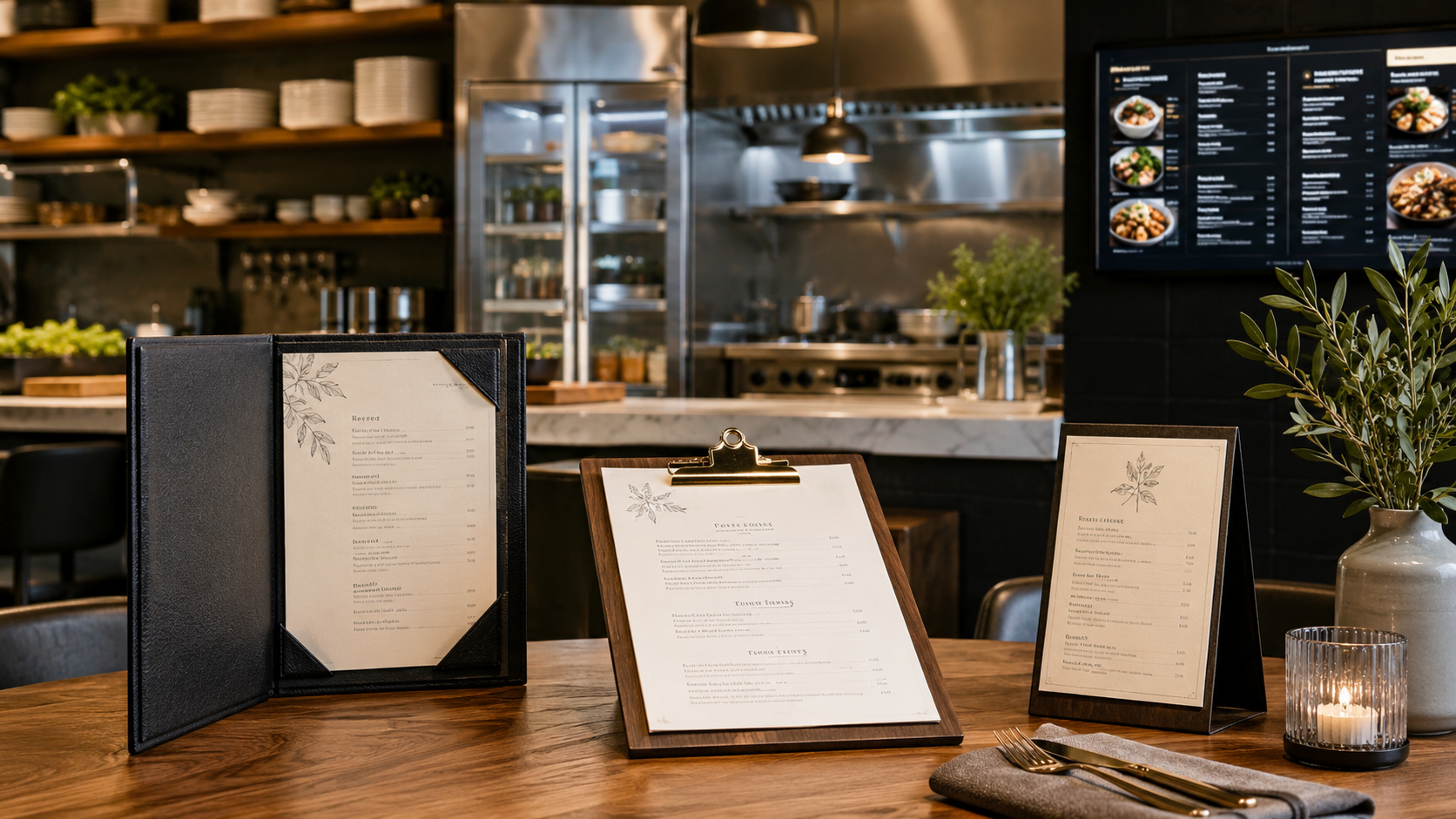
Printed menus are the classic choice for full-service restaurants. They can be single-page, folded, laminated, inserted into covers, or printed on premium paper.
Printed menus work well when guests are seated and have time to browse. They also support strong branding because the restaurant can control paper texture, typography, layout, color, and menu descriptions.
However, printed menus can become expensive if prices or items change often. Restaurants with seasonal menus may need menu inserts or clipboards to avoid constant reprinting.
Best for: full-service restaurants, diners, cafés, bistros, fine dining, hotel restaurants.
Menu Clipboards
Menu clipboards are practical, casual, and easy to update. Restaurants can print a fresh sheet daily or weekly and clip it to a board.
This option is popular with cafés, bistros, breweries, brunch spots, bakeries, and farm-to-table restaurants. It creates a handcrafted, flexible feel without looking messy.
Clipboards are especially useful for du jour menus, limited menus, seasonal menus, and beverage lists.
Best for: cafés, bistros, breweries, brunch spots, bakeries.
Tabletop Tent Menus
Tabletop tent menus sit directly on tables or counters. They are often used to promote specials, drinks, desserts, happy hour deals, QR codes, loyalty programs, or limited-time offers.
They are not always meant to replace the main menu. Instead, they work as a secondary sales tool. A tabletop tent can remind guests to order appetizers, cocktails, desserts, or seasonal items while they are already seated.
Best for: casual dining, bars, cafés, diners, hotel restaurants.
Menu Boards
Menu boards are mounted or displayed where customers order. They are common in quick-service restaurants, fast casual concepts, cafés, bakeries, pizza shops, food trucks, ice cream shops, and coffee shops.
Menu boards need to be easy to read quickly. Customers standing in line should be able to understand categories, prices, options, and add-ons without slowing down service.
Menu boards may be chalkboards, dry-erase boards, printed boards, magnetic boards, illuminated signs, or digital screens.
Best for: fast casual, quick service, cafés, bakeries, food trucks, pizza shops.
Digital Menu Boards
Digital menu boards are becoming more common because they allow restaurants to update pricing, items, photos, promotions, and availability without reprinting signs.
They are especially useful for multi-location restaurants, quick-service brands, cafés, and businesses with frequent changes. A digital menu board can show breakfast in the morning, lunch in the afternoon, and dinner specials later in the day.
Digital boards can also reduce confusion when items sell out or prices change. For high-volume operations, this can improve ordering accuracy and service speed.
Best for: quick service, fast casual, multi-location restaurants, cafés, food courts, franchises.
QR Code Menus
QR code menus became more common after the pandemic, but they remain useful in certain environments. They allow customers to scan a code and view the menu on their phone.
QR menus are easy to update and can reduce printing costs. They are useful for restaurants with frequent changes, large beverage lists, or online ordering integration.
However, they should not be the only option for every concept. Some guests prefer physical menus, and poor mobile design can create frustration. The best approach is often hybrid: offer QR access while keeping printed menus available.
Best for: casual dining, bars, cafés, outdoor dining, restaurants with frequent updates.
Types of Menu Covers and Holders
Menu covers and holders protect menus, improve presentation, and support the restaurant’s brand identity.
Basic Menu Covers
Basic menu covers are often made of vinyl, plastic, or clear sleeves. They protect printed pages from spills, grease, fingerprints, and frequent handling.
They are practical for diners, casual restaurants, breakfast spots, and family restaurants where menus are used repeatedly throughout the day.
Deluxe Menu Covers
Deluxe covers are made from materials such as leather, wood, hardboard, metal, or premium textured materials. They create a more upscale first impression.
They are commonly used in fine dining, steakhouses, hotels, wine bars, and contemporary restaurants.
Menu Inserts
Menu inserts allow restaurants to add seasonal pages, specials, beverage lists, dessert menus, or limited-time offers without redesigning the entire menu.
They are useful for restaurants that want a stable core menu with flexible promotions.
Card Holders
Card holders are small tabletop holders used for specials, table numbers, buffet labels, dessert cards, happy hour promotions, or QR codes.
They are common in cafés, buffets, bakeries, hotels, and catered events.
Menu Racks
Menu racks store menus near the host stand, counter, wall, or tabletop. They are useful for diners, fast-casual restaurants, cafés, takeout counters, and waiting areas.
Types of Menu Boards and Signs
Different menu board styles create different customer experiences.
Chalkboards
Chalkboards create a casual, handmade feel. They are ideal for cafés, bakeries, coffee shops, breweries, and restaurants with daily specials.
Dry-Erase Boards
Dry-erase boards are practical and easy to update. They work well for casual restaurants, cafeterias, food trucks, and back-of-house communication.
Magnetic Menu Boards
Magnetic boards allow restaurants to move items, prices, photos, and promotional pieces around quickly.
Glass Boards
Glass boards offer a clean, modern look. They are often used for specials, beverage lists, and upscale casual environments.
Illuminated Boards
Illuminated boards help menus stand out in dim environments such as bars, nightclubs, theaters, food courts, and late-night restaurants.
Digital Screens
Digital screens offer the most flexibility. They are best for restaurants that need frequent updates, multiple dayparts, promotional content, or multi-location consistency.
How to Choose the Right Menu Style for Your Restaurant
The best menu style depends on how your business actually operates. Before choosing a design, ask these questions:
What type of restaurant are you opening?
How often will your menu change?
Will guests order at the table, counter, bar, window, or online?
Do you need printed menus, menu boards, QR menus, or all three?
How many items can your kitchen produce consistently?
Do you have enough refrigeration and prep space for the ingredients on the menu?
Which items are most profitable?
Which items are easiest to execute during peak hours?
Will your menu require special equipment such as fryers, ovens, refrigerated prep tables, display cases, ice machines, or walk-in coolers?
A menu should not be designed separately from the kitchen. If your menu is too large for your equipment, your service will suffer. If your menu requires more cold storage than you have, food safety and inventory control become harder. If your menu has too many cooking methods, your line may become slow and disorganized.
The best restaurant menus are built around a balance of customer demand, kitchen capacity, profitability, and brand identity.
Menu Engineering: Designing a Menu That Supports Profit
Menu engineering is the process of analyzing menu items based on popularity and profitability. Instead of guessing which items should be promoted, operators use sales data and food cost information to decide which dishes deserve more attention.
A common menu engineering model groups items into four categories:
Stars: popular and profitable items.
Plowhorses: popular but lower-profit items.
Puzzles: profitable but not ordered often enough.
Dogs: low-profit and low-popularity items.
This framework helps restaurants decide which items to feature, reprice, rename, reposition, improve, or remove.
For example, if a chicken sandwich is popular but has a low margin, it may be a Plowhorse. The restaurant may adjust portion size, change the side, increase the price slightly, or create a premium version. If a seafood entrée is highly profitable but rarely ordered, it may be a Puzzle. The restaurant may give it better menu placement, rewrite the description, train servers to recommend it, or feature it as a special.
Menu engineering is especially important when food costs rise. A menu should not only look good; it should guide customers toward items that help the business survive.
Matching Menu Type to Equipment Planning
One of the biggest mistakes new operators make is designing the menu before understanding the equipment required to execute it.
A burger menu may require griddles, fryers, refrigerated prep tables, reach-in refrigerators, freezers, bun storage, and holding equipment.
A deli menu may require slicers, sandwich prep tables, display cases, beverage coolers, undercounter refrigeration, and storage shelving.
A seafood menu may require walk-in coolers, ice machines, prep sinks, refrigerated storage, freezers, and proper cold holding.
A bakery menu may require mixers, ovens, proofers, ingredient bins, bakery cases, and reach-in refrigeration.
A pizza menu may require pizza prep tables, dough mixers, deck ovens or conveyor ovens, refrigeration, and heated holding.
A bar menu may require ice machines, back bar coolers, undercounter refrigerators, glass washers, beer dispensers, and wine storage.
The more complex your menu becomes, the more important equipment planning becomes. A smart menu should match the physical capacity of the kitchen.
Restaurant Menu Compliance Considerations
Some restaurants must follow menu labeling rules. In the United States, certain chain restaurants and similar retail food establishments are required to display calorie information for standard menu items on menus and menu boards. They must also provide additional nutrition information upon request.
Even if your restaurant is not legally required to display calorie information, clear menu descriptions can still help customers make better decisions. This is especially important for allergens, dietary preferences, gluten-free items, vegetarian options, vegan dishes, and spicy items.
Operators should always check current federal, state, and local requirements before finalizing menu language.
A restaurant menu is one of the most powerful tools in a foodservice business. It influences customer decisions, kitchen workflow, food cost, equipment needs, labor planning, and profitability.
The right menu style depends on your concept. A diner may need a durable static menu. A café may need a chalkboard and tabletop specials. A fast-casual restaurant may need digital menu boards. A fine dining restaurant may need a prix fixe or tasting menu. A bakery may need display labels and refrigerated cases. A bar may need a separate beverage menu. A family restaurant may need a children’s menu.
Before printing your menu, think about the operation behind it. Can your kitchen produce every item consistently? Do you have the right refrigeration, cooking equipment, prep tables, storage, and display equipment? Are your most profitable items easy to find? Can your staff explain the menu clearly? Can your menu change when prices, ingredients, or customer demand changes?
A good menu helps customers order. A great menu helps the entire restaurant operate better.