
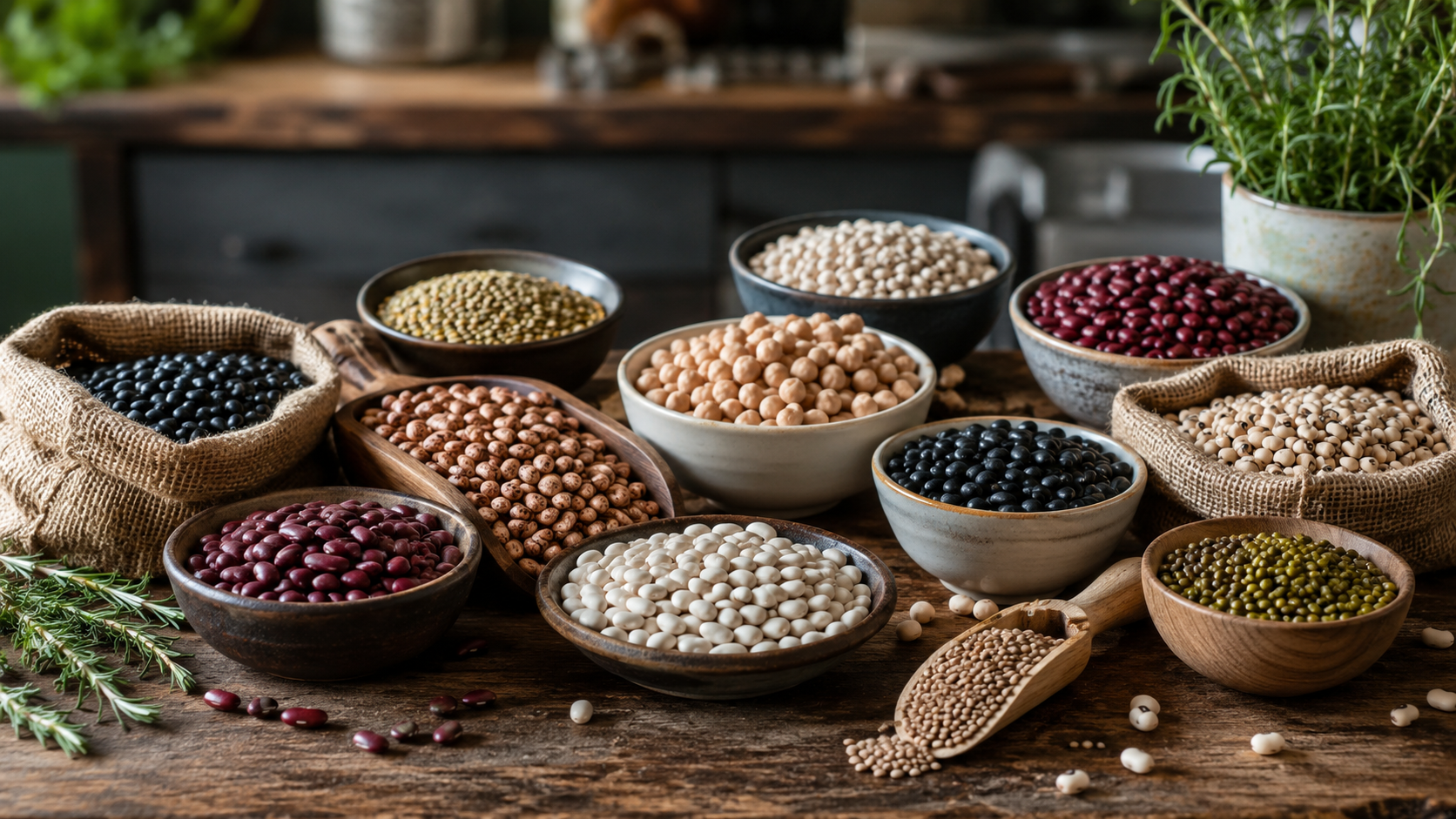
Beans are one of the most useful ingredients in a commercial kitchen. They are affordable, shelf-stable, filling, versatile, and naturally plant-based, which makes them valuable for restaurants, cafés, delis, caterers, food trucks, cafeterias, and supermarket prepared food programs. Whether you are building a chili recipe, adding a vegan protein to your menu, preparing soups in bulk, creating Mediterranean dips, or serving classic rice-and-beans dishes, the type of bean you choose affects flavor, texture, cooking time, food cost, and presentation.

At first glance, beans may seem simple. But for chefs and restaurant operators, choosing the right bean is a menu decision. Black beans do not behave the same way as chickpeas. Navy beans do not give the same texture as cannellini beans. Kidney beans hold up beautifully in chili, while lentils can break down into a thick, comforting soup or curry. Some beans are best for salads, some are better for purées, some are perfect for stews, and others work well as plant-based meat alternatives.
This guide explains the most common types of beans, how they taste, where they work best, and what foodservice operators should know before buying them in bulk.
What Are Beans?
Beans are edible seeds that come from plants in the legume family. They are closely related to peas, lentils, chickpeas, and peanuts. In everyday restaurant language, the word “beans” usually refers to dried or canned edible seeds such as black beans, pinto beans, kidney beans, navy beans, cannellini beans, chickpeas, and similar varieties.
Beans are widely used because they offer a strong combination of protein, fiber, complex carbohydrates, minerals, and menu flexibility. For restaurants, they also provide another major advantage: they are cost-effective. A single bulk bag of dried beans can turn into a large quantity of cooked product, which makes beans especially attractive for high-volume kitchens, meal prep operations, cafeterias, and budget-conscious menus.
Beans are sold in several common forms:
Dried beans are uncooked and require soaking or longer cooking. They give chefs more control over texture, seasoning, and final flavor.
Canned beans are already cooked and ready to use. They save labor and prep time, which is valuable in busy restaurant kitchens.
Frozen beans are less common but useful for certain prepared food programs.
Fresh beans, such as fresh fava beans or edamame, are used in more seasonal or specialty applications.
For most foodservice kitchens, dried and canned beans are the two most important buying options.
Quick Guide: Best Beans by Menu Application
Before going into each bean variety, here is a practical way to think about beans from a restaurant menu perspective.
For chili, choose kidney beans, pinto beans, black beans, or small red beans. These beans hold their shape well and stand up to long simmering.
For refried beans, choose pinto beans first. Black beans can also work if you want a darker, earthier version.
For hummus, choose chickpeas. For a twist, white beans or black beans can also be used in alternative dips.
For soups, choose navy beans, great northern beans, cannellini beans, lentils, split peas, or cranberry beans.
For salads, choose chickpeas, kidney beans, black beans, cannellini beans, or black-eyed peas because they hold their structure well.
For vegan burgers, choose black beans, chickpeas, lentils, or pinto beans because they can bind well with grains, vegetables, and seasonings.
For baked beans, choose navy beans, great northern beans, or pinto beans.
For Mediterranean dishes, choose chickpeas, cannellini beans, fava beans, or lentils.
For Latin American dishes, choose black beans, pinto beans, pink beans, red beans, or kidney beans.
For Southern-style sides, choose black-eyed peas, lima beans, navy beans, or red beans.
For Asian desserts or sweet bean pastes, choose adzuki beans or mung beans.
1. Black Beans
Black beans are small, dark, oval-shaped beans with a mild, earthy flavor and a dense texture. They are strongly associated with Latin American, Caribbean, Southwestern, and Mexican-inspired cooking. In restaurants, they are one of the most useful beans because they work in both hot and cold applications.
Black beans are excellent in burritos, tacos, rice bowls, soups, chili, salads, dips, and vegetarian burgers. They pair well with cumin, garlic, onion, cilantro, lime, smoked paprika, chili powder, oregano, jalapeño, and roasted peppers.
For foodservice menus, black beans are especially valuable because they can be used across multiple dishes. A restaurant can cook one batch and use it for sides, burrito bowls, nachos, soups, breakfast plates, vegan entrées, and catering trays.
Flavor: Mild, earthy, slightly sweet
Texture: Dense, smooth, meaty
Best uses: Burritos, rice bowls, soups, chili, dips, salads, veggie burgers
Best cuisines: Mexican, Cuban, Caribbean, Southwestern, Brazilian-inspired menus
2. Pinto Beans
Pinto beans are one of the most popular beans in American and Mexican-style cooking. They are beige with brown speckles when dry, but they turn light brown after cooking. Pinto beans have a creamy texture and a warm, earthy flavor.
They are the classic choice for refried beans, but they are also excellent in chili, burritos, enchiladas, soups, casseroles, and rice plates. In restaurants, pinto beans are valuable because they become soft and creamy without losing all structure. This makes them ideal for mashed or partially mashed preparations.
If your menu includes tacos, burritos, Tex-Mex plates, BBQ sides, or Southwestern bowls, pinto beans are one of the first bulk beans to consider.
Flavor: Earthy, nutty, warm
Texture: Soft, creamy
Best uses: Refried beans, chili, burritos, soups, bean dips, BBQ sides
Best cuisines: Mexican, Tex-Mex, Southwestern, American comfort food
3. Chickpeas / Garbanzo Beans
Chickpeas, also known as garbanzo beans, are round, firm beans with a nutty flavor. They are essential in Mediterranean, Middle Eastern, Indian, and vegetarian cooking. Chickpeas are one of the most versatile beans for restaurants because they can be served whole, mashed, puréed, roasted, fried, or ground.
Their most famous use is hummus, but chickpeas are also used in falafel, curries, salads, grain bowls, soups, stews, wraps, and roasted snacks. In plant-based menus, chickpeas are especially useful because they provide body and texture without needing meat.
Canned chickpeas are convenient for hummus and salads, while dried chickpeas can offer better texture and lower food cost for high-volume kitchens. The liquid from cooked or canned chickpeas, known as aquafaba, can also be used in some vegan recipes as an egg white substitute.
Flavor: Nutty, earthy
Texture: Firm, slightly grainy
Best uses: Hummus, falafel, salads, curries, bowls, roasted snacks, vegan dishes
Best cuisines: Mediterranean, Middle Eastern, Indian, Spanish, vegetarian menus
4. Kidney Beans
Kidney beans are large, red, kidney-shaped beans with a firm texture. They are best known for chili, but they are also common in Creole, Cajun, Indian, Caribbean, and American dishes. Kidney beans hold their shape well during long cooking, making them a smart choice for stews, soups, and simmered dishes.
Red kidney beans should always be cooked properly. They are not safe to eat raw or undercooked because raw kidney beans contain lectins that can cause digestive illness. In a restaurant setting, this makes proper cooking procedures especially important.
Kidney beans are visually strong because their red color stands out in chili, three-bean salads, rice dishes, and buffet presentations.
Flavor: Mild, slightly sweet, robust
Texture: Firm, meaty
Best uses: Chili, red beans and rice, stews, soups, salads
Best cuisines: American, Cajun, Creole, Indian, Caribbean
5. Navy Beans
Navy beans are small white beans with a mild flavor and soft texture. They are commonly used in baked beans, navy bean soup, white bean purées, and casseroles. Because they absorb flavors well, they are ideal for slow-cooked dishes with smoky, sweet, or savory ingredients.
For restaurants, navy beans are a strong option for comfort-food sides. They can be used in BBQ baked beans, soups with ham or smoked turkey, vegetarian white bean stews, or creamy dips.
Navy beans are smaller than great northern or cannellini beans, which makes them better for dishes where a soft, cohesive texture is desired.
Flavor: Mild, delicate
Texture: Soft, creamy, slightly powdery
Best uses: Baked beans, soups, stews, purées, dips
Best cuisines: American, BBQ, comfort food, cafeteria menus
6. Cannellini Beans
Cannellini beans are large white kidney beans with a tender, creamy texture and a slightly nutty flavor. They are widely used in Italian and Mediterranean cooking. They are excellent in soups, stews, salads, pasta dishes, and white bean spreads.
Cannellini beans are a premium-feeling bean because they look clean, hold up well, and pair beautifully with olive oil, rosemary, garlic, lemon, parsley, tomatoes, greens, and seafood.
Restaurants can use cannellini beans in minestrone, pasta e fagioli, Tuscan white bean soup, white bean salad, braised greens, and Mediterranean small plates.
Flavor: Nutty, mild, earthy
Texture: Tender, creamy, semi-firm
Best uses: Pasta dishes, soups, salads, stews, white bean dips
Best cuisines: Italian, Mediterranean, modern American
7. Great Northern Beans
Great northern beans are medium-sized white beans with a mild flavor and soft texture. They are slightly smaller than cannellini beans and slightly larger than navy beans. They absorb flavors well, making them useful in soups, stews, casseroles, and baked bean recipes.
In restaurant kitchens, great northern beans are a flexible all-purpose white bean. They work well when you want a creamy bean that still holds some shape. They can often be used in place of cannellini or navy beans, depending on the recipe.
Flavor: Mild, delicate, slightly nutty
Texture: Soft, creamy
Best uses: Soups, casseroles, baked beans, stews, dips
Best cuisines: American, French-inspired, comfort food
8. Lima Beans / Butter Beans
Lima beans are flat beans that range from green to creamy white. Larger lima beans are often called butter beans because of their rich, buttery texture. They are common in Southern cooking and are often served as a side dish, in succotash, or in stews.
For restaurants, lima beans can be used as a comfort-food side, a vegetarian entrée base, or a creamy addition to soups and casseroles. Their larger size gives them a distinctive plate presence.
Flavor: Buttery, slightly sweet, nutty
Texture: Smooth, creamy
Best uses: Succotash, soups, stews, casseroles, Southern sides
Best cuisines: Southern American, comfort food, homestyle menus
9. Black-Eyed Peas
Black-eyed peas, also called cowpeas, are small pale beans with a black “eye.” They are deeply associated with Southern American cooking, West African cuisine, Caribbean dishes, and Indian recipes.
They have a firm texture and earthy flavor, which makes them suitable for long-cooked dishes, stews, curries, salads, and rice plates. In Southern menus, black-eyed peas are often served with greens, smoked meat, rice, cornbread, or hot sauce.
For restaurant operators, black-eyed peas are an excellent way to create regional dishes, seasonal specials, and hearty vegetarian sides.
Flavor: Earthy, nutty, savory
Texture: Firm, dense
Best uses: Southern sides, stews, curries, salads, rice dishes
Best cuisines: Southern, African, Caribbean, Indian
10. Red Beans
Red beans are smaller than kidney beans and have a smoother, creamier texture. They are commonly used in Caribbean, Latin American, Creole, and Cajun cooking. The most famous dish is red beans and rice, especially in Louisiana-style menus.
Red beans work well with smoked sausage, ham hock, onions, celery, bell peppers, garlic, thyme, bay leaves, and Cajun seasoning. They soften into a creamy base while still maintaining enough structure for hearty dishes.
Flavor: Earthy, nutty
Texture: Smooth, creamy
Best uses: Red beans and rice, soups, stews, chili, side dishes
Best cuisines: Cajun, Creole, Caribbean, Latin American
11. Pink Beans
Pink beans are small to medium-sized beans with a pinkish color and a rich, savory flavor. They are common in Caribbean and Latin American cooking. Pink beans are often used in rice and beans, stews, chili, and refried bean-style preparations.
They are similar to pinto beans in some applications but have a slightly different color and flavor profile. If your restaurant serves Puerto Rican, Dominican, Mexican, or Latin-inspired dishes, pink beans are worth considering.
Flavor: Rich, savory, slightly sweet
Texture: Smooth, meaty
Best uses: Rice and beans, stews, chili, refried beans, side dishes
Best cuisines: Caribbean, Latin American, Mexican-inspired menus
12. Cranberry Beans / Borlotti Beans
Cranberry beans, also known as borlotti beans, are beige-pink beans with red markings when dry. Their markings fade during cooking, but their creamy texture and nutty flavor remain. They are popular in Italian, Portuguese, and Mediterranean dishes.
Cranberry beans create a flavorful bean broth, making them excellent for soups, ragouts, stews, and pasta dishes. They are a strong choice for chefs who want something more distinctive than standard white beans.
Flavor: Rich, nutty, slightly sweet
Texture: Creamy, meaty
Best uses: Minestrone, pasta e fagioli, stews, ragouts, casseroles
Best cuisines: Italian, Portuguese, Mediterranean
13. Lentils
Lentils are technically pulses rather than beans in the strictest sense, but they are usually discussed alongside beans because they serve a similar purpose in cooking. Lentils come in many varieties, including brown, green, red, yellow, black beluga, and French green lentils.
One of the biggest advantages of lentils is that they cook faster than most dried beans and usually do not require soaking. Red and yellow lentils break down easily, making them excellent for soups, dal, and purées. Green, brown, black, and French lentils hold their shape better, making them useful for salads, bowls, and side dishes.
For restaurants, lentils are extremely valuable because they support vegetarian, vegan, gluten-free, Mediterranean, Middle Eastern, Indian, and health-focused menu items.
Flavor: Earthy, mild, sometimes peppery depending on variety
Texture: Soft to firm depending on type
Best uses: Soups, dal, curries, salads, bowls, veggie burgers
Best cuisines: Indian, Middle Eastern, Mediterranean, vegetarian menus
14. Mung Beans
Mung beans are small green beans commonly used in Indian, Chinese, Korean, and Southeast Asian cooking. They can be cooked whole, split, sprouted, or used in sweet and savory dishes.
Whole mung beans have a mild, slightly sweet flavor. Split mung beans are commonly used in dal and soups. Mung bean sprouts are widely used in stir-fries, salads, noodle dishes, and fresh rolls.
For restaurants, mung beans are especially useful if the menu includes Asian-inspired bowls, vegetarian soups, plant-based specials, or sprouted ingredients.
Flavor: Mild, slightly sweet, nutty
Texture: Soft when cooked; crisp when sprouted
Best uses: Dal, soups, curries, sprouts, stir-fries, desserts
Best cuisines: Indian, Chinese, Korean, Southeast Asian
15. Fava Beans
Fava beans, also called broad beans, are large green beans often sold fresh, frozen, canned, or dried. Fresh fava beans require more prep because they are usually removed from the pod, blanched, and peeled before final cooking.
Fava beans are common in Mediterranean, Middle Eastern, and North African cooking. They can be used in salads, dips, spreads, soups, stews, and purées. They have a slightly bitter, nutty flavor and a creamy texture when cooked properly.
For restaurants, fava beans can add a more seasonal or chef-driven feel to the menu. They work especially well with olive oil, lemon, herbs, garlic, lamb, seafood, and spring vegetables.
Flavor: Nutty, slightly bitter, fresh
Texture: Tender, creamy
Best uses: Salads, dips, spreads, soups, stews, seasonal sides
Best cuisines: Mediterranean, Middle Eastern, North African
16. Soybeans / Edamame
Soybeans are round beans used in many forms, including tofu, tempeh, soy milk, soy sauce, miso, and edamame. Mature soybeans are tan, while edamame refers to young green soybeans.
Edamame is especially popular as an appetizer, bar snack, salad topping, bowl ingredient, or side dish. Tofu and tempeh are widely used as plant-based proteins in vegan and vegetarian menus.
Soybeans are unique because they are connected to a large range of foodservice products. For restaurants, they are not just a bean; they are a foundation for many plant-based menu items.
Flavor: Mild, slightly sweet when young
Texture: Soft to firm depending on preparation
Best uses: Edamame, tofu, tempeh, miso, soy-based sauces, vegan entrées
Best cuisines: Japanese, Chinese, Korean, vegan, health-focused menus
17. Adzuki Beans
Adzuki beans are small red beans with a naturally sweet, nutty flavor. They are widely used in East Asian desserts, especially Japanese and Chinese sweets. The most famous preparation is sweet red bean paste, often used in mochi, buns, cakes, shaved ice, and other desserts.
Adzuki beans can also be used in savory applications, including rice dishes, soups, curries, and salads. For restaurants, they are most valuable in dessert programs, Asian-inspired menus, bakeries, cafés, and specialty beverage concepts.
Flavor: Sweet, nutty
Texture: Soft but structured
Best uses: Sweet red bean paste, desserts, rice dishes, soups, curries
Best cuisines: Japanese, Chinese, Korean, Asian bakery menus
18. Flageolet Beans / Fayot Beans
Flageolet beans, sometimes called fayot beans, are small, pale green to creamy white beans associated with French cuisine. They have a delicate flavor and tender texture, making them excellent for refined dishes.
They are often served with lamb, used in cassoulet-style dishes, added to salads, or cooked gently with herbs and aromatics. Flageolet beans are less common than navy or cannellini beans, but they can help a restaurant create a more premium or European-inspired plate.
Flavor: Mild, delicate, slightly grassy
Texture: Tender, creamy
Best uses: Lamb dishes, cassoulet, salads, soups, sides
Best cuisines: French, European, chef-driven menus
19. Split Peas
Split peas are dried peas that have been split in half. They are usually green or yellow and cook faster than many whole dried beans. Split peas are most commonly used in split pea soup, but they also work in purées, dals, stews, and vegetarian dishes.
Green split peas have a slightly sweet, earthy flavor, while yellow split peas are common in Indian and Caribbean cooking. In high-volume kitchens, split peas are valuable because they create thick, hearty soups at a low ingredient cost.
Flavor: Earthy, mild, slightly sweet
Texture: Soft, thick, creamy when cooked
Best uses: Split pea soup, dal, stews, purées
Best cuisines: American, Indian, Caribbean, European comfort food
20. Small White Beans
Small white beans are mild, creamy beans that can be used similarly to navy beans. They are useful in soups, baked beans, casseroles, dips, and purées. Because of their neutral flavor, they absorb seasonings and aromatics very well.
Restaurants can use small white beans in simple comfort-food dishes or in more modern preparations like white bean hummus, garlic-herb bean spreads, and warm bean salads.
Flavor: Mild, neutral
Texture: Soft, creamy
Best uses: Soups, baked beans, dips, purées, casseroles
Best cuisines: American, Mediterranean-inspired, cafeteria menus
Canned Beans vs Dried Beans: Which Is Better for Restaurants?
The best choice depends on your kitchen’s labor, storage, prep schedule, recipe style, and food cost goals.
Canned beans are best when speed and consistency matter. They are already cooked, easy to portion, and useful for quick-service restaurants, cafés, small kitchens, food trucks, salad stations, and operations without long prep windows. They reduce cooking time and make it easy to add beans to salads, soups, bowls, and sides.
The main drawbacks are higher sodium, less control over texture, and higher cost per cooked pound compared with dried beans. For many recipes, draining and rinsing canned beans can improve texture and reduce excess sodium.
Dried beans are best when food cost, flavor control, and batch cooking matter. They are usually more economical for high-volume operations, and chefs can control seasoning, firmness, and final texture. Dried beans are ideal for soups, stews, chili, hummus, refried beans, catering trays, cafeterias, and prepared food programs.
The main drawbacks are labor, soaking time, cooking time, and the need for proper storage. Dried beans also need consistent prep procedures so the final product is reliable from batch to batch.
For many restaurants, the smartest approach is not choosing one over the other. Use dried beans for planned batch production and canned beans for backup, speed, small-batch specials, and low-volume menu items.
How Many Servings Do Dried Beans Make?
For restaurant purchasing, yield matters. As a practical rule, 1 pound of dried beans usually produces about 6 cups of cooked, drained beans. One cup of dried beans usually produces about 3 cups of cooked, drained beans. A standard 15-ounce can usually contains about 1.75 cups of cooked, drained beans.
This means dried beans can be very cost-effective for restaurants that cook in volume. However, the true value depends on labor cost, cooking equipment, storage space, waste control, and menu demand.
A restaurant that sells chili every day may benefit from dried beans. A small café that only adds chickpeas to salads a few times per week may prefer canned beans. A food truck with limited prep space may also prefer canned beans for operational simplicity.
How to Choose the Right Bean for Your Menu
The easiest way to choose the right bean is to start with the final dish.
If the dish needs to hold shape during long cooking, choose kidney beans, black beans, chickpeas, cranberry beans, or black-eyed peas.
If the dish needs a creamy texture, choose pinto beans, navy beans, great northern beans, cannellini beans, lima beans, or small white beans.
If the dish is a cold salad, choose chickpeas, black beans, kidney beans, cannellini beans, or lentils that hold their shape.
If the dish is a dip or spread, choose chickpeas, white beans, black beans, fava beans, or lentils.
If the dish is vegan or vegetarian, choose black beans, chickpeas, lentils, pinto beans, soybeans, or kidney beans for satisfying texture.
If the dish needs a premium or chef-driven feel, consider cannellini beans, cranberry beans, flageolet beans, fava beans, or black beluga lentils.
If the dish needs a low-cost comfort-food base, choose pinto beans, navy beans, split peas, lentils, or black beans.
How to Store Dried Beans in a Restaurant
Dried beans should be stored in a cool, dry, clean area away from moisture, pests, heat, and direct sunlight. Once opened, they should be transferred to sealed food-safe containers and labeled clearly.
For restaurant storage, use FIFO rotation, meaning first in, first out. Older product should be used before newer product. Even though dried beans can last a long time, quality changes over time. Very old beans may take longer to cook and may not soften evenly.
Best practices for storing dried beans:
Keep beans in airtight food-safe containers.
Store them off the floor on proper shelving.
Keep them away from moisture and cleaning chemicals.
Label containers with product name and delivery date.
Check regularly for pests, broken packaging, unusual odor, or moisture.
Avoid mixing old and new beans in the same container unless your kitchen has a clear rotation system.
For busy restaurants, organization matters. If the dry storage area is messy, beans can become harder to rotate, harder to count, and easier to waste.
How to Store Cooked Beans Safely
Cooked beans are perishable. Once beans are cooked, they need to be cooled, stored, and reheated properly. This is especially important for restaurants that cook large batches for soups, chili, rice bowls, or prepared foods.
Do not place a large deep pot of hot beans directly into a cooler and assume it will cool quickly. Large dense batches can stay warm in the center for too long. Instead, divide cooked beans into shallow containers to help them cool faster. Label and date the containers, then store them in a refrigerator or walk-in cooler.
Cooked beans should be kept cold at safe refrigeration temperatures. If they are held hot for service, they should stay at proper hot-holding temperatures. When reheating for hot service, reheat thoroughly and quickly according to your local food safety procedures.
For foodservice operations, this is where the right equipment matters. A reliable reach-in refrigerator, walk-in cooler, prep table, food warmer, hot holding cabinet, and proper storage containers all help maintain consistency and reduce food safety risk.
Common Bean Cooking Mistakes in Restaurant Kitchens
One common mistake is underestimating cooking time. Beans can vary depending on age, variety, soaking time, water hardness, and batch size. A recipe that worked with one case of beans may need adjustment with another.
Another mistake is adding acidic ingredients too early. Tomatoes, vinegar, citrus, and some sauces can slow softening. For many bean recipes, it is better to cook the beans until tender before adding acidic ingredients.
A third mistake is oversalting too early or relying too heavily on canned beans without checking sodium. If a kitchen uses canned beans, the sodium level can affect the final dish. Draining and rinsing may help, especially for salads, bowls, and recipes where the canning liquid is not needed.
A fourth mistake is poor cooling. Beans are dense and often cooked in large batches. If not cooled properly, the center of the batch can remain warm longer than expected.
A fifth mistake is choosing the wrong bean for the dish. For example, red lentils are excellent for thick soups but not ideal for a salad where the lentil needs to stay firm. Kidney beans are excellent for chili, but they are not the best choice for a smooth dip. Navy beans are great for baked beans, but chickpeas are better for hummus.
Best Beans for Popular Restaurant Dishes
For chili, the best beans are kidney beans, pinto beans, black beans, and small red beans. Kidney beans provide structure, pinto beans add creaminess, and black beans add earthy depth.
For hummus, chickpeas are the classic choice. White beans can create a softer, creamier alternative, while black beans can create a Southwestern-style dip.
For rice and beans, choose black beans, red beans, pinto beans, pink beans, or black-eyed peas depending on the cuisine.
For soups, choose navy beans, great northern beans, cannellini beans, lentils, split peas, or cranberry beans.
For vegan burgers, choose black beans, chickpeas, lentils, or pinto beans. These varieties mash well and combine with grains, vegetables, breadcrumbs, or binders.
For baked beans, choose navy beans, great northern beans, or pinto beans. Navy beans are the classic option for many American-style baked bean recipes.
For salads, choose chickpeas, cannellini beans, kidney beans, black beans, or firm lentils. These beans hold their shape and look good in cold service.
For curries, choose chickpeas, lentils, kidney beans, mung beans, or black-eyed peas.
For dips, choose chickpeas, white beans, black beans, fava beans, or lentils.
Bean Substitutions: What Can You Swap?
Bean substitutions can help restaurants manage inventory and avoid 86’ing menu items when one ingredient runs out.
Black beans and pinto beans can often be swapped in burritos, bowls, and Tex-Mex dishes, although the flavor and color will change.
Cannellini beans, great northern beans, navy beans, and small white beans can often substitute for one another in soups, stews, and white bean dips.
Kidney beans and small red beans can sometimes be swapped in chili or Creole-inspired dishes, but kidney beans are larger and firmer.
Chickpeas and white beans can both work in dips, but chickpeas create a firmer, nuttier result while white beans create a smoother, creamier texture.
Lentils are not always a direct substitute for beans because they cook differently. Red lentils break down quickly, while green and brown lentils hold shape better.
When substituting beans in a restaurant recipe, test the dish before adding it to the menu. The wrong substitution can change cook time, texture, color, plating, and customer expectations.
Beans and Plant-Based Menus
Beans are one of the easiest ways to build plant-based menu items without relying only on processed meat alternatives. They are familiar, affordable, filling, and flexible. A restaurant can use beans to create vegan chili, black bean burgers, chickpea salads, lentil soups, hummus plates, falafel wraps, rice bowls, bean tacos, white bean dips, and protein-rich side dishes.
For operators, beans also help with menu profitability. Plant-based proteins can sometimes be expensive, but beans remain one of the most cost-effective ways to add substance to a dish. They work across casual dining, fast casual, catering, college dining, healthcare foodservice, and prepared food departments.
The key is to make the dish feel intentional. A bean dish should not feel like a last-minute vegetarian option. It should have strong seasoning, good texture, attractive plating, and a clear place on the menu.
Restaurant Equipment That Helps with Bean Prep
Beans are simple ingredients, but high-volume bean prep depends on the right equipment. Restaurants that cook beans regularly may need reliable stock pots, ranges, tilt skillets, steam kettles, food processors, immersion blenders, prep tables, refrigeration, storage containers, and hot holding equipment.
For dried beans, cooking equipment matters because large batches need even heat and enough capacity. For hummus, dips, and purées, food processors or commercial blenders can improve consistency. For cooked bean storage, reach-in refrigerators and walk-in coolers help keep batches cold and organized. For service, steam tables and hot holding cabinets can keep beans ready for the line.
If beans are part of your regular menu, they should be treated as a production item, not just a pantry item. Consistent prep creates consistent food.
Frequently Asked Questions About Beans
What are the most common types of beans?
The most common types of beans include black beans, pinto beans, chickpeas, kidney beans, navy beans, cannellini beans, great northern beans, lima beans, black-eyed peas, red beans, pink beans, cranberry beans, mung beans, fava beans, soybeans, adzuki beans, flageolet beans, and small white beans. Lentils and split peas are also commonly grouped with beans in cooking because they are pulses and serve similar culinary purposes.
What beans are best for chili?
Kidney beans, pinto beans, black beans, and small red beans are the best beans for chili. Kidney beans hold their shape well, pinto beans add creaminess, and black beans bring earthy flavor.
What beans are best for hummus?
Chickpeas are the classic bean for hummus. White beans can also be used for a smoother, softer dip, while black beans can be used for a Southwestern-style hummus.
What are white beans?
White beans are a group of mild, creamy beans that includes cannellini beans, navy beans, great northern beans, and small white beans. They are commonly used in soups, stews, baked beans, salads, dips, and Mediterranean-style dishes.
Are canned beans already cooked?
Yes, canned beans are already cooked. They can usually be drained, rinsed, and added directly to salads, soups, bowls, dips, and hot dishes. Some recipes use the canning liquid, while others call for rinsing to improve texture or reduce sodium.
Are dried beans cheaper than canned beans?
Dried beans are usually more cost-effective for high-volume cooking, especially for restaurants that prepare large batches. However, canned beans save labor and time. The better choice depends on your menu volume, kitchen labor, storage space, and prep schedule.
Do dried beans need to be soaked?
Many dried beans benefit from soaking because it can reduce cooking time and help them cook more evenly. Some smaller beans and lentils do not always need soaking. Restaurants should build a consistent prep method for each bean variety they use.
Which beans cook the fastest?
Lentils, split peas, mung beans, black-eyed peas, and some smaller beans usually cook faster than larger beans such as chickpeas, kidney beans, or large lima beans.
Which beans are best for salads?
Chickpeas, kidney beans, black beans, cannellini beans, and firm lentils are excellent for salads because they hold their shape and provide good texture.
Which beans are best for vegan burgers?
Black beans, chickpeas, lentils, and pinto beans are among the best options for vegan burgers because they mash well and combine easily with grains, vegetables, and seasonings.
How should restaurants store dried beans?
Restaurants should store dried beans in airtight food-safe containers in a cool, dry storage area. Beans should be labeled, dated, kept off the floor, and rotated using FIFO.
How should restaurants cool cooked beans?
Cooked beans should be divided into shallow containers so they cool faster. Large deep containers can hold heat in the center for too long. Once cooled properly, beans should be labeled, dated, and stored under refrigeration.
Beans are more than a basic pantry ingredient. For restaurants and foodservice businesses, they are a low-cost, high-flexibility ingredient that can support comfort food, global cuisine, plant-based menus, soups, sides, salads, dips, bowls, and prepared foods.
The best bean depends on the dish. Use black beans for earthy Latin-inspired dishes, pinto beans for refried beans and Tex-Mex plates, chickpeas for hummus and Mediterranean menus, kidney beans for chili, navy beans for baked beans, cannellini beans for Italian soups and salads, lentils for fast-cooking plant-based dishes, and black-eyed peas for Southern-style sides.
For commercial kitchens, the real advantage comes from understanding how each bean behaves. Flavor matters, but so do texture, cooking time, storage, yield, food safety, labor, and equipment. When you choose the right bean for the right recipe, you can create dishes that are affordable, satisfying, and consistent enough for daily service.