

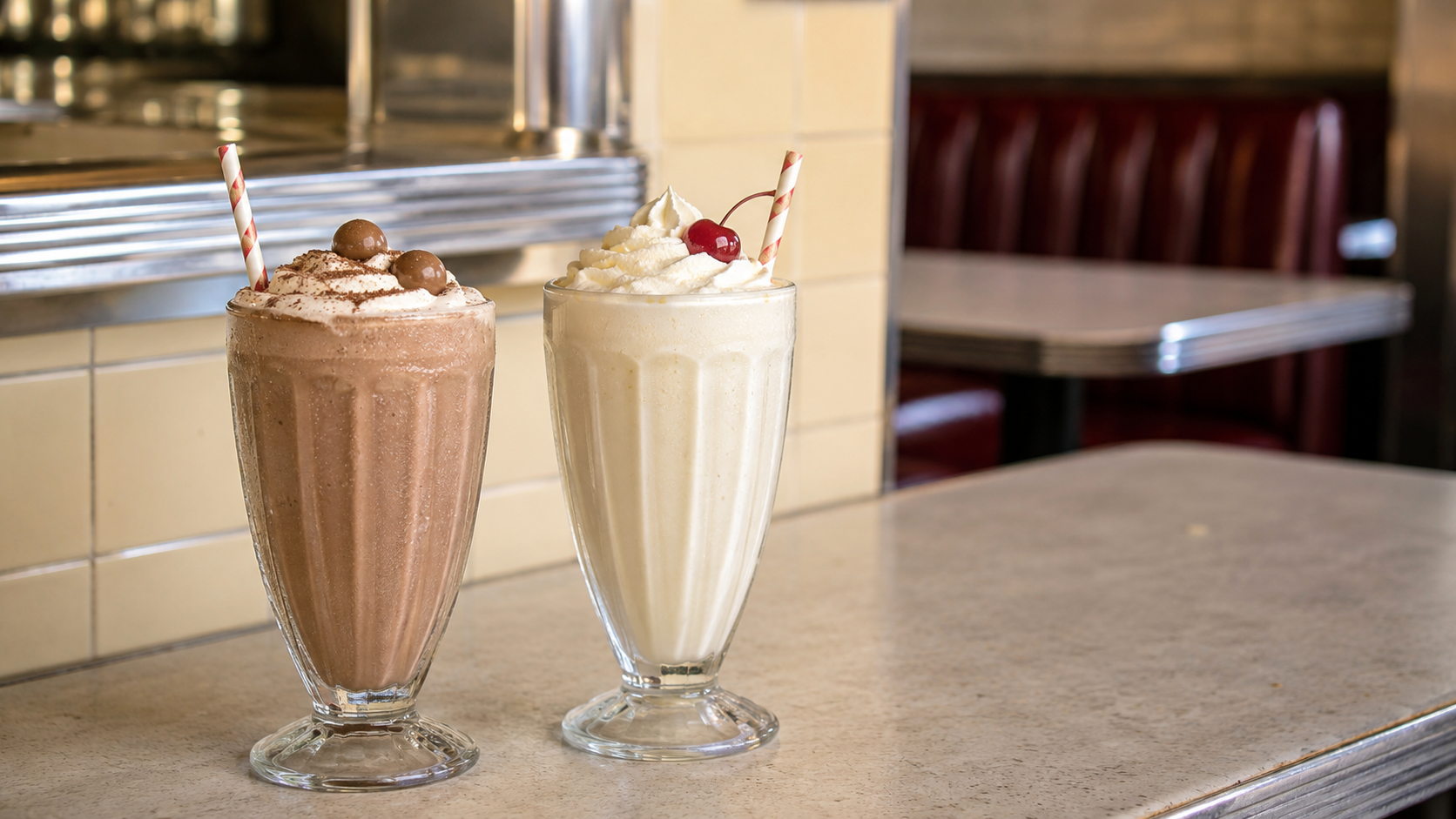
The difference between a malt and a shake comes down to one ingredient: malted milk powder.
Both drinks are usually made with ice cream, milk, and flavoring. A malt contains malted milk powder, which gives it a toasted, nutty, slightly caramelized flavor. The powder can also add a little body, although the ice cream-to-milk ratio has a much greater effect on thickness.
In short: Every malt is a milkshake, but not every milkshake is a malt.
This guide explains the differences between malts and milkshakes, what malted milk powder contains, which flavors work best, and how restaurants can make a consistent chocolate malt.
Malt vs. Shake: Quick Comparison
| Feature | Milkshake | Malted Milkshake |
|---|---|---|
| Main ingredients | Ice cream, milk, and optional flavoring | Ice cream, milk, flavoring, and malted milk powder |
| Flavor | Determined mainly by the ice cream and syrup | Toasty, nutty, milky, and slightly caramelized |
| Texture | Creamy; thickness depends on the recipe | Creamy with slightly more body |
| Sweetness | Depends on the base and flavoring | Often tastes richer and slightly sweeter |
| Popular flavors | Vanilla, chocolate, strawberry, cookies and cream | Chocolate, vanilla, coffee, caramel, banana, and strawberry |
| Common allergens | Usually milk; others depend on mix-ins | Usually milk and wheat; generally contains gluten |
| Menu position | Standard frozen beverage or dessert | Premium option or milkshake upgrade |
Toppings such as whipped cream, cherries, chocolate sauce, and malted milk balls are optional. They do not determine whether the drink is considered a malt.
What Is a Milkshake?
A milkshake is a cold beverage typically made by blending ice cream with milk. Additional flavor may come from syrup, fruit, cookies, candy, coffee, peanut butter, or other ingredients.
A good milkshake should balance four qualities:
- Flavor: The primary ice cream or mix-in should remain recognizable after adding milk.
- Consistency: The shake should be thick and creamy but still able to move through a straw.
- Temperature: Cold ingredients help the shake maintain its structure and slow melting.
- Aeration: Proper mixing creates a smooth texture without incorporating too much air.
There is no single required thickness. Some restaurants serve thin, easily drinkable shakes, while others build thick shakes that are almost spoonable. The important consideration is consistency from one order to the next.
What Is a Malt?
A malt, also called a malted milkshake, is a milkshake blended with malted milk powder.
The powder gives the drink a flavor commonly described as:
- Toasty
- Nutty
- Cereal-like
- Milky
- Slightly caramelized
- Sweet with a subtle savory quality
The taste may be familiar if you have eaten malted milk ball candy. Malt works especially well with chocolate, vanilla, coffee, caramel, peanut butter, banana, strawberry, and warm baking spices.
A malt does not have to be dramatically thicker than a regular milkshake. Malted milk powder adds dry solids and absorbs some moisture, so it may provide additional body. However, a shake made with more ice cream and less milk can be much thicker than a malt containing a larger amount of milk.
What Is Malted Milk Powder?
Malted milk powder is a shelf-stable ingredient commonly made with malted barley, wheat, and dried milk ingredients. Some commercial formulations also contain sugar, salt, flavoring, or other ingredients.
Malt is produced by allowing grain—most commonly barley—to germinate under controlled conditions before drying it. This process helps convert some of the grain’s starches into sugars. Drying and heating produce the toasted cereal flavor associated with malt.
Malted milk powder combines this malt flavor with milk solids and, in many products, wheat. It is different from plain powdered milk and from specialized malt powders used in bread making.
Malted Milk Powder vs. Malt Powder
Although the names sound similar, these ingredients are not always interchangeable.
- Malted milk powder contains malt ingredients and dried milk and commonly contains wheat. It is the correct choice for a classic malted milkshake.
- Diastatic malt powder contains active enzymes and is primarily used to improve fermentation and browning in bread dough.
- Non-diastatic malt powder has inactive enzymes and is used to add flavor, sweetness, and color to baked goods.
- Malt extract or malt syrup is a concentrated malt product used in brewing, baking, confectionery, and specialty beverages.
For a traditional malt, look for a product specifically labeled malted milk powder.
Is Ovaltine the Same as Malted Milk Powder?
Not exactly.
Ovaltine and similar products are formulated beverage mixes. Depending on the variety, they may contain cocoa, added sugar, vitamins, minerals, and other ingredients.
They can be used to make a malt-style beverage, but they are not necessarily a one-to-one replacement for plain malted milk powder. If you use a sweetened or chocolate-flavored drink mix, you may need to reduce the chocolate syrup or other sweeteners in the recipe.
Does Malt Make a Milkshake Thicker?
Malted milk powder may make a shake feel slightly fuller, but it is not the primary factor controlling thickness.
The most important variables are:
- Ice cream-to-milk ratio: More ice cream or less milk produces a thicker drink.
- Ice cream temperature: Extremely hard ice cream is difficult to mix, while overly soft ice cream quickly creates a thin shake.
- Mixing time: Overmixing warms the ingredients and can make the shake thinner.
- Mix-in moisture: Coffee, fruit purée, and thin syrups introduce additional liquid.
- Equipment: A spindle drink mixer and a high-speed blender create different textures and levels of aeration.
- Malted milk powder: The powder adds dry solids and provides a modest increase in body.
If a malt is too thin, adding excessive malted milk powder is not the best solution. Reduce the milk, use properly held ice cream, increase the ice cream portion, or shorten the mixing time.
What Does a Malt Taste Like?
A malt tastes like the original milkshake flavor combined with toasted grain and cooked-milk notes. It is often compared to malted milk candy, toasted cereal, biscuits, caramel, or light butterscotch.
Malted milk powder should complement the main flavor rather than overpower it. Too little may disappear behind chocolate or coffee, while too much can make the drink powdery or excessively sweet.
Best Malted Milkshake Flavors
Popular malt flavors include:
- Chocolate
- Vanilla
- Coffee
- Caramel
- Peanut butter
- Banana
- Strawberry
- Cookies and cream
- Brownie
- Toasted marshmallow
- Maple
- Pumpkin spice
Fruit and malt are not automatically incompatible. Strawberry and banana malts are both classic combinations. Highly acidic citrus or delicate sorbet-style flavors can be more difficult to balance with malt’s toasted dairy character.
A Brief History of the Malted Milkshake
Malted milk began as a shelf-stable nutritional product rather than a restaurant dessert.
William Horlick’s U.S. patent application, filed in 1882 and published in 1883, described a dried preparation made from barley malt, cereal, and milk. The original patent explains that the product was intended to dissolve in water and resist spoilage during storage.
Malted milk eventually moved beyond its original nutritional positioning and became a popular soda-fountain beverage.
In 1922, Walgreens employee Ivar “Pop” Coulson added vanilla ice cream to a chocolate malted milk drink. He is widely credited with helping popularize the modern ice-cream-based malted milkshake.
Malts later became closely associated with American drugstore counters, diners, burger restaurants, ice cream parlors, and the classic malt shop.
Classic Chocolate Malt Recipe
This recipe produces approximately one 16-ounce restaurant serving.
Ice cream density, serving temperature, chocolate syrup concentration, and malted milk powder formulation can vary. Restaurants should test the recipe using their actual products before establishing a final portion standard.
Ingredients
- 10 ounces vanilla ice cream by weight, approximately 3 generous scoops
- 3 fluid ounces cold whole milk
- 1 1/2 fluid ounces chocolate syrup
- 2 tablespoons malted milk powder
- Whipped cream, optional
- Chocolate drizzle, optional
- Malted milk balls, optional
- 1 cherry, optional
How to Make a Chocolate Malt
- Add the cold milk, chocolate syrup, and malted milk powder to the mixing cup or blender jar.
- Mix briefly at low speed to disperse the powder.
- Add the vanilla ice cream.
- Blend only until the drink is smooth and able to move through a wide straw.
- Check the consistency and portion before pouring.
- Pour the malt into a chilled glass or takeout cup.
- Add whipped cream, chocolate drizzle, malted milk balls, or a cherry if desired.
- Serve immediately.
Adding the liquid first helps the agitator or blender blades move freely. Dispersing the malted milk powder before adding all the ice cream also helps prevent dry pockets and clumps.
Milkshake Machine vs. Blender
Both a commercial drink mixer and a blender can make milkshakes and malts, but they produce different results.
Commercial Drink Mixer
A spindle-style drink mixer uses an agitator inside a metal mixing cup. It is the machine traditionally associated with soda-fountain milkshakes.
A drink mixer is a good choice when:
- The menu focuses primarily on classic milkshakes and malts
- Drinks are prepared individually
- Operators need direct control over consistency
- Most recipes use syrups rather than hard mix-ins
- A traditional soda-fountain texture is preferred
However, a drink mixer may not break down cookies, hard candy, frozen fruit, or other substantial mix-ins as effectively as a blender.
Commercial Blender
A blender uses sharp blades at the bottom of a closed jar. It is better suited to menus featuring smoothies, frozen coffee drinks, candy shakes, and other beverages with solid ingredients.
A blender is a good choice when:
- Recipes contain cookies, candy, fruit, or nut butter
- The operation serves several types of frozen beverages
- A uniform texture is preferred
- A covered jar is helpful for controlling splashes
- The restaurant needs greater menu flexibility
High-speed blending can warm or overprocess a shake, so employees should stop the machine as soon as the correct consistency is reached.
Restaurants serving several frozen beverage categories can explore Atlantic’s commercial blenders.
How to Make Consistent Restaurant Malts
Consistency matters more than making the thickest possible drink. Guests should receive the same flavor, fill level, and texture with every order.
Standardize Portions
“Three scoops” is not an exact commercial measurement unless scoop size and employee technique are carefully controlled.
Weigh the ice cream during recipe development, then create a portioning procedure employees can repeat. Use measured pumps or portion cups for syrups and a level scoop for malted milk powder.
Control Ice Cream Temperature
Ice cream that is too hard can strain equipment and encourage employees to add too much milk. Ice cream that is too soft produces a thin drink that melts quickly.
Follow the ice cream manufacturer’s serving recommendations and keep the dipping cabinet operating consistently. Atlantic’s ice cream display freezers keep multiple flavors accessible for scooping and customer presentation.
Use the Same Mixing Order
A repeatable sequence helps prevent clumps and recipe variation:
- Milk
- Syrup or liquid flavoring
- Malted milk powder
- Ice cream
- Solid mix-ins, when applicable
Serve Immediately
Milkshakes and malts begin warming and separating as soon as they are mixed. They should be made to order and served promptly rather than prepared in advance.
Common Malt Problems and Solutions
| Problem | Likely Cause | Solution |
|---|---|---|
| Malt is too thin | Too much milk, soft ice cream, or overmixing | Reduce milk, use properly held ice cream, or mix for less time |
| Malt is too thick | Too little milk or ice cream is too hard | Add cold milk in small measured increments |
| Powder forms clumps | Malt powder was added on top of dense ice cream | Disperse it in the milk before adding the ice cream |
| Texture is gritty | Too much powder or incomplete mixing | Reduce the powder or adjust the mixing order |
| Malt is too sweet | Sweetened powder, syrup, and sweet ice cream | Reduce the syrup before changing the ice cream ratio |
| Malt flavor is weak | Too little powder or strong mix-ins | Increase the powder gradually and retest |
| Drink separates quickly | Warm ingredients, overmixing, or delayed service | Start with colder ingredients and serve immediately |
Malted Milk Allergens and Gluten
Traditional malted milkshakes normally contain ingredients that require allergen awareness.
- Milk: Ice cream, liquid milk, malted milk powder, whipped cream, and malted milk candy commonly contain milk.
- Wheat: Many malted milk powders contain wheat flour or wheat-derived ingredients.
- Barley and gluten: Barley contains gluten. Conventional malted milk powder should not be described as gluten-free unless the exact product and complete recipe support that claim.
- Additional allergens: Cookies, candy, peanut butter, chocolate, sauces, and flavored ice creams may introduce peanuts, tree nuts, eggs, soy, sesame, or additional wheat and milk.
Milk and wheat are among the nine major food allergens recognized by the FDA. Shared blender jars, mixer spindles, utensils, and preparation surfaces can also create cross-contact.
Restaurants should maintain accurate ingredient information, follow established cleaning procedures, and train employees not to guess when a customer reports an allergy. More information is available in the FDA’s food allergen guidance.
