

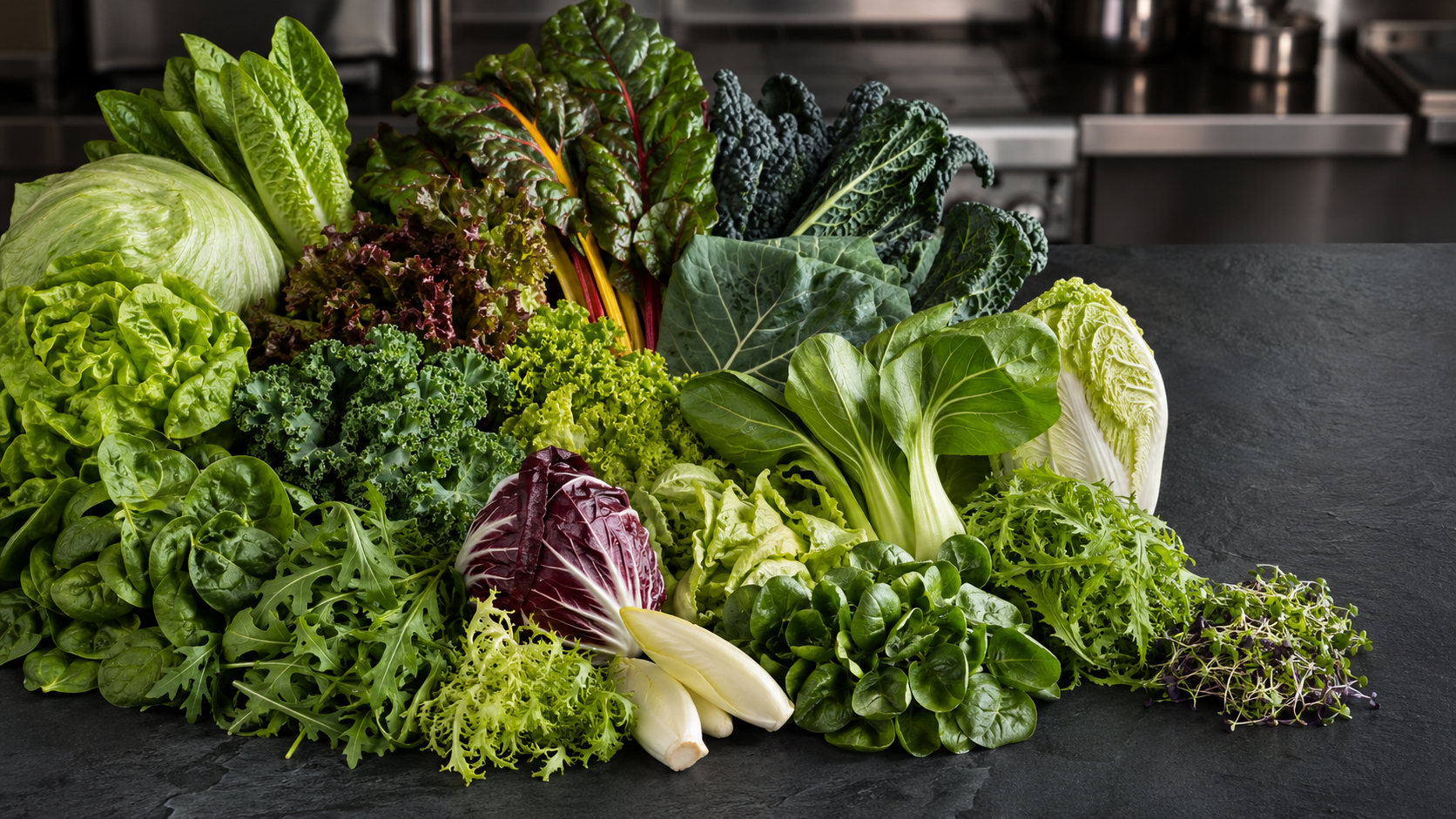
Leafy greens can be crisp or tender, mild or bitter, delicate enough for a salad or sturdy enough for a long braise. Choosing the right one affects far more than color: it changes texture, flavor, prep time, cooked yield, plate life, and food cost.
This guide compares 30 common types of leafy greens, including lettuces, cooking greens, chicories, Asian greens, and microgreens. Use it to choose the best greens for salads, sandwiches, soups, sautés, stir-fries, and plated dishes and to store and prep them efficiently in a commercial kitchen.
What Are Leafy Greens?
Leafy greens are edible plant leaves used raw or cooked. The phrase includes several botanical families, so “leafy green” is a culinary category rather than one precise plant group. Lettuce, spinach, kale, cabbage, mustard greens, and chicories are all leafy greens, even though they differ in structure, flavor, and ideal cooking method.
For menu planning, it is more useful to sort greens by how they behave:
- Lettuce and tender salad greens provide freshness, crunch, or a soft texture and are usually served raw.
- Cooking greens have sturdier leaves and often improve with sautéing, blanching, braising, or simmering.
- Cabbage and Asian greens range from tender leaves to crisp stems and work especially well in stir-fries, soups, and fermented preparations.
- Chicories and bitter greens add complexity and stand up to rich, sweet, salty, or acidic ingredients.
- Microgreens are young seedlings harvested early for concentrated flavor, color, and garnish value.
Some greens fit more than one group. Spinach can be a salad green or a cooking green, while escarole can be served raw, grilled, or simmered in soup. The best classification is the one that helps you use the ingredient well.
Types of Greens at a Glance
| Green | Flavor | Texture | Best Uses |
|---|---|---|---|
| Romaine lettuce | Mild, slightly vegetal | Crisp ribs, sturdy leaves | Caesar salad, wraps, grilled lettuce |
| Iceberg lettuce | Very mild | Extra-crisp, juicy | Wedge salads, burgers, tacos |
| Butterhead lettuce | Mild, buttery | Soft, tender | Delicate salads, lettuce cups |
| Loose-leaf lettuce | Mild to slightly sweet | Tender, ruffled | Mixed salads, sandwiches |
| Spinach | Mild, earthy | Tender; wilts quickly | Salads, sautés, pasta, fillings |
| Arugula | Peppery, nutty | Tender | Salads, pizza, sandwiches, pesto |
| Watercress | Peppery, fresh | Crisp stems, tender leaves | Salads, soups, sandwiches |
| Mâche | Mild, nutty | Very tender | Premium salads, delicate garnish |
| Kale | Earthy, mildly bitter | Firm, fibrous | Salads, soups, chips, braises |
| Collard greens | Earthy, slightly bitter | Broad, sturdy | Braises, wraps, soups |
| Swiss chard | Earthy, mildly bitter | Tender leaves, crisp stems | Sautés, gratins, soups |
| Mustard greens | Peppery, pungent | Tender to sturdy | Braises, sautés, pickles |
| Turnip greens | Peppery, earthy | Sturdy | Braises, soups, stews |
| Beet greens | Earthy, mild | Tender leaves, crisp stems | Sautés, soups, frittatas |
| Radish greens | Peppery, grassy | Tender to slightly coarse | Pesto, soups, sautés |
| Dandelion greens | Assertively bitter | Jagged, sturdy | Salads, sautés, braises |
| Sorrel | Tart, lemony | Tender | Sauces, soups, salads |
| Green cabbage | Mild, sweet when cooked | Dense, crunchy | Slaws, sautés, soups, braises |
| Bok choy | Mild, slightly sweet | Tender leaves, crisp stalks | Stir-fries, soups, steaming |
| Napa cabbage | Mild, sweet | Tender, juicy, crisp | Kimchi, stir-fries, slaws |
| Mizuna | Mildly peppery | Feathery, tender-crisp | Salads, hot pots, stir-fries |
| Tatsoi | Mild, mustard-like | Spoon-shaped, tender | Salads, soups, quick sautés |
| Komatsuna | Mildly mustardy | Sturdy, juicy stems | Stir-fries, soups, pickles |
| Broccoli rabe | Bitter, nutty | Leafy with slender stems | Sautés, pasta, sandwiches |
| Kohlrabi greens | Cabbage-like, earthy | Sturdy | Sautés, braises, soups |
| Escarole | Mildly bitter | Broad, sturdy | Soups, salads, grilling |
| Frisée | Bitter, fresh | Fine, curly, crisp | Bistro salads, garnish |
| Belgian endive | Mildly bitter | Crisp, compact | Canapés, salads, roasting |
| Radicchio | Bitter, spicy-sweet | Crisp, sturdy | Salads, grilling, risotto |
| Microgreens | Varies by variety | Delicate | Garnishes, salads, sandwiches |
Lettuce and Tender Salad Greens

These greens are prized for freshness and texture. Most are best kept cold, handled gently, and dressed shortly before service.
1. Romaine Lettuce
Romaine has elongated leaves, crisp pale ribs, and darker green outer leaves. Its combination of crunch and durability makes it one of the most versatile restaurant lettuces.
Flavor: Mild, clean, and slightly vegetal.
Best uses: Caesar salad, chopped salad, lettuce wraps, sandwiches, and grilled lettuce.
Chef’s tip: Use the inner leaves for presentation and the larger outer leaves for chopped applications. Halved romaine hearts can be grilled quickly to add smoke without losing their crisp center.
2. Iceberg Lettuce
Iceberg grows in a tight, round head and delivers more crunch than flavor. That is not a weakness: its cold, juicy texture provides contrast in rich or spicy dishes.
Flavor: Very mild and refreshing.
Best uses: Wedge salads, burgers, deli sandwiches, tacos, tostadas, and shredded garnishes.
Chef’s tip: Cut iceberg as close to service as possible. A sharp knife produces cleaner edges and less bruising than a dull blade.
3. Butterhead Lettuce
Butterhead lettuces, including Boston and Bibb, form loose heads with soft, cup-shaped leaves. They bring a premium look and silky texture to a plate.
Flavor: Mild, subtly sweet, and buttery.
Best uses: Delicate salads, lettuce cups, composed appetizers, and sandwiches.
Chef’s tip: Pair butterhead with light vinaigrettes. Heavy dressings can collapse the leaves and obscure their texture.
4. Loose-Leaf Lettuce
Loose-leaf varieties do not form a compact head. Green leaf, red leaf, and oak leaf lettuces add color and volume to salad mixes with minimal trimming.
Flavor: Mild, sometimes slightly sweet.
Best uses: Garden salads, mixed greens, sandwiches, wraps, and buffet displays.
Chef’s tip: Red leaf lettuce adds visual contrast, but its tender edges bruise easily. Dry and store it in shallow containers rather than compressing it.
5. Spinach
Spinach is available as baby leaves for salads and mature bunches for cooking. It is one of the easiest greens to move across breakfast, lunch, and dinner menus.
Flavor: Mild, earthy, and slightly mineral.
Best uses: Salads, omelets, dips, pasta, curries, soups, and sautéed sides.
Chef’s tip: Spinach loses substantial volume when heated. Plan portions by cooked yield, not raw appearance, and cook in batches to avoid steaming it in an overcrowded pan.
6. Arugula
Also called rocket, arugula has narrow, lobed leaves and a recognizable peppery bite. Baby arugula is tender and mild; mature leaves are more pungent.
Flavor: Peppery, nutty, and slightly bitter.
Best uses: Salads, flatbreads, pizza, sandwiches, pasta, and pesto.
Chef’s tip: Add arugula to hot pizza or pasta after cooking. Residual heat softens the leaves while preserving their fresh flavor.
7. Watercress
Watercress has small round leaves attached to crisp, juicy stems. It brings both freshness and peppery intensity to otherwise mild dishes.
Flavor: Bright, peppery, and clean.
Best uses: Salads, tea sandwiches, puréed soups, steak garnish, and herb-forward sauces.
Chef’s tip: Tender upper stems are edible. Remove only thick or damaged portions to improve yield.
8. Mâche
Mâche, also called lamb’s lettuce or corn salad, grows in small rosettes. It is delicate, visually refined, and well suited to premium composed salads.
Flavor: Mild, nutty, and faintly sweet.
Best uses: Fine-dining salads, light vinaigrettes, and delicate garnish.
Chef’s tip: Treat mâche like an herb rather than a bulk lettuce. Avoid heavy ingredients and dress it immediately before plating.
Sturdy Cooking Greens
Cooking greens generally have more fiber, stronger flavor, or both. Heat softens their texture and can mellow bitterness. Many stems are edible but may need to cook longer than the leaves.
9. Kale
Kale comes in curly, lacinato, and red or Russian types. Curly kale is sturdy and ruffled; lacinato kale has long, dark, textured leaves and is often more tender.
Flavor: Earthy, vegetal, and mildly bitter.
Best uses: Massaged salads, soups, braises, grain bowls, smoothies, and kale chips.
Chef’s tip: Remove thick stems from mature leaves. For raw salads, slice the leaves thinly and massage them with salt, oil, or dressing to soften their structure.
10. Collard Greens
Collards have large, smooth leaves and a strong central rib. They hold their shape during long cooking and readily absorb smoked, savory, and acidic flavors.
Flavor: Earthy with a gentle bitterness.
Best uses: Slow braises, soups, stews, wraps, and sautéed sides.
Chef’s tip: Stack, roll, and slice the leaves into ribbons for efficient prep. Add acid near the end of cooking to brighten a long-braised dish.
11. Swiss Chard
Swiss chard has broad leaves and colorful or white stalks. The leaves cook like tender greens, while the stems behave more like a crisp vegetable.
Flavor: Earthy and mildly bitter.
Best uses: Sautés, soups, gratins, pasta fillings, and egg dishes.
Chef’s tip: Separate stems from leaves during prep. Start the diced stems first, then add the leaves near the end so both finish at the right texture.
12. Mustard Greens
Mustard greens may be flat, frilled, green, or purple depending on the variety. Their pungency becomes milder and more rounded with cooking.
Flavor: Peppery, mustard-like, and assertive.
Best uses: Braises, sautés, soups, pickles, and spicy green blends.
Chef’s tip: Balance the heat with rich pork, beans, sesame, coconut milk, or a touch of sweetness and acid.
13. Turnip Greens
Turnip greens are the leafy tops of the turnip root. Young leaves can be tender, while mature bunches benefit from moist heat.
Flavor: Peppery, earthy, and slightly bitter.
Best uses: Southern-style braises, soups, stews, and mixed cooking greens.
Chef’s tip: Blend turnip greens with milder collards or kale when you want complexity without overwhelming bitterness.
14. Beet Greens
Beet greens have tender leaves and red or green stems. Their flavor is similar to chard because beets and chard are closely related.
Flavor: Earthy, mild, and faintly sweet.
Best uses: Sautés, frittatas, soups, pasta, and warm grain bowls.
Chef’s tip: When whole beets arrive with fresh tops, treat the greens as a second usable ingredient. Separate them from the roots promptly and cook the stems before the leaves.
15. Radish Greens
Radish tops are often discarded, but fresh, undamaged leaves can add peppery flavor and improve whole-product utilization.
Flavor: Peppery, grassy, and slightly sharp.
Best uses: Pesto, puréed soup, sautéed greens, and mixed-herb sauces.
Chef’s tip: Choose young leaves for raw sauces. Mature leaves can feel coarse and are better blanched or cooked.
16. Dandelion Greens
Dandelion greens have long, jagged leaves and one of the most pronounced bitter flavors in this guide. Young leaves are milder; mature leaves are more assertive.
Flavor: Boldly bitter and earthy.
Best uses: Italian-style sautés, warm salads, braises, and bean dishes.
Chef’s tip: Blanching before sautéing can reduce bitterness. Pair with garlic, chile, cured meat, citrus, or a rich egg yolk.
17. Sorrel
Sorrel is a tender green known for its tart, lemon-like flavor. When cooked, it softens quickly and often changes from bright green to olive.
Flavor: Bright, acidic, and citrusy.
Best uses: Cream sauces, soups, omelets, seafood dishes, and small amounts in salads.
Chef’s tip: Use sorrel as both a green and an acidic seasoning. Its sharpness can replace part of the lemon or vinegar in a recipe.
Cabbage and Asian Greens
This group offers excellent range: leafy tops, juicy stems, compact heads, and flavors that move from mild to mustardy. Many are valuable in high-volume kitchens because one ingredient can serve raw, fermented, simmered, or stir-fried applications.
18. Green Cabbage
Green cabbage forms a dense head of tightly layered leaves. It stays crisp after cutting and becomes sweeter and softer with heat.
Flavor: Mild, grassy when raw, and sweet when cooked.
Best uses: Coleslaw, soups, braises, stir-fries, stuffed cabbage, and fermented dishes.
Chef’s tip: Use a slicer or properly adjusted food processor for consistent high-volume shreds. Uniform cuts improve both texture and portion control.
19. Bok Choy
Bok choy has dark green leaves and thick white or pale green stalks. Baby bok choy works well whole or halved, while mature heads are usually separated and cut.
Flavor: Mild, clean, and slightly sweet.
Best uses: Stir-fries, noodle soups, steaming, braising, and grilling.
Chef’s tip: Add the stalks before the leaves. This preserves the contrast between crisp stems and tender greens.
20. Napa Cabbage
Napa cabbage has an elongated head, crinkled pale leaves, and juicy white ribs. It is softer and more delicate than green cabbage.
Flavor: Mild, sweet, and lightly peppery.
Best uses: Kimchi, dumpling fillings, slaws, hot pots, stir-fries, and soups.
Chef’s tip: Napa releases moisture as it cooks. Salt and drain it first when preparing fillings that need to stay firm.
21. Mizuna
Mizuna is a Japanese mustard green with slender stems and deeply cut, feathery leaves. It is tender enough for salads but holds up to brief cooking.
Flavor: Mildly peppery and fresh.
Best uses: Salad mixes, hot pots, noodle dishes, stir-fries, and garnish.
Chef’s tip: Add mizuna at the end of cooking. A short wilt preserves its shape and gentle bite.
22. Tatsoi
Tatsoi forms compact rosettes of dark, spoon-shaped leaves. Baby tatsoi is common in salad mixes; mature plants can be cooked like bok choy.
Flavor: Mild, slightly mustardy, and subtly sweet.
Best uses: Salads, soups, stir-fries, and quick sautés.
Chef’s tip: Its rosette shape makes tatsoi visually distinctive. Keep small leaves whole for plate presentation.
23. Komatsuna
Often called Japanese mustard spinach, komatsuna has broad green leaves and sturdy stems. It remains pleasantly juicy after quick cooking.
Flavor: Mildly mustardy with cabbage-like notes.
Best uses: Stir-fries, soups, steamed sides, and pickles.
Chef’s tip: Komatsuna is a useful middle ground when spinach is too delicate and mustard greens are too pungent.
24. Broccoli Rabe
Broccoli rabe, or rapini, has leafy stems, small florets, and a distinctive bitterness. Despite its name, it is more closely associated in the kitchen with turnip and mustard greens than with conventional broccoli.
Flavor: Bitter, nutty, and mustardy.
Best uses: Sautéed sides, pasta, sausage dishes, pizza, and Italian sandwiches.
Chef’s tip: Blanch, drain, and then sauté with garlic and oil for a milder, more controlled result.
25. Kohlrabi Greens
The leaves attached to kohlrabi bulbs are edible and can be used much like collards or kale. Their stems and central ribs become more fibrous as they mature.
Flavor: Earthy, cabbage-like, and mildly sweet.
Best uses: Sautés, braises, soups, and mixed greens.
Chef’s tip: Using both the bulb and leaves can improve yield. Remove tough ribs from mature greens and cook them separately or reserve them for stock.
Chicories and Bitter Greens
Chicories are known for pleasant bitterness, crisp structure, and visual character. They are especially effective with fatty cheeses, cured meats, fruit, nuts, honey, and assertive vinaigrettes.
26. Escarole
Escarole has broad, sturdy leaves with pale centers and darker outer edges. It is less bitter than many other chicories and transitions easily from raw to cooked dishes.
Flavor: Mildly bitter and slightly nutty.
Best uses: Italian soups, bean dishes, chopped salads, sautés, and grilling.
Chef’s tip: Use pale inner leaves raw and reserve darker outer leaves for cooking.
27. Frisée
Frisée, or curly endive, has narrow, finely curled leaves. Pale inner leaves are more tender and less bitter than the darker outer growth.
Flavor: Bitter, fresh, and slightly peppery.
Best uses: Bistro salads, poached-egg salads, garnish, and mixed greens.
Chef’s tip: Frisée benefits from warm, rich components such as bacon vinaigrette or a soft egg, which tame its bitterness and texture.
28. Belgian Endive
Belgian endive grows as a compact, torpedo-shaped head with pale leaves and yellow tips. Each leaf forms a natural scoop, making it useful beyond salads.
Flavor: Crisp and mildly bitter.
Best uses: Canapés, composed salads, gratins, roasting, and braising.
Chef’s tip: Keep endive away from light during storage to help limit greening and increased bitterness. Trim the base only when ready to separate the leaves.
29. Radicchio
Radicchio has tightly packed red or burgundy leaves with white ribs. Common forms include round Chioggia and elongated Treviso.
Flavor: Bitter and spicy when raw; mellower and slightly sweet when cooked.
Best uses: Salads, grilling, roasting, pasta, and risotto.
Chef’s tip: High heat caramelizes the edges and softens bitterness. Pair radicchio with balsamic vinegar, blue cheese, citrus, or toasted nuts.
Specialty Greens
30. Microgreens
Microgreens are not one species of green. They are young seedlings of herbs and vegetables harvested after the seed leaves develop and, depending on the crop, around the appearance of the first true leaves. Radish, mustard, pea, sunflower, basil, and beet microgreens all taste different.
Flavor: Varies from sweet or grassy to peppery or intensely herbal.
Best uses: Garnishes, premium salads, sandwiches, tasting menus, and color accents.
Chef’s tip: Choose microgreens for flavor, not only appearance. Add them at the pass and keep them away from hot, wet surfaces that cause rapid wilting.
How to Choose the Right Green for a Dish
Start with the function the green needs to perform.
| If You Need… | Choose… |
|---|---|
| Maximum crunch | Iceberg, romaine, green cabbage, Belgian endive |
| A tender salad base | Butterhead, loose-leaf lettuce, mâche, baby spinach |
| Peppery flavor | Arugula, watercress, mustard greens, radish greens |
| Pleasant bitterness | Radicchio, frisée, escarole, dandelion greens |
| Long-cooking durability | Collards, kale, turnip greens, cabbage |
| Fast sauté performance | Spinach, Swiss chard, beet greens, bok choy |
| Stir-fry or hot-pot versatility | Bok choy, napa cabbage, mizuna, tatsoi, komatsuna |
| A premium garnish | Mâche, watercress, microgreens, baby tatsoi |
| Better whole-vegetable utilization | Beet, radish, turnip, and kohlrabi greens |
Match the Green to the Service Format
- For dressed salads: Use leaves that can support the dressing. Romaine and radicchio tolerate creamy or assertive dressings; butterhead and mâche need lighter treatment.
- For sandwiches and burgers: Choose dry, crisp greens such as iceberg, romaine, or green leaf lettuce. Excess surface water can make bread soggy.
- For soup: Escarole, kale, collards, bok choy, and turnip greens keep more character than delicate lettuce.
- For sautéing: Spinach and chard cook quickly; kale and collards need more time or preliminary blanching.
- For holding: Sturdy greens generally retain texture longer than baby leaves, but finished-dish temperature and holding time still matter.
How to Balance Bitter Greens
Bitterness creates contrast, but it should feel intentional. Five techniques help control it:
- Add fat. Olive oil, cheese, nuts, eggs, cream, and cured meat round bitter edges.
- Use acid. Citrus and vinegar brighten the dish and make bitterness feel cleaner.
- Include sweetness. Roasted fruit, honey, balsamic reduction, or caramelized onion can provide balance.
- Apply heat. Grilling, roasting, braising, and sautéing often soften aggressive flavors.
- Blanch first. A brief blanch followed by draining is useful for broccoli rabe, dandelion greens, and strong mustard greens.
Salt also reduces the perception of bitterness, but balance should come from the whole recipe rather than excess seasoning.
Selecting, Washing, and Storing Leafy Greens
Good purchasing and prep practices protect yield as well as quality.
What to Look for When Buying Greens
Choose leaves with color appropriate to the variety, crisp stems, and no slimy areas, sour odor, excessive yellowing, or widespread decay. Compact heads should feel firm for their size.
For bunched greens, inspect the tie area and inner leaves, where damage and moisture can be hidden.
Commercial Kitchen Handling
- Receive and refrigerate promptly. Maintain the cold chain and follow the product label, supplier specifications, and local health code.
- Prevent cross-contamination. Keep produce separate from raw meat, poultry, seafood, and their equipment.
- Wash correctly. The FDA advises rinsing produce under running tap water and does not recommend washing produce with soap or detergent. Follow label directions for products marked prewashed or ready to eat.
- Use clean, sanitized equipment. Prep sinks, knives, cutting boards, salad spinners, and storage containers should be cleaned and sanitized according to the operation’s food-safety procedures.
- Dry thoroughly. Excess water dilutes dressing, speeds quality loss, and can make sandwiches or salads watery.
- Protect cut greens. Under the FDA model Food Code, cut leafy greens are treated as time/temperature control for safety food. Hold them at the required temperature and follow your jurisdiction’s rules; the FDA model standard is generally 41°F (5°C) or below.
- Label and rotate. Date prepared product, use first-in, first-out rotation, and discard greens that become slimy, decayed, or otherwise unfit for service.
For consumer-facing safe-handling guidance, see the FDA’s Safe Food Handling page.
Foodservice operators should also consult the current FDA Food Code and the code adopted by their state or local authority.
Storage Principles by Green Type
- Tender leaves: Keep cold, dry, and protected from crushing. Use shallow containers where practical.
- Head lettuce and cabbage: Keep intact until needed to reduce cut-surface exposure and moisture loss.
- Bunched cooking greens: Remove damaged leaves and avoid trapping free water around the bunch.
- Greens with roots attached: Separate edible tops when appropriate because the root can draw moisture from the leaves.
- Microgreens: Follow the grower’s label closely; they are delicate and highly sensitive to excess moisture and compression.
Shelf life varies with product condition, packaging, temperature history, and handling. A fixed number of days is less reliable than a documented receiving, rotation, and quality-control procedure.
Reducing Waste and Improving Prep Efficiency
Leafy greens can create avoidable loss through overtrimming, poor drying, incorrect storage, and unrealistic cooked-yield assumptions.
- Standardize trim specifications so employees know which stems and ribs are usable.
- Track raw-to-cooked yield for spinach, kale, chard, and other high-shrink items.
- Use tender stems in sautés and soups; reserve clean, appropriate trimmings for stocks or purées when your food-safety plan allows.
- Prep to projected demand instead of cutting the full day’s volume at once.
- Select equipment based on volume: sharp knives for small batches, commercial salad spinners for effective drying, and suitable processors for consistent high-volume slicing.
- Store prepped greens in properly sized containers rather than compressing them into overcrowded pans.
An efficient cold-prep station can shorten movement between refrigeration, washing, cutting, drying, portioning, and service. Explore Atlantic’s sandwich and salad prep tables, commercial refrigerators, and food prep equipment when planning or upgrading a greens station.
