


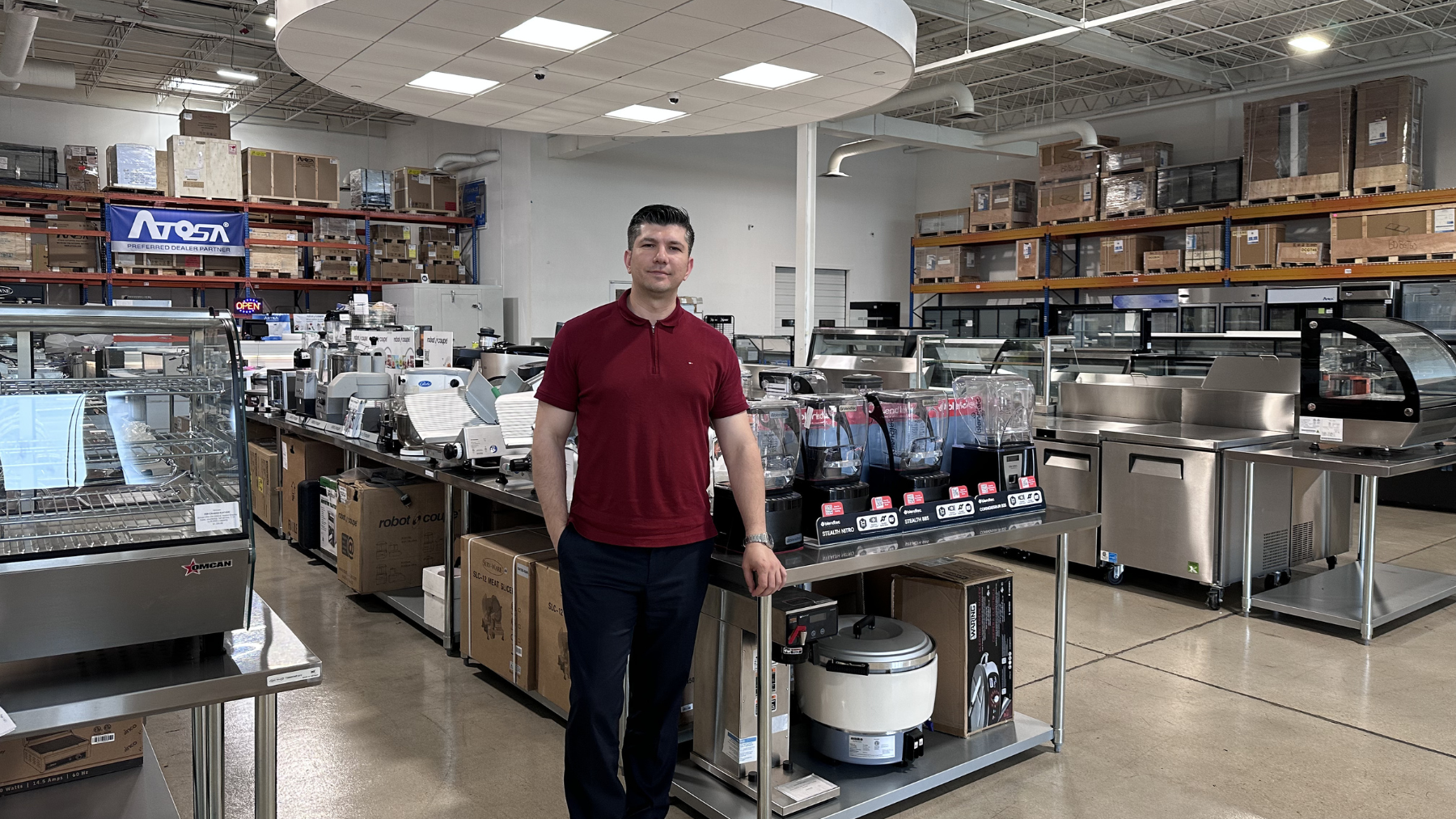
The right restaurant equipment list begins with your concept, cuisine, and menu, not a supplier catalog. Every appliance, prep table, sink, shelf, and smallware should support a specific product, production volume, food-safety requirement, or service task. Buying too little can create bottlenecks on opening day; buying too much can consume capital, utility capacity, and valuable kitchen space.
This guide covers the major equipment categories needed to open a restaurant, explains which items are essential and which depend on your concept, and shows you what to verify before placing an order.
Download the Free Restaurant Equipment Checklist
Planning a new restaurant or upgrading your kitchen? Download Atlantic’s printable Pre-Purchase Restaurant Equipment Checklist to review your equipment, dimensions, utilities, installation requirements, warranties, and opening-day readiness before placing an order.
Download the Free ChecklistWhat Equipment Do You Need to Open a Restaurant?

Most restaurants need equipment for receiving and storage, refrigeration, food preparation, cooking, hot holding, warewashing, sanitation, service, and safety. A typical restaurant equipment checklist includes:
- Commercial refrigerators and freezers
- A commercial range, oven, griddle, charbroiler, fryer, or other menu-specific cooking equipment
- Ventilation and fire-suppression systems where required
- Stainless steel work tables and refrigerated prep tables
- Food processors, mixers, slicers, blenders, or other prep equipment
- Hot food holding equipment
- An ice machine and beverage equipment
- A commercial dishwasher and required sinks
- Storage shelving, dunnage racks, carts, and food containers
- Pots, pans, knives, cutting boards, utensils, and other smallwares
- Dining room, takeout, POS, and service equipment
- Thermometers, first-aid supplies, fire extinguishers, and other required safety items
The exact list depends on your menu, expected order volume, service style, kitchen layout, available utilities, and local code requirements.
Equipping a new restaurant or upgrading an existing kitchen? Atlantic can help you compare equipment, confirm specifications, and build a package around your menu, space, and budget. Request a restaurant equipment quote or call 201-467-8222.
Restaurant Equipment Checklist by Category
Use this table as a starting point. “Core” items are common to most foodservice operations, while “concept-dependent” items should only be purchased when the menu and production plan justify them.
| Equipment category | Core equipment | Concept-dependent equipment |
|---|---|---|
| Refrigeration | Reach-in refrigerator, reach-in freezer, thermometers | Walk-in cooler/freezer, prep table, undercounter unit, blast chiller, display refrigerator |
| Cooking line | Range or primary cooking appliance, commercial oven | Fryer, griddle, charbroiler, broiler, steamer, wok range, induction cooktop, specialty oven |
| Food preparation | Work tables, cutting boards, scales, basic prep tools | Mixer, slicer, food processor, meat grinder, vegetable cutter, dough sheeter |
| Holding and service | Heat-safe pans and basic holding equipment | Holding cabinet, steam table, proofing cabinet, heat lamp, heated display |
| Ice and beverages | Appropriate beverage service equipment | Ice machine, coffee brewer, espresso machine, soda dispenser, blender, juicer |
| Warewashing | Hand sink, warewashing setup, drainboards | Door-type, undercounter, conveyor, or glass dishwasher |
| Storage and transport | Shelving, containers, labels, carts | Dunnage racks, ingredient bins, sheet pan racks, insulated carriers |
| Smallwares | Pots, pans, knives, utensils, hotel pans, measuring tools | Pizza tools, sushi tools, bakery pans, specialty molds and cookware |
| Front of house | POS, tables, chairs, dinnerware or disposables | Kiosks, display cases, bar equipment, host station, outdoor furniture |
| Safety and sanitation | Cleaning tools, sanitizer supplies, thermometers, first-aid kit | Grease-handling equipment, specialty PPE, security and access systems |
Start With the Menu, Volume, and Workflow
A generic checklist cannot tell you whether your restaurant needs a six-burner range, two fryers, a conveyor oven, or no traditional cookline at all. Build your final list by working backward from what you plan to sell.
Create a menu-to-equipment map
List every menu item and write down each step required to receive, store, prep, cook, hold, plate, and clean up after it. When several menu items use the same appliance, that appliance becomes more valuable. When an appliance supports only one low-volume item, reconsider the item or look for equipment that can perform multiple functions.
Estimate peak-hour production
Daily sales alone are not enough for sizing. A restaurant serving 300 evenly distributed orders has different requirements from one producing 150 orders during a two-hour dinner rush. Estimate the number of portions each station must complete during your busiest 15, 30, and 60 minutes.
Design the flow before selecting model numbers
A functional kitchen generally moves food from receiving to storage, preparation, cooking, holding or plating, service, and warewashing without unnecessary backtracking. Equipment doors, employee paths, hot surfaces, landing areas, and cart routes all need clearance. Finalize the operational layout and utility plan before buying equipment simply because it fits along a wall.
1. Commercial Refrigeration Equipment

Refrigeration protects inventory and supports food safety, but one large refrigerator is rarely the best answer for every task. High-volume kitchens often combine bulk cold storage with smaller units positioned at workstations.
Reach-in refrigerators and freezers
Commercial refrigerators and reach-in freezers provide organized, accessible storage without requiring a separate room. One-, two-, and three-section configurations are available with solid or glass doors. Solid doors generally provide better insulation, while glass doors make inventory easier to see before opening the unit.

Coldline C-1FE 29” Single Door Reach-In Freezer
Choose capacity based on delivery frequency, menu inventory, pan and container sizes, and how much product must be available between deliveries. Also compare door clearance, shelf load, compressor location, operating temperature, electrical requirements, and recovery during frequent use.
Walk-in coolers and freezers
Restaurants with bulk inventory or large deliveries may need a walk-in cooler, a walk-in freezer, or a combination unit. Plan usable storage—not just exterior dimensions. Shelving, evaporators, door swing, aisles, carts, and required clearances reduce the space available for food.

Astra 5 x 6 Walk-In Cooler No Floor CNF5X6
Walk-ins should be selected around the application, location, ambient conditions, door traffic, product load, and refrigeration design. Freezer projects also require careful floor and vapor-control planning.
Undercounter and worktop refrigeration
Undercounter refrigerators keep frequently used ingredients close to the cooking or prep line while preserving counter space. Worktop models add a durable preparation surface. Check height, door or drawer configuration, pan compatibility, rear or side clearance, and whether the unit will be installed near high-heat equipment.
Refrigerated prep tables
Sandwich, salad, and pizza prep tables combine cold ingredient storage with an assembly surface. Pizza prep tables typically provide a deeper work surface, while sandwich and salad units are optimized for smaller pans and fast assembly. Select pan capacity and cutting-board depth around the actual menu rather than choosing the largest model that fits.
Specialty refrigeration
Depending on the concept, the list may also include:
- Blast chillers
- Milk coolers
- Chef bases
- Roll-in refrigerators
- Fish or meat storage units
- Wine refrigerators
- Ice cream freezers
- Refrigerated display cases
- Back-bar and bottle coolers
The FDA advises holding refrigerated food at 40°F or below and freezer storage at 0°F; specific commercial processes and local requirements may call for different operating targets. Review the FDA’s refrigeration guidance and confirm requirements with your local authority.
2. Commercial Cooking Equipment

The cookline should be built around cooking method, batch size, recovery time, and peak demand. Browse Atlantic’s commercial cooking equipment while developing the following menu-specific list.
Commercial ranges
Commercial ranges combine open burners or other top configurations with an oven or storage base. They are versatile for sautéing, boiling, simmering, roasting, and baking. Consider burner count, top configuration, oven type, total BTU or electrical load, gas type, width, and the size of cookware used during peak service.

Atosa AGR-4B 24" Gas Range 4 Burner - NG
Commercial ovens
Different commercial ovens solve different production problems:
- Convection ovens circulate hot air for consistent baking and roasting.
- Combi ovens combine convection heat and steam for flexible production.
- Deck ovens provide direct deck heat for pizza and artisan bread.
- Conveyor ovens support repeatable, high-volume cooking with controlled belt speed.
- Cook-and-hold ovens cook slowly and transition to holding.
- Rapid-cook ovens support quick-service menus with short ticket times.
Compare usable cavity dimensions—not only exterior size. Confirm pan capacity, temperature range, recovery, ventilation, water treatment where applicable, gas or electric service, and required clearances.
Griddles
Commercial griddles are used for breakfast foods, burgers, sandwiches, vegetables, and other products that benefit from a flat cooking surface. Plate width, thickness, surface material, control type, recovery, grease management, and production volume all matter. Thermostatic controls can be useful when different menu items require repeatable temperatures.

Dukers DCGM24 24 in. W Griddle with 2 Burners
Charbroilers and broilers
Charbroilers create high-heat grill marks and char flavor for meat, seafood, and vegetables. Consider grate style, heat distribution, recovery, cleaning access, gas load, ventilation, and whether radiant or lava-rock performance better matches the menu. Overfired and underfired broilers are used where intense finishing or steak production is required.
Commercial fryers
Fryer selection depends on product mix, hourly output, oil capacity, recovery, and filtration. Restaurants cooking breaded products, french fries, and strongly flavored foods may benefit from separate vats to protect flavor and manage allergens. Built-in filtration can reduce manual handling, but it does not replace proper oil-management procedures.

Serv-Ware SGF-40N 40 LB Deep Fryer, Natural Gas
Steamers and kettles
Steamers are useful for vegetables, seafood, rice, and batch production. Steam-jacketed kettles support soups, sauces, stocks, and other high-volume liquid foods. Check batch size, steam source, water quality, floor drain needs, ventilation, and cleaning procedures.
Specialty cooking equipment
Your menu may require:
- Wok ranges
- Pasta cookers
- Rotisseries
- Salamanders and cheese melters
- Induction cooktops
- Panini grills
- Rice cookers
- Tortilla equipment
- Tandoor ovens
- Smokehouses or smokers
- Sous-vide equipment
- Commercial microwaves
Specialty equipment earns its space when it improves throughput, consistency, product quality, or labor enough to justify its purchase and utility requirements.
3. Food Preparation Equipment
Preparation equipment should reduce repetitive labor while producing the size, texture, and batch volume your recipes require.
Stainless steel work and prep tables
Stainless steel kitchen prep tables create durable, cleanable work areas. Plan tables around task sequence and employee reach. Consider backsplash, undershelf, casters, drawer options, tabletop gauge, load, and adjacent equipment. Leave appropriate space for ingredient containers, scales, cutting boards, and landing areas.
Food processors and vegetable preparation machines
Batch-bowl processors are useful for chopping, puréeing, and emulsifying. Continuous-feed units are better for repeated slicing, shredding, and dicing. Select the machine around desired cut sizes, pounds processed per hour, feed opening, attachments, and cleaning time.
Commercial mixers
Planetary mixers handle batters, whipped products, sauces, and some doughs. Spiral mixers are designed primarily for dough and can be a better fit for pizza and bread production. Capacity should be based on the specific product and attachment—not the bowl volume alone. Dough absorption, batch weight, motor load, and duty cycle affect usable capacity.
Slicers
Commercial slicers improve consistency for deli meat, cheese, and other products. Compare knife diameter, gravity-feed or automatic operation, duty level, sharpening system, safety features, and disassembly for cleaning. A slicer should be chosen for the product and daily workload, not only its blade size.
Other prep equipment
Depending on the menu, add:
- Meat grinders and patty machines
- Meat and bone saws
- Tenderizers
- Immersion or countertop blenders
- Juicers
- Dough sheeters and dividers
- Vacuum packaging machines
- Food scales
- Salad spinners
- Can openers
- Peelers
- Stick blenders
Explore Atlantic’s full food preparation equipment selection when mapping these tasks.
4. Food Holding and Warming Equipment
Cooking capacity is wasted if finished food cannot be held safely and served at the intended quality. Holding equipment should support the service model without encouraging production too far in advance.
Common options include:
- Heated holding cabinets
- Steam tables
- Heat lamps and strip warmers
- Heated shelves
- Soup warmers
- Proofing and holding cabinets
- Heated display merchandisers
- Plate warmers
- Insulated food carriers
When comparing equipment, consider holding temperature, humidity control, pan capacity, recovery after door openings, mobility, cleaning, and how long the menu item can be held without losing quality. Remember that cooking, cooling, reheating, and hot-holding requirements are separate food-safety controls; follow the procedures required for your operation and jurisdiction.
5. Ice and Beverage Equipment
Ice is food and should be planned with the same attention as any other ingredient. A commercial ice machine must be sized for peak demand, not simply average daily use.
Ice machines
Estimate ice used for beverages, bar service, food displays, preparation, catering, and employee needs. Then consider production conditions, bin capacity, recovery between peak periods, ice type, filtration, water supply, drainage, ventilation, and cleaning access. ENERGY STAR notes that important selection factors include ice type, daily production, ice hardness, clarity, and footprint. See its commercial ice maker guidance.
Coffee, bar, and beverage equipment
The concept may also require:
- Batch coffee brewers and grinders
- Espresso machines
- Hot water dispensers
- Beverage dispensers
- Soda systems
- Bar blenders
- Glass chillers or frosters
- Back-bar refrigerators
- Keg coolers
- Wine preservation and storage
- Juice extractors
- Milkshake or frozen-drink machines
Account for water filtration, drain locations, CO₂ storage, electrical load, counter space, cup and glass storage, and the distance employees travel during service.
6. Warewashing, Sinks, and Sanitation Equipment
The dish area should be sized around the busiest return period, the largest item that must be washed, and the time available to return wares to service.
Commercial dishwashers
Commercial dishwashers are available in several configurations:
- Undercounter dishwashers for lower-volume kitchens, bars, and compact spaces
- Door-type machines for moderate to high rack volume
- Conveyor dishwashers for continuous, high-volume operations
- Glasswashers for bar glassware
- Pot and pan washers for oversized kitchenware
Compare racks per hour, usable opening height, high-temperature or chemical sanitizing operation, booster-heater requirements, water consumption, ventilation, drain requirements, and available electrical service. Real-world throughput also depends on scraping, pre-rinsing, loading, unloading, and drying space.
Sinks and dishroom support
Depending on local requirements and operations, the plan may include:
- Dedicated handwashing sinks
- A three-compartment warewashing sink
- Food-preparation sinks
- Mop or service sinks
- Pre-rinse faucets
- Drainboards and dishtables
- Grease interceptors
- Drying and clean-dish shelving
- Waste and recycling stations
Do not assume that a dishwasher eliminates the need for specific sinks. The FDA Food Code is a model used by many jurisdictions, but adoption and requirements vary. Have the local health department and design professionals review the plan before rough plumbing is installed. The FDA Food Code is a useful starting reference.
7. Dry Storage, Shelving, and Transport
Storage is operational equipment. Poorly planned shelving can increase search time, obstruct cleaning, limit air circulation, and create unsafe stacking.
Add the following as required:
- Adjustable wire or polymer shelving
- Dunnage racks
- Wall shelves
- Ingredient bins
- Food storage containers with lids
- Sheet pan and bun pan racks
- Utility carts
- Platform trucks and hand trucks
- Insulated transport carriers
- Labeling and date-marking supplies
- Lockable storage for chemicals or high-value products
Choose materials for the environment. Dry storage, humid dishrooms, walk-in coolers, and freezers can require different finishes. Confirm weight ratings and provide enough aisle space for employees, carts, and safe product handling.
8. Smallwares and Kitchen Tools
Smallwares may cost less individually, but missing them can stop a station from working. Build the list recipe by recipe and station by station.
Cookware and bakeware
- Stockpots, saucepans, sauté pans, and frying pans
- Sheet pans, hotel pans, roasting pans, and inserts
- Baking pans, molds, and cooling racks
- Lids sized for each pan family
- Colanders, strainers, and mixing bowls
Knives and preparation tools
- Chef’s knives, paring knives, bread knives, and boning knives
- Color-managed cutting boards
- Knife storage and sharpening tools
- Peelers, graters, mandolines, and kitchen shears
- Measuring cups, spoons, scales, and timers
Cooking and service utensils
- Tongs, spatulas, turners, whisks, ladles, and spoons
- Portion scoops and spoodles
- Thermometers and temperature-recording tools
- Squeeze bottles and condiment containers
- Food storage pans and lids
- Oven mitts and heat-resistant gloves
Buy enough to support peak production plus the time items spend being washed. Standardizing pan and container families can simplify lids, racks, storage, and replacement purchasing.
9. Front-of-House and Service Equipment
A complete restaurant equipment list extends beyond the kitchen. Requirements vary greatly between dine-in, takeout, delivery, cafeteria, and quick-service concepts.
Possible front-of-house items include:
- POS terminals, tablets, cash drawers, and receipt printers
- Kitchen display screens and ticket printers
- Tables, chairs, booths, and high chairs
- Host and server stations
- Dinnerware, flatware, and glassware
- Trays, tray stands, and bus tubs
- Beverage stations and water service
- Display cases and merchandisers
- Condiment and self-service stations
- Takeout shelving or pickup lockers
- Menu boards and order kiosks
- Outdoor dining furniture
- Takeout containers, cups, bags, and tamper-evident supplies
Map front-of-house equipment to guest flow: arrival, ordering, payment, seating, food delivery, beverage refill, takeout pickup, and table clearing.
10. Safety, Cleaning, and Facility Equipment
Safety and sanitation items should be included in the opening budget rather than treated as last-minute purchases.
The project may require:
- Code-compliant hood and fire-suppression systems
- Correct fire extinguishers and inspection tags
- First-aid kits
- Slip-resistant floor mats
- Wet-floor signs
- Personal protective equipment
- Chemical storage and dispensing systems
- Mop buckets, brooms, brushes, squeegees, and floor machines
- Waste, recycling, and grease-handling containers
- Pest-control monitoring devices
- Step stools or approved access equipment
- Security cameras and access control
- Emergency lighting and exit signage
Equipment placement also affects safety. Protect employees from hot surfaces, sharp edges, steam, lifting hazards, and conflicting traffic routes. OSHA provides restaurant-specific information on hazards such as burns, cuts, slips, and steam exposure in its restaurant safety resources.
Equipment Lists by Restaurant Type
The table below highlights equipment that commonly defines each concept. It supplements—not replaces—the core storage, sanitation, and safety list.
| Restaurant type | Priority equipment |
|---|---|
| Full-service restaurant | Range, oven, fryer or charbroiler as required, reach-ins, prep refrigeration, dishwasher, ice machine, holding equipment |
| Quick-service restaurant | High-output menu-specific cookline, rapid or conveyor equipment, fryers, prep tables, holding cabinets, ice machine, KDS |
| Pizzeria | Deck or conveyor pizza oven, dough mixer, dough prep tools, pizza prep table, proofing/storage equipment, slicers |
| Bakery or café | Convection or deck oven, mixer, proofing cabinet, refrigeration, display case, coffee equipment, dishwasher |
| Deli or sandwich shop | Slicer, sandwich prep table, reach-in refrigeration, panini equipment or toaster, soup warmer, display case |
| Steakhouse or grill | Charbroiler, broiler, range, ovens, high-capacity refrigeration, prep tables, hot holding, dishwashing |
| Asian restaurant | Wok range or induction, rice cookers, steamers, fryers, prep equipment, high-capacity ventilation as required |
| Bar or taproom | Ice machine, back-bar refrigeration, glasswasher, sinks, blenders, beverage systems, limited cooking equipment if food is served |
| Food truck | Compact code-approved cooking, refrigeration, holding, warewashing, water, ventilation, power, and fire-safety systems designed for mobile use |
| Ghost kitchen | Menu-specific cookline, compact refrigeration, prep tables, holding and packaging stations, KDS, pickup organization |
Not sure which equipment belongs on your concept’s list? Send Atlantic your menu, estimated volume, kitchen dimensions, location, and opening timeline. Our team can help you compare suitable equipment and identify the specifications that need to be confirmed. Discuss your restaurant project.
How to Choose the Right Restaurant Equipment
1. Match capacity to peak demand
Ask for production-based specifications: pizzas per hour, fryer recovery, oven pan capacity, dishwasher racks per hour, ice produced under rated conditions, or refrigeration storage volume. Allow for growth, but do not automatically buy the largest available model.
2. Verify every dimension
Record equipment width, depth, height, door swing, handles, casters, utility connections, hood coverage, service clearance, and the path from the delivery truck to the final position. Measure doors, elevators, stairs, corridors, and turns. A unit that fits the final space may still be impossible to move into the building.
3. Confirm utilities before ordering
For every powered or plumbed item, verify:
- Voltage, phase, amperage, and plug or hardwire requirements
- Natural gas or propane and required supply pressure
- Total BTU load and line capacity
- Hot and cold water supply
- Water quality and filtration
- Drain type, location, and elevation
- Hood, exhaust, and make-up air requirements
- Clearances from combustible materials
- Floor loading and equipment weight
Have licensed trades confirm utility capacity. Do not rely on an equipment title or a photo to determine installation requirements.
4. Look for applicable sanitation and safety certifications
Local authorities often look for equipment evaluated to recognized sanitation and electrical safety standards. NSF maintains standards for categories including commercial cooking equipment, refrigerators and freezers, powered food-preparation equipment, and ice machines. Learn more from NSF’s food equipment standards, then confirm the specific listings accepted by your jurisdiction.
5. Evaluate lifetime operating cost
Purchase price is only one cost. Consider energy, water, filtration, cleaning labor, consumables, planned maintenance, service access, replacement parts, and potential downtime. ENERGY STAR provides certified commercial foodservice categories including refrigerators, freezers, ice machines, dishwashers, ovens, griddles, fryers, steam cookers, holding cabinets, coffee brewers, and electric cooktops. Review ENERGY STAR commercial foodservice equipment and investigate local utility rebates.
6. Check warranty and service support
Understand parts, labor, compressor, travel, and installation-related exclusions. Ask who provides authorized service in your area and how quickly common replacement parts can be obtained. A lower purchase price can lose its advantage if a critical appliance is difficult to service.
New vs. Used Restaurant Equipment
Both new and used equipment can make sense when selected carefully.
New equipment is often preferable when:
- The appliance is mission-critical
- Energy or water consumption is a major operating cost
- Exact dimensions and specifications are required for a new build
- The warranty has significant value
- The equipment contains complex controls or refrigeration components
- Matching multiple units matters
Used equipment may be practical when:
- The construction is simple and easy to inspect
- Replacement parts remain readily available
- Cosmetic wear does not affect performance
- The price leaves room for delivery, installation, and possible repairs
- A qualified technician can evaluate the unit before purchase
Stainless steel tables, shelving, sinks, and some simple cooking equipment can be lower-risk used purchases than heavily cycled refrigeration or complex electronic appliances. This is not an absolute rule—condition, history, parts support, and price determine the real value. Atlantic maintains a changing selection of used restaurant equipment.
Common Restaurant Equipment Buying Mistakes
Avoid these costly errors:
- Buying before the menu is finalized. The cookline should serve the menu, not force the menu to fit the equipment.
- Sizing for daily averages instead of peak demand. Bottlenecks appear during the busiest service period.
- Ignoring the delivery path. Equipment must pass through every doorway and turn before reaching its final position.
- Ordering the wrong voltage, phase, gas type, or orientation. Confirm utilities and door hinges before release.
- Forgetting ventilation and make-up air. Cooking equipment and hoods must be planned as a system.
- Underestimating landing and staging space. Ovens, fryers, dishwashers, and prep stations need safe adjacent work areas.
- Choosing equipment that is difficult to clean. Daily labor can outweigh a small difference in purchase price.
- Using residential equipment in a commercial operation. It may not withstand the workload or meet listing and code requirements.
- Failing to plan service access. Technicians need access to panels, filters, compressors, valves, and controls.
- Spending the entire budget on large appliances. Freight, installation, utility work, smallwares, shelving, permits, and startup supplies also require funding.
Pre-Purchase Restaurant Equipment Checklist
Download the Free Restaurant Equipment Checklist
Planning a new restaurant or upgrading your kitchen? Download Atlantic’s printable Pre-Purchase Restaurant Equipment Checklist to review your equipment, dimensions, utilities, installation requirements, warranties, and opening-day readiness before placing an order.
Download the Free ChecklistBefore approving an equipment order, confirm:
- ☐ The menu and portion specifications are finalized
- ☐ Peak-hour production has been estimated by station
- ☐ Every item has a defined operational purpose
- ☐ The kitchen layout and employee workflow have been reviewed
- ☐ Exterior and usable interior dimensions have been checked
- ☐ Door swings, drawer pullouts, and service clearances fit
- ☐ The complete delivery path has been measured
- ☐ Voltage, phase, amperage, gas type, and BTU requirements are confirmed
- ☐ Water, filtration, drainage, ventilation, and make-up air are planned
- ☐ Required sanitation and safety listings are accepted locally
- ☐ The health, building, fire, mechanical, and electrical authorities have reviewed the project as required
- ☐ Freight, unloading, installation, startup, and removal of packaging are assigned
- ☐ Warranty coverage and local service availability are understood
- ☐ Smallwares, shelving, and sanitation supplies are included in the budget
- ☐ Staff training, cleaning procedures, and preventive maintenance are scheduled
Build Your Restaurant Equipment Package With Atlantic
The best restaurant equipment list is not the longest one. It is the list that lets your team store food safely, prepare the menu efficiently, survive peak service, clean the kitchen properly, and maintain the equipment without wasting space or capital.
Atlantic Restaurant & Supermarket Equipment supplies commercial cooking equipment, refrigeration, walk-in coolers and freezers, food-preparation equipment, ice machines, dishwashers, holding equipment, and complete equipment packages for foodservice businesses. Our team can help you compare models and turn your menu, dimensions, utility information, and budget into a clearer purchasing plan.
Request a custom restaurant equipment quote or call Atlantic at 201-467-8222 to discuss your project.

