
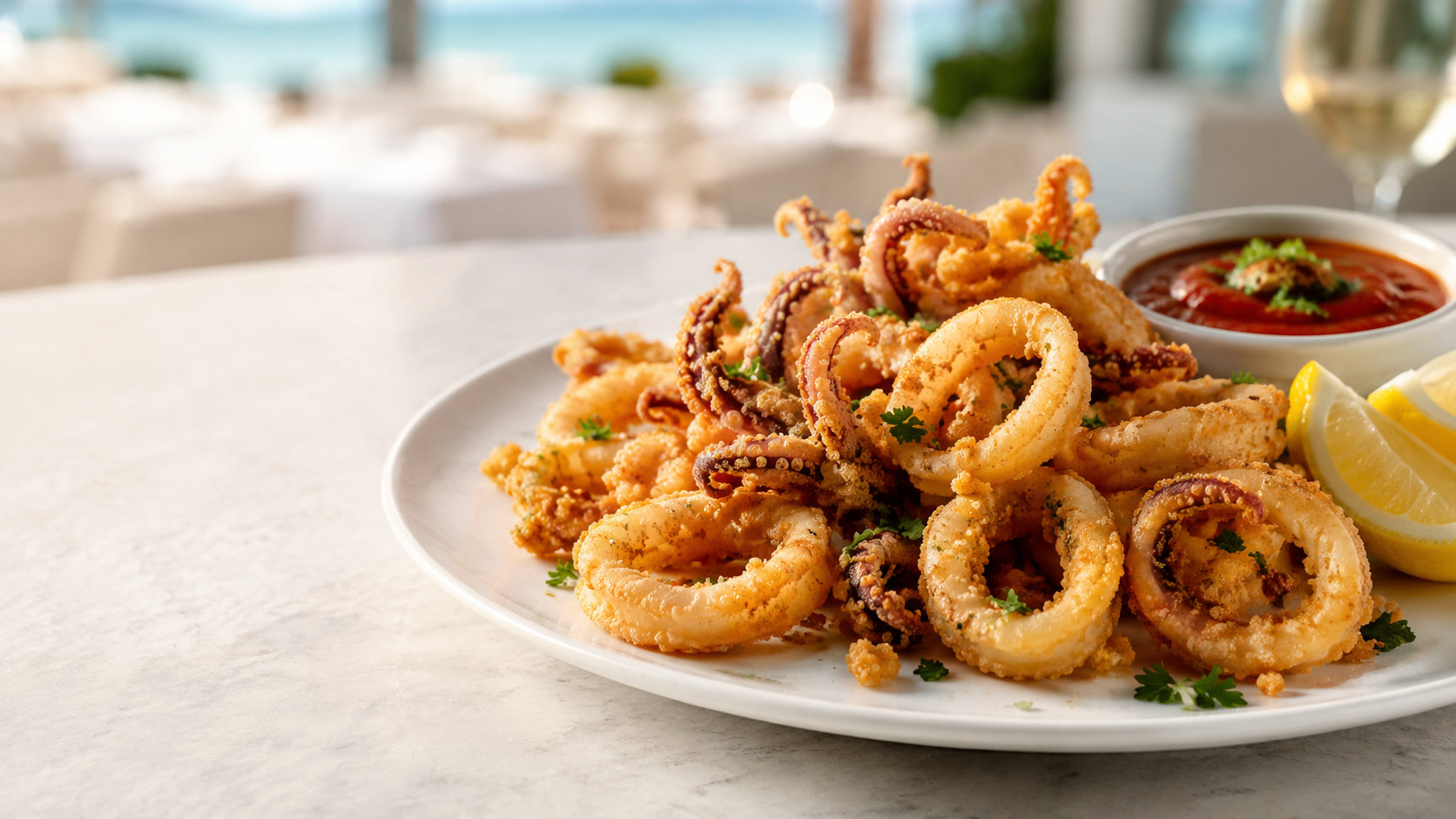
Calamari is one of the most recognizable seafood appetizers on restaurant menus. It is affordable compared to many premium seafood items, quick to cook, easy to portion, and flexible enough for casual bars, seafood restaurants, Mediterranean concepts, Asian menus, catering operations, and upscale dining rooms.
In simple terms, calamari is squid prepared for food. In the United States, the word often makes people think of crispy fried squid rings served with lemon and marinara sauce, but calamari can also be grilled, sautéed, braised, stuffed, tossed into pasta, served in salads, or used in tacos, rice bowls, and shared appetizers.
For restaurants, calamari is more than a seafood dish. It is a high-impact menu item that can be portioned consistently, cooked fast during service, and adapted to different cuisines with the right seasoning, sauce, and equipment.
What Is Calamari?
Calamari is the culinary name for squid. The word comes from Italian, but the ingredient is used across Mediterranean, Asian, Latin American, and coastal cuisines around the world.

The most common calamari preparation is made from the squid’s mantle, the tube-shaped body that is sliced into rings. The tentacles are also edible and are often served with the rings because they become crisp and flavorful when fried. Depending on the supplier, restaurants can buy squid whole, cleaned, sliced into rings, separated into tubes and tentacles, frozen, breaded, or fully prepared for frying.
Calamari has a mild seafood flavor, a slightly sweet finish, and a firm texture. When cooked correctly, it should be tender, not rubbery. The key is timing: squid usually performs best when it is cooked quickly over high heat or slowly over low heat. The middle zone is where many kitchens run into tough, chewy calamari.
Calamari vs Squid: Are They the Same?
Yes. Calamari and squid are the same animal, but the words are used differently in foodservice.
“Squid” usually refers to the raw seafood ingredient. “Calamari” usually refers to the prepared menu item. A chef may order cleaned squid tubes from a seafood supplier, prep them in the kitchen, and list the finished dish as fried calamari, grilled calamari, calamari salad, or calamari pasta.
For menu writing, “calamari” sounds more familiar and appetizing to many customers than “squid.” That is why most restaurants use “calamari” on the menu even though the ingredient itself is squid.
Is Calamari Squid or Octopus?
Calamari is squid, not octopus.
Squid and octopus are both cephalopods, but they are different animals with different textures, cooking behavior, and menu uses. Squid has a long body, fins, eight arms, and two longer tentacles. Octopus has a rounded body and eight arms. Squid is commonly sliced into rings and fried, while octopus is often braised, grilled, or served in larger pieces.
From a kitchen perspective, squid is usually faster to prep and cook than octopus. Octopus often requires longer tenderizing or braising, while calamari can be cooked in minutes.
What Does Calamari Taste Like?
Calamari has a mild, clean seafood flavor with a slightly sweet finish. It is less “fishy” than many finfish and less rich than lobster, crab, or scallops. Because the flavor is mild, calamari takes seasoning, marinades, breading, spices, citrus, herbs, and sauces very well.
The final flavor depends heavily on the cooking method:
Fried calamari tastes crispy, savory, lightly salty, and mild inside. The breading or batter creates most of the exterior flavor.
Grilled calamari has a smoky, slightly charred flavor and works well with olive oil, lemon, garlic, parsley, chili flakes, and Mediterranean-style sauces.
Sautéed calamari is softer and more delicate, often used with garlic, white wine, tomatoes, herbs, or pasta.
Braised calamari becomes tender in sauces and stews, especially when cooked slowly with tomato, wine, aromatics, or seafood stock.
Why Calamari Is Popular on Restaurant Menus
Calamari works well in commercial kitchens because it fits several important restaurant needs at once.
First, it cooks quickly. Fried calamari can often go from fryer to plate in a very short time, making it practical for appetizer stations and bar menus.
Second, it is portion-friendly. Rings and tentacles can be weighed or portioned consistently, helping operators control food cost and plate presentation.
Third, it is versatile. The same base ingredient can support Italian, Greek, Spanish, Japanese, Chinese, Korean, Mexican, and American bar-style menu concepts.
Fourth, it pairs well with high-margin sauces. Marinara, aioli, lemon-garlic sauce, spicy mayo, chipotle crema, sweet chili sauce, ponzu, and herb sauces can all change the identity of the dish without requiring a completely different protein.
Finally, calamari feels familiar but still elevated. Many guests recognize fried calamari as a shareable appetizer, but restaurants can also use grilled or stuffed calamari to build a more premium seafood section.
Common Types of Squid Used for Calamari
Restaurants may source calamari from several squid species depending on region, supplier, availability, and price. Common commercial squid types include longfin squid, shortfin squid, California market squid, European squid, and Pacific squid varieties.
For U.S. restaurants, domestic squid can be a strong sourcing story. NOAA describes U.S. wild-caught longfin squid, shortfin squid, and California market squid as seafood choices managed under U.S. regulations. Sustainability can vary by species, harvest method, and region, so restaurants should always verify sourcing details with their seafood supplier.
When buying calamari, ask the supplier for:
Species or market name
Country of origin
Fresh or frozen status
Wild-caught or farmed status
Processing format
Pack size
Glaze percentage if frozen
Whether tubes and tentacles are included
Whether the product is raw, cleaned, breaded, or par-fried
Any sustainability certification or sourcing documentation
This information helps the kitchen control quality and helps the front-of-house team answer customer questions with confidence.
How to Buy Calamari for a Restaurant
The best calamari format depends on your kitchen labor, menu style, storage space, and service volume.
Whole Squid
Whole squid gives the kitchen the most control, but it requires cleaning, trimming, and training. This format can work for chef-driven restaurants that want maximum freshness and flexibility, but it is less efficient for high-volume fried calamari programs.
Cleaned Tubes and Tentacles
Cleaned tubes and tentacles are one of the most practical options for restaurants. The tubes can be sliced into rings, stuffed, grilled, or cut into strips. The tentacles can be fried or grilled. This format reduces prep labor while still allowing the kitchen to season, bread, and cook the product in-house.
Pre-Cut Calamari Rings
Pre-cut rings save time and improve portion consistency. They are useful for bars, casual restaurants, catering operations, and kitchens with limited prep labor. The tradeoff is that the kitchen has less control over ring thickness and presentation.
Breaded Calamari
Breaded calamari is designed for speed and consistency. It can be a good fit for high-volume operations, but restaurants should test the coating, flavor, fry performance, and hold time before committing. Some breaded products become soggy quickly if the fryer temperature drops or if the product is overloaded in the basket.
Frozen Calamari
Frozen calamari is common in foodservice and can be a smart choice when quality and handling are controlled. Squid freezes well compared to many seafood items, and frozen formats can support consistent inventory. The key is proper thawing, draining, and cold storage before cooking.
How to Store Calamari Safely
Seafood quality depends heavily on temperature control. FoodSafety.gov recommends keeping seafood cold and storing it at 40°F or below if it will be used within two days; otherwise, it should be wrapped and frozen. For restaurants, that means calamari should move quickly from receiving to refrigerated or frozen storage.
Best practices for restaurant storage include:
Check product temperature at receiving.
Inspect packaging for leaks, damage, freezer burn, or excessive ice crystals.
Store raw calamari below ready-to-eat foods to prevent cross-contamination.
Keep refrigerated seafood at 40°F or below.
Thaw frozen calamari under refrigeration, not at room temperature.
Drain thawed calamari well before breading or frying.
Label and date all opened cases or thawed containers.
Use clean prep tables, sanitized knives, and separate seafood handling procedures.
Cold storage is not just a food safety issue. It also affects texture. Poorly handled calamari can become watery, soft, fishy-smelling, or difficult to bread.
How to Prep Calamari for Service
For fried calamari, moisture control is one of the most important prep steps. Wet calamari can cause breading to fall off, oil to splatter, and the final product to taste greasy.
A basic prep flow looks like this:
Thaw under refrigeration if frozen.
Drain well in a perforated pan.
Pat dry before breading.
Cut tubes into even rings if needed.
Keep rings and tentacles cold before service.
Season shortly before cooking or use a controlled marinade.
Dredge, batter, or bread in small batches.
Fry immediately after coating for best texture.
Some kitchens soak calamari in buttermilk, milk, lemon juice, or a light marinade to improve flavor and texture. If you use a marinade, keep time, acidity, and salt levels consistent. Too much acid for too long can change the texture of seafood.
How to Cook Calamari
Calamari can be fried, grilled, sautéed, boiled, braised, or stuffed. The right method depends on your menu concept and equipment.
Fried Calamari
Fried calamari is the most common restaurant version. It should be crisp on the outside and tender inside. For best results, use a commercial fryer that can recover temperature quickly between batches. Overloading the fryer drops the oil temperature, which can make calamari greasy and soft.
A practical restaurant method:
Preheat fryer oil to about 350°F to 375°F.
Work in small batches.
Shake off excess flour or breading.
Fry until lightly golden and just cooked.
Drain on a rack, not a flat paper towel-lined pan.
Season immediately after frying.
Serve quickly with lemon and sauce.
USDA/FSIS lists 145°F as the safe minimum internal temperature for fish and shellfish. Because calamari pieces are small and cook fast, restaurants should rely on standardized time, oil temperature, batch size, and food safety procedures rather than guessing during service.
Grilled Calamari
Grilled calamari works well for Mediterranean menus, seafood restaurants, and lighter entrée options. Use cleaned tubes and tentacles, dry them well, season with oil, salt, pepper, garlic, lemon, herbs, or chili, and grill quickly over high heat.
To prevent curling and uneven cooking, tubes can be opened flat and scored lightly. Grilled calamari should be served immediately or sliced for salads and shared plates.
Sautéed Calamari
Sautéed calamari is ideal for pasta, garlic butter sauces, seafood medleys, and tomato-based dishes. Cook it quickly in a hot pan with oil or butter. Avoid crowding the pan, because excess moisture will cause the calamari to steam instead of sear.
Braised Calamari
Braised calamari follows the opposite approach from quick frying or grilling. Instead of fast high heat, it uses slow cooking in sauce until tender. Tomato sauce, wine, garlic, onions, peppers, herbs, and seafood stock all work well.
This method is useful for Mediterranean entrées, seafood stews, pasta sauces, and stuffed calamari.
Stuffed Calamari
Stuffed calamari uses whole cleaned tubes filled with ingredients such as rice, herbs, breadcrumbs, seafood, sausage, vegetables, or tomato-based mixtures. The tubes are usually simmered, baked, or braised until tender.
This dish requires more labor but can support a higher menu price and a more distinctive seafood program.
Best Oil for Frying Calamari
The best oil for calamari is neutral, stable at frying temperatures, and appropriate for your restaurant’s flavor profile and budget.
Common choices include:
Canola oil: Neutral flavor, widely used, and suitable for deep frying.
Vegetable oil: Flexible, cost-effective, and neutral.
Peanut oil: High-heat performance with a light nutty flavor; check allergen policies and customer expectations.
Sunflower oil: Neutral and useful for crisp frying.
Corn oil: Budget-friendly and common in commercial kitchens.
Extra virgin olive oil is flavorful but is usually not the first choice for high-volume deep frying. It can be used for sautéing, finishing, or Mediterranean-style grilled calamari, but most restaurants prefer a more neutral fryer oil for fried calamari.
For consistent results, oil management matters as much as oil choice. Filter oil regularly, skim loose breading, avoid overheating, and do not mix strongly flavored products in the same fryer if they will affect the calamari’s taste.
Why Calamari Gets Rubbery
Rubbery calamari is usually caused by overcooking, poor temperature control, or improper prep.
Common causes include:
Cooking too long
Fryer oil too cool
Overloaded fryer baskets
Wet calamari before breading
Uneven ring thickness
Holding fried calamari too long before serving
Using product that was thawed and refrozen
Poor draining after thawing
The solution is to standardize the process. Keep calamari cold and dry before cooking, use consistent portions, fry in small batches, monitor oil temperature, and serve immediately.
Best Sauces for Calamari
A good sauce can turn calamari from a basic appetizer into a signature item. Popular options include:
Marinara sauce
Garlic aioli
Lemon-herb aioli
Spicy mayo
Chipotle crema
Sweet chili sauce
Tzatziki
Ponzu
Tartar sauce
Harissa yogurt
Salsa verde
Calabrian chili aioli
Black garlic aioli
Sriracha-lime sauce
Restaurants can use sauce strategy to create multiple menu items from the same core ingredient. For example, classic calamari can be served with marinara, Asian-style calamari with sweet chili and scallions, and coastal-style calamari tacos with chipotle crema.
Calamari Menu Ideas for Restaurants
Calamari can fit many restaurant formats. Here are practical menu ideas:
Classic Fried Calamari
Lightly breaded calamari rings and tentacles served with lemon, parsley, and marinara.
Spicy Calamari
Fried calamari tossed with chili flakes, Calabrian chili oil, or spicy aioli.
Salt and Pepper Calamari
A Chinese-inspired version with white pepper, garlic, scallions, chiles, and a crisp coating.
Grilled Calamari Salad
Grilled calamari served over greens, tomatoes, olives, cucumber, herbs, and lemon vinaigrette.
Calamari Tacos
Grilled or fried calamari served in tortillas with cabbage, salsa, lime, and crema.
Calamari Pasta
Sautéed calamari with garlic, tomato, white wine, parsley, and linguine.
Stuffed Calamari
Calamari tubes filled with rice, herbs, breadcrumbs, vegetables, seafood, or sausage and simmered in tomato sauce.
Calamari Fritto Misto
Calamari served with shrimp, fish, vegetables, or other fried seafood as a shareable platter.
Calamari Rice Bowl
Crispy or grilled calamari over rice with vegetables, pickled toppings, and a signature sauce.
Mediterranean Calamari Plate
Grilled calamari with lemon potatoes, salad, pita, and tzatziki.
Equipment Needed for Calamari in a Commercial Kitchen
A strong calamari program depends on more than the seafood itself. The right equipment helps with food safety, speed, consistency, and presentation.
Commercial Refrigeration
Calamari must stay cold before service. Restaurants need reliable refrigeration for raw seafood storage, thawing, and prep. Reach-in refrigerators, undercounter refrigerators, refrigerated prep tables, and walk-in coolers can all support seafood programs depending on volume.
For higher-volume restaurants, a walk-in cooler gives the kitchen more space for cases of seafood, sauces, produce, and prepared mise en place. For smaller operations, a reach-in refrigerator near the prep or cook line may be more practical.
Commercial Freezers
If your restaurant uses frozen calamari, freezer storage is essential. A reach-in freezer or walk-in freezer helps maintain backup inventory and reduce emergency ordering. Frozen calamari should be stored tightly wrapped and organized by date.
Prep Tables
Stainless steel prep tables are useful for thawing, draining, cutting, breading, and staging calamari. Because seafood handling requires sanitation discipline, stainless surfaces are preferred for cleanability and durability.
Commercial Fryers
For fried calamari, the fryer is one of the most important pieces of equipment. A commercial fryer with enough oil capacity and fast temperature recovery will produce better results than an undersized fryer. If the oil temperature drops too much during service, calamari can become greasy before it becomes crisp.
Restaurants that sell calamari heavily should consider whether they need a dedicated fryer or a fryer battery. A dedicated seafood fryer can help prevent flavor transfer from fries, chicken, or other breaded products.
Sheet Pans and Drain Racks
After frying, calamari should drain on a rack so steam can escape. If it sits flat on paper towels or in a closed container, the coating can soften quickly.
Food Thermometers
Thermometers help verify fryer temperature, refrigeration temperature, and safe food handling. A fryer thermometer or built-in fryer controls are essential for consistency.
Food Safety Notes for Calamari
Restaurants should handle calamari like other raw seafood. Keep it cold, prevent cross-contamination, cook it properly, and train staff on allergen awareness.
Important food safety reminders:
Store seafood at 40°F or below.
Thaw frozen seafood under refrigeration.
Keep raw seafood separate from ready-to-eat foods.
Use clean gloves, utensils, cutting boards, and prep surfaces.
Cook seafood to safe standards.
Avoid serving raw or undercooked squid unless your operation has proper controls and local code compliance.
Communicate seafood allergens clearly to guests.
Calamari is a mollusk shellfish. While U.S. major allergen labeling rules focus heavily on crustacean shellfish such as crab, lobster, and shrimp, restaurants should still treat squid as a seafood allergen concern and train staff to communicate clearly with customers who report shellfish or seafood allergies.
How to Price Calamari on a Restaurant Menu
Calamari pricing depends on seafood cost, portion size, breading, oil, sauce, garnish, labor, waste, and plate style.
To price calamari correctly, calculate:
Raw product cost per pound
Usable yield after thawing and draining
Portion size per order
Cost of breading or batter
Sauce and garnish cost
Fryer oil impact
Labor time
Target food cost percentage
For example, a basic fried calamari appetizer may use a controlled portion of rings and tentacles with lemon and marinara. A premium version may include a house-made aioli, herbs, pickled peppers, specialty flour blend, or imported seasoning. The premium version can often justify a higher menu price if the presentation and flavor are distinctive.
Calamari Troubleshooting Guide
Problem: Calamari is rubbery
Most likely causes: overcooking, low fryer temperature, or holding too long.
Fix: Cook faster, fry smaller batches, verify oil temperature, and serve immediately.
Problem: Calamari is greasy
Most likely causes: oil too cool, overcrowded fryer, wet product, or old oil.
Fix: Drain and dry calamari before breading, fry in smaller batches, and maintain proper oil temperature.
Problem: Breading falls off
Most likely causes: calamari too wet, coating too thick, or long delay between breading and frying.
Fix: Pat dry, use a consistent dredging process, shake off excess coating, and fry shortly after breading.
Problem: Calamari tastes fishy
Most likely causes: poor seafood quality, old product, bad storage, or improper thawing.
Fix: Review supplier quality, receiving checks, storage temperature, and inventory rotation.
Problem: Fried calamari gets soggy fast
Most likely causes: steam buildup, poor draining, overcrowded plating, or sauce added too early.
Fix: Drain on racks, avoid closed containers, serve sauce on the side, and plate immediately.
Frequently Asked Questions About Calamari
What is calamari made of?
Calamari is made from squid. The most common parts used are the squid tube, which is sliced into rings, and the tentacles.
Is calamari the same as squid?
Yes. Calamari is the culinary term for squid, especially when it appears as a prepared dish on a restaurant menu.
Is calamari octopus?
No. Calamari is squid. Octopus is a different cephalopod with a different body structure, texture, and cooking method.
Why is calamari chewy?
Calamari becomes chewy when it is overcooked, cooked at the wrong temperature, held too long, or prepared from poor-quality product. Cook it quickly over high heat or slowly in a braise.
What is the best way to cook calamari?
The most popular method is frying, but calamari is also excellent grilled, sautéed, braised, or stuffed. For fried calamari, small batches and consistent fryer temperature are critical.
What oil is best for frying calamari?
Canola, vegetable, peanut, sunflower, and corn oil are common choices. The best option depends on your fryer setup, flavor goals, allergen policies, and budget.
What sauce goes with calamari?
Classic sauces include marinara, garlic aioli, lemon aioli, spicy mayo, sweet chili sauce, tartar sauce, tzatziki, ponzu, and chipotle crema.
Can restaurants use frozen calamari?
Yes. Frozen calamari is common in foodservice. The key is to thaw it under refrigeration, drain it well, keep it cold, and avoid refreezing thawed product.
Is calamari healthy?
Calamari itself is a lean seafood protein, but the nutrition depends heavily on preparation. Grilled or sautéed calamari is generally lighter than deep-fried calamari. Sauces, breading, and frying oil change the final nutrition profile.
What equipment do restaurants need for calamari?
A restaurant serving calamari should have reliable refrigeration, freezer storage if using frozen product, stainless prep surfaces, proper cutting tools, food thermometers, draining racks, and a commercial fryer if fried calamari is on the menu.